One Story. Many Angles.
Coverage splits between pure threat framing and emphasis on imminent diplomatic contact.
The reporting converges on Trump’s explicit binary framing yet diverges sharply on whether the dominant note is threat or diplomacy. Middle East Eye and NRC lead with the annihilation language as the core dilemma, reflecting critical lenses on escalation. Punch frames it as a US policy binary with global fallout, while Ynetnews adds the post-midterm timeline and Israeli security context. Arab News uniquely pairs the threat with confirmation of Tuesday’s US-Iran meeting and Rubio’s openness to Pezeshkian talks, underscoring contact over confrontation. This pattern shows how regional stakes shape emphasis: Israeli and Saudi sources balance pressure with engagement signals, European and African ones stress the stark choice, and UK-based Middle East coverage highlights risk. The consistent prediction of a post-election deal across independent chains suggests the ultimatum functions more as leverage than immediate prelude to total war, a nuance no single national press captured alone.
Perspective Analysis
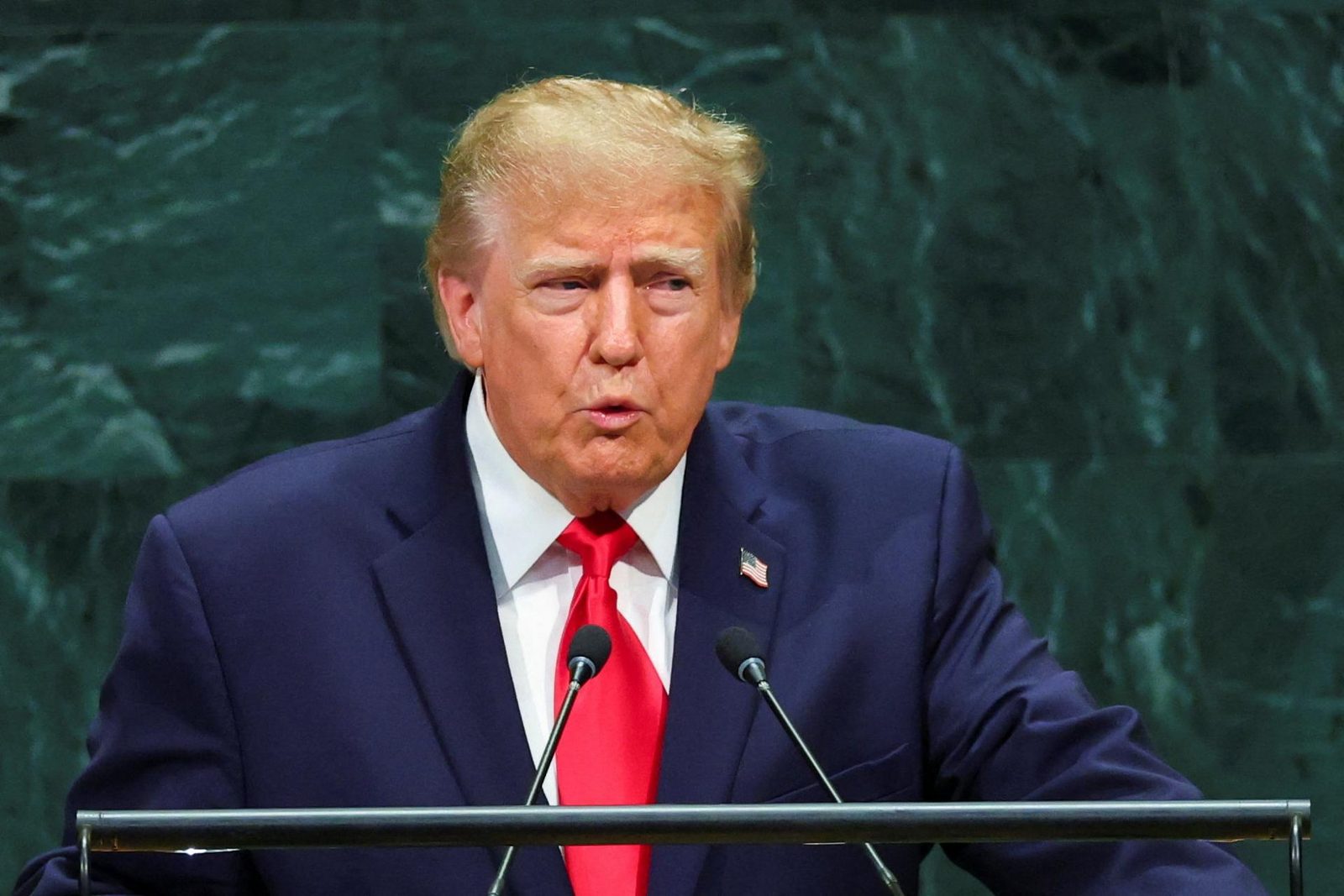
US President Donald Trump stood before the United Nations General Assembly on September 22 and described a single stark decision on Iran. He said the United States could reach an agreement that would let the Islamic Republic rebuild and become one of the greatest countries in the Middle East or the world. Or it could annihilate the Islamic Republic quickly, denying it any chance to kill and destroy people and countries again, driving it into hell with no survival or hope of future generations. Trump framed the choice as his alone to make.
The speech came seven months into a war the United States and Israel have waged against Iran over its nuclear program and regional actions. Trump defended the decision to open that conflict, saying previous diplomatic efforts had failed and that Iran had rejected terms meant to block nuclear weapons. He told the assembly that Iranian leaders were waiting to see the outcome of November midterm elections before committing to talks, but he insisted a deal would still be reached afterward because it made no sense for them to refuse. He added that he himself was not on the ballot and would help Republicans in the campaign.
Four of the five outlets that carried the remarks reported this post-election prediction in nearly identical language. Middle East Eye, Punch, Ynetnews and NRC all quoted Trump saying an agreement would come right after the vote. Arab News alone added that US and Iranian officials had already met on Tuesday, hours after the address. Trump described that session to reporters as very good but gave no further details on participants or substance. Secretary of State Marco Rubio separately told NBC that Trump remained open to a direct meeting with Iranian President Masoud Pezeshkian while both leaders were in New York, though Rubio noted that Iran’s supreme leader holds final authority.
Trump also used the address to list other diplomatic and military moves. He celebrated the recent US operation that removed Venezuelan President Nicolás Maduro, announced a new security agreement with Greenland that will expand American military bases there, and pressed for economic isolation of Iran until it stops attacks on shipping, abandons nuclear ambitions and ends support for terrorism. He invoked the October 7, 2023 Hamas attack on Israel and said Iran could never be allowed a nuclear arsenal. Meetings scheduled after the speech included separate sessions with Ukrainian President Volodymyr Zelensky, Gulf leaders and Venezuela’s acting President Delcy Rodríguez.
The accounts diverge on what the binary choice itself signals. Middle East Eye and NRC present the annihilation option as the central and most immediate element, quoting the full passage on driving Iran into hell and placing it against the backdrop of an organization founded to pursue peace. Punch relays the same language but situates the decision inside a broader US policy dilemma that carries consequences for global energy markets and fuel prices. Ynetnews folds the threat into an Israeli security reading, linking it to the need to prevent nuclear weapons and to the precedent of the Gaza ceasefire Trump said his administration helped secure. Arab News pairs the warning with the confirmed Tuesday meeting and Rubio’s comments, giving equal weight to the possibility of engagement.
These differences track the outlets’ locations. The Israeli and Saudi pieces balance pressure with signals of contact. The Dutch and British Middle East-focused pieces foreground the risk of escalation. The Nigerian outlet, drawing on agency copy, stresses worldwide fallout without regional alignment. No outlet contradicted the core quotes; the variation lies in which part of the same text each chose to emphasize and which surrounding facts it placed beside it.
The single-source detail of the Tuesday meeting stands apart. Only Arab News reported Trump’s confirmation of that session. The other four outlets carried the speech and the election prediction but did not mention any immediate follow-up contact. Rubio’s openness to a Pezeshkian meeting appeared in both Arab News and Ynetnews, giving that element two independent chains.
The most widely corroborated elements are therefore the binary framing itself and the prediction of a deal after the midterms. Those appear across four separate reporting lines and match Trump’s words on the record. The meeting detail, while narrower, supplies concrete evidence that diplomacy did not wait for the election. Taken together, the reporting shows an ultimatum delivered in public that was accompanied, at least in one documented case, by private contact the same day.
What to Watch
The pattern suggests the stark language functions as leverage rather than an announcement of imminent total war. Trump has an interest in projecting resolve to domestic audiences facing higher fuel prices and to regional allies wary of Iranian capabilities. At the same time, the consistent forecast of a post-election agreement and the reported Tuesday meeting indicate that both sides retain channels. What happens next will turn on whether those channels produce terms acceptable to Iran’s leadership before November or whether the military and economic pressure Trump described intensifies instead. The sources leave that outcome open, but they document that the choice Trump described is already being tested in practice.
That’s how the world told the story.
Get tomorrow’s bulletin by email — one briefing, up to six stories.
Subscribe freeNo spam. One-click unsubscribe. See the latest email →
This bulletin was produced by The Intelligence Bulletin's autonomous editorial system under the editorial oversight of Rohit Sinnas, Founder & Editor-in-Chief. How it works →