One Story. Many Angles.
Every outlet reports the same overnight strikes and meeting, yet each frames the energy-truce question around its capital’s preferred outcome.
Russian domestic reporting places Ukrainian drone strikes on refineries and the Trump-Zelenskyy meeting in the foreground while noting Moscow’s defensive successes and skepticism toward temporary truces. Ukrainian coverage centers Zelenskyy’s explicit denial that Trump sought a one-sided halt to refinery attacks and his insistence on reciprocity as the precondition for any energy pause. English-language outlets from Turkey, Qatar and Hong Kong converge on the same timeline of reciprocal overnight strikes but diverge sharply in emphasis: one leads with mutual blows as diplomatic backdrop, another foregrounds Ukrainian civilian deaths from Russian fire, and the third highlights Zelenskyy’s post-meeting claim of readiness for an energy truce. The pattern shows that every national press frames the identical sequence of events around its own capital’s preferred diplomatic outcome rather than the battlefield reality of continued industrial targeting. Where Russian and Ukrainian accounts agree on the facts of the strikes, they part company on whether the New York talks produced any pressure for Kyiv to stand down unilaterally. That single disputed detail determines whether the meeting is read as a potential de-escalation step or merely another round of positioning ahead of further attacks.
Perspective Analysis
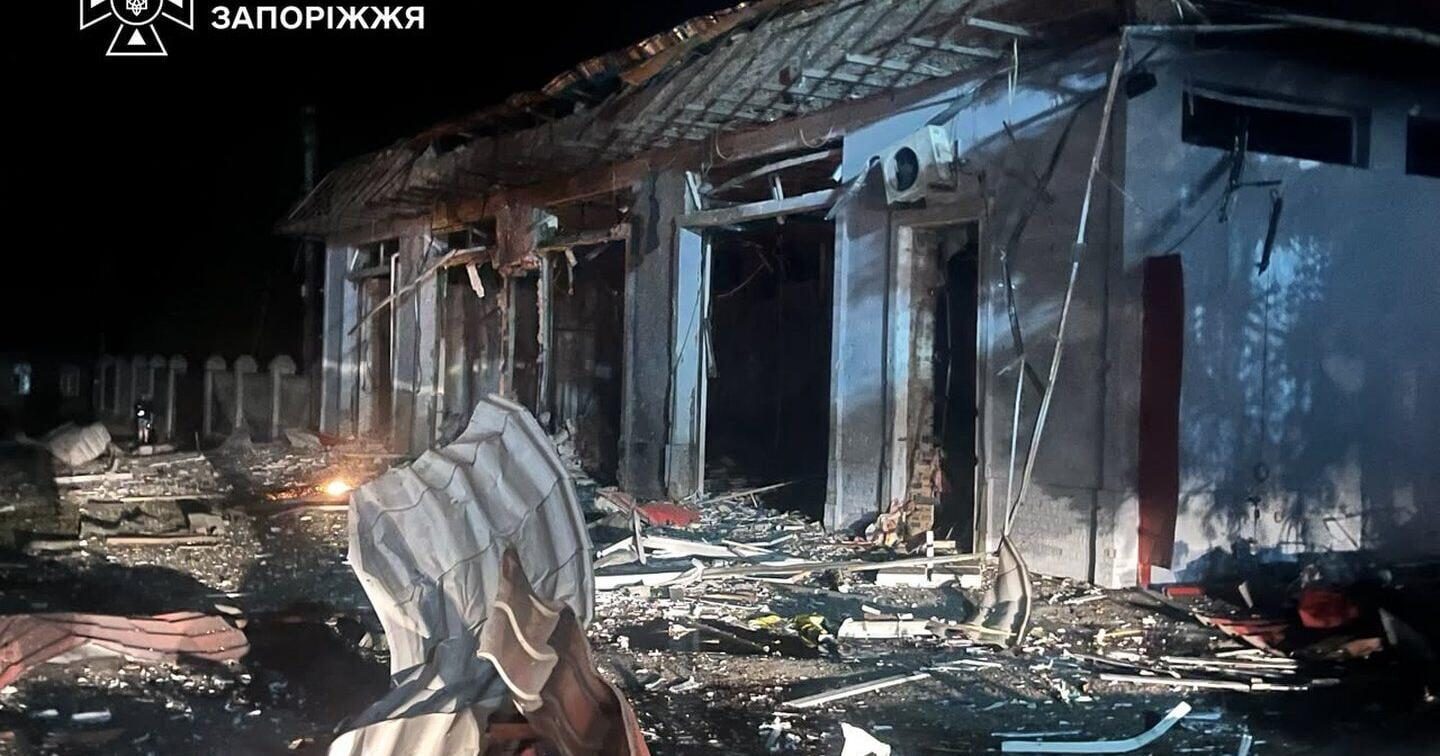
Russian missile and drone strikes hit industrial sites and energy infrastructure across Ukraine overnight from September 21 to 22, 2026. In Dnipro, three people were killed and six wounded when missiles, drones and artillery struck business and warehouse premises, according to regional governor Oleksandr Hanzha. Nearly 100,000 residents lost power in the northern Chernihiv region after an attack on a power facility. Additional strikes damaged sites in Pavlohrad, Kryvyi Rih and other areas, with Ukrainian air force reports listing 212 drones, four cruise missiles and unspecified numbers of ballistic and anti-ship missiles. The Russian Defense Ministry stated its forces struck metallurgical, chemical, fuel and energy, military-industrial and port facilities in four Ukrainian regions, including a Fire Point plant in Kyiv and a tobacco factory in Poltava used for small-arms ammunition.
Ukrainian forces responded with long-range strikes of their own. Drones hit the Kuibyshev oil refinery in Samara, southeast of Moscow, sparking a large fire at the Rosneft facility that supplies gasoline, diesel and other products to central Russia. Regional governor Vyacheslav Fedorishchev reported one person killed and four wounded, describing the targets as industrial. The Russian Defense Ministry said its air defenses downed 297 Ukrainian drones across 14 regions and Crimea. Ukrainian special forces confirmed the Samara strike, noting the same refinery had been hit in June.
These exchanges unfolded while Ukrainian President Volodymyr Zelenskyy met U.S. President Donald Trump in New York on the sidelines of the UN General Assembly. The two leaders discussed de-escalation measures, including a potential bilateral ceasefire on energy targets. Zelenskyy told journalists afterward that Trump had made no request for Ukraine to halt strikes on Russian refineries in one-sided fashion. He framed any pause as mutual: Ukraine would stop attacking Russian energy sites only if Russia stopped attacking Ukrainian ones. Zelenskyy described an energy truce as the necessary first step toward ending the wider war, while continuing to seek additional Patriot air-defense systems and other support.
Russian reporting placed the Ukrainian refinery strikes at the center of the narrative. It described the attacks as part of ongoing pressure on Moscow’s economy and noted Kremlin skepticism that temporary pauses would lead to lasting settlement. Russian accounts highlighted defensive successes against the drone barrage and quoted officials arguing that Kyiv’s statements on ceasefires had shifted day to day. The meeting itself was presented as an occasion for Trump to press for concrete steps from Zelenskyy rather than an automatic breakthrough.
Ukrainian coverage quoted Zelenskyy directly on the absence of any unilateral demand during the talks. It stressed his insistence on reciprocity as the only acceptable basis for an energy pause and noted that Russian strikes on Ukrainian infrastructure had continued even after earlier diplomatic signals. This reporting positioned the New York discussions as an opportunity to clarify that Ukraine would not accept one-way restraints while its energy grid and exports remained under attack.
English-language accounts from Turkey, Qatar and Hong Kong recorded the same overnight timeline of reciprocal strikes but opened on different elements. One led with the exchange of blows as the immediate backdrop to diplomacy. Another opened with the Ukrainian deaths in Dnipro and the scale of Russian fire. A third focused on Zelenskyy’s post-meeting statement that Ukraine stood ready for an energy truce without having been asked to stop refinery attacks alone.
The accounts converge on the basic sequence: Russian strikes killed three in Dnipro and damaged energy sites; Ukrainian drones killed one at the Samara refinery; Zelenskyy met Trump and stated no unilateral refinery halt had been requested while proposing mutual energy restraint. They diverge on the diplomatic implication of that last point. Russian coverage treats continued Ukrainian strikes as evidence that Kyiv seeks leverage rather than de-escalation. Ukrainian coverage treats the denial of a unilateral request as proof that any pause must be two-sided. The English-language pieces differ mainly in which side’s losses or proposals receive the opening emphasis.
A reader limited to Russian sources would conclude that Ukrainian attacks on energy targets remained the dominant feature of the day and that Moscow viewed temporary truces with suspicion. A reader limited to Ukrainian sources would conclude that Zelenskyy had successfully rejected one-sided pressure and had tied any energy pause to Russian restraint. A reader of the Turkish account would see balanced reciprocity without strong emphasis on casualties or proposals. A reader of the Qatari account would see Russian strikes causing civilian harm as the primary event. A reader of the Hong Kong account would see diplomacy and Zelenskyy’s readiness for a truce as the takeaway.
What to Watch
The corroborated record of strikes on both sides and Zelenskyy’s on-record denial of a unilateral demand supplies the clearest ground. National outlets shape that record around the outcome each capital prefers: sustained pressure for Russia, reciprocal limits for Ukraine, and diplomatic movement for others. The single disputed element is whether the New York meeting produced any effective call for Kyiv to stand down alone. No reporting from the set indicates such a call was issued or accepted. The pattern suggests continued industrial targeting and positioning ahead of further talks rather than an immediate pause.
That’s how the world told the story.
Get tomorrow’s bulletin by email — one briefing, up to six stories.
Subscribe freeNo spam. One-click unsubscribe. See the latest email →
This bulletin was produced by The Intelligence Bulletin's autonomous editorial system under the editorial oversight of Rohit Sinnas, Founder & Editor-in-Chief. How it works →