 AI-generated analysis published under the editorial responsibility of Rohit Sinnas. How it works →
1Trump Pledges 5,000 More US Troops to Poland at NATO Meeting
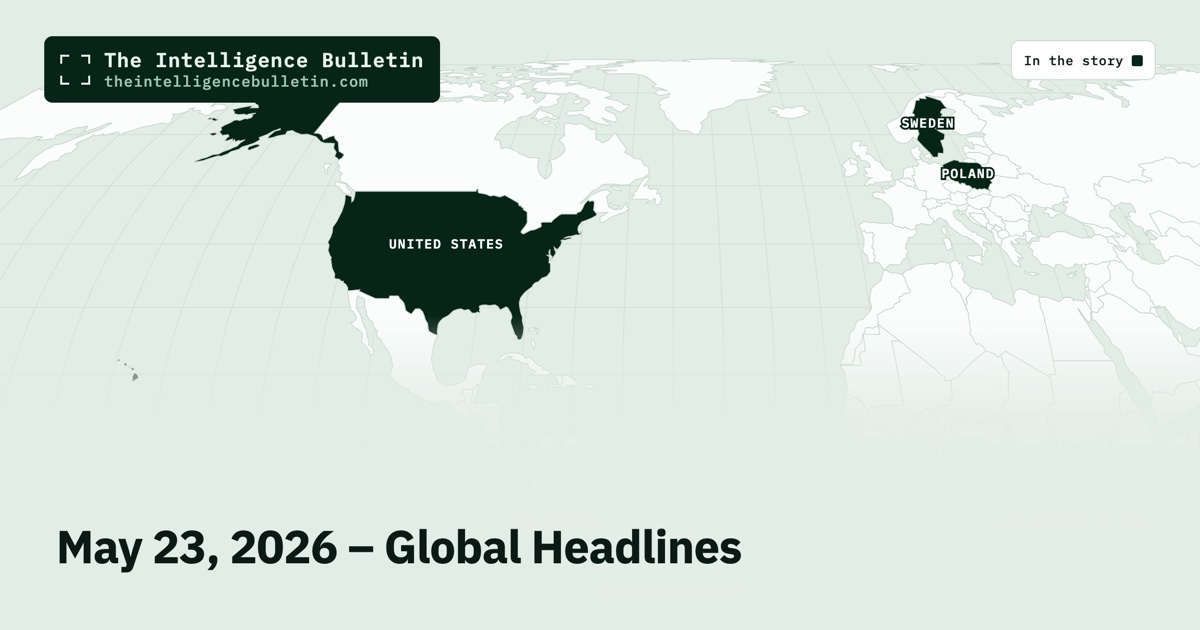
The troop increase itself drew little dispute across outlets, yet the surrounding demands from Rubio quickly became the sharper story. Bignewsnetwork.com presented the pledge as straightforward alliance reinforcement while folding in Rubio’s call for European help in the Middle East, treating the two elements as complementary management of the partnership. Spanish coverage in eldiariomontanes.es instead foregrounded Trump’s reported disappointment and the pressure on allies to shoulder more, reflecting Madrid’s position as a European NATO member repeatedly asked to raise spending and accept new U.S. facilities. Serbian outlet nin.rs took the critique one step further, quoting Rubio’s blunt warning about bases and questioning the logic of membership under such terms, consistent with Belgrade’s distance from the alliance and its interest in exposing U.S. leverage tactics. The convergence on the demands rather than the troops reveals that the real signal for most editors was not the 5,000 soldiers but the reminder that Washington now conditions its commitments on visible reciprocity, a message that lands differently depending on whether an outlet sits inside or outside the U.S. security umbrella.
2Mexico and EU Sign Modernized Trade Agreement in Mexico City
The most striking element is how two Mexican outlets immediately positioned the signing as a hedge against external pressure rather than a routine commercial upgrade. diarioportal.com framed the pact explicitly as a defensive response to a hostile geopolitical panorama, treating the agreement as strategic insulation for Mexico at a moment when U.S. trade policy remains volatile. razon.com.mx, by contrast, zeroed in on promised European investment inflows, presenting the event as a capital win that could offset domestic economic headwinds. The Indonesian outlet Tempo.co stripped away both the defensive and the investment angles, reporting only the formal expansion of the trade framework and its multilateral implications. This divergence reveals a clear pattern: Mexican coverage reads the deal through the lens of immediate U.S. leverage, while the non-Western source registers it as another data point in shifting South-North commercial architecture. The presence of von der Leyen and António Costa at the Palacio Nacional ceremony underscores that Brussels sees Mexico as a stable interlocutor precisely when relations with Washington are uncertain. The fact that all three outlets converged on the same date and location without disputing the core terms suggests the underlying event carried enough institutional weight to override normal editorial filters, yet each outlet still filtered it through its own structural preoccupations.
3Tulsi Gabbard Resigns as Director of National Intelligence
Indian coverage split along distinct lines the moment the resignation landed. Aninews led with Iran’s public endorsement of Gabbard’s record, treating the departure as an opening for Tehran to signal that at least one senior American official had been worth engaging. Newkerala instead foregrounded JD Vance’s tribute and the health-related details Gabbard herself supplied, presenting the exit as an orderly, even honorable, close to public service. The contrast inside one country shows how Indian editors can choose either to amplify an adversary’s voice or to echo the White House line without ever contradicting the basic facts. Mexican reporting took the opposite route. Lasillarota framed the move as simply the latest departure from Trump’s cabinet, embedding it in a running narrative of personnel churn that already colors Latin American views of Washington stability. That choice reflects a structural habit: regional outlets track U.S. executive turbulence because it directly affects migration, trade and security cooperation that Mexico must manage daily. No outlet disputed the date, the letter, or the June 30 effective date; the divergence appears only in which actor is allowed to supply the closing judgment. The result is three short dispatches that together map the same resignation onto three different power relationships: adversary validation, domestic partisan endorsement, and neighborly concern over administrative continuity.
4US Orders Green Card Applicants to File from Home Countries
The policy memo lands at a moment when Washington is testing how far administrative tools can reshape migration flows without new legislation. Indian coverage through Livemint focuses on the immediate hit to H-1B holders and their families who had counted on seamless status adjustments while working in technology and consulting sectors; the outlet notes that return trips could stretch into years given backlogs at US consulates in India. Colombian reporting from Hoy Diario del Magdalena instead stresses the physical separation imposed on applicants already settled in US communities, framing the requirement as an abrupt reversal that forces Latin American migrants to abandon jobs and schooling while cases are adjudicated abroad. KVIA, the US station, treats the memo as a straightforward enforcement clarification, recording the State Department and USCIS language on limited exceptions without exploring downstream effects on employers or sending-country economies. What stands out across the three accounts is the shared acceptance that the rule change itself is real and enforceable rather than aspirational rhetoric; the divergence appears only in which population bears the visible cost. This convergence suggests the policy has crossed from campaign promise into operational guidance faster than prior immigration restrictions, with each outlet simply tracking the consequences most relevant to its primary audience.
5Rubio Reports Slight Progress in US-Iran Nuclear Talks
The Indian outlet Open The Magazine frames the same Rubio statement as evidence that NATO is fracturing under the weight of a possible wider Middle East war, treating U.S. diplomatic language as secondary to alliance strain. American coverage on iHeart and KATU instead presents the remarks as incremental movement that preserves presidential options, with little reference to alliance cohesion. This split is not accidental. Indian reporting, shaped by New Delhi’s distance from both Washington and Tehran, sees the episode as another data point in multipolar realignment where European reluctance to back further strikes matters as much as any draft text. U.S. domestic outlets, operating inside the immediate political cycle, register the same words as evidence that the administration can still claim momentum without committing to deadlines or force. The result is two different stories from one briefing: one about eroding Western unity, the other about tactical flexibility that keeps war powers in the White House. Neither outlet disputes the existence of ongoing messages; they simply assign different weight to the diplomatic channel versus the risk that the channel collapses.
That’s how the world told the story.
Get our daily open-source intelligence on world events in your inbox — one email a day, up to six stories.
Subscribe freeNo spam. One-click unsubscribe. See the latest email →