 AI-generated analysis published under the editorial responsibility of Rohit Sinnas. How it works →
1India and Netherlands Upgrade Ties to Strategic Partnership
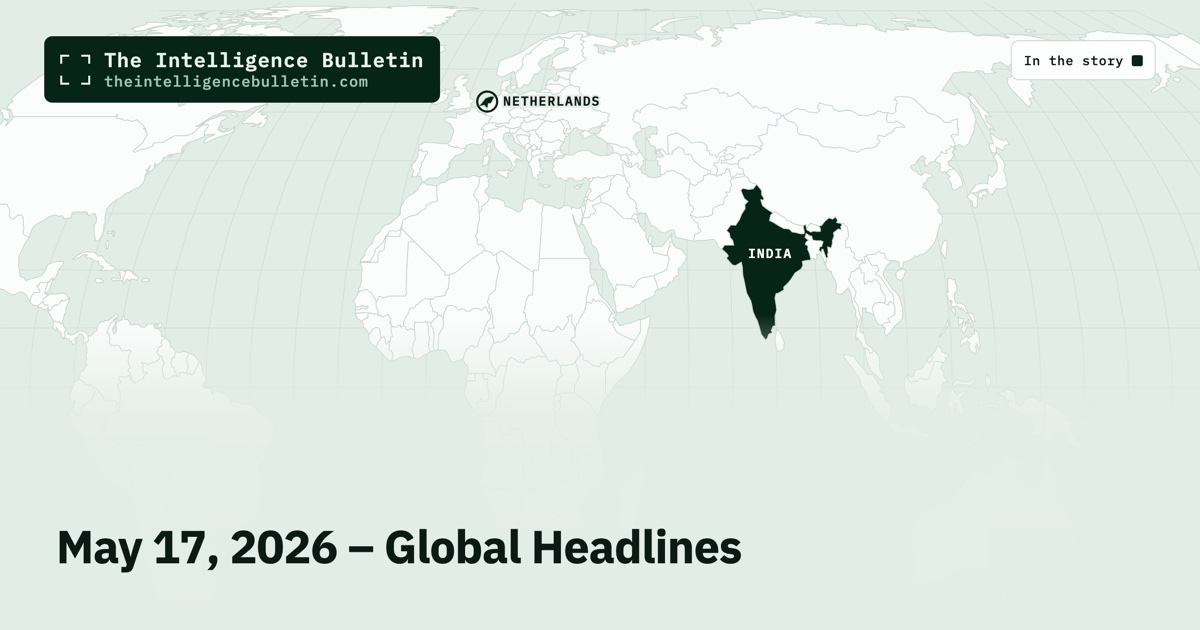
The most striking feature of coverage is how little the partnership upgrade itself is questioned. Indian outlets treat the elevation as a natural extension of existing economic ties, noting that the Netherlands already sits among India’s five largest investors and that the ASML-Tata deal simply formalises semiconductor ambitions long discussed in Delhi. This pragmatic tone contrasts with the single Marathi-language piece that folds the visit into warnings about global disorder and poverty, suggesting the domestic audience is being prepared for a more turbulent decade rather than celebrated for a diplomatic win. Russian Herald’s framing adds another layer by presenting the same agreements as evidence of multipolar technology cooperation that bypasses traditional Western gatekeepers. What none of the reports dwell on is the timing: the upgrade occurs while both capitals navigate U.S. export controls on advanced chips and while Europe seeks to diversify supply chains away from East Asia. The royal meeting with King Willem-Alexander receives only passing mention in one Indian regional paper, yet it quietly underscores the Netherlands’ preference for using monarchy as a low-friction channel for sensitive technology discussions. In short, the coverage reveals a shared assumption that strategic partnerships can be expanded on commercial terms even as the underlying technology competition intensifies.
2Venezuela Deports Alex Saab to US in Rare Cooperation Move
Venezuela’s decision to hand over Alex Saab reveals a pragmatic calculation inside the Maduro government that has gone largely unremarked in the coverage. El Carabobeño framed the move as the regime cynically invoking Saab’s Colombian citizenship to deflect domestic blame, a reading that fits its long-standing opposition stance yet still recorded the legal pretext the government itself offered. Yle, by contrast, treated the deportation as straightforward evidence of international legal pressure succeeding, reflecting Finland’s institutional focus on accountability mechanisms rather than Venezuelan politics. LiveMint highlighted the business angle of renewed U.S. engagement, consistent with an Indian outlet attuned to Global South governments weighing sanctions relief against domestic optics. Pulzo emphasized cross-border security fallout for Colombia, unsurprising given its proximity and history of managing Venezuelan migration and crime networks. Estado de Minas struck the most skeptical note, viewing the handover through the lens of Lula-era diplomacy that has long questioned unilateral U.S. sanctions. The shared factual core across these outlets—that Caracas chose to deliver a once-protected associate—suggests the Maduro inner circle now sees selective cooperation as a narrower but necessary survival tactic rather than a broader policy shift.
3Putin Eases Citizenship for Transnistria Residents
The decree lands at a telling moment, just days after Putin signaled that Russia’s war with Ukraine may be approaching its conclusion. Rather than framing the citizenship change as a routine administrative adjustment, outlets in the region immediately cast it as a deliberate extension of influence into a territory that has long served as a Russian foothold on NATO’s doorstep. ProTV in Moldova, operating in a country that still claims sovereignty over Transnistria, presents the move as direct encroachment on Chisinau’s authority, underscoring how easily Moscow can convert legal residency rules into political tools. Polish coverage from wiadomosci.wp.pl echoes this concern but sharpens it into geopolitical maneuvering, describing the decree as a fresh mechanism for the Kremlin to keep the region tethered even as battlefield dynamics shift. What stands out is the absence of any counter-narrative suggesting humanitarian or administrative motives; both sources treat the policy as self-evidently strategic, reflecting their proximity to the security consequences of a permanently Russian-leaning enclave inside Moldova. This convergence reveals how the story is read less as domestic Russian policy and more as the next chapter in managing frozen conflicts while the active war in Ukraine winds down.
4Trump Warns Taiwan Against Independence After Xi Meeting
Trump’s post-summit caution to Taiwan reveals how quickly personal diplomacy with Xi can recalibrate U.S. signaling on the island. Argentine coverage in arroyodiario.com.ar frames the episode through Latin America’s lens of great-power economic leverage, noting Trump’s remarks as a pragmatic concession that protects trade deals rather than ideological commitments. In contrast, acento.com.do relays BBC Mundo material that embeds the warning inside broader Western concerns over democratic norms and alliance credibility, treating the statement as a potential erosion of the status quo that has kept peace since 1949. Indian reporting from navbharattimes.indiatimes.com places the exchange inside South Asia’s competitive triangle, highlighting how any U.S. softening on Taiwan could free Beijing to intensify pressure along the Himalayas. Across these accounts the common thread is not disagreement over facts but recognition that Trump’s direct engagement with Xi has produced an immediate, public boundary on Taiwanese actions, echoing the May 14 praise for Xi ties that preceded the Beijing visit. This convergence suggests outlets view the episode less as rupture than as evidence that personal rapport now shapes red lines once managed through formal channels.
5India and UAE Sign Energy and Defence Pacts in Modi Visit
The joint emphasis on energy security and defence hardware reveals a pragmatic convergence between New Delhi and Abu Dhabi that goes beyond routine diplomatic pleasantries. Arab Herald presents the pacts as a Gulf initiative that strengthens regional leverage through closer Indian alignment, highlighting how Abu Dhabi National Oil Company commitments secure long-term export routes while defence clauses add military depth. Daily Excelsior, by contrast, centers the narrative on Modi’s personal diplomacy delivering concrete gains for Indian Strategic Petroleum Reserves Limited and Ministry of External Affairs priorities. Both accounts converge on the same core outcome without evident friction because the underlying interests align tightly: the UAE gains a reliable large-market partner outside traditional Western channels, while India locks in diversified crude supplies and technology transfers at a moment when global energy routes face repeated disruption. This shared framing underscores how energy and defence have become the default currency of India-Gulf relations, eclipsing older cultural or labour-migration themes that once dominated coverage. The absence of any critical notes on implementation timelines or pricing terms in either outlet further signals that the agreements are being treated as foundational rather than transactional, a structural choice that reflects the strategic weight both capitals now assign to the partnership.
That’s how the world told the story.
Get our daily open-source intelligence on world events in your inbox — one email a day, up to six stories.
Subscribe freeNo spam. One-click unsubscribe. See the latest email →