 AI-generated analysis published under the editorial responsibility of Rohit Sinnas. How it works →
1EU and 36 Countries Advance Special Tribunal for Ukraine Aggression
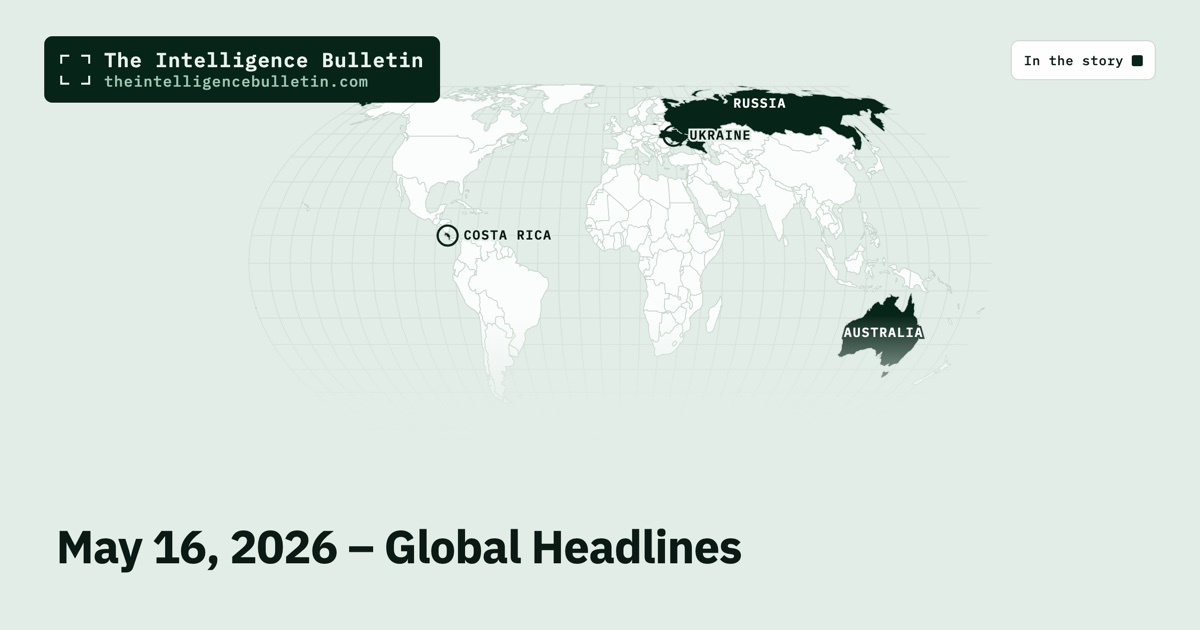
Coverage across the three outlets shows strong convergence on the procedural milestone and the breadth of international backing rather than disagreement or competing narratives. French, German and Croatian sources all present the Chișinău decision as a concrete step forward supported by 36 entities, underscoring its diplomatic weight without framing it as controversial. Minor framing differences appear along national lines: French reporting highlights France’s explicit participation, German coverage stresses the expanding coalition of supporters, and Croatian reporting centers the EU’s leading role. These patterns arise from each outlet’s audience base and institutional context within Europe, where proximity to the conflict and shared EU membership create consistent interest in accountability mechanisms. A reader limited to one language or country would miss only the small national emphases while still receiving the same core facts about the tribunal’s creation.
2Trump and Xi Conclude Beijing Summit Without Announced Deals
Coverage across the three outlets shows strong convergence on the factual outcome of the Beijing meeting with no announced deals, reflecting the event’s clear but limited results. Outlets uniformly noted the positive tone of the discussions alongside the absence of concrete agreements, indicating broad agreement on the summit as a procedural step rather than a breakthrough. Framing differences appear mainly in emphasis: Suriname’s outlet highlighted the bilateral success language while U.S. Spanish-language reporting stressed the limited tangible progress and key unresolved issues, and Peru’s coverage focused on the historical nature of the state visit itself. These patterns align with geographic distance and audience priorities, where distant English-language reporting in the Caribbean treats it as straightforward diplomacy and U.S.-based Spanish media tie it more closely to ongoing bilateral tensions familiar to their viewers. Readers limited to one language or region would miss how Latin American outlets link the event to regional trade implications while Caribbean coverage remains more neutral on outcomes. This coverage collectively shows a story whose core facts are undisputed across borders, revealing how even high-stakes U.S.-China meetings register as routine procedural updates outside the two countries directly involved.
3Modi Pledges India’s Support to UAE During Abu Dhabi Talks
Coverage across the three Indian outlets shows near-total convergence on the story’s core elements, reflecting the event’s straightforward diplomatic character with minimal interpretive divergence. All sources frame the meeting as a routine affirmation of strong India-UAE relations, emphasizing Modi’s verbal pledge of solidarity, expressions of gratitude for the Indian expatriate community, and the announcement of practical economic and defence agreements. This uniformity arises because the outlets share the same national audience base, institutional context within India’s English-language press ecosystem, and reliance on similar official briefings from the Prime Minister’s Office and Ministry of External Affairs. No meaningful omissions or contrasting emphases appear; differences are limited to headline word choice that highlights either the emotional pledge language or the concrete deal outcomes. The agreement itself signals how clear and low-controversy the bilateral event remains in Indian reporting. Readers limited to these sources receive a consistent picture of advancing strategic partnership but miss any potential regional Arab media framing that might stress UAE security priorities or Gulf economic diversification needs over India’s domestic political messaging.
4Israel Strikes Southern Lebanon as US Talks Enter Second Day
Coverage of the Israeli strikes in southern Lebanon shows strong convergence across the three outlets, with all framing the events as direct military responses tied to simultaneous US diplomatic efforts. The dominant pattern treats the strikes as routine updates within the broader Israel-Hezbollah conflict rather than escalatory developments, reflecting the clear factual sequence of displacement orders followed by airstrikes. This agreement across French- and English-language sources reveals an information environment where the basic chronology and actors remain undisputed, allowing outlets to prioritize factual reporting over interpretive divergence. Framing choices emphasize the timing with Washington talks without introducing additional regional context or historical backstory, likely due to the recency of the events and shared reliance on wire service reporting. Geographic and institutional factors produce minimal variation: Canadian outlets focus on bilateral security implications while the French regional source links the action explicitly to the negotiation timeline. A reader limited to one outlet would miss little substantive detail but would encounter slight differences in emphasis on Hezbollah’s role versus Israel’s operational statements. Collectively, the coverage illustrates how simultaneous diplomatic and military tracks in the Levant produce synchronized reporting that underscores the interdependence of battlefield actions and external mediation.
5Democratic Rep. Steve Cohen Drops Re-Election Bid After Tennessee Redistricting
Coverage across the three outlets converges on a single factual narrative with minimal variation in emphasis or framing. All sources present the announcement as a direct consequence of state-level redistricting by Republicans, noting Cohen’s conditional statement about possible court intervention. This uniformity indicates the event is treated as routine domestic U.S. electoral mechanics rather than a contested or interpretive story. Marketscreener.com and el-balad.com mirror the New York Post in sticking to the core facts of the announcement and the redistricting trigger, with no added regional context or speculation. The agreement reveals how clear-cut procedural developments in U.S. congressional districts generate little divergence even across outlets with different primary audiences. A reader limited to any single source would encounter essentially the same information without missing alternative angles or omitted details.
That’s how the world told the story.
Get our daily open-source intelligence on world events in your inbox — one email a day, up to six stories.
Subscribe freeNo spam. One-click unsubscribe. See the latest email →