 AI-generated analysis published under the editorial responsibility of Rohit Sinnas. How it works →
1China to Buy $17 Billion in US Farm Goods Annually
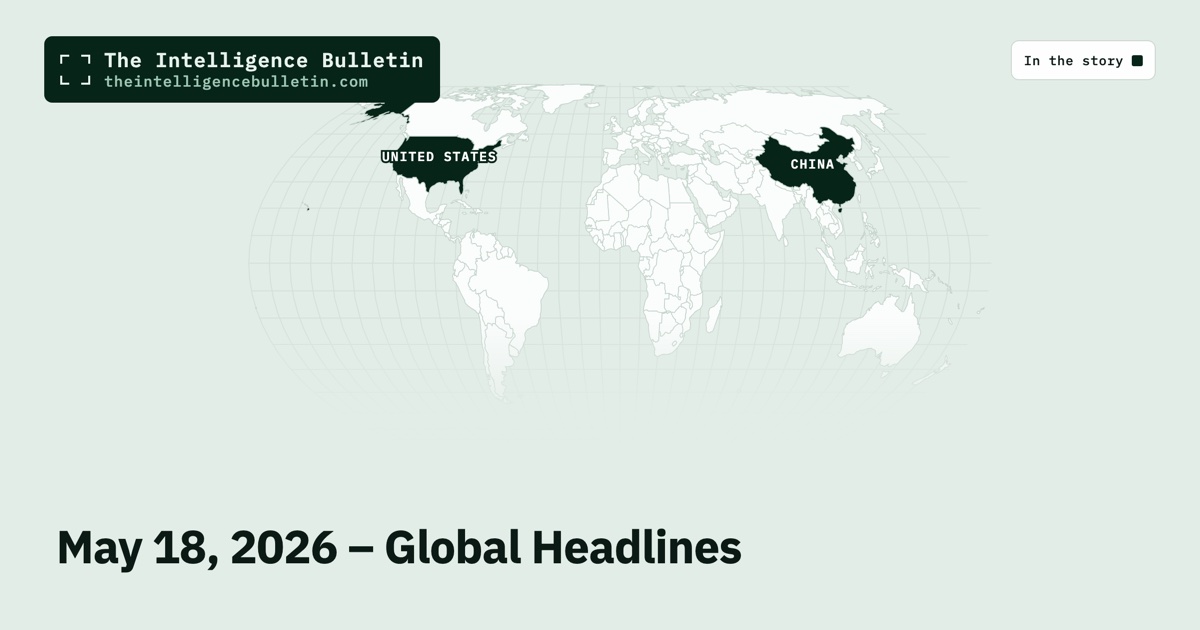
The announcement lands days after President Trump described his relationship with Xi Jinping as fantastic and signaled trade would dominate their upcoming meeting. What stands out is how uniformly the outlets treat the White House fact sheet as the authoritative record rather than probing Chinese confirmation or implementation details. Finance Yahoo frames the commitment as a straightforward export victory for American farmers, while Benzinga highlights the optics for the Trump administration’s negotiating record. South China Morning Post reports the same dollar figure and timeline but situates the purchases within a broader diplomatic exchange that includes reciprocal tariff relief. This convergence suggests the story’s core fact has hardened quickly across markets and regional lenses, revealing a shared journalistic reliance on the initial US disclosure even as Beijing’s Ministry of Commerce has yet to issue its own statement. The absence of Beijing-sourced pushback or caveats in the first 24 hours may indicate either rapid internal alignment or a deliberate pause while negotiators finalize the still-pending levy cuts.
2Taiwan’s Lai Rejects Security Sacrifices Amid Trump-Xi Arms Talks
Lai Ching-te’s blunt refusal to let Taiwan become bargaining collateral reveals how quickly the island’s fate can be pulled into the orbit of U.S.-China personal diplomacy, especially after Trump’s public praise of Xi Jinping just days earlier. Indian coverage through livemint.com situates the episode inside Quad calculations, treating Lai’s words as evidence that smaller Indo-Pacific states must assert their own red lines rather than wait for Washington to cut deals. Australian reporting on abc.net.au instead folds the story into alliance management, stressing that any U.S. arms transaction with Beijing risks eroding the very deterrence Australia relies upon across the Pacific. French public broadcaster la1ere.franceinfo.fr, writing from its Pacific edition, frames the same statement as a rebuke of transactional bilateralism, contrasting it with the multilateral guardrails Europe prefers. The convergence across these outlets is telling: none treats Lai’s declaration as routine domestic rhetoric. Instead each reads it as a structural warning that Taiwan’s security is now being tested inside a personal channel between two leaders whose last meeting produced no visible restraints on arms flows. That shared reading exposes how little room regional capitals feel they have left once Washington and Beijing begin trading concessions directly.
3Modi and Jetten Upgrade India-Netherlands Ties to Strategic Partnership
The most striking element is how Modi’s remarks on a ‘disastrous’ decade for the world land differently depending on the outlet. Loksatta frames the entire visit around those warnings and poverty risks, treating the partnership as secondary to India’s broader concerns. IndiaTVNews instead leads with Netherlands ranking among India’s top five investors and lists the MoUs as straightforward economic wins. RussiaHerald takes a third path, stressing Dutch praise for Modi and positioning the deal as a non-Western success in innovation and semiconductors. This split reveals more than editorial preference. Indian national outlets have institutional incentives to emphasize investment inflows during a strategic visit, while a regional Marathi paper can highlight global instability without the same pressure. Russian coverage, by contrast, uses the same facts to signal multipolar options for India. Since TIB reported the upgrade itself on May 17, the follow-on angles have moved from the announcement to these selective emphases, showing how quickly the story fragments along domestic priorities once the core event is confirmed.
4India Flags Attacks on Hormuz Shipping at UN Council
India chose the UN Economic and Social Council to voice alarm over attacks on shipping in the Strait of Hormuz just days after Washington rebuffed Tehran’s ceasefire overtures. All three Indian outlets carried essentially the same account of Harish’s remarks, underscoring that New Delhi views any disruption in the narrow waterway as an immediate threat to its oil imports and broader trade. Orissa Post placed the statement in a regional maritime-security frame, while The New Indian Express and India TV News stressed the legal principle of free navigation, yet none deviated from the core message delivered at UN headquarters. This uniformity across a regional daily, a national broadsheet and a television portal reveals how tightly coordinated the diplomatic signal has become inside India’s foreign-policy apparatus. The timing is not accidental: with Trump still publicly dismissive of Iranian proposals and with BRICS members watching energy-route stability, New Delhi is using the UN podium to register its red line without naming any single actor. The absence of counter-narratives in the coverage further indicates that, for now, Indian outlets see no domestic political gain in questioning the envoy’s line. Instead, the reporting quietly reinforces India’s long-standing doctrine that commercial traffic through Hormuz must remain sacrosanct, a position that aligns with its growing naval reach and its dependence on Gulf crude.
5Pope Leo XIV Forms Vatican Internal AI Study Group
The quiet establishment of a Vatican AI study group draws attention less for its immediate policy impact and more for what it signals about the new pope’s priorities amid accelerating global tech regulation. Dominican Republic outlet elnacional.com.do presents the decision through a Catholic lens rooted in developing-world concerns over faith and moral authority, framing AI oversight as an extension of traditional doctrine rather than innovation policy. In contrast lactualite.com from Quebec treats the announcement as a philosophical and regulatory development, reflecting Canada’s post-religious secular outlook that views the Vatican primarily as one actor among many shaping AI norms. The Santa Fe New Mexican links the group explicitly to the timing of Leo XIV’s forthcoming encyclical, underscoring an American focus on institutional process and the Vatican’s potential role in broader tech governance debates. These framings converge on the core fact of internal coordination yet diverge in emphasis: Latin American coverage stresses continuity with longstanding Church teaching on human dignity, Canadian reporting highlights procedural modernity, and U.S. wire copy situates the step within encyclical preparation. The absence of market sensitivity or geopolitical actors in the event data explains why outlets avoid speculation about immediate influence on companies like NVIDIA or EU regulators. Instead the coverage reveals a shared recognition that the Vatican’s move functions as a normative signal, arriving as governments and firms race to define AI guardrails. This consensus across ideologically distinct outlets suggests the story’s resonance lies in the Church’s enduring claim to ethical authority even in a field dominated by Silicon Valley and Brussels.
That’s how the world told the story.
Get our daily open-source intelligence on world events in your inbox — one email a day, up to six stories.
Subscribe freeNo spam. One-click unsubscribe. See the latest email →