One Story. Many Angles.
Coverage converges on Reuters facts; only tone and named actors differ across US, UK, Croatian and Russian outlets.
All four outlets rest on the identical Reuters dispatch detailing Adm. Brad Cooper’s July 28 letter and the Jordan phone-confiscation reports. Air Force Times delivers the plain operational-security facts. Daily Mail adds Trump’s name and calls the warning chilling. Dnevnik stresses how footage directly aids Iranian targeting. RIA Novosti frames it as Western media reporting without local stakes. The convergence shows the story’s core is uncontested open-source intelligence risk rather than routine force protection, yet the absence of any Iranian or Jordanian outlet leaves the adversary perspective and base-host reaction unvoiced in this pool.
Perspective Analysis
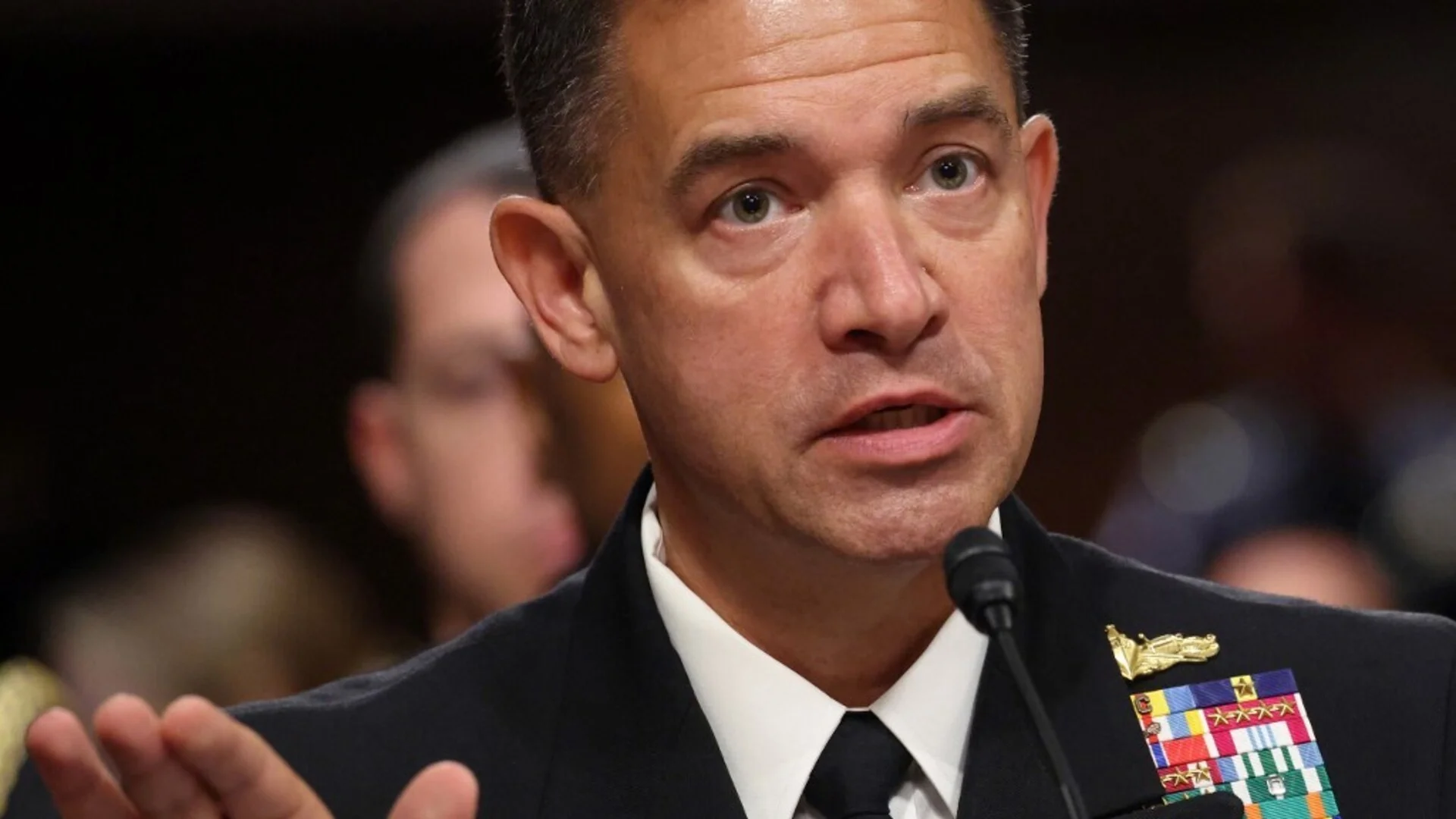
The top U.S. commander for the Middle East has told troops that videos from their cell phones, once posted online, let Iran judge in near real time whether its strikes on American bases succeeded or missed. Adm. Brad Cooper, head of U.S. Central Command, made the warning in a July 28 letter obtained by Reuters. He noted that Iran normally struggles to assess damage because of U.S. electronic jamming and other battlefield tactics. Without those countermeasures working perfectly against open-source material, Iranian forces receive free battle-damage assessments from news reports, social-media posts, and footage shot by service members themselves.
Cooper pointed to one concrete case. A video recorded on Meta smart glasses during an Iranian missile and drone attack on Muwaffaq Salti Air Base in Jordan on July 17 showed troops running for shelter and entering a bunker. The clip appeared on Instagram. Cooper wrote that such footage reveals exactly where and how personnel evacuated, information that lets Iran calibrate follow-on strikes. He added that detailed public lists of what was hit perform Iran’s battle-damage assessment for free. Any secondary wave of attacks enabled by that information, he said, carries a direct cost in American lives and in the safety of civilians in targeted Gulf countries. The letter called on troops to redouble operational-security efforts but did not spell out new rules at that stage.
Sources familiar with the matter told Reuters that in Jordan, already a frequent target of Iranian strikes, some troops have been notified that their phones will be confiscated in the coming days. A third source said the possibility is under consideration across the region because of the same security concerns. Rules on personal devices have long varied by unit and mission. Special-operations forces already lock phones away on sensitive tasks. What is new is the prospect of broader, preemptive seizure tied to real-time intelligence leaks in an ongoing conflict.
That conflict began on February 28. Eighteen U.S. troops have been killed and more than 600 wounded. Public support inside the United States stands at roughly one in three Americans. Families of deployed personnel already receive Iranian claims of successful strikes on bases across the Middle East; the added prospect of losing phone contact has increased their anxiety, according to the same sources. Officials have warned for years that fitness apps and other location-data services on commercial phones can be harvested by adversaries. Cooper’s letter now links that long-standing technical vulnerability to the immediate problem of strike assessment.
The measure, if carried out, changes the baseline assumption that troops in the theater can maintain routine contact with home while deployed. Many rely on phones for occasional messages that reassure families they are safe. Removing those devices adds friction to daily life in forward positions and signals that open-source intelligence has become a measurable factor in Iranian targeting cycles.
All four published accounts rest on the identical Reuters dispatch that first reported Cooper’s letter and the Jordan confiscation reports. They share the same core details: the July 28 date of the letter, the Meta-glasses video from the July 17 Jordan attack, the 18 deaths and 600-plus wounded, and the warning that public disclosures perform battle-damage assessment for Iran at no cost. Where the accounts differ is in the additional framing each outlet chose to attach to that shared material. One outlet inserted references to President Trump and described the general’s message as chilling while noting family unease. Another stressed the direct benefit to Iranian targeting and headlined the risk that footage helps the opponent. A third presented the development as Western media reporting on U.S. measures and supplied extra background on the conflict’s recent resumption after a June ceasefire collapsed. The fourth stayed closest to the original dispatch without those additions.
The convergence itself is the clearest signal. No outlet disputes the existence of the letter, the specific video example, the Jordan confiscation reports, or the mechanism by which open-source material aids Iranian assessment. The differences lie in tone and in which secondary elements each outlet chose to highlight, not in competing versions of what happened. Because every account traces back to the same Reuters reporting, none supplies an independent verification or contradiction. The absence of any Iranian or Jordanian outlet in the selected coverage leaves the receiving side’s perspective on the measure unrepresented here.
What to Watch
The Reuters-sourced account is the one closest to the operational record because it originates with the commander who issued the warning and with sources inside the affected commands. Outlets that add political references or dramatic adjectives layer interpretation on top of that record without altering its substance. The practical next step is likely implementation of phone restrictions at the highest-risk sites first, beginning with Jordan bases that have already been struck. That step will test whether the loss of routine personal communication measurably reduces the flow of useful imagery to Iranian planners. If the pattern of strikes continues, similar restrictions could spread to other locations in the theater. The episode shows how commercial devices and public platforms have become active variables in targeting decisions rather than background noise.
That’s how the world told the story.
Get tomorrow’s bulletin by email — one briefing, up to six stories.
Subscribe freeNo spam. One-click unsubscribe. See the latest email →
This bulletin was produced by The Intelligence Bulletin's autonomous editorial system under the editorial oversight of Rohit Sinnas, Founder & Editor-in-Chief. How it works →