One Story. Many Angles.
Asian outlets detail local rescue and diaspora safety; Western ones flag semiconductor supply risks.
Japanese and regional outlets zero in on the mechanics of recovery inside an earthquake-hardened nation still scarred by the 2016 Kumamoto disaster. Asahi details joint fire, police and SDF operations at the Aeon mall and Yatsushiro factory, Prime Minister Takaichi’s Tokyo briefings and the absence of nuclear-plant problems. Taipei Times records Taiwan’s foreign ministry confirming no nationals harmed and offering relief help, underscoring neighbor-to-neighbor preparedness. Vietnam News reports its embassy confirming 1,330 workers and students safe. Western coverage adds a different layer: Deutsche Welle calls the effort a ‘race against time’ and flags Sony and TSMC plants, while The Guardian notes evacuations at those same sites without deeper economic follow-through. The pattern shows Asia-Pacific media treating the quake as a domestic test of systems already in place; Western reports treat the same facts as a potential global supply-chain alert.
Perspective Analysis
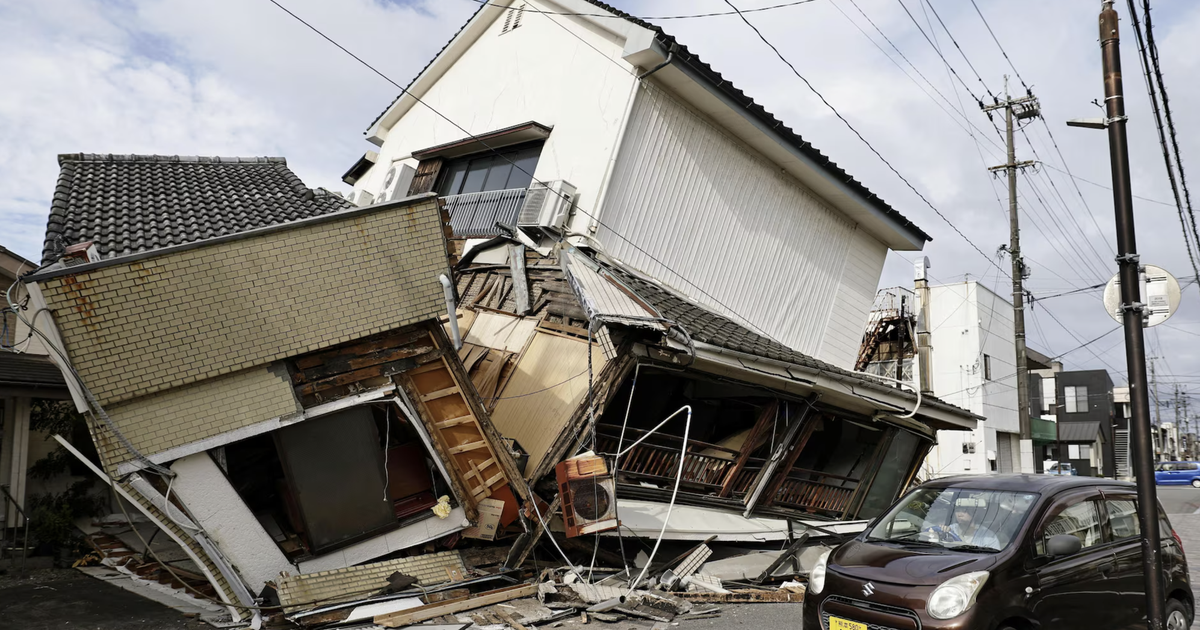
A magnitude 7.1 earthquake struck Kumamoto Prefecture on July 28, 2026, at 4:27 p.m. local time, killing at least 13 people and leaving others trapped under rubble at an Aeon shopping mall and a paper factory. The epicenter lay about 20 kilometers south of Kumamoto city on the southern island of Kyushu. Japanese authorities recorded the highest intensity of 7 on the national shindo scale, with the tremor felt across multiple prefectures and followed by more than 60 aftershocks, one of them magnitude 6.1.
Prime Minister Sanae Takaichi convened a disaster-response task force the same evening and told reporters that damage assessments were ongoing. She noted injuries, power outages, fires, collapsed buildings, and disrupted roads and bridges. By the next morning her government reported that rescuers had pulled eight people from the Aeon mall in Kashima town after an explosion tore away one side of the structure. Two women in their twenties died there; a third person was found in cardiopulmonary arrest. One additional death occurred in a separate building collapse near the epicenter. At the Nippon Paper Industries factory in Yatsushiro, a chimney collapsed and trapped eleven workers; two were later confirmed without vital signs. Hospitals in the region treated more than one hundred injured people, some with burns and fractures.
More than 300,000 residents received orders to evacuate, and by dawn on July 29 roughly 9,000 people had reached 506 designated centers across five prefectures. Kyushu Electric Power reported 45,000 to 48,000 households without electricity. Rail services, including bullet trains, halted, a train derailed at Yatsushiro station, and Kumamoto airport closed its runway before reopening later that night. Stone walls at the historic Kumamoto Castle sustained further damage on top of repairs still underway from the 2016 quakes that killed 273 people in the same region.
Rescue teams from fire departments, police, and the Self-Defense Forces concentrated on areas inside the mall where calls for help had been heard. The explosion followed the initial shaking; mall staff reported smelling gas before the blast, and investigators treated a possible gas leak as the leading explanation. At the paper factory, operations stopped immediately. Toyota suspended production at three Kyushu plants for safety checks and planned to resume the following day. Honda and Nippon Paper also halted work. Sony, Fujifilm, and TSMC evacuated employees from their facilities; TSMC later stated its site sustained no damage and began gradual resumption. Tokyo Electron suspended operations at its two Kumamoto plants through July 29. No irregularities appeared at nearby nuclear power stations, according to the Nuclear Regulation Authority.
The Japan Meteorological Agency warned residents to remain alert for strong aftershocks and landslides for roughly one week. Temperatures were forecast to reach 34 degrees Celsius the next day, raising heatstroke risks for those in evacuation centers. A brief tsunami advisory was issued and lifted within hours because the quake occurred inland.
Taiwan’s Ministry of Foreign Affairs reported that its office in Fukuoka had contacted all known Taiwanese nationals in the affected area and confirmed none were injured or required assistance. The ministry stated it stood ready to provide post-disaster relief if requested. Vietnam’s embassy in Tokyo contacted labor unions and companies employing about 1,330 Vietnamese workers and trainees in Kumamoto and nearby prefectures; none reported casualties or serious damage. Vietnamese students in the region likewise remained in contact with one another and confirmed their safety.
The accounts diverge most clearly on what the event reveals beyond immediate casualties and rescues. Deutsche Welle described the operation as a race against time and explicitly named Sony and TSMC plants among the industrial facilities at stake, framing the disruption in terms of global semiconductor supply. The Guardian noted evacuations at the same plants but did not develop the economic angle further. Asahi Shimbun provided the most detailed local sequence of rescue deployments, exact casualty figures from the mall and factory, and repeated assurances about nuclear facilities. Taipei Times recorded the Taiwanese foreign ministry’s statements on citizen welfare and the offer of assistance, along with comparisons to the 2016 disaster. Vietnam News limited its reporting to embassy confirmation that Vietnamese nationals were unharmed and made no reference to broader rescue operations or industrial impacts.
These differences are not contradictions on the facts themselves. Every source reported the same core sequence of the mall explosion, the factory collapse, the prime minister’s public statements, and the absence of nuclear problems. The divergence lies in emphasis once those facts are established. Japanese and Taiwanese reporting stays inside the mechanics of government coordination, military mobilization of 3,600 personnel and 20 aircraft, and neighbor-state diplomatic readiness. Vietnamese coverage stays inside the embassy’s consular checklist. Western European outlets add the observation that several of the halted factories produce components central to global electronics supply.
The Japanese account supplies the most complete operational picture of how a major economy with repeated seismic experience actually moves resources on the ground. It records joint command at the mall, specific evacuation-center counts, and the precise status of power restoration and rail suspension. Western reports correctly identify the semiconductor plants but do not contradict or add new operational details; they simply place the same verified shutdowns inside a supply-chain frame. The Taiwanese and Vietnamese pieces correctly document the absence of harm to their nationals and the diplomatic posture that follows, facts that do not appear in the other accounts but do not conflict with them.
What to Watch
The next phase will test whether the systems described in the Japanese reporting hold under aftershocks and summer heat. Factories that suspended operations will resume only after safety inspections; any prolonged delay at the semiconductor sites will register in global chip markets. Residents ordered to evacuate will decide whether to return or remain in centers once the immediate danger assessment is complete. The pattern of coverage already shows that readers relying solely on one national press will miss either the granular domestic command structure or the downstream economic exposure that follows from the same physical damage.
That’s how the world told the story.
Get tomorrow’s bulletin by email — one briefing, up to six stories.
Subscribe freeNo spam. One-click unsubscribe. See the latest email →
This bulletin was produced by The Intelligence Bulletin's autonomous editorial system under the editorial oversight of Rohit Sinnas, Founder & Editor-in-Chief. How it works →