One Story. Many Angles.
US reports celebrate bipartisan consensus; European accounts flag potential costs to EU energy imports.
The Senate’s 86-12 procedural vote on the Graham sanctions package reveals unusually broad US backing for tightening economic pressure on Russia exactly when Zelenskyy was in town to press for battlefield support and air defense. US outlets such as RFE/RL and EA WorldView stress the bipartisan consensus and the bill’s potential to cut Moscow’s war revenues more effectively than frontline moves, framing it as a tribute to Graham that pairs sanctions with ongoing Patriot talks. Kyiv Post ties the timing directly to Zelenskyy’s presence and the bill’s role as a lifeline for Ukraine’s defense industry. European reporting diverges in emphasis: RTÉ flags the tariff authority’s possible bite on EU energy buyers, while taz places the vote inside a wider Washington visit that also featured Netanyahu and notes Europe’s heavier lifting on Ukraine aid compared with shifting US priorities. The shared factual core across all five pieces is that the bill now targets the largest Russian energy customers to starve Putin’s finances, yet only the European sources surface the downstream risk to transatlantic energy flows.
Perspective Analysis
The US Senate voted 86 to 12 on July 28 to move forward with legislation that would authorize tariffs as high as 100 percent on the largest remaining buyers of Russian oil and gas. The measure, now called the Lindsey O. Graham Sanctioning Russia and Iran Act of 2026, targets the revenues that continue to finance Moscow’s war effort more than four years after the full-scale invasion of Ukraine. It also expands sanctions on Russian officials, oligarchs, banks, financial institutions and the vessels in the so-called shadow fleet that evade existing restrictions. The vote occurred on the same day as the funeral of Senator Lindsey Graham, the bill’s chief architect, who died on July 11, and while Ukrainian President Volodymyr Zelenskyy was in Washington for that service and meetings with US officials.
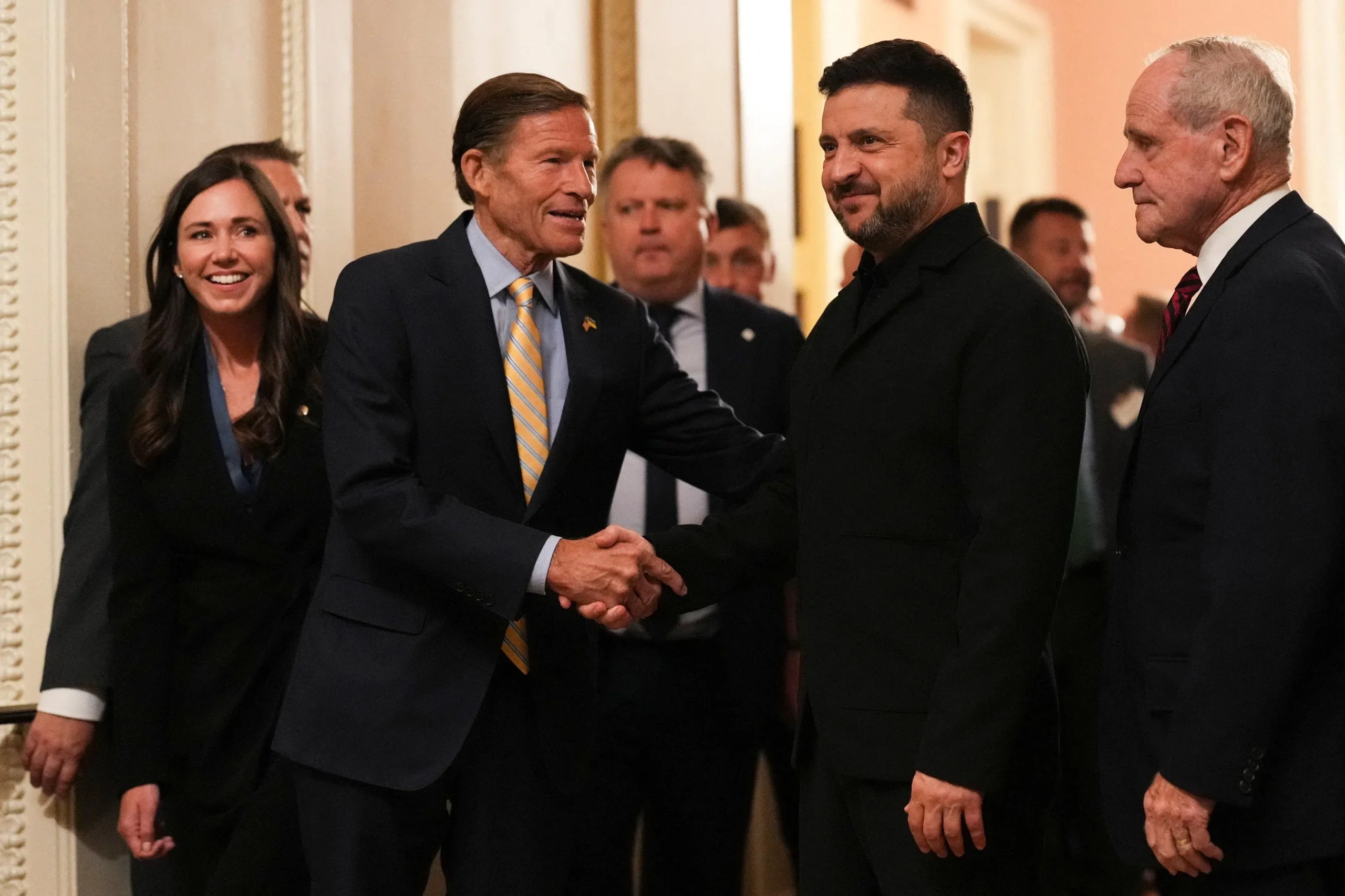
Zelenskyy attended the closed-door session with more than 60 senators before watching the procedural vote from the chamber. He described the legislation as important both for the money it would deny Russia and for the signal it would send to Europe and to Ukraine itself. Earlier that day he met President Donald Trump in the Oval Office and discussed licenses for domestic production of Patriot air-defense interceptors along with other ideas to strengthen Ukraine’s defense industry. Trump had backed the sanctions package once provisions extending sanctions authority against Iran through 2031 were added. The revised bill gives the president authority to impose the steep tariffs on the five largest importers of Russian crude or natural gas and on the top five countries that help Russia evade energy sanctions. China and India are repeatedly identified as the principal targets. A separate provision would allow duties up to 500 percent on goods imported directly from Russia.
The Senate action remains only a first procedural hurdle. Lawmakers must still clear additional votes on the measure itself, after which the House would need to act. The House is not scheduled to resume regular business until September. Senators from both parties presented the 86-12 tally as evidence of rare bipartisan agreement that economic pressure remains one of the strongest available tools against Moscow. Republican Jim Risch, chairman of the Senate Foreign Relations Committee, said the legislation had been negotiated with the White House and that both Zelenskyy and Finnish President Alexander Stubb told senators it could have an impact equal to or greater than developments on the battlefield. Democratic Senator Richard Blumenthal called the vote a solid demonstration that Ukraine’s fight is America’s fight and warned Putin that his days of war are numbered. Other senators, including Jeanne Shaheen and Katie Britt, framed the step as both a tribute to Graham and a practical effort to stop foreign purchases of Russian energy from funding the war machine.
The legislation narrows earlier drafts that would have applied even steeper tariffs more broadly. Backers said the current text is crafted to avoid punishing US allies while concentrating pressure on the main purchasers that still generate revenue for Moscow. Recent US tariffs on India were cited as evidence that the approach can reduce purchases. At the same time, some Democrats have expressed concern that the broad tariff authority granted to the president could raise costs for American consumers and affect trading partners that still rely in part on Russian energy supplies. Representative Gregory Meeks warned that the bill functions more as backdoor tariff authority than as a straightforward sanctions measure.
European reporting on the same events notes the same core provisions but places greater weight on the downstream consequences for energy buyers that include EU member states. The tariff language leaves the president discretion to adjust or lift the duties depending on whether targeted countries reduce their Russian energy purchases. This flexibility is presented as carrying risks for European energy security at a time when the continent has already worked to diversify away from Russian supplies. Coverage from Germany situates the Senate vote inside Zelenskyy’s wider Washington schedule, which also included a meeting with Israeli Prime Minister Benjamin Netanyahu, and observes that Europe continues to supply the bulk of Ukraine’s financial and military assistance packages even as US policy toward the conflict shows signs of recalibration.
The same sources record that Zelenskyy used his Senate meeting to stress Ukraine’s urgent need for additional air-defense systems capable of countering ballistic missiles, alongside expanded production of weapons to defeat Iranian-made Shahed drones and Russian unmanned aircraft. He met separately with representatives of Lockheed Martin, one of the manufacturers of the Patriot system, to discuss joint production possibilities. These military discussions occurred against the backdrop of the sanctions vote and were presented as complementary tracks: one aimed at cutting Russian funding and the other at strengthening Ukraine’s own defensive capacity.
Coverage across the outlets converges on the factual sequence and on the bill’s stated purpose of depriving Moscow of energy revenues. The 86-12 margin, the timing with Graham’s funeral, the addition of Iran provisions, the identification of China and India as primary targets, and Zelenskyy’s presence are reported consistently. No account disputes that the legislation still faces further Senate and House steps or that the tariff authority is discretionary rather than automatic. Where the accounts differ is in the relative prominence given to potential effects on European energy costs versus the domestic political significance of the bipartisan tally. Reports from Ireland and Germany explicitly flag the possibility that tariffs could reach EU trading partners and note Democratic reservations on that point. US-based accounts give more space to senators’ statements that the measure represents a strategic escalation capable of influencing negotiations and to the procedural momentum it creates ahead of the House recess.
What to Watch
The European emphasis tracks the bill text itself, which grants the president unilateral authority over tariffs that could be applied to any of the listed major purchasers, including countries inside or aligned with the EU. The US emphasis tracks the actual vote count and the repeated bipartisan statements that the legislation honors Graham while advancing a shared goal of increasing the economic cost of Russia’s campaign. Both sets of observations are grounded in the same legislative language and the same public remarks by senators and Zelenskyy. The next concrete development will be whether the measure clears its remaining Senate hurdles before the August recess and whether House leadership schedules it promptly in September. If it reaches the president’s desk in its current form, the discretionary tariff power it creates will determine how sharply it affects both Russian energy income and the energy costs faced by major purchasers outside Russia.
That’s how the world told the story.
Get tomorrow’s bulletin by email — one briefing, up to six stories.
Subscribe freeNo spam. One-click unsubscribe. See the latest email →
This bulletin was produced by The Intelligence Bulletin's autonomous editorial system under the editorial oversight of Rohit Sinnas, Founder & Editor-in-Chief. How it works →