 AI-generated analysis published under the editorial responsibility of Rohit Sinnas. How it works →
Press quoted
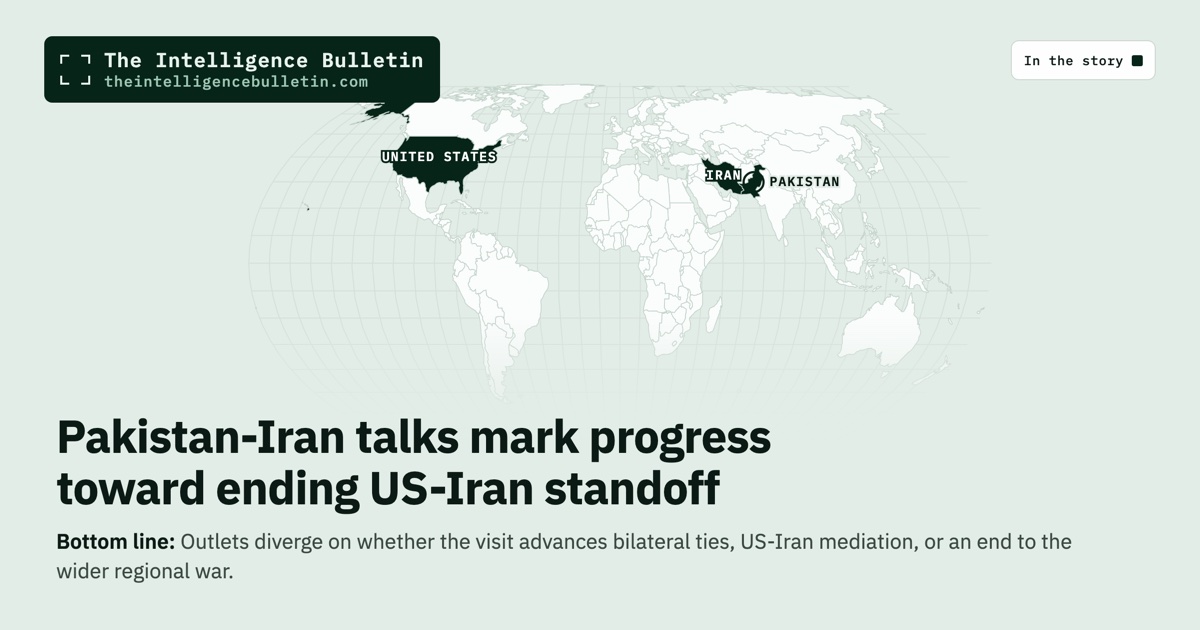
Outlets diverge on whether the visit advances bilateral ties, US-Iran mediation, or an end to the wider regional war.
The same Pakistani delegation visit produces noticeably different emphases once it crosses borders. Pakistani reporting centers the bilateral exchange and Naqvi’s positive assessment of direct talks with Pezeshkian on the Islamabad MoU. Iranian state coverage quotes the identical statements but immediately pairs them with Pezeshkian’s warning that the United States must abandon coercion, positioning the visit as a check on Washington. Turkish accounts add an Iranian parliamentarian’s claim that Munir carried a US message urging return to the MoU, explicitly linking the progress to ending the broader Mideast war. Wire-based Gulf and Israeli pieces stay close to the Pakistani quote while embedding it in ongoing US sanctions and naval posture. The convergence on the phrase “significant progress” is therefore real, yet each outlet’s surrounding context reveals whether the story is told as bilateral diplomacy, US-Iran mediation, or part of a larger conflict. No outlet contradicts the core claim; the variation lies in what each chooses to foreground around it.
Full analysis
Pakistani Interior Minister Mohsin Naqvi and Army Chief Field Marshal Asim Munir arrived in Tehran on August 24 for a day of meetings with Iranian leaders. The pair met President Masoud Pezeshkian along with Supreme National Security Council representative Mohsen Rezaei, Parliament Speaker Mohammad Bagher Ghalibaf, Foreign Minister Abbas Araghchi, and Interior Minister Eskandar Momeni. After the sessions, Naqvi posted on X that the discussions had produced significant progress and ended on a highly positive note. He said the talks covered the US-Iran conflict, tensions across the Middle East, and the steps both sides needed to restore the Islamabad Memorandum of Understanding.
A separate statement from Pakistan’s Inter-Services Public Relations described the exchanges as comprehensive. It said the two sides examined measures to prevent further escalation, reopen the Strait of Hormuz, and reach an expedited end to the conflict through negotiated settlement. The Iranian side, according to the statement, expressed appreciation for Pakistan’s constructive role in facilitating dialogue and de-escalation. The visit formed part of Islamabad’s broader diplomatic effort to break the stalemate between Washington and Tehran.
The conflict itself dates to February 28. A 14-point Islamabad MoU signed on June 17 under Pakistani mediation had called for an immediate halt to hostilities, reopening of the Hormuz strait, and follow-on negotiations toward a permanent settlement within 60 days. That framework collapsed after the United States maintained a naval blockade and resumed airstrikes on Iranian southern shores while Tehran suspended its own obligations, accusing Washington of bad faith. Iran has since warned that continued economic pressure would lead it to block all oil exports from the Persian Gulf. Pakistan, along with Qatar and Oman, has continued shuttle efforts to revive the June accord.
Iranian state media carried Naqvi’s statements but placed them alongside comments from Pezeshkian. The Iranian president told the Pakistani visitors that the United States must correct its tone and abandon reliance on coercion and bullying, because such methods only complicate any implementation process. He added that Washington remains legally and morally obliged to honor its international commitments. Iranian officials described the Pakistani army chief’s visit as highly productive and said it had already yielded significant diplomatic achievements whose results would become apparent soon.
One Turkish account added a further detail from an Iranian parliamentarian. Abbas Golrou, chairman of the parliament’s Foreign Relations Committee, told the semi-official ISNA news agency that Munir had conveyed a message from the United States urging Iran to return to the Islamabad memorandum and revive the stalled political process. The same account noted that Munir had spoken with US President Donald Trump before traveling to Tehran. It also recorded that the White House and State Department offered no immediate comment on the visit when contacted outside business hours.
Wire reports carried in Gulf and Israeli outlets stayed closer to the Pakistani statements while embedding them in the wider economic context. They recorded that Trump had warned the previous week of severe economic consequences for any country providing any type of lifeline to Iran. In response, Iranian officials stated they had prepared a two-year plan to manage the pressure. US Treasury Secretary Scott Bessent had announced an “Operation Economic Outcast” campaign targeting Iranian petroleum, transportation, banking, shipping, aviation, digital assets, technology, and gold sectors, with secondary sanctions possible against third parties that continued facilitating Iranian economic activity.
The accounts converge on the central claim that Naqvi described the Tehran meetings as having produced significant progress toward restoring the Islamabad MoU and addressing the Hormuz standoff. Five separate outlets recorded that assessment from Naqvi’s X post and the accompanying ISPR release. They also agree that the talks explicitly addressed preventing escalation, reopening Hormuz, and pursuing a negotiated settlement. No published piece contradicts either point.
The surrounding framing nevertheless shifts by outlet. The Pakistani account centers the bilateral exchange between Naqvi, Munir, and Pezeshkian and presents the outcome as direct progress on the MoU and regional stability. Iranian coverage quotes the same Pakistani language but immediately pairs it with Pezeshkian’s warning to Washington, presenting the visit as evidence that outside pressure can be countered through continued resistance. The Turkish report introduces the claim that Munir carried an explicit US message and situates the entire episode inside the larger US-Israeli military campaign against Iran. Wire pieces in Oman and Israel report the Pakistani statements with little added interpretation while placing them next to separate items on US sanctions and naval posture.
These differences do not alter the corroborated record of what Naqvi said or what the ISPR statement contained. They do show how the same set of meetings is positioned differently depending on the national vantage. The single additional claim that Munir delivered a US message appears only in the Turkish account citing the Iranian parliamentarian. The Pezeshkian warning against coercion appears only in the Iranian state account. Both remain unattested in the other independent reporting chains examined here.
What to Watch
The most reliable spine of the story therefore rests on the points carried across multiple independent chains: Naqvi’s public assessment of progress and the ISPR description of the topics discussed. Those elements draw directly from on-record Pakistani statements and receive consistent repetition. The additional Iranian and Turkish details supply context that a reader of only one outlet would miss, yet they rest on narrower sourcing within the set examined. Whether the visit produces further movement on the MoU or the Hormuz issue will depend on follow-up contacts that have not yet been reported. The episode illustrates how a single diplomatic trip can be absorbed into competing national narratives without any of those narratives disputing the surface facts of the meetings themselves.
That’s how the world told the story.
Get our daily open-source intelligence on world events in your inbox — one email a day, up to six stories.
Subscribe freeNo spam. One-click unsubscribe. See the latest email →