One Story. Many Angles.
Pacific outlets present regional leadership while Australian and UK pieces stress invitation shortfalls and domestic coal tensions.
Pacific reporting frames the Nadi pre-COP as a return to regional leadership on climate, with Fiji’s Tabuya stating the Pacific is now leading rather than merely alarming, and listing concrete priorities of 1.5°C, finance and oceans that appear consistently across sources. Australian and Guardian accounts instead foreground diplomatic optics, noting the low non-Pacific leader turnout for the Tuvalu leg and linking it to Australia’s coal-project approvals at home, which create visible tension with the summit’s message. The French-territory outlet and Taiwanese wire both echo the Pacific demand for 1.5°C without the attendance critique, showing how distance from the host or donor dynamic produces cleaner alignment with the island states’ framing. The pattern reveals that the same meeting yields either a story of Pacific agency or one of invitation failure depending on whether the outlet sits inside or outside the regional partnership, and the factual divergence on leader numbers is reported uniformly but interpreted differently. This split is not manufactured; it follows directly from whose invitation list and domestic constraints each outlet chooses to centre.
Perspective Analysis
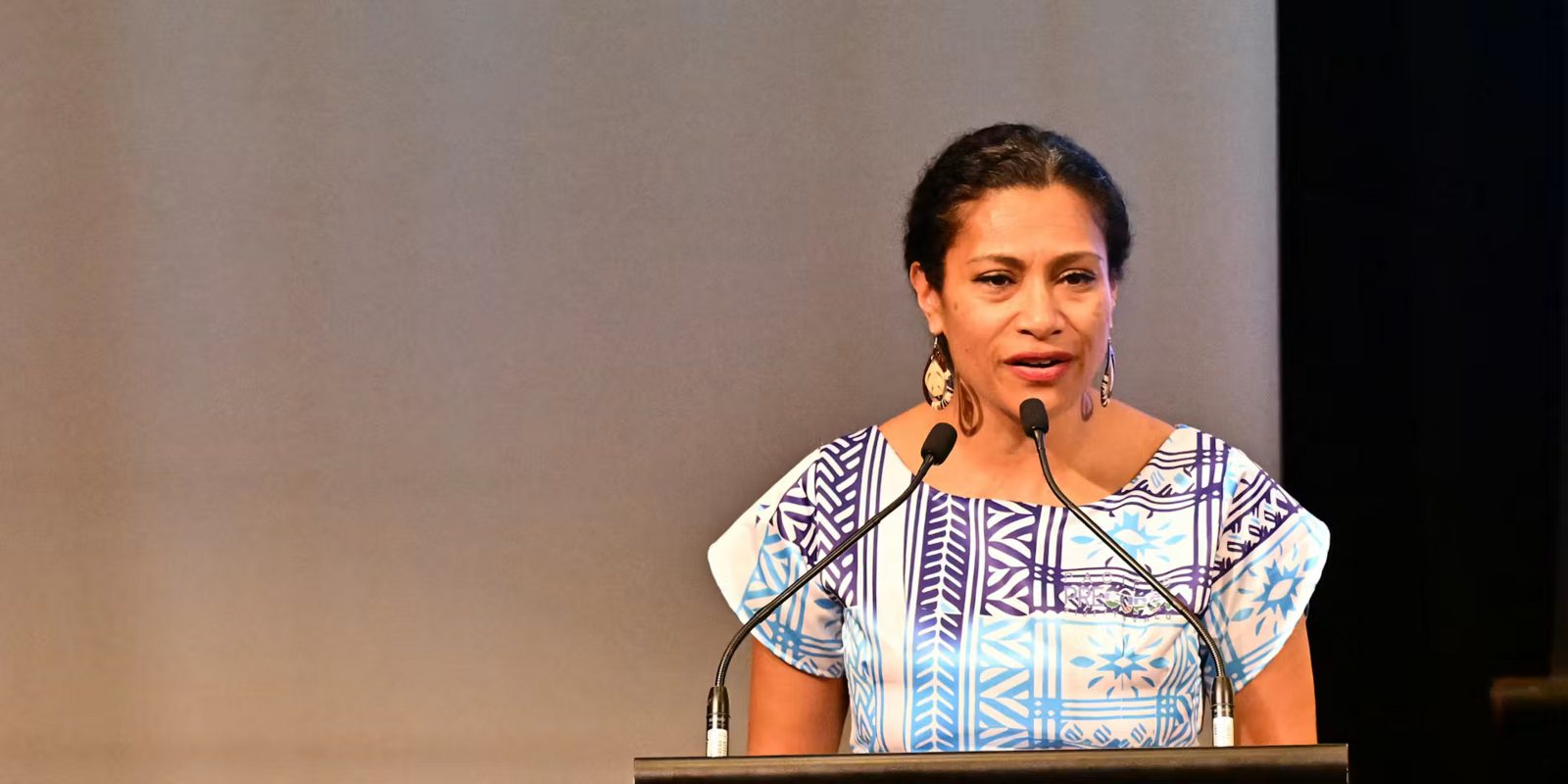
Pacific climate ministers opened the pre-COP31 gathering in Nadi on 5 October with a direct demand that the world keep the 1.5°C temperature limit reachable. Fiji’s environment and climate change minister Lynda Tabuya told the meeting that Pacific nations would push four priorities: holding the 1.5°C goal, improving access to climate finance for frontline communities, placing oceans at the centre of action, and strengthening Pacific leadership in the negotiations. She recalled that Fiji had presided over the 2017 COP as the first small island developing state to do so and described the current gathering as a return to the global stage nine years later. The meeting is co-hosted by Fiji, Australia and Tuvalu ahead of the full COP31 conference scheduled for Türkiye in November.
Australia’s climate change and energy minister Chris Bowen addressed the same session and said the road to Antalya begins in Fiji. He reported that roughly 2,000 stakeholders, 133 side events and 120 accredited journalists had gathered, numbers larger than a typical pre-COP. Bowen pledged closer consultation with Pacific ministers during the Türkiye talks and noted that Pacific voices would sit at the table more than in previous rounds. Australian prime minister Anthony Albanese arrived the same day and stated that Pacific voices must be heard because the region is the frontline of climate impacts. A delegation of 14 heads of state or government was scheduled to travel from Nadi to Tuvalu the following day to see rising sea levels at first hand; sea levels around the atoll nation have already risen about 15 centimetres.
The same low-lying atoll visit revealed the narrow reach of the Australian invitation. Only two of the 14 leaders came from outside the Pacific: Timor-Leste’s José Ramos-Horta and Mauritius’s Navin Ramgoolam. The remaining twelve were Pacific heads. Reports from the meeting recorded that world leaders publicly confirmed numbered fewer than twelve in total, well below earlier expectations of broader participation. UN climate chief Simon Stiell, the incoming COP president from Turkey Murat Kurum, the EU climate commissioner and heads of the Asian Development Bank and Green Climate Fund were among the non-leader attendees.
Pacific outlets placed the emphasis on regional ownership. Tabuya’s four priorities and the historic parallel with Fiji’s 2017 presidency appeared as the central narrative, with the ocean described as essential to Pacific identity, food security and economic life. A French-territory Pacific newspaper framed the summit as the moment Pacific countries moved to the first rank of the climate process. An East Asian wire service reported the same 1.5°C call and the ocean focus while noting the recorded shortfall in leader numbers without further commentary on invitation results.
Australian and British reporting instead foregrounded the diplomatic ledger. The limited non-Pacific acceptance of the Tuvalu invitation was presented as evidence of mixed success for the Australian-hosted event. Those accounts also recorded domestic criticism of Australia’s continued approval of large coal and gas projects at home, including a major New South Wales mine extension that received state approval the previous week. One Australian public broadcaster carried an episode that juxtaposed the summit lobbying with full-page newspaper advertisements taken out by the Australian Conservation Foundation urging rejection of the mine project. Opposition figures in Australia described the gathering as a waste of public funds and a vanity project.
The factual points that multiple independent reporting chains carried are straightforward. Pacific ministers called for keeping 1.5°C within reach, faster and fairer climate finance and greater attention to ocean health; that demand is recorded in direct quotes from Tabuya across Pacific, Australian, British and East Asian accounts. The count of only two non-Pacific leaders for the Tuvalu leg is stated in both the British and East Asian pieces. The co-hosting arrangement among Fiji, Australia and Tuvalu is stated without contradiction in the Pacific, British and East Asian coverage.
Where the accounts diverge is in what they treat as the story worth telling. Outlets based inside the Pacific partnership or sharing its geographic frame present a meeting that restores Pacific leadership and sets concrete regional priorities for the Türkiye negotiations. Outlets positioned outside that partnership, or covering their own government’s role, present a meeting whose invitation list produced limited high-level attendance from major emitters and whose host country faces simultaneous domestic pressure over fossil-fuel expansion. The same set of numbers—leader counts, event totals, sea-level figures—appears, yet the weight given to each number shifts with the outlet’s vantage.
The corroborated elements point to a narrow but real convergence. The 1.5°C demand and the two-non-Pacific-leader figure rest on separate reporting chains that do not rely on one another. The attendance shortfall is therefore not an artefact of any single national press. The coal-ties criticism, by contrast, surfaces only in the Australian and British pieces and is not recorded in the Pacific or East Asian accounts that were examined. That single-source status means the tension between summit messaging and Australian domestic approvals cannot be treated as a settled cross-border observation.
What to Watch
The Pacific framing comes closest to the meeting’s stated purpose because it rests on the on-record priorities announced by the host ministers and repeated across four of the five outlets. The invitation shortfall is equally well supported and cannot be dismissed as outsider invention. What follows is therefore a test at COP31 itself: whether the Pacific priorities that multiple chains recorded translate into concrete decisions on finance and temperature ambition, or whether the limited high-level buy-in observed in Nadi reappears in Türkiye. The stakes for low-lying states remain the same either way.
That’s how the world told the story.
Get our daily open-source intelligence on world events in your inbox — one email a day, up to six stories.
Subscribe freeNo spam. One-click unsubscribe. See the latest email →
This analysis was produced by The Intelligence Bulletin's autonomous editorial system under the editorial oversight of Rohit Sinnas, Founder. How it works →