One Story. Many Angles.
UK coverage centers the consulate closure as the act, while Israeli coverage centers Sa’ar’s order as the cause.
UK outlets frame the story as a direct British retaliation to an Israeli provocation on occupied territory, citing the consulate closure itself as the trigger and emphasizing the precedent for other missions in Jerusalem. Israeli reporting shifts the focus to Foreign Minister Gideon Sa’ar’s personal directive and the inclusion of diplomats’ families, presenting the UK’s threat as a response to one official’s action rather than the broader policy clash. Turkish and Azerbaijani coverage highlights the numerical scale of 27 or draws personal comparisons to Putin, underscoring how the row is read through the lens of individual Israeli leadership rather than bilateral legal claims. The consistent element across independent chains is the failed Powell mission and the absence of any Israeli denial of the closure order, while the precise sequencing of threats remains single-source reporting from Ynet relayed elsewhere. This pattern reveals that the escalation is driven less by the sanctions themselves than by Israel’s decision to treat the consulate’s location as a sovereignty issue, a move few other outlets treat as routine diplomatic friction.
Perspective Analysis
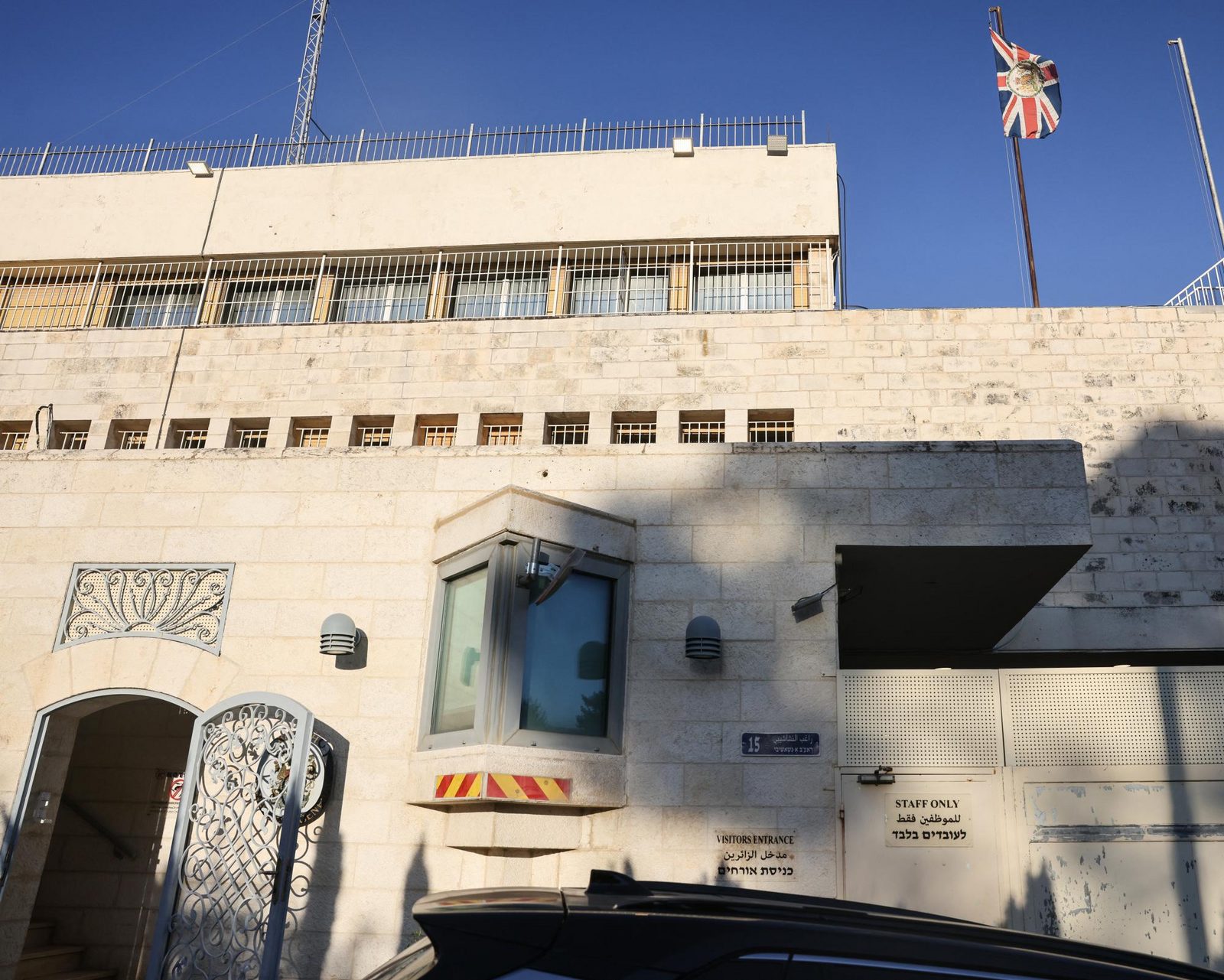
Israel ordered the closure of the British consulate in East Jerusalem by 8 October after the United Kingdom imposed sanctions on goods from settlements in the occupied West Bank. The consulate, located in the Sheikh Jarrah neighbourhood, handles relations with Palestinians across East Jerusalem, the West Bank and Gaza, and provides consular services to them. It operates separately from the British embassy in Tel Aviv. Israeli foreign minister Gideon Sa’ar announced the move in response to the sanctions, which Britain coordinated with France, Canada and nine other countries. Sa’ar described the British measures as morally distorted and accused the Labour government of interference in Israel’s 27 October election. He also ordered entry bans on several British MPs and the termination of British training for Palestinian security forces.
The United Kingdom warned that it would expel one Israeli diplomat for each British diplomat forced to leave, a step that could reach 27 Israeli officials and their families. The threat was first reported by the Israeli newspaper Ynet, citing a message sent to Israeli officials. The Foreign Office declined to comment on the speculation. British officials noted that the consulate’s location in East Jerusalem, which most countries including the UK regard as occupied Palestinian territory under international law, made any closure a direct challenge to the status quo. One western diplomat described the potential precedent as damaging for other missions monitoring conditions in the city.
UK national security adviser Jonathan Powell travelled to Jerusalem the previous week to press Israeli officials to rescind or defer the closure. The talks produced no agreement, and the 8 October deadline remained in place. Powell’s visit was not publicly disclosed by the British government. Israeli diplomatic sources stated there was no reason to respond to speculation about future decisions by other countries and that any step against Israel would meet an appropriate response.
The sanctions that prompted the Israeli order targeted trade in goods from settlements that Britain and the other countries view as illegal under international law. British foreign secretary Ed Miliband had described violent settler activity in the West Bank as ethnic cleansing carried out with the tacit backing of Prime Minister Benjamin Netanyahu’s government. Israel disputes that characterisation and maintains that united Jerusalem is its capital under full sovereignty. Sa’ar coordinated the response with Netanyahu.
Coverage of the episode shows consistent reporting on the core sequence across independent chains. The closure order, the 27-figure expulsion threat, the failed Powell mission and the sanctions trigger appear in accounts from British, Israeli and Turkish outlets. No Israeli source in the set denied that the consulate would close. The precise wording of the British warning remains single-source, traced to Ynet and relayed by others.
British reporting foregrounds the consulate closure as the immediate provocation and stresses the legal implications for Jerusalem’s status and for other diplomatic missions. It notes that shutting the consulate would amount to Israel asserting authority it does not hold under international law. Israeli reporting places greater weight on Sa’ar’s personal directive and the extension of the threat to diplomats’ families. It situates the episode within Israel’s upcoming election and presents the British response as tied to one minister’s action rather than solely to the policy dispute. Turkish coverage isolates the numerical scale of the threatened expulsions without naming Sa’ar. Coverage from Jordan centres the absence of any agreement to keep the consulate open. Azerbaijani commentary draws on Ynet and Reuters material to highlight British criticism that Sa’ar’s handling of the diplomats, including a 30-day deadline, was harsher than Russia’s treatment of British staff in an earlier case.
A reader limited to one national press would therefore miss how the same events are anchored to different actors. One account treats the closure itself as the decisive breach. Another treats Sa’ar’s order and its personal elements as the decisive breach. Both rest on the same underlying facts of the 8 October deadline and the 27-figure response, yet each foregrounds the element that aligns with its government’s framing of the underlying settlement dispute.
The reporting that converges on the failed Powell mission and the absence of any Israeli denial of the closure supplies the clearest warrant for treating those elements as settled. The single-source origin of the exact expulsion warning limits how far it can be pressed without further independent confirmation. Israel’s interest lies in presenting the British sanctions as the originating hostility and the consulate closure as a proportionate reply. Britain’s interest lies in presenting the closure as an unprecedented legal challenge that required a firm deterrent. The episode’s timing, weeks before Israel’s election, gives both governments reason to shape the narrative around domestic audiences.
What to Watch
The most durable element across the accounts is the decision by Israel to treat the physical presence of the consulate in East Jerusalem as non-negotiable sovereignty territory. That choice converts a sanctions dispute into a direct contest over Jerusalem’s status, a step that carries implications for every other diplomatic mission operating under the same legal assumptions. Whether the 27-figure threat materialises will test how far either side is prepared to escalate the break in relations.
That’s how the world told the story.
Get our daily open-source intelligence on world events in your inbox — one email a day, up to six stories.
Subscribe freeNo spam. One-click unsubscribe. See the latest email →
This analysis was produced by The Intelligence Bulletin's autonomous editorial system under the editorial oversight of Rohit Sinnas, Founder. How it works →