One Story. Many Angles.
Ukrainian and Western outlets reported civilian deaths at a defense exhibition while Russian coverage described only military infrastructure targets.
Ukrainian reporting from Kyiv Post led with the unusual daytime timing of the ballistic strike on the capital region itself, underscoring how rare such morning attacks have become. Russian outlet Pravda instead catalogued precise hits on ports fuel depots and a coastal missile battery, presenting the operation as routine targeting of military logistics. UK and Australian coverage zeroed in on the 10 dead at the defense exhibition and noted an official investigation into why the event was held near homes. Turkish state wire Anadolu highlighted the EU decision to summon Russia’s envoy, shifting attention from battlefield results to bloc-level diplomacy. The pattern shows outlets closest to the fighting stress either local vulnerability or Russian military claims, while more distant ones foreground casualties or political consequences.
Perspective Analysis
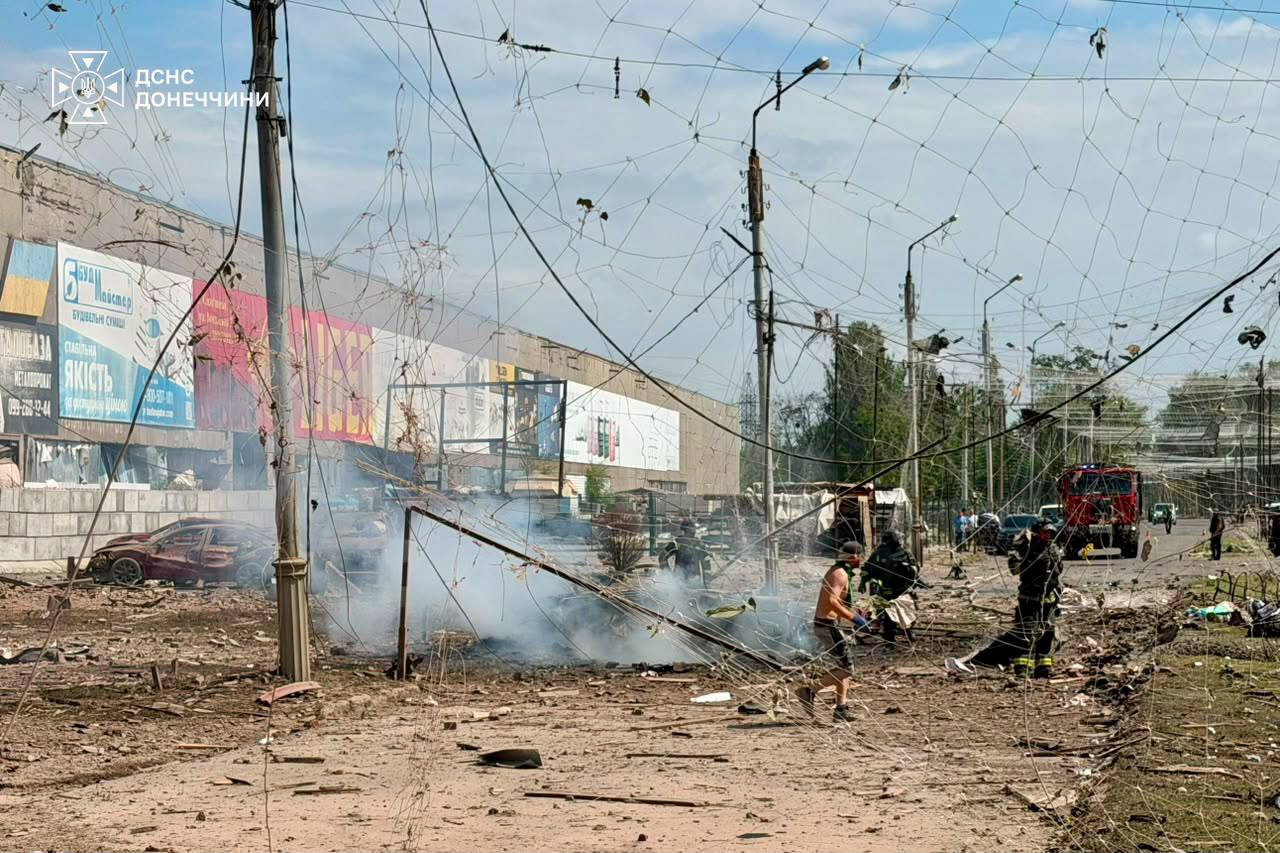
Russian missile strikes on July 24 reached a defense industry exhibition near Kyiv and killed ten people while injuring nearly one hundred others, an outcome that laid bare the limits of Ukrainian air defenses even as Russian forces claimed precision hits on ports, fuel sites, and a coastal missile battery farther south. The timing and location of the Kyiv-region strike, which hit a private training ground hosting a drone manufacturers’ event adjacent to homes, immediately raised questions inside Ukraine about event security and official oversight. Ukrainian authorities opened a criminal investigation into whether organizers had properly carried out their duties, and President Volodymyr Zelensky stated that holding such gatherings with large crowds near residential buildings remained unacceptable under wartime conditions.
Coverage closest to the fighting stressed the unusual morning timing of the ballistic missile barrage on the capital region itself. Reports noted multiple explosions and air-defense activity that began around 11:30 a.m., describing the attack as rare because most Russian strikes occur at night. Local accounts also recorded smoke over the city and emergency crews sent to the Svyatoshynsky district, underscoring how daytime ballistic threats had become uncommon after earlier patterns of evening or nocturnal launches. These details placed the focus on immediate vulnerability rather than distant infrastructure damage or diplomatic fallout.
Russian state-aligned reporting instead presented the operation as a routine series of strikes against military logistics. Ministry of Defense statements detailed hits on Odesa port facilities, fuel storage tanks, cargo vessels at sea, a Nova Poshta logistics center, and a Neptune coastal missile battery near Kovalyivka. The accounts listed additional damage to energy sites, transport hubs, and substations across multiple regions, framing every target as support for Ukrainian forces. Such narratives omitted any reference to the ten deaths at the defense exhibition and avoided discussion of civilian proximity or event security failures.
Western European and Australian reporting centered the civilian toll and the decision to hold the exhibition. Accounts described the site as a drone industry event on a training ground not under direct military jurisdiction, noted the completed rescue operation, and recorded Ukrainian statements that the event should never have occurred near homes. One public broadcaster highlighted an official probe into security lapses, maintaining distance from escalation rhetoric while recording the ten fatalities and roughly one hundred injuries as established facts. These pieces treated the strike as one element in a broader day of attacks that also included an aerial bomb strike killing five in Sloviansk.
Turkish state coverage shifted attention to the European Union response. Reports led with the announcement that the bloc would summon Russia’s envoy over the strikes, attributing the decision to statements from EU figures such as Kallas. This framing moved the story from battlefield results or local accountability toward immediate diplomatic consequences at the European level, consistent with Ankara’s interest in tracking EU policy reactions as a regional stakeholder.
The pattern of emphasis reveals a consistent divide: outlets nearest the impact zone record the rarity of daytime strikes and local air-defense performance, Russian sources catalogue claimed military successes while sidestepping civilian deaths, and more distant Western and Turkish accounts foreground casualties or bloc-level diplomacy. The Ukrainian accounts come closest to the operational reality on the ground because they track both the timing of the ballistic threat and the subsequent domestic investigation into why the exhibition took place where it did. Russian claims of precision targeting remain unverified in independent reporting and serve mainly to sustain the narrative of controlled escalation. Western casualty-focused pieces accurately capture the human cost but risk diluting attention to the sustained Russian use of ballistic missiles and drones despite high interception rates.
What to Watch
What happens next will likely follow the same rhythm already visible. Russia has signaled it will continue strikes while awaiting any new U.S. proposals, and Ukrainian authorities have already begun reviewing security procedures for public defense events. The EU summons may produce formal protests without altering battlefield dynamics. For readers outside the immediate theater, the episode demonstrates that Russian missile and drone campaigns retain the capacity to reach defended urban areas in daylight and that civilian gatherings tied to the war effort carry measurable risk when held near populated zones. Those two facts will shape both Ukrainian defensive adjustments and the diplomatic maneuvering that accompanies them.
That’s how the world told the story.
Get tomorrow’s bulletin by email — one briefing, up to six stories.
Subscribe freeNo spam. One-click unsubscribe. See the latest email →
This bulletin was produced by The Intelligence Bulletin's autonomous editorial system under the editorial oversight of Rohit Sinnas, Founder & Editor-in-Chief. How it works →