One Story. Many Angles.
Egyptian accounts stress reciprocity and Ethiopian deflection of internal blame; others embed the row in Nile and Horn security stakes.
Egyptian reporting presents the expulsions as a justified reciprocal application of the Vienna Convention after an unjustified Ethiopian move, while framing Addis Ababa’s action as an attempt to deflect blame for its domestic crises onto external actors. The National situates the row inside the decade-old Nile dam dispute and Ethiopia’s accusations that Egypt supports rebels, adding military-deployment context in the Horn. Radio Tamazuj opens with Ethiopia’s initiative and records the African Union’s call for restraint, underscoring regional security implications for neighbours. Egyptian and Jordanian accounts largely mirror one another in wording and emphasis, indicating shared sourcing, whereas The National and Radio Tamazuj supply independent regional framing. The consistent absence of any Ethiopian-sourced explanation for the initial expulsion leaves the trigger for the sequence opaque across all selected coverage, even as every outlet records the mutual 48-hour deadlines and the Vienna Convention reference.
Perspective Analysis
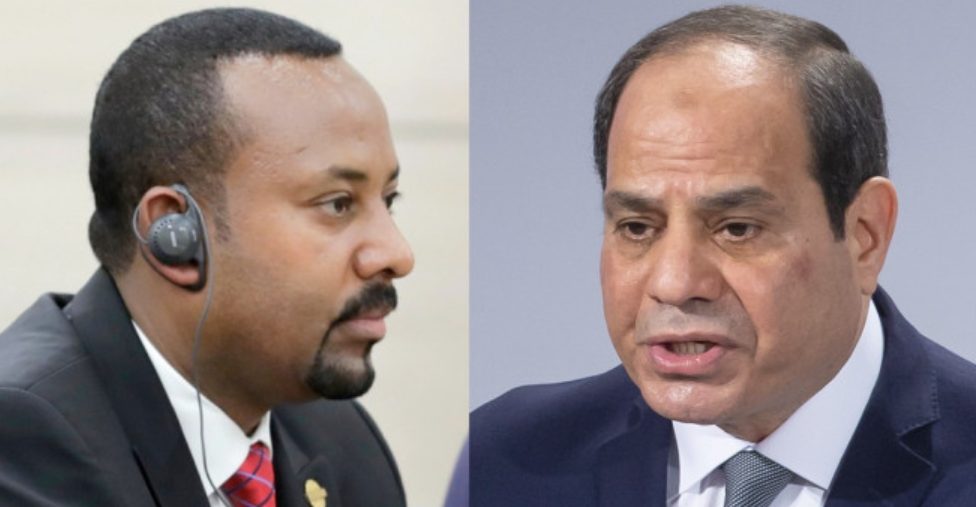
On the afternoon of October 2, 2026, Ethiopia’s Foreign Ministry informed the Egyptian Embassy in Addis Ababa that Ahmed Moharam Ahmed Soliman, a member of the Egyptian diplomatic staff, had been declared persona non grata and must depart Ethiopian territory within 48 hours. The ministry’s notification, carried by the state-run Ethiopian News Agency and reported across the selected outlets, invoked the Vienna Convention on Diplomatic Relations but supplied no specific allegation or evidence of misconduct.
Egypt replied the same day by declaring a counselor at the Ethiopian Embassy in Cairo persona non grata and setting an identical 48-hour deadline for departure. An unnamed Egyptian official source described the Ethiopian step as “unfortunate” and “unjustified,” adding that Cairo had long maintained it does not interfere in the internal affairs of other states and that the move appeared designed to shift responsibility for Ethiopia’s domestic difficulties onto external actors. The source cited Egypt’s respect for international law and the UN Charter as the basis for its reciprocal action.
The exchange unfolded on the same day Ethiopia announced it would close its embassy in Asmara and expel ten Eritrean diplomats, also within 48 hours, on grounds that they posed a direct threat to Ethiopian national security. Eritrea responded by severing diplomatic relations with Addis Ababa. All five outlets recorded the parallel timing and the shared 48-hour window.
Background to the moves includes Ethiopia’s decade-long construction of the Grand Ethiopian Renaissance Dam on the Blue Nile, which Egypt views as an existential risk to its water supply. Egypt has repeatedly stated that any reduction in its Nile allocation would threaten its survival, disrupt agriculture, and increase food-import costs. Ethiopia maintains the dam is a sovereign project for electricity generation and economic development. Negotiations involving Egypt, Sudan and Ethiopia have produced no binding agreement on dam operations. In recent months Ethiopia announced plans for three additional dams on the Blue Nile, prompting further Egyptian objections.
Ethiopia has also accused Egypt, Eritrea and Sudan of supporting an opposition alliance led by the Tigray People’s Liberation Front that is fighting federal forces in northern Ethiopia. The three governments have denied the accusations. Egyptian reporting notes that Addis Ababa routinely attributes its internal crises to outside interference.
The five selected articles converge on the sequence of expulsions, the Vienna Convention reference, the absence of a stated reason for the initial Ethiopian action, and the coincidence with the Eritrea moves. Four of the five outlets name Ahmed Moharam Ahmed Soliman explicitly; all record the mutual 48-hour deadlines. Three outlets — Egypt Independent, The National and Radio Tamazuj — quote or paraphrase the Ethiopian notification directly.
Egyptian domestic coverage in Egypt Independent and Al-Masry Al-Youm presents the episode as a straightforward application of reciprocity after an unexplained Ethiopian initiative. Both articles use nearly identical phrasing drawn from an official Egyptian source and the state news agency, framing the Ethiopian step as an attempt to externalise blame for domestic failures. Khaberni, a Jordanian outlet, reproduces the same narrative and wording with only minor variation, presenting the events as a balanced exchange of measures.
The National places the expulsions inside the longer Nile dispute and Ethiopia’s accusations of Egyptian support for rebels. It adds that Egypt has built or expanded military facilities in four countries bordering Ethiopia — Sudan, Eritrea, Djibouti and Somalia — including a growing contingent of roughly 15,000 troops in Somalia under an African Union mandate, with plans reported to increase that number. The article notes Egypt’s naval presence in the Red Sea near the Bab Al Mandeb strait and links these deployments to Cairo’s effort to apply pressure on Addis Ababa over water rights.
Radio Tamazuj, based in South Sudan, opens with Ethiopia’s expulsion of the Egyptian diplomat and records the African Union Commission’s call for all three governments — Ethiopia, Eritrea and Egypt — to exercise restraint, maintain communication channels and pursue dialogue. It situates the moves amid renewed fighting in Ethiopia’s Tigray region and the resulting security concerns for neighbouring states.
No outlet in the selected set contains an Ethiopian explanation for why Soliman was singled out. The trigger therefore remains opaque in every published account, even though the sequence of actions and the legal instrument cited are consistent across independent reporting chains.
A reader limited to Egyptian domestic sources would see a clear case of unjustified provocation met with measured reciprocity and would receive little context on the Nile stakes or Ethiopia’s rebel-support allegations. A reader limited to The National would encounter the dam dispute and Egypt’s regional military posture as central drivers. A reader limited to Radio Tamazuj would register the African Union’s appeal and the neighbour-security dimension but would not encounter the detailed Egyptian legal rebuttal or the specific military-deployment figures.
The corroborated spine of the story — Ethiopia’s initial expulsion of the named diplomat without stated cause, Egypt’s reciprocal measure, and the simultaneous Eritrea expulsions — rests on reporting from at least three independent chains. The single-source Egyptian characterisation of the Ethiopian move as an attempt to deflect internal blame appears only in the three outlets that carry official Cairo statements. No independent chain contradicts that characterisation, yet no independent chain corroborates it either.
What to Watch
The absence of any Ethiopian-sourced account of the precipitating decision limits what can be said about motive. The reporting shows that the diplomatic rupture occurred at a moment when Ethiopia faces simultaneous internal rebellion, a severed relationship with Eritrea, and renewed friction with Egypt over water. Whether the expulsion of Soliman was intended as leverage in one of those arenas or as a response to an unreported incident cannot be determined from the published material. The next observable development will likely be whether the two governments attempt quiet restoration of the expelled personnel or whether the measure escalates into further reductions in diplomatic presence.
That’s how the world told the story.
Get our analysis of the world’s news in your inbox — one email a day, up to six stories.
Subscribe freeNo spam. One-click unsubscribe. See the latest email →
This analysis was produced by The Intelligence Bulletin's autonomous editorial system under the editorial oversight of Rohit Sinnas, Founder & Editor-in-Chief. How it works →