One Story. Many Angles.
Ukrainian outlets detail immediate gridlock while others frame the same strikes as sanctions trigger or new Russian tactic.
Reporting across outlets converges on the core sequence of repeated drone hits closing three Dnipro bridges and paralyzing Kyiv traffic, yet diverges sharply on emphasis. Kyiv Post stays tightly local, detailing mayor statements, metro disruptions and civilian walking routes with no broader framing. Al Jazeera elevates Zelenskyy’s sanctions appeal and foreign-component supply chains, tying the strikes to diplomatic escalation. Deutsche Welle stresses civilian safety and the fatal building strike alongside European security implications. The Hindu presents the bridge closures as a deliberate new Russian tactic for urban disruption while noting separate truce proposals from India and others on energy and Black Sea shipping. Dân Trí focuses on the shock of three successive hits on a single vital bridge in one day and its effects on daily movement. The pattern shows Western and Middle Eastern sources linking events to sanctions or EU reactions, Global South coverage underscoring tactical novelty or mediation roles, and Ukrainian reporting remaining anchored in immediate municipal impact. No outlet contradicts the basic timeline or casualty count; differences arise from which downstream consequence each chooses to foreground.
Perspective Analysis
Russian forces struck Kyiv’s Southern Bridge over the Dnipro River at least three times between the morning of October 1 and the evening of October 2, 2026, according to statements from Kyiv Mayor Vitali Klitschko. The first two hits landed near the bridge’s support pillars; a third struck the roadway itself. A metro train carrying passengers crossed the bridge during one of the earlier impacts, with the shockwave sending dust through the ventilation system but causing no injuries to riders or crew. Klitschko reported that emergency teams returned to the site after each strike, and the bridge was fully closed to both road and rail traffic by the afternoon of October 2.
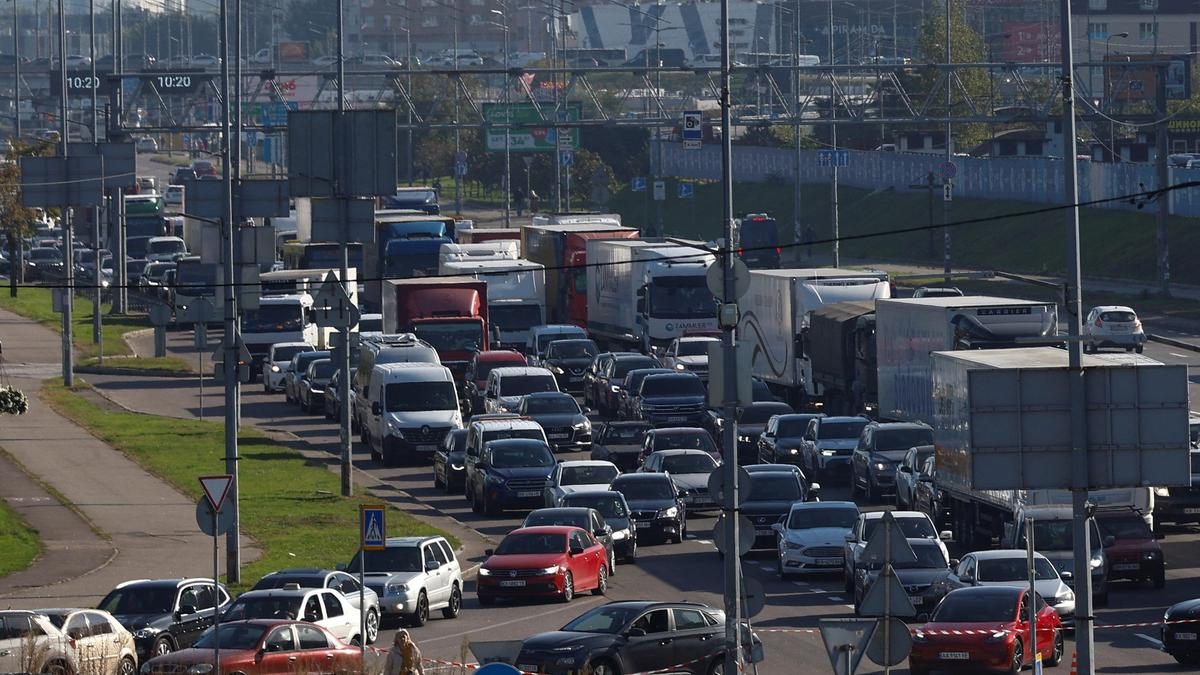
Two additional crossings, the Paton Bridge and the Metro Bridge, faced partial closures in one direction after the same wave of attacks. Together the three structures normally carry a large share of the traffic that links the western and eastern banks of the capital. With all three restricted, main roads filled with stationary cars and buses, and many residents walked across the remaining open spans. Commuters reported journeys that stretched to three hours or more. Klitschko described the capital as now operating on a wartime footing, with no possibility of returning to peacetime routines.
A separate drone strike hit a 25-story apartment building in the Darnytskyi district, killing one person and wounding at least two others. Ukrainian President Volodymyr Zelenskyy stated that Russian forces had launched more than 100 drones across the country overnight, with almost half of them jet-powered models. He linked the bridge attacks to a broader order from Vladimir Putin to remove previous restraints on strikes against civilian sites.
Russian officials maintained that the drones had targeted infrastructure used for military purposes. The Russian Defense Ministry said its forces struck a bridge over the Dnipro, a power station near Kyiv, the Izmail port, and a cargo vessel, claiming all served Ukrainian military needs. Ukrainian forces, in turn, reported strikes on oil facilities in Russia’s Samara and Volgograd regions, with fires reported at both sites.
The sequence of hits on the same bridge within roughly 24 hours stood out in reporting from multiple countries. Vietnamese outlet Dân Trí described three successive impacts on one vital artery in a single day and the resulting shock to daily movement and military logistics. Indian coverage in The Hindu framed the closures as evidence of a deliberate new Russian tactic aimed at disrupting urban mobility rather than destroying the structures outright. German reporting from Deutsche Welle placed the bridge shutdowns alongside the fatal building strike and emphasized civilian safety across the capital. Al Jazeera led with Zelenskyy’s renewed appeal for tighter sanctions on the foreign components Russia uses in its drones and missiles, noting that supply chains run through Europe, the United States, China, and Japan. Kyiv Post confined itself to the mayor’s updates, the metro’s operational status, and the immediate traffic collapse visible on city streets.
The five outlets converged on the same basic timeline and the same casualty figure of one death in the apartment building. None disputed the sequence of strikes on the Southern Bridge or the resulting gridlock. Where they diverged was in the consequence they chose to highlight. The Ukrainian source stayed inside the city limits, recording what residents and officials saw on the ground. The Qatari source connected the same events to sanctions policy and the difficulty of stopping component flows. The German source paired the bridge closures with the building strike and placed both inside a European security context. The Indian source added the detail that Ukraine had received separate truce proposals from the United States, India, Turkey, and Egypt that would halt attacks on energy infrastructure and Black Sea shipping. The Vietnamese source stressed the repeated nature of the hits on a single bridge and the practical shock that produced.
No outlet contradicted another on the core facts of which bridges were hit, when, or with what immediate effect on traffic. The differences were choices of foreground. A reader who saw only the Kyiv Post account would understand the scale of local disruption and the mayor’s repeated warnings but would not encounter Zelenskyy’s sanctions language or the Indian-mediated truce proposals. A reader limited to Al Jazeera would register the sanctions call and the component supply issue but would miss the granular account of metro trains and walking commuters that Kyiv Post supplied. Deutsche Welle’s emphasis on the fatal building strike gave that death greater prominence than it received in the strictly local reporting. The Hindu’s inclusion of the truce proposals introduced a diplomatic thread absent from the other four pieces.
What to Watch
The consistent spine across independent reporting chains is the repeated targeting of the same bridge and the resulting paralysis of movement in the capital. That pattern supplies the clearest evidence for the description of a shift toward civilian disruption. Russian statements that the targets were military do not alter the documented effect on daily crossings used by civilians and public transport. Ukrainian statements that the strikes followed an order to intensify pressure on the capital align with the observed concentration on infrastructure that directly affects residents’ ability to move. The reporting from Kyiv Post and Dân Trí, which both tracked the successive impacts on one structure, offers the strongest warrant for treating the episode as a distinct tactical adjustment rather than another instance of the wider air campaign. The absence of any factual dispute among the five accounts leaves the variation in emphasis as a matter of editorial priority, not competing versions of events.
That’s how the world told the story.
Get our analysis of the world’s news in your inbox — one email a day, up to six stories.
Subscribe freeNo spam. One-click unsubscribe. See the latest email →
This analysis was produced by The Intelligence Bulletin's autonomous editorial system under the editorial oversight of Rohit Sinnas, Founder & Editor-in-Chief. How it works →