US Hits Iran Again as Trump Scraps Ceasefire Over Hormuz Shipping Attacks

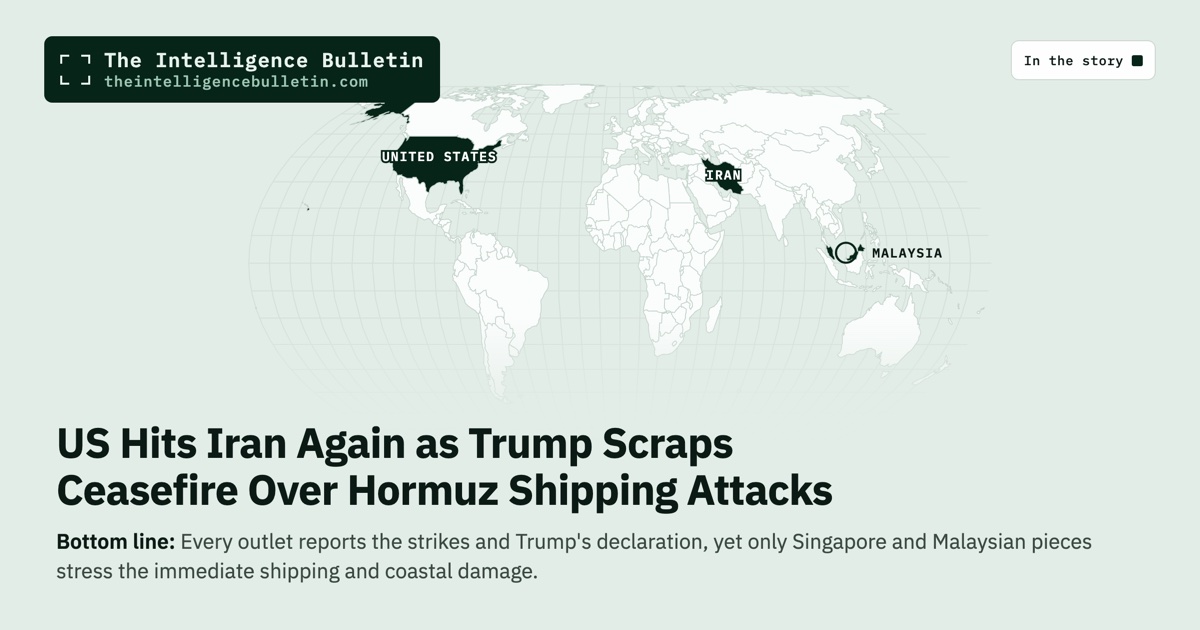
Map of the countries in the story: US Hits Iran Again as Trump Scraps Ceasefire Over Hormuz Shipping Attacks
On July 8-9 2026 the United States carried out additional airstrikes on Iranian military sites near the Strait of Hormuz. CENTCOM said the strikes responded to Iranian attacks on commercial shipping and aimed to protect navigation. President Trump declared an interim ceasefire agreement over and threatened further action. Iran condemned the strikes as violations of a recent memorandum, reported explosions along its southern coast, and promised retaliation.

One Story. Many Angles.

🇺🇸
United States
Forbes
Trump Strikes Iran Again—After Declaring Ceasefire ‘Over’
Read →
🇸🇬
Singapore
The Business Times
US military says it is carrying out fresh strikes on Iran, after Trump says accord is ‘over’
Read →
🇨🇳
China
Xinhua
SPANISH
Tehran condemns US attacks and promises to respond while Trump says he will attack Iran again “tonight”
“Teherán condena ataques de EEUU y promete responder mientras Trump dice que atacará a Irán de nuevo “esta noche””
Read →
🇲🇾
Malaysia
Astro Awani
MS
US launches new attack on Iran, explosions reported on southern coast
“AS lancar serangan baharu ke atas Iran, letupan dilapor di pesisir selatan”
Read →
🇧🇷
Brazil
Veja
PORTUGUESE
Trump’s new threat to Iran after US attack and declaration that ceasefire ‘is over’
“A nova ameaça de Trump ao Irã após ataque dos EUA e declaração de que cessar-fogo ‘acabou’”
Read →
In Brief

Every outlet reports the strikes and Trump’s declaration, yet only Singapore and Malaysian pieces stress the immediate shipping and coastal damage.

US strikes on Iran after Trump ended the ceasefire expose how quickly diplomacy collapsed into renewed force. American coverage frames the action as accountability for ship attacks and decisive leadership, while Singapore reporting stresses risks to global oil routes through Hormuz and power outages along Iran’s coast. Chinese state media leads with Tehran’s condemnation of the strikes as breaches of the UN charter and the recent US-Iran memorandum, plus Iranian vows to hit back at US bases. Malaysian outlets detail local explosions from Bandar Abbas to Kharg Island and minor injuries, grounding the story in immediate regional effects. Brazilian reporting highlights Trump’s personal rhetoric—calling Iran “scum” and promising worse—over military specifics. The shared emphasis on Hormuz shipping and oil prices shows the event’s real stakes lie in energy security rather than any single capital’s preferred narrative.

Perspective Analysis

The swift unraveling of the June 17 US-Iran memorandum into fresh American airstrikes on July 8, 2026, shows that control over the Strait of Hormuz and the oil flows it carries outweighs any interim diplomatic arrangement. Both sides resumed force after Iranian attacks on commercial tankers triggered the latest US response, and the reporting from multiple regions converges on the same core risk: disruption of a waterway that handles roughly one-fifth of global oil supplies.

US Central Command stated that its forces began additional strikes to degrade Iran’s ability to threaten freedom of navigation. The command described the action as holding Iran accountable for unjustified aggression against commercial shipping and civilian crews. Targets included air-defense systems, coastal surveillance facilities, surface-to-air and anti-ship missiles, drone launch sites, and more than sixty Islamic Revolutionary Guard Corps speedboats. No US fatalities were reported from the exchange.

President Trump declared the interim accord “over” during a NATO summit in Ankara and said further dealings with Iranian leadership would be a waste of time. He labeled Iran “scum” and its leaders “sick people” and “dishonorable,” while posting videos and photos on Truth Social of burning structures that he presented as retribution for the ship attacks. He warned that any repeat incidents would produce a much worse outcome and floated the possibility of striking power and desalination plants or seizing Kharg Island, which processes an estimated 90 percent of Iran’s oil exports. Brent crude futures reached $79.09 a barrel, reflecting an 8 percent rise over five trading days and a sharper 5 percent jump immediately after the rhetoric.

Iran’s Foreign Ministry condemned the strikes as aggressive violations of the UN Charter and the recent memorandum. It stated that US actions, combined with the revocation of an oil-sales license until August 21 and renewed naval pressure in the strait, had nullified key provisions of the understanding. Iranian officials vowed that armed forces would not hesitate to strike the source of the aggression. State media reported that the Revolutionary Guards had already hit 85 US military sites in Bahrain and Kuwait in an earlier round of the exchange. One Guard member was reported killed in Bandar-e Mahshahr.

Local accounts from Iran’s southern coast recorded explosions in Bandar Abbas, Chabahar, Konarak, Sirik, Qeshm, and on Kharg Island itself. Power outages affected parts of Chabahar. Port facilities and fishing boats sustained damage, and some individuals suffered minor injuries from blast fragments. Iranian state outlets described the sounds of strikes reaching multiple coastal cities and noted electricity cuts in affected zones.

Singapore-based coverage placed the Hormuz shipping lane at the center of the story, noting that the strait’s leverage has allowed Tehran to force a stalemate with the world’s most powerful military. It recorded the power outages and coastal blasts alongside the economic stakes for global trade routes. Malaysian reporting supplied the most immediate sensory details of the explosions and their localized effects on ports and residents. Chinese state media led with Tehran’s diplomatic rejection of the strikes and the explicit promise of retaliation against US bases. Brazilian accounts emphasized Trump’s personal language and the images he circulated on social media more than the technical targets or route-specific risks.

The common thread across these accounts is the strait itself. Whether framed as accountability for tanker attacks, a breach of a recent understanding, or a direct threat to energy transit, every major outlet returns to the same physical chokepoint. That convergence indicates the real stakes lie in the uninterrupted movement of crude rather than in any single capital’s preferred justification or condemnation.

What to Watch

The pattern points to continued volatility. With Trump explicitly ruling out further negotiations as pointless and Iran pledging proportional or greater responses, the next Iranian move against shipping or US positions appears likely to draw another round of strikes. Oil markets will register each exchange first, and any sustained closure or blockade attempt would affect prices and supply far beyond the Gulf.
Share this story

Trump Delists Syria as Terrorism Sponsor but Neighbors Flag Security and Accountability Risks

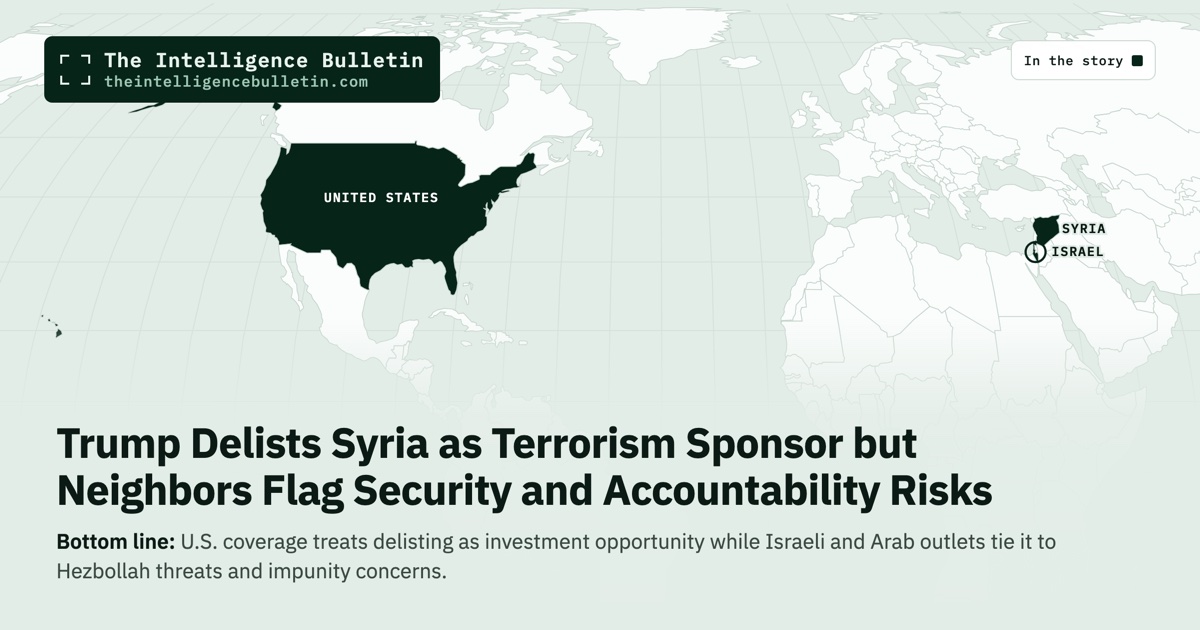
Map of the countries in the story: Trump Delists Syria as Terrorism Sponsor but Neighbors Flag Security and Accountability Risks
On July 8 2026 President Trump informed Congress of his intent to remove Syria from the U.S. list of state sponsors of terrorism after meeting Syrian President Ahmed al-Sharaa at the NATO summit. The step aims to help Syria rebuild and attract American investment. U.S. coverage emphasizes pragmatic diplomacy while Israeli and Arab outlets highlight security risks and accountability gaps.

One Story. Many Angles.

🇺🇸
United States
Time
Trump Moves to Revoke Syria’s Designation as State Sponsor of Terrorism
Read →
🇸🇾
Syria
SANA
Rubio : Trump notifies Congress of plan to delist Syria from SST
Read →
🇮🇱
Israel
The Jerusalem Post
Donald Trump says Syria may be removed from US terrorism sponsor list
Read →
🇬🇧
United Kingdom
Middle East Eye
Trump administration moves to rescind Syria terrorism designation
Read →
🇹🇷
Turkey
Anadolu Agency
Trump formally notifies Congress of intent to remove Syria from terrorism sponsor list
Read →
In Brief

U.S. coverage treats delisting as investment opportunity while Israeli and Arab outlets tie it to Hezbollah threats and impunity concerns.

The factual announcement of the congressional notification drew near-identical treatment across U.S. Syrian Israeli Turkish and British outlets yet the real divergence sits in what each sees the delisting unlocking. Time presents the move as a direct result of Trump’s meeting with al-Sharaa and a route to reconstruction investment. SANA celebrates it as historic relief from sanctions that opens partnership. The Jerusalem Post immediately links the change to Hezbollah threats and regional stability. Middle East Eye asks whether the step rewards impunity without clear accountability steps. Anadolu situates the decision inside the NATO summit itself. The pattern shows Washington treating delisting as forward-looking policy while neighbors treat it as a test of whether past terrorism designations still constrain new power arrangements in Damascus.

Perspective Analysis

President Donald Trump’s decision to notify Congress of his intent to remove Syria from the U.S. list of state sponsors of terrorism marks a decisive pivot toward economic reintegration rather than sustained isolation. The move, announced July 8, 2026, after Trump’s meeting with Syrian President Ahmed al-Sharaa on the margins of the NATO summit in Ankara, prioritizes reconstruction and investment over lingering designations rooted in the Assad era. Yet the same announcement exposes sharp regional fault lines: neighbors and independent observers see it as a test of whether security threats and accountability deficits will persist under the new Damascus government.

The factual core of the announcement received nearly uniform reporting. Trump stated he would rescind the designation, first applied in 1979 under Hafez al-Assad. Secretary of State Marco Rubio confirmed the formal notification to Congress, triggering a 45-day review period before any change could take effect. Rubio emphasized that al-Sharaa had provided formal assurances against future support for international terrorism and pointed to “positive changes and counterterrorism actions” already taken. The step builds on earlier U.S. actions, including an executive order last June lifting most sanctions and the removal of al-Sharaa himself from the Specially Designated Global Terrorist list in November 2025. A bipartisan Senate letter had already urged the change, citing the designation as the chief remaining barrier to private-sector investment and billions pledged for recovery.

Time frames the development explicitly as pragmatic diplomacy. Its account opens with the bilateral meeting in Ankara and Rubio’s statement that lifting the designation “will unlock international trade and investment, give Syria a chance to rebuild, and open up a new chapter for the Syrian people.” The piece notes al-Sharaa’s own remarks beside Trump crediting the earlier sanctions relief for helping unify the country. This forward-looking emphasis aligns with Washington’s domestic policy lens: the goal is stability that benefits the region and the world by enabling a unified Syria at peace with its neighbors.

Syrian state media outlet SANA presents the same facts as historic relief. It quotes Rubio’s description of the move as opening “new possibilities for economic opportunity and recovery, giving the Syrian people a chance at greatness.” The report situates the decision after the Ankara meeting and recalls the 1979 designation under the ousted regime, treating the delisting as a clean break that shifts Syria toward partnership and prosperity. As the direct beneficiary’s voice, SANA celebrates the announcement without conditions or caveats.

Regional outlets apply different tests. The Jerusalem Post report foregrounds immediate security implications, linking the change to Hezbollah threats and broader regional stability concerns that remain unaddressed by the U.S. announcement alone. Middle East Eye, in its live-blog update, notes the 45-day congressional window but situates the step within a broader question of whether rescinding the designation rewards impunity absent clear accountability mechanisms for past abuses. Anadolu Agency places the notification squarely inside the NATO summit context, underscoring alliance dynamics rather than bilateral economic gains.

These differences reveal the real stakes. U.S. coverage treats delisting as a logical next step after prior sanctions relief and al-Sharaa’s assurances, betting that economic connectivity will reinforce stability. Syrian coverage welcomes the outcome as overdue recognition of changed realities. Israeli reporting flags unresolved militant networks and border risks that predate and may outlast the designation. Turkish and Arab-focused accounts highlight alliance politics and post-conflict justice gaps. The divergence stems directly from proximity: Washington sees an opening for investment and reintegration; neighbors view the same action as a potential loosening of constraints on Damascus without guarantees against renewed threats or unaddressed wartime conduct.

What to Watch

The pattern suggests the delisting will proceed unless Congress intervenes within the 45-day window. If it does, reconstruction financing and trade may accelerate, but the absence of explicit new safeguards on counterterrorism performance or transitional justice will keep the move under scrutiny from Israel, Turkey, and Arab states. Those actors hold direct interests in whether Damascus consolidates control without reviving old networks or evading responsibility for documented abuses. The announcement therefore functions less as a settled policy victory and more as an opening wager whose success will be measured by concrete outcomes on security cooperation and accountability in the months ahead.


Share this story

Trump Offers Ukraine License to Build Patriots; Kyiv Sees Win, Moscow Sees Escalation

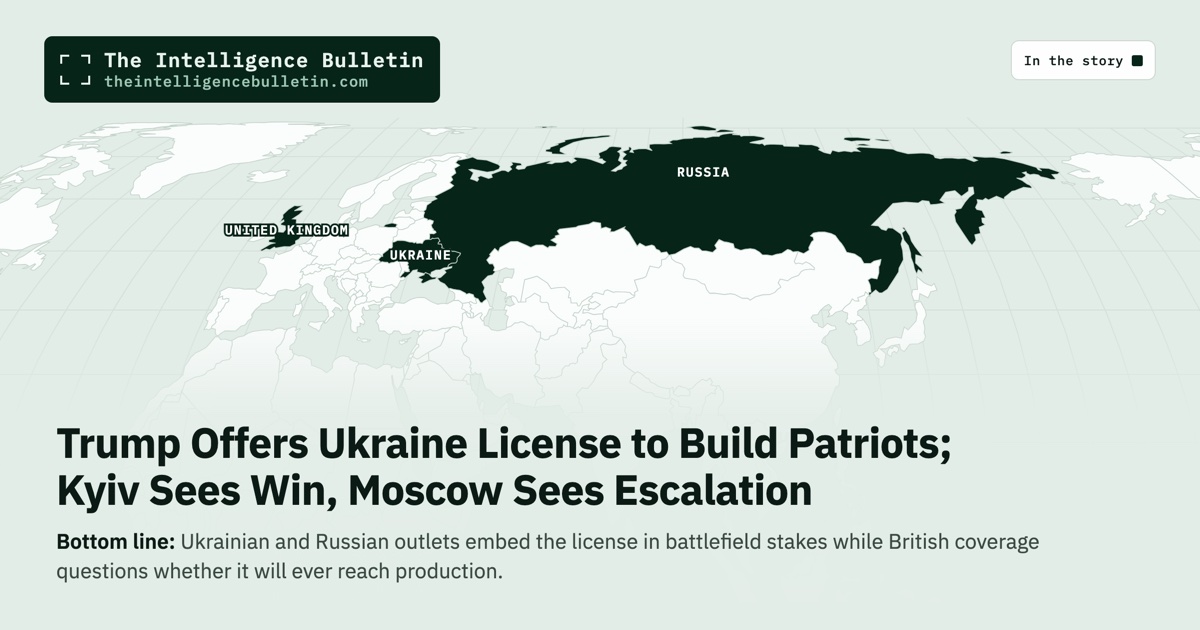
Map of the countries in the story: Trump Offers Ukraine License to Build Patriots; Kyiv Sees Win, Moscow Sees Escalation
On July 8, 2026, US President Donald Trump informed Ukrainian President Volodymyr Zelenskyy during bilateral talks on the margins of the NATO summit in Ankara that the United States would grant Ukraine a license to manufacture Patriot interceptor missiles domestically. The announcement came amid Ukrainian requests for more air defense amid Russian strikes and followed months of lobbying by Kyiv. Trump framed the move as allowing Ukraine to produce the systems itself rather than relying solely on US deliveries. Coverage across outlets varied sharply in emphasis on implementation speed, risks, and links to ongoing battlefield actions.

One Story. Many Angles.

🇺🇦
Ukraine
Kyiv Post
Trump, Zelensky wrap up hour-long Ankara talks as US president says he would visit Ukraine
Read →
🇷🇺
Russia
Fontanka
RUSSIAN
Trump on the situation between Russia and Ukraine: strikes on energy and Patriot supplies
“Trump on the situation between the RF and Ukraine: strikes on energy and Patriot supplies – 8 July 2026”
Read →
🇬🇧
United Kingdom
The Guardian
Trump gives Zelenskyy vague promise of licence to manufacture Patriot missiles
Read →
🇺🇸
United States
Euronews
US to give Ukraine licence to produce Patriot air-defence interceptors
Read →
🇦🇿
Azerbaijan
APA
Trump says he will let Ukraine make Patriot Missiles
Read →
In Brief

Ukrainian and Russian outlets embed the license in battlefield stakes while British coverage questions whether it will ever reach production.

The license announcement landed as a concrete technology-transfer step rather than immediate weapons delivery, yet outlets split on its practical weight. Kyiv Post reported the hour-long Ankara session with Trump saying relations had improved and explicitly offering the license so Ukraine could “make them yourself,” while also noting his comment that Ukrainian strikes on Russian energy targets represented useful escalation. Fontanka instead tied the same remarks directly to those strikes, quoting Trump that they “may help end the conflict” and presenting the license as a way to stop Kyiv complaining about insufficient US supplies. The Guardian stressed vagueness, noting Trump had not yet spoken to Lockheed Martin or RTX and that production would be expensive, slow, and vulnerable to Russian attack on any new facility. Euronews treated the pledge as straightforward NATO-summit progress after six months of Ukrainian lobbying, adding production-rate details and the backdrop of depleted global stocks from the Iran conflict. APA delivered the bare announcement in two sentences drawn from Bloomberg. The pattern shows proximity to the war shapes tone: Ukrainian outlets record a potential industrial win, Russian ones embed it in escalation, British reporting flags delivery hurdles, and neutral or distant outlets record the statement without elaboration. What emerges is less disagreement on facts than on whether the license alters supply realities anytime soon.

Perspective Analysis

The announcement that the United States would grant Ukraine a license to manufacture Patriot interceptor missiles marks a shift toward technology transfer rather than fresh deliveries, yet its immediate effect on Ukraine’s air defenses remains distant. Trump conveyed the decision to Zelensky during an hour-long bilateral session on the sidelines of the NATO summit in Ankara on July 8, 2026. The move addresses Kyiv’s repeated requests for greater air-defense autonomy amid intensified Russian strikes, but production timelines, costs, and vulnerability to attack mean it will not alter battlefield realities in the near term.

Trump framed the license explicitly as a way to reduce Ukrainian complaints about insufficient supplies. “We’re gonna give you a license to make Patriots… Make them yourself,” he said, adding that the systems are complex but that Ukraine could “figure out the complexity quickly.” He noted that the United States needs Patriots for its own use and that discussions with manufacturers had not yet occurred. The comments came against the backdrop of Ukrainian drone and missile strikes on Russian energy infrastructure, which Trump described as “an escalation that can help lead to an end.” He also observed that relations with Zelensky had improved since their earlier Oval Office meeting and left open the possibility of a future presidential visit once the war concluded.

Ukrainian reporting recorded the exchange as a concrete step toward industrial self-reliance. The Kyiv Post account emphasized the personal rapport between the leaders and presented the license alongside Trump’s assessment that Ukrainian strikes on Russian energy targets represented useful pressure. It noted the session took place at the Beştepe Presidential Complex and tied the announcement to Kyiv’s broader push for defense cooperation and security guarantees during the summit.

Russian coverage integrated the same remarks into the dynamics of the battlefield. Fontanka linked the license directly to the Ukrainian strikes on energy sites, quoting Trump that such actions “may help end the conflict.” The report presented the offer as a means to silence Ukrainian complaints about arms shortfalls while noting Trump’s plan to speak with Putin the same day. This framing situates the technology transfer within ongoing escalation rather than as an isolated diplomatic gesture.

British reporting foregrounded the practical barriers. The Guardian stressed that Trump had not consulted Lockheed Martin or RTX, the manufacturers, and described production as expensive, slow, and exposed to Russian attack on any new facility. It cited estimates that even at increased U.S. output rates, replenishing stockpiles would stretch into 2028 and quoted an expert warning that a Ukrainian plant would require diverting existing batteries for protection and would likely become an intelligence target for Moscow. The account contrasted the warm tone of the Trump-Zelensky meeting with the limited short-term relief the license would deliver.

Euronews placed the pledge in the context of six months of Ukrainian lobbying and NATO-summit outcomes. It reported Trump’s claim that U.S. industry was already constructing four plants and could enable production within two to three months, while noting global stocks had been drawn down by the Iran conflict. The piece supplied production-rate details—roughly 60 interceptors per month from Lockheed Martin—and described Russia’s monthly output of ballistic missiles as roughly double that figure, underscoring the pressure on Ukrainian defenses.

Azerbaijani coverage delivered the statement with minimal elaboration. APA summarized the bilateral announcement in two sentences drawn from Bloomberg wire copy, recording Trump’s offer without caveats on timelines or risks. The brevity reflects reporting aimed at an audience outside the immediate European or Russian sphere, focused on the raw fact of the U.S. position rather than its operational implications.

These differences arise from each outlet’s proximity to the conflict and its readers’ immediate concerns. Ukrainian accounts highlight potential autonomy gains because air-defense shortfalls directly affect civilian protection and energy infrastructure. Russian reporting embeds the license in escalation narratives to illustrate how Western moves prolong or intensify the fighting. British analysis examines alliance constraints and delivery feasibility because those factors determine whether commitments translate into usable systems. More distant coverage records the statement plainly because the practical hurdles lie outside its primary audience’s lived experience.

The underlying constraints remain unchanged by the announcement itself. Global Patriot interceptor stocks are depleted, new facilities would take months to construct and would face targeting, and the United States has signaled it cannot spare existing missiles. The license therefore functions primarily as a diplomatic signal of support and a mechanism to shift some production burden, rather than a rapid solution to Ukraine’s air-defense gap. Kyiv gains a formal pathway to domestic manufacturing; Moscow gains a fresh talking point about Western escalation; Washington gains a talking point that reduces pressure for immediate transfers.

What to Watch

What follows will likely be measured progress at best. Even if licensing arrangements move forward, construction timelines, cost, and the need to protect any new site against Russian strikes mean operational Ukrainian-made Patriots are years away. In the interim, Ukraine will continue to rely on existing deliveries and face the same missile threat that prompted the request. The episode illustrates how technology-transfer pledges can serve political ends while leaving the immediate military balance largely untouched.


Share this story

Zelensky’s Air Defense Plea Exposes Global Patriot Shortage

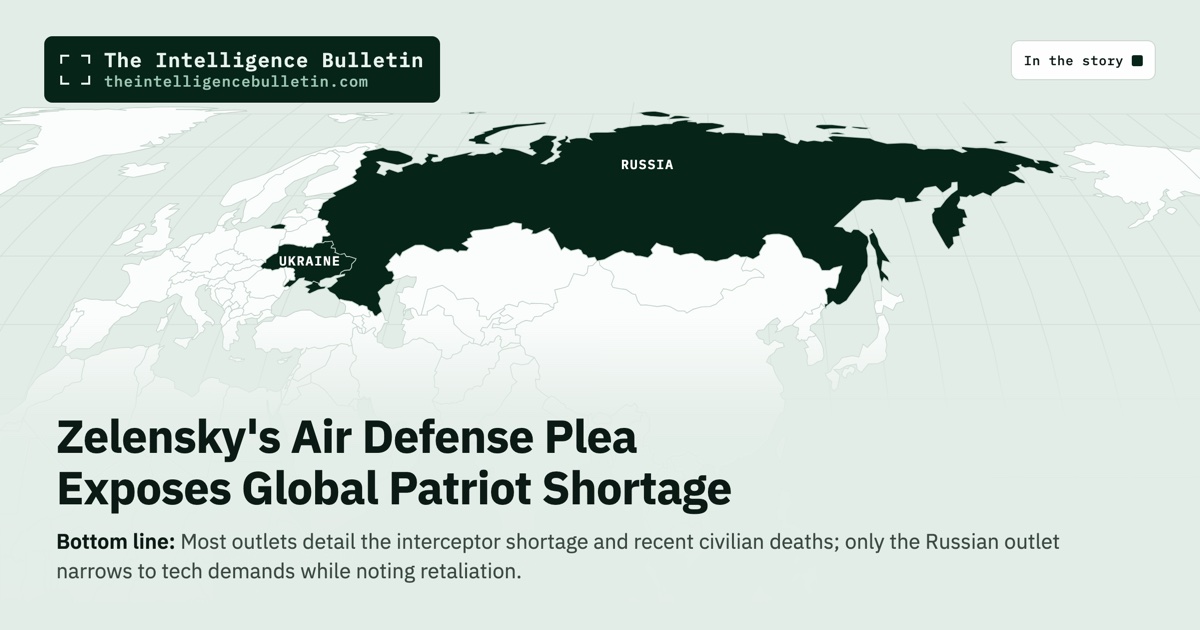
Map of the countries in the story: Zelensky's Air Defense Plea Exposes Global Patriot Shortage
On July 7, 2026, Ukrainian President Volodymyr Zelensky arrived in Ankara for the NATO summit and urged allies to supply more air defense systems, interceptor missiles, and missile production technology. He cited recent Russian ballistic missile and drone attacks on Kyiv that killed over 50 civilians and left Ukrainian defenses unable to intercept many strikes. Zelensky said Ukraine can handle most defense needs itself but requires partners for air defense scale-up, while also seeking drone deals. NATO Secretary General Mark Rutte called for allies to increase support amid ongoing Russian attacks.

One Story. Many Angles.

🇺🇦
Ukraine
Kyiv Post
Zelensky Arrives in Ankara Seeking Air Defenses, Drone Deals at NATO Summit
Read →
🇹🇷
Turkey
Daily Sabah
Zelenskyy demands NATO air defense help , touts Kyiv war ability
Read →
🇷🇺
Russia
RT Arabic
ARABIC
Zelensky demands Europe share missile production technologies
Read →
🇮🇳
India
LiveMint
Ukraine Shortage of Patriot Missiles Leaves Kyiv Undefended
Read →
🇳🇬
Nigeria
Tribune Online
Zelensky seeks more NATO air defence systems after intense Russian strikes
Read →
In Brief

Most outlets detail the interceptor shortage and recent civilian deaths; only the Russian outlet narrows to tech demands while noting retaliation.

Ukrainian and Turkish reporting frames Zelensky’s Ankara visit as a practical push for immediate systems and production licenses to counter Russian strikes, with Kyiv Post detailing nearly 20 bilateral meetings and drone agreements. Daily Sabah adds his argument that Ukraine’s battlefield performance makes it a net asset for NATO. Indian and Nigerian coverage sharpens on the operational crisis, with LiveMint reporting Ukraine failed to intercept any of 23 ballistic missiles in one attack and Tribune Online linking the plea directly to civilian deaths from recent barrages. RT Arabic instead narrows to Zelensky demanding European missile tech sharing while noting Russian strikes as retaliation and the Kremlin’s shift to calling the conflict a full war. The pattern shows consensus on the air defense shortfall as the binding constraint, not abstract alliance debates, with the most concrete details on shortages and recent casualties coming from outlets outside the conflict parties.

Perspective Analysis

Zelensky’s appeal in Ankara exposes how the worldwide scarcity of Patriot interceptors has become the single most immediate limit on Ukraine’s capacity to protect its cities from Russian ballistic missile strikes. The coverage across outlets confirms that Ukraine can manage most other defense tasks but cannot scale air defense without partners releasing stockpiles and sharing production know-how, a shortfall that recent barrages have turned into civilian casualties rather than an abstract alliance question.

Zelensky arrived in the Turkish capital on July 7, 2026, for the NATO summit and stated that new air defense systems, interceptor missiles, and production licenses ranked among his top priorities. He also planned to pursue drone agreements and hold nearly 20 bilateral meetings while attending the Defense Industries Forum. The Ukrainian president stressed that decisions at the summit must deliver greater protection for civilians and stronger industrial cooperation with Europe and the United States.[[1]](https://www.kyivpost.com/post/79751)

Turkish reporting captured Zelensky arguing that Ukraine’s battlefield performance makes it a net contributor to NATO rather than a liability. He noted that Ukrainian forces handle most drone threats independently yet require allied determination to expand air defense coverage. Production of U.S.-made Patriot missiles remains too low, he said, and European countries should develop their own cheaper anti-ballistic systems immediately.[[2]](https://www.dailysabah.com/world/europe/zelenskyy-demands-nato-air-defense-help-touts-kyivs-war-ability)

Indian coverage, drawing on detailed operational reporting, highlighted the practical consequences of the interceptor shortage. In one recent attack, Ukraine failed to intercept any of 23 Russian ballistic missiles that struck the Kyiv area. The piece linked the shortage to broader global constraints, including reduced stockpiles after the U.S. conflict with Iran, and noted that roughly 20 countries compete for the same limited supply, with new missiles taking more than two years to manufacture.[[3]](https://www.livemint.com/global/ukraines-shortage-of-patriot-missiles-leaves-kyiv-undefended-11783359110852.html)

Nigerian reporting tied the plea directly to the human cost of recent strikes. Russian missiles hit residential buildings in Kyiv twice within a week, killing more than 50 civilians. Ukrainian air defenses intercepted nearly all drones in the latest assault but none of the ballistic missiles. Zelensky framed the request as urgent because existing Patriot stockpiles sitting in allied warehouses provide no protection while civilians die.[[4]](https://tribuneonlineng.com/zelensky-seeks-more-nato-air-defence-systems-after-intense-russian-strikes/)

Russian-state Arabic coverage narrowed the story to Zelensky’s demand that Europe share missile production technologies and industrial capabilities. It noted his frustration with the pace of Western deliveries after Russian strikes on Kyiv and surrounding regions, and it recorded the Kremlin’s recent shift to describing the conflict as a full-scale war rather than a special military operation.[[5]](https://arabic.rt.com/world/1807764-%D8%B2%D9%8A%D9%84%D9%8A%D9%86%D8%B3%D9%83%D9%8A-%D9%8A%D8%B7%D8%A7%D9%84%D8%A8-%D8%A3%D9%88%D8%B1%D9%88%D8%A8%D8%A7-%D8%A8%D9%85%D8%B4%D8%A7%D8%B1%D9%83%D8%A9-%D8%AA%D9%82%D9%86%D9%8A%D8%A7%D8%AA-%D8%A5%D9%86%D8%AA%D8%A7%D8%AC-%D8%A7%D9%84%D8%B5%D9%88%D8%A7%D8%B1%D9%8A%D8%AE/)

The pattern across these accounts reveals broad agreement that air defense shortfalls, not membership debates or general alliance coordination, now dictate outcomes on the ground. Ukrainian and Turkish sources emphasize diplomatic deliverables and Ukraine’s own contributions. Outlets farther from the conflict supply the clearest numbers on failed interceptions and death tolls, underscoring that the binding constraint is physical availability of interceptors rather than political will alone.

NATO Secretary General Mark Rutte reinforced the same point in Ankara, stating that allies must increase support because Russia continues missile and drone attacks on Ukrainian cities. He described the latest strikes as evidence of Kremlin desperation rather than strength and called for every member to contribute more air defense assets.

Production realities limit what any summit pledge can achieve in the short term. Patriot interceptors already face multi-year manufacturing backlogs, and European efforts to field cheaper alternatives remain years away. Ukraine can absorb most other defense responsibilities domestically, yet ballistic missile defense stays dependent on external supply lines that cannot expand overnight.

What to Watch

The coverage therefore points to a narrowing window in which civilian protection hinges on immediate transfers from existing allied stocks, even as those stocks remain thin. Without accelerated releases or licensed production deals, Russian ballistic strikes will continue to find gaps, and the pressure on Ukrainian cities will grow. The next weeks will test whether NATO governments treat the shortage as an emergency manufacturing and allocation problem or continue to treat it primarily as a diplomatic talking point.


Share this story

European Allies Back Denmark’s Greenland Defense Pledge as Trump Renews Claim

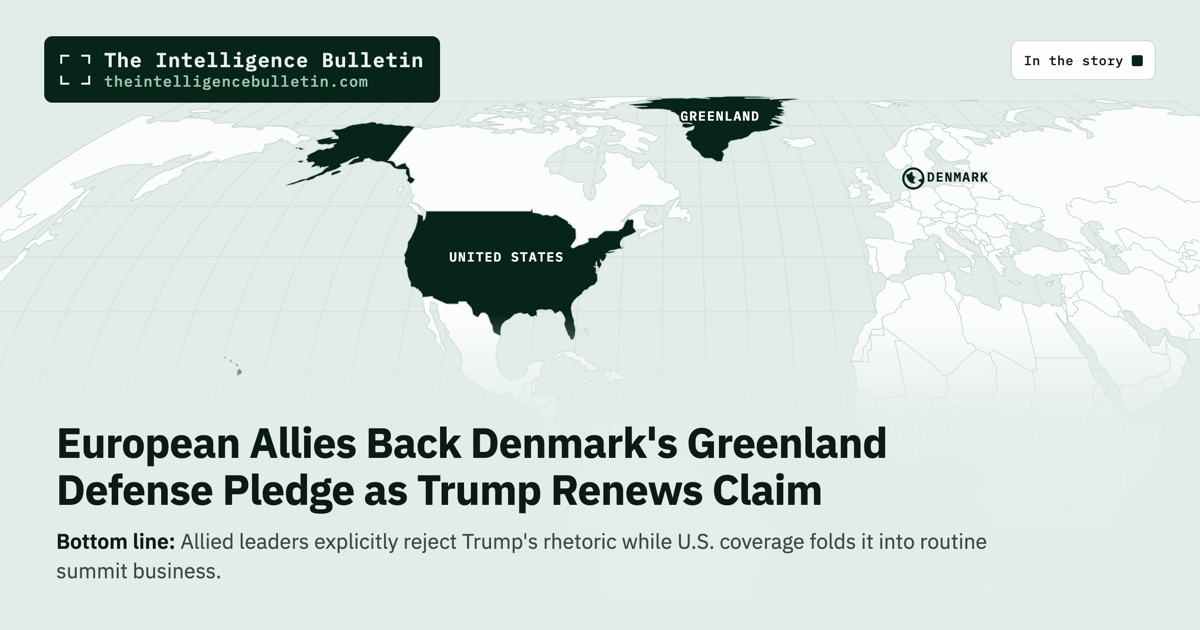
Map of the countries in the story: European Allies Back Denmark's Greenland Defense Pledge as Trump Renews Claim
On July 8, 2026, at the NATO summit in Ankara, Turkish Prime Minister Mette Frederiksen publicly rejected U.S. President Donald Trump’s call for American control of Greenland. She stated that Greenland is not for sale, urged respect for its people’s self-determination and Danish sovereignty, and said Denmark is ready to defend every inch of its territory. Trump had repeated the claim the previous day during meetings with Turkish leaders.

One Story. Many Angles.

🇩🇰
Denmark
Jyllands-Posten
DANISH
Mette Frederiksen after threat from Trump: Denmark will defend Greenland
“Mette Frederiksen efter trussel fra Trump: Danmark vil forsvare Grønland”
Read →
🇺🇸
United States
Newsday
The Latest: Danish prime minister vows to defend Greenland during NATO summit in Turkey
Read →
🇳🇴
Norway
VG
NORWEGIAN
Støre: Norway distances itself from Trump’s Greenland threats
“Støre: Norge tar avstand fra Trumps Grønland-trusler”
Read →
🇷🇺
Russia
Sputnik
Danish Prime Minister Says Country Ready to Defend Greenland
Read →
🇨🇳
China
Xinhua
Danish PM says Greenland not for sale after Trump suggests U.S. control
Read →
In Brief

Allied leaders explicitly reject Trump’s rhetoric while U.S. coverage folds it into routine summit business.

European coverage treats the exchange as a direct sovereignty test for an Arctic NATO member, with Danish and Norwegian outlets foregrounding explicit rejection of U.S. claims and allied support. Newsday’s AP report buries the exchange inside summit logistics and unrelated topics like Iran strikes and Ukraine aid, treating it as routine Trump rhetoric rather than a potential alliance fracture. Sputnik alone highlights Denmark’s defiance to underscore Western divisions, while Xinhua sticks to bare quotes without alliance context. The shared factual core—Frederiksen’s refusal and defense pledge—reveals that even amid summit distractions, no outlet disputes the core tension: whether Trump’s remarks cross from bombast into a live territorial challenge that tests Article 5 commitments.

Perspective Analysis

The renewed American claim on Greenland at the Ankara NATO summit tests whether alliance commitments to territorial integrity hold when the challenge comes from within rather than from Moscow or Beijing. Danish Prime Minister Mette Frederiksen made that explicit on July 8 when she told reporters that Greenland “is of course not for sale” and that Denmark stands ready to defend every inch of its territory under Article 5. Trump had restated the day before, after meetings with Turkish President Recep Tayyip Erdoğan, that the island should be controlled by the United States rather than Denmark.

Frederiksen’s statement tied the defense pledge directly to NATO obligations while invoking Greenlanders’ right to self-determination. She stressed that sovereign states expect respect for territorial integrity, a formulation that left little room for interpretation about Copenhagen’s position. Norwegian Prime Minister Jonas Gahr Støre reinforced the point the same day, rejecting the rhetoric outright and noting that Arctic security responsibilities fall to the Kingdom of Denmark and its neighbors. Icelandic and Finnish leaders added parallel affirmations that Greenland remains Danish territory and that external focus should stay on Russia.

European reporting treated these exchanges as a concrete sovereignty matter for an Arctic NATO member rather than passing rhetoric. Danish coverage led with national resolve to protect territory, while Norwegian accounts highlighted Støre’s explicit distancing as a neighbor sharing Arctic duties. The core facts—no sale, self-determination respected, readiness to defend—appeared consistently across these accounts.

By contrast, the Associated Press report carried by Newsday folded the Danish response into a roundup that also covered U.S. strikes on Iran, Ukrainian aid, and Turkish F-35 diplomacy. The exchange appeared as one item among summit logistics, with no elevation as a potential alliance fracture. Sputnik framed the same statements to emphasize internal strains, quoting the defense pledge alongside Trump’s repetition of the claim. Xinhua confined itself to the Danish quotes on sovereignty and self-determination without broader NATO context.

The shared record shows no outlet disputed the factual sequence: Trump’s July 7 remarks, Frederiksen’s July 8 rejection and defense commitment, and allied support from Norway and others. What differs is placement and emphasis. Outlets closest to the territory at stake presented the episode as a direct test of Article 5 applicability inside the alliance. Wire service treatment subordinated it to concurrent crises. Russian state media used it to illustrate division; Chinese state media kept the presentation minimal.

This pattern matters because Greenland’s strategic location already draws Russian and Chinese attention in the Arctic. When a U.S. president revives a territorial claim against a founding NATO member, the question of whether collective defense extends to intra-alliance disputes moves from abstract to immediate. Frederiksen’s invocation of Article 5 in response signals that Copenhagen views the matter in those terms. European allies’ quick alignment indicates they do as well.

What to Watch

The next phase will likely see continued public affirmations of Danish sovereignty paired with private efforts to contain the issue. NATO’s military planning and Arctic exercises will proceed under existing command arrangements, yet the precedent of a U.S. claim will remain on the table for future summits. For readers, the coverage divergence reveals less about media slant than about whose security calculations treat Arctic territory as non-negotiable: those with direct stakes treat the claim as a live test of alliance credibility, while distant accounts can still file it under routine summit noise.


Share this story

India Sells BrahMos and Astra Missiles to Indonesia While Coverage Splits on Why

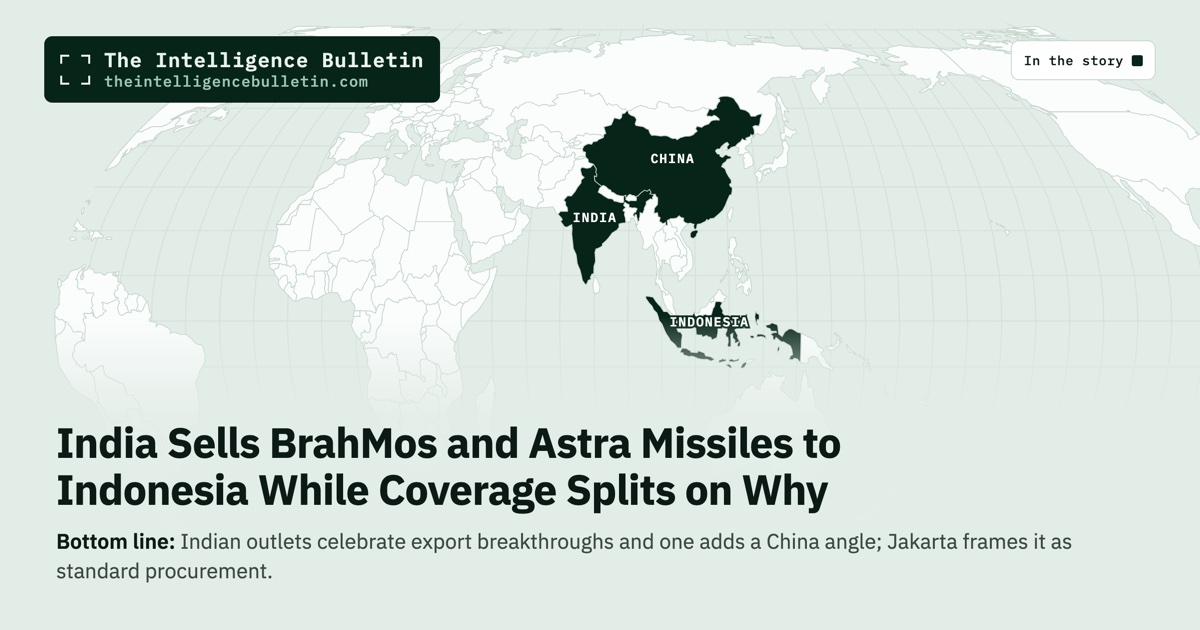
Map of the countries in the story: India Sells BrahMos and Astra Missiles to Indonesia While Coverage Splits on Why
On July 7, 2026, Prime Minister Narendra Modi and President Prabowo Subianto met in Jakarta and signed agreements for Indonesia to acquire BrahMos supersonic cruise missiles and the Astra beyond-visual-range air-to-air missile. The BrahMos deal involves at least two batteries valued around $200 million, with Indonesia also becoming the first export customer for the fully indigenous Astra system. Separate pacts covered critical minerals, steel production, maritime security, and port development at Sabang. The agreements mark the third BrahMos export after deals with the Philippines and Vietnam.

One Story. Many Angles.

🇮🇩
Indonesia
The Jakarta Post
Indonesia, India sign BrahMos missile deal
Read →
🇮🇳
India
The Times of India
Indonesia becomes first foreign customer of India Astra air missile
Read →
🇮🇳
India
The Indian Express
India to supply 2 BrahMos missile batteries worth $200 million to Indonesia
Read →
🇮🇳
India
The Tribune
Indonesia third nation in China backyard to get BrahMos missile
Read →
🇵🇭
Philippines
The Manila Times
Indonesia, India announce long-range missile deal
Read →
In Brief

Indian outlets celebrate export breakthroughs and one adds a China angle; Jakarta frames it as standard procurement.

Indian reporting centers on export milestones and industrial self-reliance, with The Times of India stressing that Indonesia is the first foreign buyer of the home-grown Astra missile and The Indian Express detailing the $200 million BrahMos package plus technology transfers. The Tribune alone places the sales inside a China-containment frame by calling Indonesia the third recipient in Beijing’s backyard. The Jakarta Post, by contrast, treats the contracts as routine procurement and bilateral cooperation that also includes minerals and steel ventures, quoting Prabowo on regional benefits without strategic qualifiers. The Manila Times, as a regional neighbor, sticks to a neutral announcement of long-range missile cooperation and wider economic ties. The pattern shows Indian outlets claiming a concrete win for Atmanirbhar Bharat while Indonesian coverage registers the hardware arrival without the geopolitical overlay, revealing how the same transaction registers as milestone at the source and as standard defense upgrade at the destination.

Perspective Analysis

The July 7, 2026, defense agreements between India and Indonesia expose a clear divergence in how the same arms transfers register depending on the vantage point. Indian coverage presents the sales of BrahMos supersonic cruise missiles and the Astra beyond-visual-range air-to-air missile as concrete proof of export success and industrial self-reliance. Indonesian and regional reporting registers them as routine additions to Jakarta’s procurement list, folded into wider talks on minerals, steel, and port infrastructure without any overlay of strategic competition.

The meeting at Merdeka Palace between Prime Minister Narendra Modi and President Prabowo Subianto produced contracts for at least two BrahMos batteries valued at roughly $200 million, plus the Astra system that makes Indonesia the first foreign customer for that fully indigenous weapon. Separate pacts covered critical minerals supply chains, a joint venture between Steel Authority of India and Krakatau Steel for stainless steel production, maritime security cooperation, and development at Sabang port near the Strait of Malacca. India had already exported BrahMos systems to the Philippines and Vietnam; Indonesia marks the third recipient.

The Times of India led with the Astra milestone, noting the missile’s Mach 4.5 speed, 80-to-160-kilometer range options, and planned integration on Indonesian Sukhoi fighters. It quoted Modi’s social-media posts linking both deals to “Atmanirbhar Bharat” and “make-in-India for the world,” while highlighting the Sabang arrangement’s potential to improve monitoring of traffic through the Malacca Strait, through which an estimated 75 to 80 percent of China’s imported crude oil passes. The Indian Express supplied the $200 million figure and battery details, recorded that Indonesia becomes the third BrahMos buyer, and noted ongoing talks with at least six additional countries. These accounts treat the transaction as measurable progress for India’s defense industry and a demonstration of its ability to deliver operational systems that have already seen use in prior conflicts.

The Tribune alone added an explicit geopolitical frame, describing Indonesia as the third nation in “China’s backyard” to receive BrahMos and linking the sales to efforts to counter Chinese weapons supplies to Pakistan and Bangladesh. It observed that the Philippines and Vietnam, the prior recipients, hold maritime disputes with Beijing in the South China Sea, while noting Indonesia’s own limited coastline along that body of water. No other source in the group used this language.

The Jakarta Post, by contrast, reported the BrahMos signing as one item among several announced after the leaders’ talks. It stated that BrahMos Aerospace and Indonesia’s defense ministry signed the contract, with no further details released by the palace. Reuters was cited for the additional Astra agreement between Bharat Dynamics and Republikorp. The piece emphasized separate memorandums on critical minerals, steel, and agriculture, plus accelerated talks on a preferential trade agreement. Prabowo was quoted saying the two largest democracies in the world would bring “benefits to the region,” while Modi spoke of maritime safety and security in the Indian Ocean. The report noted that neither leader mentioned the missile deal in public remarks. Earlier 2023 discussions had put a potential BrahMos package in the $200–350 million range, but the Jakarta Post framed the outcome as standard defense procurement rather than a turning point.

The Manila Times carried a concise wire-style account that listed the long-range missile agreements alongside defense exchanges, disaster management, critical minerals, and steel cooperation. It quoted Modi on “growing trust” and Prabowo on economic cooperation as a main pillar of relations. The piece stayed with the leaders’ statements on trade acceleration and temple restoration without adding export counts or regional-balancing interpretations.

These differences arise directly from each outlet’s position. Indian national dailies with defense beats naturally foreground indigenous production records and cumulative export tallies because those metrics speak to domestic industrial policy. The single explicit China reference in one Indian paper reflects a security-oriented lens that connects arms transfers to neighboring maritime frictions. Jakarta’s leading English daily, focused on what the government acquires and how partnerships diversify suppliers, omits any external strategic narrative. A Philippine neighbor’s paper records the announcement as one more data point in regional diplomacy.

What to Watch

The pattern indicates that future deals will continue to be read differently at source and destination. Indonesia’s emphasis on immediate hardware needs and multiple economic tracks suggests additional purchases will be presented domestically as procurement successes rather than alignment signals. Indian reporting will likely keep tallying export firsts and technology-transfer totals. Regional outlets will probably maintain the neutral ledger of announced cooperation. What matters for readers is that the hardware itself has now moved; the interpretations attached to it will remain secondary to the capabilities delivered and the supply relationships established.


Share this story