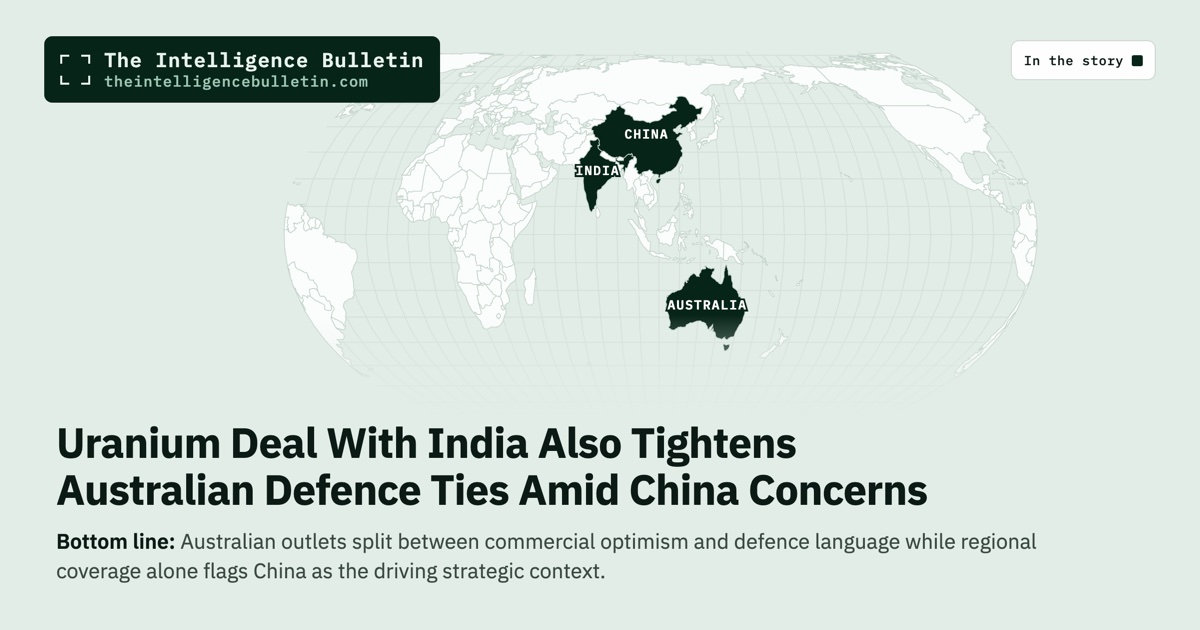
Uranium Deal With India Also Tightens Australian Defence Ties Amid China Concerns

Map of the countries in the story: Uranium Deal With India Also Tightens Australian Defence Ties Amid China Concerns
On July 9, 2026, Australian Prime Minister Anthony Albanese and visiting Indian Prime Minister Narendra Modi announced an agreement allowing Australian uranium exports to India for civilian nuclear use. The deal, reached in Melbourne, also covers cooperation in renewables, critical minerals, green hydrogen, and defence including a new Joint Declaration on Defence and Security Cooperation plus a Maritime Security Collaboration Roadmap. Australian sources highlight commercial and domestic mining opportunities while noting Greens opposition over potential weapons risks; regional reporting adds context on Indo-Pacific strategic concerns.

One Story. Many Angles.

šŸ‡¦šŸ‡ŗ
Australia
ABC
Australia to supply uranium to India
Read →
šŸ‡¦šŸ‡ŗ
Australia
Sydney Sun
India Australia seal uranium deal to enhance defence and maritime cooperation
Read →
šŸ‡øšŸ‡¬
Singapore
Asia News Network
Indian PM Modi inks uranium and defence deals in Australia amid regional anxieties
Read →
šŸ‡¬šŸ‡§
United Kingdom
Shafaqna English
Australia seals uranium export deal with India
Read →
In Brief

Australian outlets split between commercial optimism and defence language while regional coverage alone flags China as the driving strategic context.

The uranium deal itself is straightforward commercial energy policy, yet the surrounding coverage reveals how different outlets weigh the bilateral relationship’s strategic weight. ABC’s domestic lens stresses Australian mining gains and internal political pushback from the Greens on safeguards, treating the export as a resources-sector win with domestic hurdles. Sydney Sun, reprinting Indian wire copy, foregrounds the defence and maritime elements as the core advance, listing expanded exercises, information sharing and a new annual ministers’ dialogue. Asia News Network, writing from Singapore, places the agreements explicitly against China’s military rise and Quad dynamics, quoting Australian ministers on shared missile concerns and noting India’s desire to diversify away from Russian uranium. Shafaqna’s Reuters-sourced piece stays narrowly on the export mechanics and joint pledges in renewables, omitting defence language entirely. This pattern shows Australian outlets split between commercial optimism and strategic partnership language, while the regional Asian outlet alone supplies the geopolitical anxiety that makes the timing and scope of the deals notable. The consensus across sources is that the civil nuclear step is now operational; the divergence lies in whether that step is presented as routine trade or as one element of tighter Indo-Pacific alignment.

Perspective Analysis

Australia and India’s July 9 agreement to operationalise uranium exports is a narrow commercial step that unlocks Australian resources for India’s civilian nuclear program. The surrounding coverage, however, demonstrates how outlets assign different weights to the same summit, with most treating defence and maritime measures as secondary while one regional perspective correctly identifies them as the primary signal of tightened Indo-Pacific alignment. What is at stake is not simply energy trade but whether Australia is prepared to treat its relationship with India as a durable strategic hedge against Chinese military expansion.

The deal itself allows Australian uranium to reach Indian reactors under existing safeguards that restrict use to peaceful purposes. Australian Prime Minister Anthony Albanese described the step as providing an additional market for the domestic resources sector and helping India increase non-fossil fuel capacity. Indian Prime Minister Narendra Modi, speaking after the Melbourne meeting, called the opportunities historic for meeting India’s rising power demand and supporting its clean-energy transition. Both leaders also announced parallel pledges on renewables, critical minerals and green hydrogen, yet these elements receive uneven emphasis depending on the outlet.

Australia’s public broadcaster ABC framed the announcement principally through the lens of domestic mining interests. Its report highlighted industry welcomes for potential new demand and noted calls from the Minerals Council of Australia to lift state-level bans on uranium mining in New South Wales, Queensland and Western Australia. It also recorded the Greens’ immediate opposition, with Senator David Shoebridge warning of risks that material could be diverted to India’s nuclear weapons program. The piece placed the uranium supply at the centre and treated defence language as background rather than the main event.

By contrast, the Sydney Sun carried reporting from India’s ANI wire service that placed the new Joint Declaration on Defence and Security Cooperation and the Maritime Security Collaboration Roadmap at the forefront. The account listed expanded military exercises, greater interoperability, information sharing, personnel exchanges and a new annual Defence Ministers’ Dialogue as core outcomes of the third India-Australia Annual Summit. It quoted Foreign Secretary Vikram Misri describing the measures as recognition that the partnership must adapt to changing geopolitical realities. The uranium deal appeared among eighteen total outcomes rather than as the lead item.

The Asia News Network report, written from Singapore and drawing on Straits Times coverage, supplied the explicit geopolitical framing missing from the two Australian domestic pieces. It situated the uranium and defence agreements against shared concerns over China’s military rise, noting both countries’ membership in the Quad and quoting Australian Defence Minister Richard Marles on the need to respond to the strategic landscape and China’s growing missile range. The piece added context on India’s desire to diversify uranium sources away from Russia amid trade disruptions and described China as the unspoken factor driving closer ties. It also recorded industry estimates that Australian supplies could help India reach a 100-gigawatt nuclear target by 2047.

Shafaqna English, relying on Reuters copy, produced the narrowest account. Its summary confined itself to the uranium export mechanics and the joint pledges on renewables, critical minerals and green hydrogen. No defence declaration, maritime roadmap or regional security references appeared. The report presented the transaction as routine trade expansion without reference to strategic context.

These differences reveal more than editorial preference. The two Australian outlets split along familiar lines: one prioritising resources policy and internal political debate, the other reproducing Indian framing that elevates strategic partnership language. The regional Asian network alone connected the dots between the deals and concrete anxieties over Chinese capabilities, including a recent Pacific missile test. The Reuters-derived piece, by omitting those connections, effectively presented the summit as a standard bilateral commercial announcement.

The defence elements carry greater long-term weight than the uranium export alone. The new Joint Declaration renews and expands a 2009 security framework, adding commitments across cyber, emerging technologies, counter-terrorism, humanitarian assistance and regional security. The accompanying Maritime Security Collaboration Roadmap focuses on information sharing, capability development and operational coordination, supported by a fresh coast-guard memorandum. Leaders also endorsed an annual ministers’ dialogue and deeper industry-to-industry defence links. These steps build on the 2020 Comprehensive Strategic Partnership and the Mutual Logistics Support Arrangement, moving the relationship from dialogue toward integrated planning.

The uranium component remains contingent on regulatory and production realities. Australia holds roughly one-third of global reserves yet ranks only fourth in production because of state mining bans. Industry sources cited in the coverage indicated the new export arrangements include clearer safeguards, but actual shipments will depend on whether those bans are lifted and on India’s ability to meet Australian non-proliferation conditions. The civil nuclear agreement itself dates to earlier years; the July 9 step was operationalisation rather than a fresh treaty.

What to Watch

What happens next will test whether the defence roadmap produces measurable changes in interoperability and contingency planning. The pattern of coverage suggests Australian domestic audiences will continue to hear the relationship described mainly in trade and resources terms, while regional observers already read the same announcements as incremental tightening of Quad-adjacent coordination. That divergence matters because sustained public support for deeper security ties requires clearer explanation of the strategic drivers. If the defence and maritime measures remain under-emphasised at home, future governments may face greater domestic friction when those commitments require resources or political capital. The July agreements therefore mark not an endpoint but a clearer baseline against which both the pace of implementation and the honesty of public explanation can be judged.
Share this story

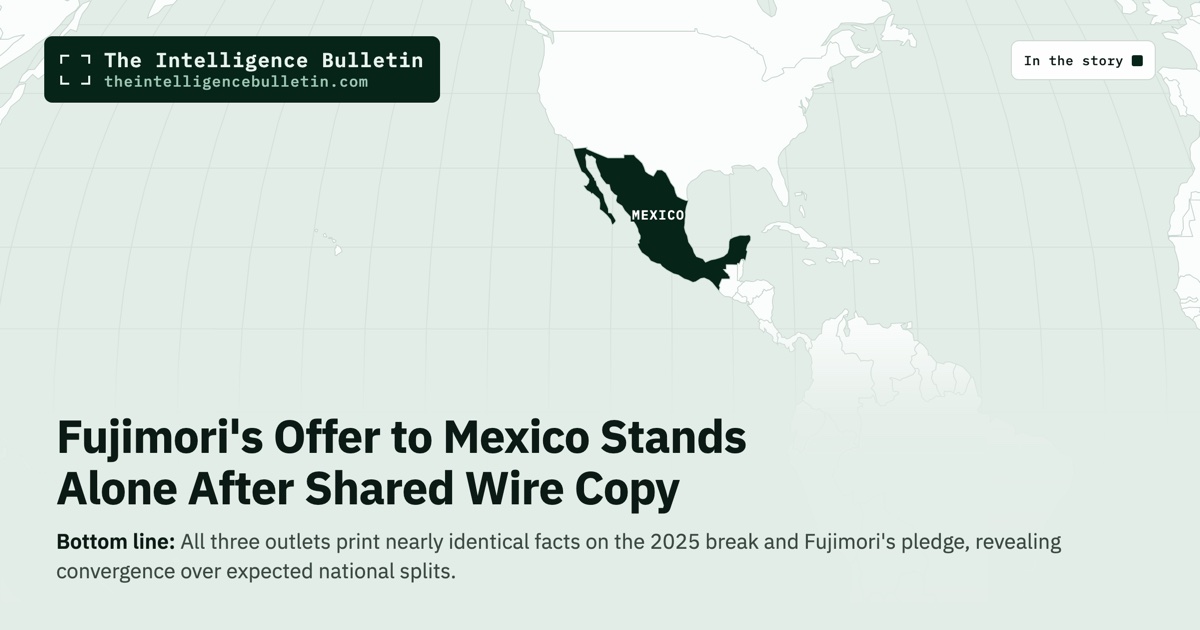
Fujimori’s Offer to Mexico Stands Alone After Shared Wire Copy

Map of the countries in the story: Fujimori's Offer to Mexico Stands Alone After Shared Wire Copy
On July 9, 2026, Peru’s president-elect Keiko Fujimori stated in Lima that she has every intention of resuming diplomatic relations with Mexico. Ties were severed in November 2025 after Mexico granted asylum to former prime minister Betssy ChĆ”vez, who faces charges tied to Pedro Castillo’s failed 2022 power grab. Mexican President Claudia Sheinbaum said she has had no contact with Fujimori and recalled that Peru broke relations over Mexico’s view of Castillo as a political prisoner. All three outlets reported the same core statements and background.

One Story. Many Angles.

šŸ‡·šŸ‡ŗ
Russia
RT
SPANISH
Keiko Fujimori ‘extends a hand’ to Mexico to resume relations
“Keiko Fujimori tiende la mano a Mexico para retomar las relaciones”
Read →
šŸ‡­šŸ‡³
Honduras
Proceso
SPANISH
Keiko Fujimori reiterates she has ‘every intention’ of resuming relations with Mexico
“Keiko Fujimori reitera que tiene toda la voluntad de retomar relaciones con Mexico”
Read →
šŸ‡²šŸ‡½
Mexico
El Economista
SPANISH
Keiko Fujimori opens the door to resuming relations between Peru and Mexico
“Keiko Fujimori abre la puerta a retomar las relaciones entre Peru y Mexico”
Read →
In Brief

All three outlets print nearly identical facts on the 2025 break and Fujimori’s pledge, revealing convergence over expected national splits.

The three reports converge on the same wire-level facts: Fujimori’s public pledge in Lima, the November 2025 rupture over asylum for Betssy ChĆ”vez, and Sheinbaum’s reminder that Peru severed ties after Mexico called Castillo’s imprisonment political. RT quotes Sheinbaum directly on the lack of communication while noting Mexico’s stance on Castillo. Proceso and El Economista, both carrying EFE material, add the same details on ChĆ”vez’s 25-year prison request and the absence of ambassadors since 2023. The uniformity reveals how the story registers as routine diplomacy rather than dynastic rehabilitation in Peru or leftist solidarity in Mexico; no outlet explores economic fallout from the Pacific Alliance or Fujimori’s upcoming July 28 inauguration. The shared restraint suggests the event is still too early for partisan spin.

Perspective Analysis

Keiko Fujimori’s pledge to restore diplomatic relations with Mexico stands out mainly because almost no one else has yet treated it as anything more than a standard post-election courtesy. The three reports that covered her July 9, 2026, remarks in Lima all drew from the same narrow set of facts and delivered them with nearly identical phrasing, showing that the episode has not yet acquired the partisan charge that might appear closer to her July 28 inauguration.

Fujimori made the statement after an event at the Municipalidad de Lima. She told reporters that ā€œDe mi lado, habrĆ” toda la intención para poder retomar las relaciones entre PerĆŗ y MĆ©xico.ā€ The comment came one day after Mexican President Claudia Sheinbaum said during her morning press conference that she had received no contact from the president-elect and would wait to see what happened. Sheinbaum added that Peru had severed ties in November 2025 precisely because Mexico had described former president Pedro Castillo as a political prisoner held illegally. She stressed that Mexico’s position remained purely declarative and had involved no further actions against Peru.

The rupture itself traces directly to Mexico’s decision to grant asylum to former prime minister Betssy ChĆ”vez, who is facing prosecution for her alleged role in Castillo’s unsuccessful December 2022 attempt to dissolve Congress. Peruvian prosecutors have requested a 25-year sentence for ChĆ”vez on conspiracy charges. She has denied prior knowledge of the plan. Castillo himself is serving an 11-year-and-five-month term on the same conspiracy count. Both countries have lacked resident ambassadors since early 2023 over the same underlying disagreement about Castillo’s case.

Proceso carried the account under an EFE byline and limited itself to the chronology: Fujimori’s repetition of her earlier campaign-era remarks about prioritizing friendship, Sheinbaum’s restatement of Mexico’s stance, and the November 2025 break triggered by ChĆ”vez’s asylum. El Economista, writing from a Mexican perspective, added only that Fujimori had defeated leftist candidate Roberto SĆ”nchez in a close election and will serve a five-year term. RT quoted Sheinbaum at slightly greater length on the lack of communication and on Mexico’s view that the congressional vote threshold for removing Castillo had not been met, but it introduced no additional analysis.

The convergence on these exact elements, without elaboration on economic consequences inside the Pacific Alliance or on Fujimori’s family political history, indicates that the outlets judged the story too preliminary for interpretive framing. No report examined whether resumed ties would affect trade volumes, regional integration mechanisms, or the pending legal proceedings against ChĆ”vez. The shared restraint leaves the episode looking like ordinary diplomatic housekeeping rather than either a rehabilitation of the Fujimori name in Peru or a test of leftist solidarity in Mexico.

What to Watch

Because the statements occurred only days before Fujimori takes office, the next moves will likely come from her new government rather than from the outgoing administration. Sheinbaum’s public posture of waiting for a formal approach suggests Mexico will respond only after receiving concrete proposals, most probably through lower-level channels first. Whether the two sides move quickly will depend on how Fujimori’s team weighs the symbolic value of restoring ambassadors against any domestic political cost attached to engaging the same Mexican government that sheltered ChĆ”vez. At this stage the coverage pattern already signals that the episode is being filed under routine diplomacy until one side chooses to raise the stakes.


Share this story

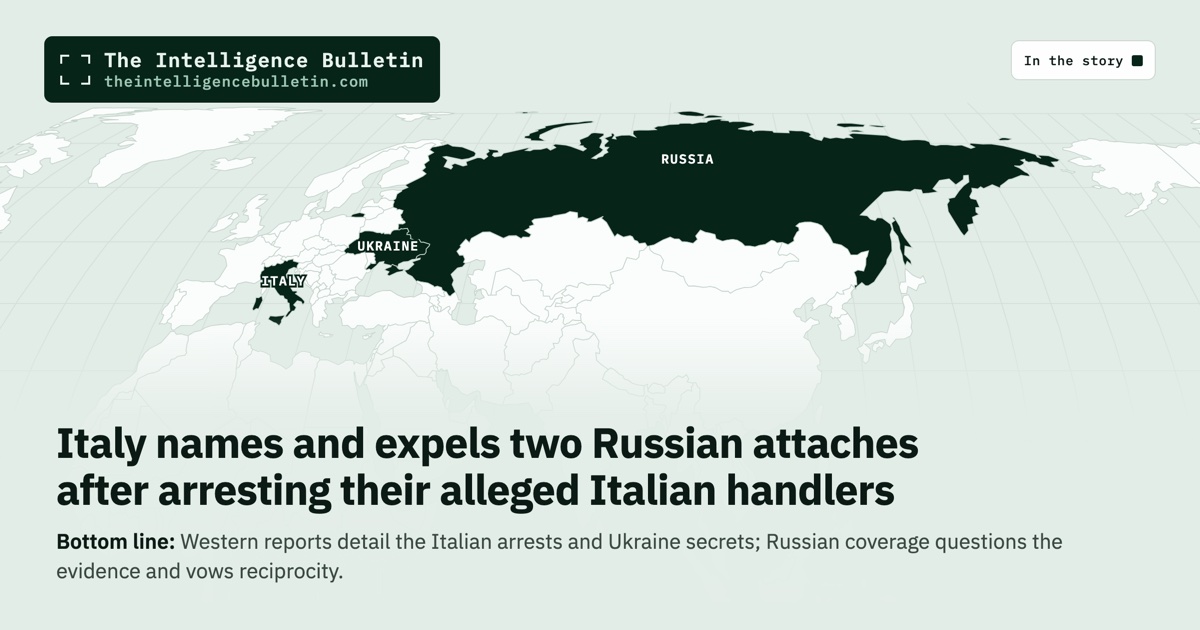
Italy names and expels two Russian attaches after arresting their alleged Italian handlers

Map of the countries in the story: Italy names and expels two Russian attaches after arresting their alleged Italian handlers
On 9 July 2026 Italy expelled Russian military attaches Ivan Petrovich Gorbachev and Mikhail Vasilyevich Astakhov from its Rome embassy. Foreign Minister Antonio Tajani cited espionage uncovered by the Rome prosecutor’s office. The move followed arrests of two former Italian intelligence officers accused of selling secrets on air-defense systems and other military aid destined for Ukraine. Moscow said it would respond appropriately.

One Story. Many Angles.

šŸ‡®šŸ‡¹
Italy
Ansa
ARABIC
Italy expels Russian diplomats over espionage, Moscow vows response
Read →
šŸ‡·šŸ‡ŗ
Russia
Vedomosti
RUSSIAN
Italy announces expulsion of two Russian diplomats
Read →
šŸ‡«šŸ‡·
France
Euronews
Italy expels two Russian diplomats accused of spying, FM Antonio Tajani says
Read →
šŸ‡«šŸ‡·
France
L’Express
FRENCH
Italy expels two Russian military attaches for espionage
Read →
šŸ‡ŗšŸ‡¦
Ukraine
24 TV
UKRAINIAN
Russian spies in Europe – Italy expels two Russian military attaches
Read →
In Brief

Western reports detail the Italian arrests and Ukraine secrets; Russian coverage questions the evidence and vows reciprocity.

The Italian expulsions rest on concrete arrests of former Italian spies who allegedly fed Russia details of SAMP/T systems and Aster missiles heading to Ukraine. Euronews and L’Express spell out those domestic arrests and the hybrid-war context. Vedomosti reports the same expulsions but stresses Moscow’s promise of reciprocity and past Russian claims that similar accusations lack proof. 24 TV alone places the case inside a continent-wide pattern of Russian military-intelligence activity tied to the ongoing war. The shared factual core is the two named attaches and the three-day deadline; the split lies in whether the Italian evidence is presented as decisive or merely asserted.

Perspective Analysis

Italy’s expulsion of two named Russian military attaches rests on tangible arrests of their alleged Italian handlers and specific leaks about air-defense systems bound for Ukraine, exposing a pattern of Russian intelligence targeting Western military aid that Russian accounts continue to dismiss as unproven. The episode underscores how espionage cases tied directly to the Ukraine war are fracturing what remains of normal diplomatic relations between Moscow and European capitals, with the evidence presented by Italian authorities carrying more weight than blanket denials because it includes documented arrests, recorded meetings, and classified material on systems such as the SAMP/T and Aster missiles.

Foreign Minister Antonio Tajani announced on 9 July 2026 that the government had ordered Ivan Petrovich Gorbachev and Mikhail Vasilyevich Astakhov to leave Italy within three days after Rome prosecutors linked them to espionage. The decision followed the earlier arrest of two former Italian intelligence officers, including 59-year-old Gavino Raoul Piras, who retired in 2012. Italian reporting and subsequent coverage in Euronews and L’Express detail how Piras and associates allegedly passed information obtained from serving military personnel in sensitive posts. The material included details on the Italian-French SAMP/T air-defense system scheduled for delivery to Ukraine, Aster missiles already sent to Kyiv, a NATO mission in Bulgaria, and the Italian firm Avio that produces motors for drones and supersonic missiles. One account described the former officer providing the identities of Italian counter-espionage personnel tasked with monitoring the Russian embassy.

Tajani characterized the activity as continued Russian use of hybrid-warfare methods against the West and Italy, calling the interference serious and unacceptable to national security. Defense Minister Guido Crosetto described the case as merely the tip of an iceberg. These statements align with the concrete steps taken by prosecutors and police, including surveillance that captured meetings near Lake Bracciano and the use of dead drops and anti-surveillance tactics such as placing a phone in a microwave. A lawyer for one suspect countered that only open-source information was involved, yet the judicial description of documents marked from ā€œconfidentialā€ to ā€œNATO Secretā€ undercuts that defense.

Western European outlets such as Euronews and L’Express foreground the domestic Italian counter-espionage success and the direct connection to Ukraine-bound military aid. Euronews noted that one detainee had been paid by a Russian handler and disclosed information through six sources, four of them serving military personnel. L’Express added operational details of the alleged tradecraft and placed the requests in the context of broader European security concerns, including British-linked agents. These reports treat the Italian evidence as the core of the story rather than a diplomatic sideshow.

Russian coverage, by contrast, reports the same expulsions but immediately pivots to Moscow’s pledge of an ā€œappropriate responseā€ and recalls earlier cases, such as Austria’s May 2026 expulsion of three diplomats, where the Foreign Ministry labeled the accusations politically motivated and lacking proof under the Vienna Convention. Vedomosti presents the Italian move as part of a pattern of unverified claims without engaging the specifics of the arrested handlers or the leaked systems. This framing serves Moscow’s consistent position that such expulsions are retaliatory and unsubstantiated, even as the Italian side supplies names, deadlines, and ties to ongoing military assistance for Ukraine.

Ukrainian outlet 24 TV situates the Rome case inside a wider continental pattern of Russian military-intelligence activity amid the invasion, a perspective absent from both the Russian and most Western accounts. The shared factual core across all reports remains the identities of Gorbachev and Astakhov and the three-day deadline. The divergence appears in whether the Italian arrests and documented leaks are treated as decisive proof or simply asserted without examination.

The Italian evidence, anchored in arrests and judicial findings rather than anonymous assertions, stands closest to the operational reality on the ground. European governments supporting Ukraine have every incentive to publicize successful disruptions of Russian networks that target precisely the weapons flows sustaining Kyiv’s defense. Moscow’s interest lies in portraying every such action as arbitrary to preserve its remaining diplomatic footholds and to justify future reciprocity. The pattern of tit-for-tat expulsions that has already occurred in prior Italian cases, including the 2021 expulsion of two Russian officials after a navy captain’s conviction, suggests the immediate next step will be a Russian response targeting Italian diplomats or attaches elsewhere.

What to Watch

What matters for readers is that these expulsions are not abstract diplomatic theater. They reflect active Russian efforts to obtain details on systems protecting Ukrainian cities and forces, efforts that Italian authorities have now interrupted with arrests rather than mere statements. The erosion of diplomatic cover for intelligence officers accelerates as the war continues, leaving fewer channels for even minimal communication and increasing the risk that future incidents will be handled entirely through covert means or public confrontation.


Share this story

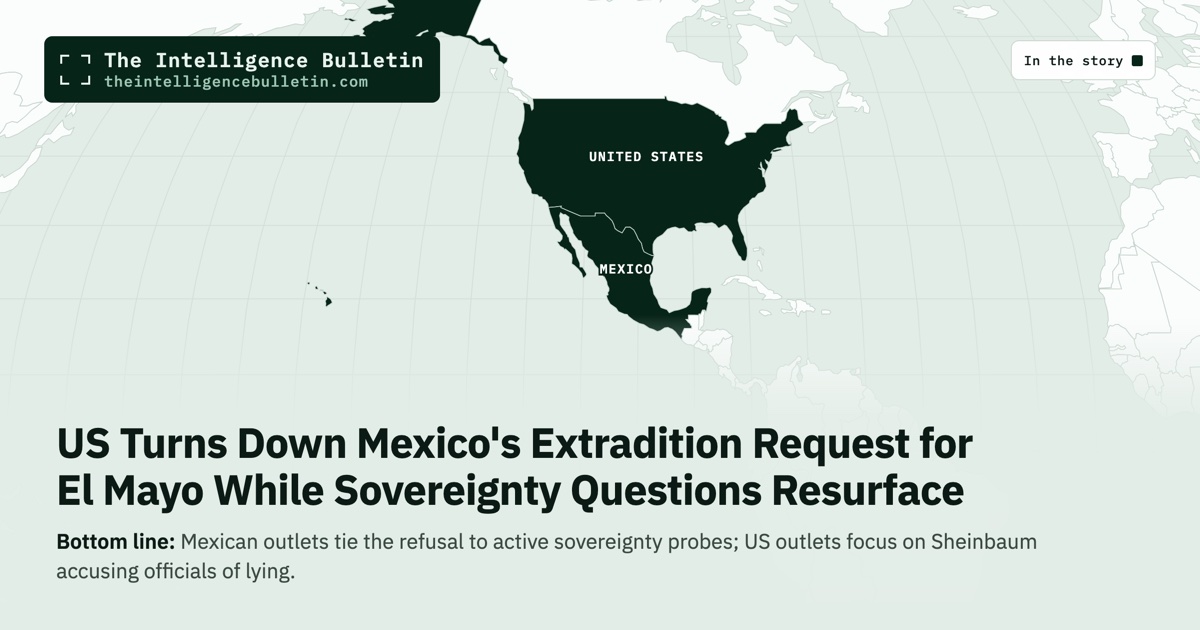
US Turns Down Mexico’s Extradition Request for El Mayo While Sovereignty Questions Resurface

Map of the countries in the story: US Turns Down Mexico's Extradition Request for El Mayo While Sovereignty Questions Resurface
On July 8, 2026, the US Department of Justice rejected Mexico’s formal extradition request for Ismael Zambada GarcĆ­a, known as ‘El Mayo.’ Mexican authorities cited 32 pending organized-crime investigations and active arrest warrants. The US cited Zambada’s existing federal court proceedings in the United States. The refusal coincides with renewed Mexican probes into whether US agencies violated sovereignty during his 2024 capture and transfer.

One Story. Many Angles.

šŸ‡²šŸ‡½
Mexico
Zeta Tijuana
SPANISH
US refused to extradite El Mayo Zambada despite 32 investigations in Mexico
“EU rechazó extraditar a El Mayo Zambada pese a 32 investigaciones en MĆ©xico”
Read →
šŸ‡ŗšŸ‡ø
United States
Los Angeles Times
SPANISH
Mexico reopens controversy over alleged US participation in El Mayo Zambada arrest
“MĆ©xico reabre polĆ©mica sobre supuesta participación de EEUU en arresto de El Mayo Zambada”
Read →
šŸ‡²šŸ‡½
Mexico
Aristegui Noticias
SPANISH
Mexico investigates whether the US violated its sovereignty to capture El Mayo
“MĆ©xico investiga si EE.UU. violó su soberanĆ­a para capturar a El Mayo”
Read →
šŸ‡ŗšŸ‡ø
United States
Telemundo
SPANISH
Who lied?: Sheinbaum questions the US version of El Mayo Zambada’s capture
“ĀæQuiĆ©n mintió?: Sheinbaum cuestiona la versión de EE.UU. sobre la captura de El Mayo Zambada”
Read →
šŸ‡²šŸ‡¾
Malaysia
Free Malaysia Today
Mexico probing if US violated sovereignty in 2024 druglord capture
Read →
In Brief

Mexican outlets tie the refusal to active sovereignty probes; US outlets focus on Sheinbaum accusing officials of lying.

The US refusal to hand over Zambada lands amid fresh Mexican scrutiny of how he reached American custody two years earlier. Zeta Tijuana and Aristegui Noticias lead with the extradition denial and Mexico’s 32 cases while tying it directly to active sovereignty investigations triggered by the FBI’s recent museum display of the transfer plane. Los Angeles Times and Telemundo instead open with President Sheinbaum’s public accusation that US officials lied about agency involvement, quoting her repeated question ‘ĀæQuiĆ©n mintió?’ Free Malaysia Today steps outside the bilateral frame to note the probe’s implications for international norms. All five outlets confirm the same core facts—the rejection and the revived 2024 questions—yet only the Mexican sources stress ongoing FGR inquiries into possible treaty breaches and altered aircraft markings. The pattern shows that once the extradition denial surfaced, Mexican reporting immediately folded it into domestic sovereignty grievances while US Spanish-language outlets amplified Sheinbaum’s trust-eroding rhetoric. What emerges is not disagreement on events but a clear split on which tension matters most: cartel accountability versus state-to-state reciprocity.

Perspective Analysis

The United States rejection of Mexico’s extradition request for Ismael Zambada GarcĆ­a on July 8, 2026, does not merely delay one cartel leader’s return. It exposes the hard limit of bilateral cooperation: American courts will keep priority over Mexican prosecutions even when Mexico holds 32 active organized-crime cases and live arrest warrants. The refusal lands while Mexican authorities are once again examining whether the 2024 transfer itself breached sovereignty, triggered by the FBI’s recent museum exhibition of the aircraft used to fly Zambada north. The resulting coverage split shows Mexican outlets folding the denial into institutional sovereignty inquiries, U.S. Spanish-language outlets centering President Claudia Sheinbaum’s direct accusations of U.S. deception, and an outside observer framing the episode as a test of treaty reciprocity. The core facts remain identical across reports; what diverges is which tension each outlet treats as primary.

Zambada, 76 and co-founder of the Sinaloa cartel, arrived in U.S. custody on July 25, 2024, alongside JoaquĆ­n GuzmĆ”n López, son of JoaquĆ­n ā€œEl Chapoā€ GuzmĆ”n. GuzmĆ”n López later admitted he had tricked and effectively kidnapped Zambada to win favor with American prosecutors. Zambada has maintained he was taken against his will. The U.S. Embassy in Mexico stated at the time that no American agency participated in planning or executing the operation. Two years later the FBI placed the same plane on public display in a Texas museum as an example of one of its actions, prompting renewed Mexican scrutiny.

On July 8 the Mexican Attorney General’s Office announced that the Department of Justice had formally declined the extradition request tied to three organized-crime cases involving health offenses. Ernestina Godoy Ramos, the attorney general, noted that Zambada already faces proceedings in a U.S. federal district court. The office added that it had conducted inspections, international legal assistance requests, and analysis of the aircraft, which showed altered markings, modified lighting and engines, changed fuel systems, and an unauthorized takeoff from an unmarked strip. Godoy Ramos described the U.S. information supplied so far as partial and said the FiscalĆ­a General de la RepĆŗblica would continue investigating possible violations of Mexican and international law.

Mexican reporting treats the extradition denial and the sovereignty probe as a single ongoing story. One border-focused outlet led directly with the Justice Department’s refusal while detailing the 32 pending Mexican investigations and the active FGR examination of the 2024 flight. It emphasized that the attorney general’s office is seeking further documentation on the aircraft and any foreign-agency role inside Mexican territory. Another investigative outlet centered the FGR’s formal inquiries into whether U.S. agencies violated treaties and the Mexican constitution, quoting officials on contradictory landing-site accounts and altered transponder use. Both reports foreground institutional steps rather than personal rhetoric.

U.S. Spanish-language coverage instead opened with Sheinbaum’s morning press conference. She asked repeatedly ā€œĀæQuiĆ©n mintió?ā€ and pointed to the museum display as contradicting the earlier embassy denial. She raised the possibility of legal action against former ambassador Ken Salazar if the discrepancy holds and stressed that Mexico seeks reciprocity: Washington cannot demand cooperation while withholding clarity on its own actions. One network report framed the episode as a direct challenge to U.S. credibility and highlighted Sheinbaum’s insistence that any unauthorized operation would breach treaties and domestic security law. These accounts give greater weight to the political confrontation than to the technical details of the FGR investigation.

An outlet outside the bilateral relationship summarized the same events as Mexico probing a possible sovereignty violation following the FBI exhibit. It noted the contradictory official versions and the risk that any U.S. agency role would breach international agreements, without dwelling on Sheinbaum’s phrasing or the attorney general’s case count. This external framing isolates the treaty question as a standalone issue of state conduct.

The Mexican institutional accounts come closest to the operational reality because they alone connect the July 8 extradition refusal to the concrete legal work already under way inside the FiscalĆ­a General de la RepĆŗblica. The denial rests on a simple U.S. position: Zambada is already in American proceedings. That position gains force from the 2024 capture itself, which produced his guilty plea and a request for life imprisonment with specialized medical care. Mexican prosecutors, however, retain 32 domestic cases and active warrants; the sovereignty inquiry is the mechanism they are using to press for fuller disclosure before any further cooperation.

What to Watch

Sheinbaum has said Mexico will not suspend security cooperation but will insist on transparency. The pattern of past episodes suggests Washington will supply limited additional information and the matter will recede without formal rupture. Yet the underlying asymmetry remains: U.S. prosecutors now hold the highest-value defendant and show no inclination to return him. Continued Mexican demands for answers about the 2024 flight will therefore function less as a path to extradition and more as a standing reminder that joint operations carry sovereignty costs. Readers tracking cartel violence in Sinaloa, where homicides rose sharply after the 2024 arrests, should watch whether those demands produce any new documentary evidence or simply become another unresolved grievance between the two governments.


Share this story

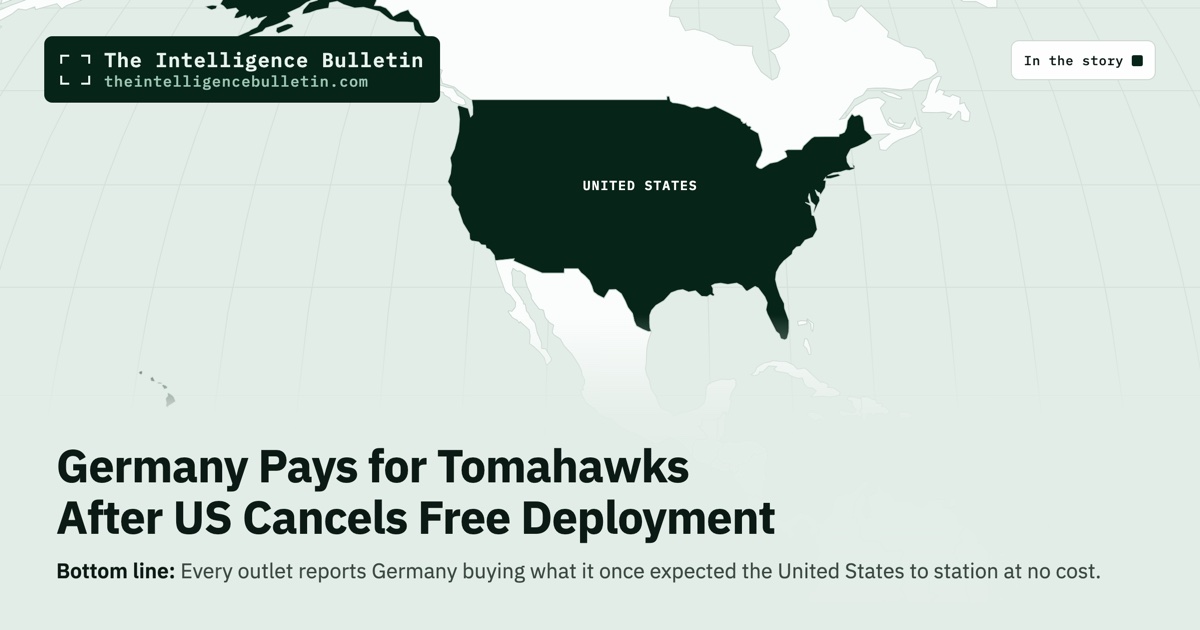
Germany Pays for Tomahawks After US Cancels Free Deployment

Map of the countries in the story: Germany Pays for Tomahawks After US Cancels Free Deployment
On July 9, 2026, German Chancellor Friedrich Merz announced that Germany and the United States agreed for Berlin to purchase Tomahawk cruise missiles and deploy them on German territory. The deal was sealed on the margins of the NATO summit in Ankara and replaces earlier plans for a temporary US deployment that were later altered. Merz described it as closing a strategic gap in Germany’s defense while European countries develop their own long-range systems.

One Story. Many Angles.

šŸ‡øšŸ‡°
Slovakia
DennĆ­k N
SLOVAK
Germany agrees with USA on purchase of Tomahawk missiles and their deployment in the country
“Nemecko sa dohodlo s USA na nĆ”kupe rakiet Tomahawk a ich rozmiestnenĆ­ v krajine”
Read →
šŸ‡­šŸ‡·
Croatia
Dnevnik
CROATIAN
Germany acquires powerful missiles from the USA, will deploy them on its territory
“Njemačka od SAD-a nabavlja moćne rakete, rasporedit će ih na svom teritoriju”
Read →
šŸ‡øšŸ‡¦
Saudi Arabia
Okaz
ARABIC
Merz: America agreed to supply us with Tomahawk missiles to close the defense gap
“Ł…ŁŠŲ±ŲŖŲ³: Ų£Ł…Ų±ŁŠŁƒŲ§ ŁˆŲ§ŁŁ‚ŲŖ على ŲŖŲ²ŁˆŁŠŲÆŁ†Ų§ بصواريخ ŲŖŁˆŁ…Ų§Ł‡ŁˆŁƒ لسد Ų§Ł„ŁŲ¬ŁˆŲ© Ų§Ł„ŲÆŁŲ§Ų¹ŁŠŲ©”
Read →
šŸ‡ŗšŸ‡ø
United States
Big News Network
Germany to buy Tomahawk cruise missiles from U.S.
Read →
šŸ‡®šŸ‡³
India
Hindustan Times
US approves sale of Tomahawk missiles to Germany, says Chancellor Merz
Read →
In Brief

Every outlet reports Germany buying what it once expected the United States to station at no cost.

All five outlets report the same core transaction: Merz telling parliament that Washington approved the sale during the Ankara NATO meeting to station American Tomahawks on German soil. The Slovak and Croatian pieces add the clearest Russia-deterrence line, noting Berlin sees the missiles as an immediate stopgap while Europe builds its own. The Saudi report stays closest to Merz’s wording on filling the defensive gap and pairs it with praise for NATO unity and a separate German submarine export deal. The US aggregator sticks to procurement facts and the Biden-to-Trump timeline shift. The Indian piece alone flags the earlier Merz-Trump friction over Iran and depleted US stocks from multiple wars. The uniform thread across languages and regions is that Germany is now buying what it once expected the United States to station for free, a quiet acknowledgment that European allies must pay for and host their own strike weapons.

Perspective Analysis

Germany’s decision to purchase and host American Tomahawk cruise missiles marks a clear shift from earlier expectations of a no-cost U.S. deployment to a straightforward commercial transaction. Chancellor Friedrich Merz presented the agreement to the Bundestag on July 9 as a necessary fix after Washington altered prior plans, forcing Berlin to pay for weapons it once anticipated receiving under temporary American operational control. This change, sealed on the sidelines of the NATO summit in Ankara, underscores how U.S. force adjustments have compelled European allies to assume direct financial responsibility for their long-range strike capabilities while they pursue independent systems.

The timeline begins with a 2024 agreement between Germany and the United States under the Biden administration to station an American battalion equipped with Tomahawks on German soil starting in 2026. That arrangement was later reduced or withdrawn after Donald Trump returned to office and signaled cuts to U.S. military presence in Europe. Merz told parliament that the new purchase deal directly addresses the resulting gap, allowing German forces to operate the missiles themselves rather than rely on a scaled-back American unit. Slovak coverage explicitly ties this reversal to the change in U.S. administration, noting that Berlin now views the weapons as an immediate deterrent against Russia while European programs mature.

Regional outlets in Central and Southeastern Europe stress the practical security implications most sharply. Slovak reporting frames the missiles as filling a vacuum left by reduced American deployments, with explicit reference to their value for Central European defense. Croatian accounts highlight the strong deterrent effect against Russia during the period when Europe develops comparable indigenous systems, pairing the announcement with separate reporting on Moscow’s reaction to NATO decisions. Both treatments treat the purchase as a pragmatic stopgap rather than an abstract alliance gesture, reflecting their proximity to potential eastern threats.

Saudi reporting stays closer to Merz’s own phrasing about closing a defensive gap and pairs it with emphasis on NATO cohesion. It records his praise for Secretary General Mark Rutte’s summit preparation and notes a parallel major German submarine export deal to Canada valued at up to 100 billion euros over coming decades. The account also supplies operational context on Tomahawk use in prior conflicts and U.S. production targets, presenting the transaction as routine alliance procurement that reinforces transatlantic ties without foregrounding Russia-specific signaling.

The U.S. aggregator version, drawing on wire copy, confines itself to procurement mechanics and the Ankara announcement. It records the Bundestag statement and the shift from the scrapped temporary deployment plan without additional geopolitical framing. Indian coverage alone supplies background on earlier friction, including Merz’s April remarks criticizing Iran’s negotiating stance toward Washington and subsequent Trump criticism of the chancellor, alongside references to depleted U.S. stockpiles from operations in Iran and Ukraine. This context explains why the original deployment plan gave way to a sale.

The uniform element across these accounts is Berlin’s acceptance that it must now buy what it previously expected the United States to station at no direct cost to Germany. Merz’s statement that the missiles close a strategic gap while Europe builds its own long-range options appears in nearly identical form in the primary reporting. The pattern reveals a quiet recalibration inside NATO: European members are moving from host-nation status for U.S. weapons to outright ownership of strike systems, with Germany accelerating its own defense spending through planned borrowing of 800 billion euros by 2030.

The Indian account comes closest to capturing the full reversal because it alone situates the deal against prior bilateral tensions and U.S. inventory constraints. Neighboring European outlets rightly emphasize deterrence continuity for their region, while the Saudi and American pieces correctly treat the transaction as standard arms-trade business. Real stakes lie in Europe’s emerging requirement to fund conventional strike options previously underwritten by Washington, a development that aligns with broader burden-sharing demands but removes any illusion of automatic U.S. provision.

What to Watch

Germany’s move is likely to accelerate similar purchases by other allies as production lines expand and European programs lag. The precedent established in Ankara shows that future deterrence on the continent will rest on paid, sovereign deployments rather than temporary foreign rotations, raising both costs and political visibility for governments that once counted on American presence at lower direct expense.


Share this story

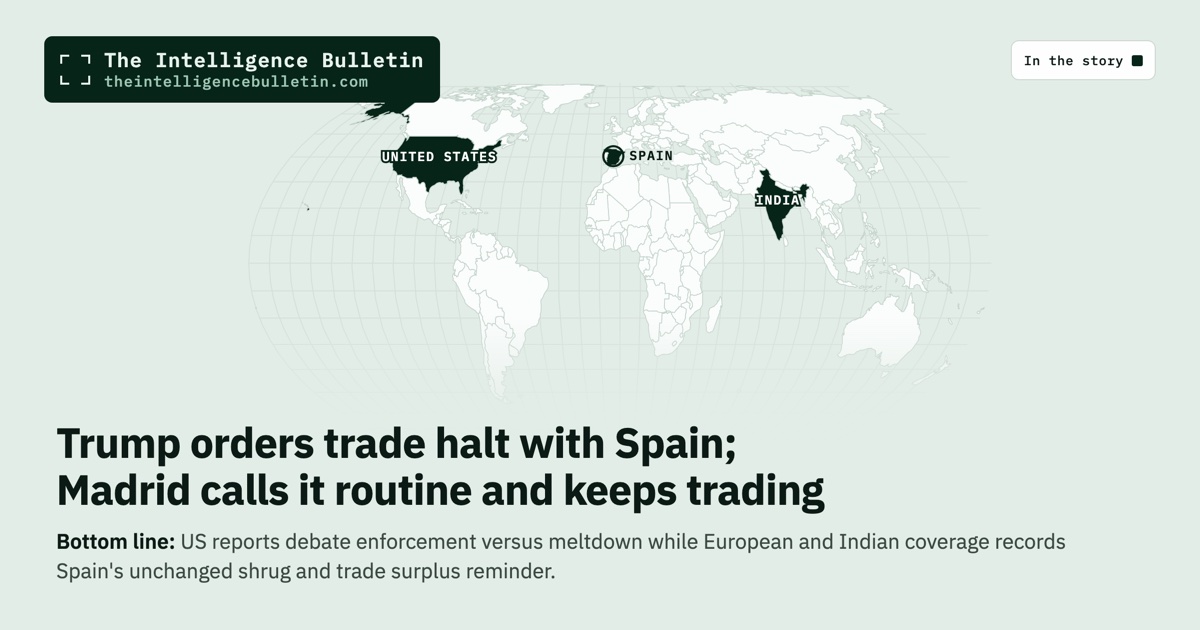
Trump orders trade halt with Spain; Madrid calls it routine and keeps trading

Map of the countries in the story: Trump orders trade halt with Spain; Madrid calls it routine and keeps trading
On July 8 2026 at the NATO summit in Ankara, President Trump ordered Treasury Secretary Scott Bessent to suspend all US trade with Spain. He cited Spain’s refusal to meet a 5 percent GDP defense target, its opposition to assisting in the Iran conflict, and its overall NATO performance. Spain’s government responded that the threats were familiar posturing and that bilateral economic and defense ties remain strong and mutually beneficial.

One Story. Many Angles.

šŸ‡ŗšŸ‡ø
United States
Breitbart
Trump Cuts Off All Trade With ‘Terrible NATO Partner’ Spain
Read →
šŸ‡ŗšŸ‡ø
United States
The Daily Beast
Trump, 80, Melts Down at Spain After Humiliating Snub
Read →
šŸ‡¬šŸ‡·
Greece
Ta Nea
GREEK
Spain responds to Trump: threats of trade rupture are ‘usual rhetoric’
“Spain responds to Trump: ‘Usual rhetoric’ the threats of trade rupture”
Read →
šŸ‡µšŸ‡±
Poland
WNP
POLISH
Trump sharply attacked an ally during the NATO summit. There is a response
Read →
šŸ‡®šŸ‡³
India
Moneycontrol
Spain is a wasted cause: Trump threatens to halt trade over defence spending, Iran war as Madrid shrugs off warning
Read →
In Brief

US reports debate enforcement versus meltdown while European and Indian coverage records Spain’s unchanged shrug and trade surplus reminder.

Every report confirms Spain’s government met the order with the same calm dismissal: routine rhetoric, no intention to alter ties, and a reminder that the US runs a trade surplus. Breitbart treats the move as overdue enforcement against a freeloading ally that also refused Iran support and clings to outdated 2 percent spending. The Daily Beast instead presents it as an erratic personal eruption after a snub. Greek outlet Ta Nea centers Madrid’s prepared rebuttal that relations stay excellent across economic, cultural and defense lines. Polish site WNP notes Sanchez’s claim of a friendly football chat with Trump and no tensions, underscoring Eastern European interest in alliance stability. Indian business outlet Moneycontrol stresses the commercial numbers and Madrid’s shrug while tying the episode to broader NATO burden-sharing disputes. The uniform Spanish non-reaction across these accounts reveals the order’s immediate practical limits: unilateral US action collides with EU single-market rules and existing trade flows that benefit Washington more than Madrid.

Perspective Analysis

President Donald Trump’s order to halt all U.S. trade with Spain during the July 8 NATO summit in Ankara exposes the narrow practical reach of unilateral American pressure on a European ally. The move, aimed at Spain’s refusal to adopt a 5 percent of GDP defense spending target and its decision to withhold support for U.S. operations tied to the Iran conflict, collides immediately with the European Union’s single-market structure and with trade patterns that already run in Washington’s favor. Spain’s government met the directive with the same prepared calm across multiple accounts: it labeled the language routine posturing, noted that commercial ties are shaped by private firms rather than governments, and pointed out that the United States runs a bilateral surplus. That consistent dismissal, rather than any reported scramble or concession, reveals the order’s limited enforceability and the real stakes in ongoing NATO burden-sharing disputes.

Trump issued the instruction directly to Treasury Secretary Scott Bessent while seated with NATO Secretary General Mark Rutte. He described Spain as a ā€œterrible partnerā€ that ā€œdoesn’t participate, doesn’t pay,ā€ and instructed Bessent to cut off all trade ā€œimmediatelyā€ and ā€œdon’t even talk to them.ā€ The president linked the step to Spain’s adherence to the older 2 percent spending benchmark and its refusal to open airspace or bases for Iran-related missions. Past threats of the same kind, including one issued in March, produced no measurable interruption in flows. Spain’s response, prepared in advance according to one European report, treated the remarks as familiar and reiterated that bilateral economic, cultural, and defense relations remain strong and mutually beneficial.

Accounts differ sharply in emphasis. One American outlet aligned with the administration framed the step as overdue enforcement against a freeloading ally, highlighting U.S. liquefied natural gas exports that make up a growing share of Spain’s energy imports and noting Spain’s energy-grid vulnerabilities after recent blackouts. Another American outlet presented the episode as an 80-year-old president’s personal eruption after a perceived snub, stressing emotional language and the absence of any formal mechanism to deliver the cutoff. Greek coverage centered Madrid’s prepared rebuttal that relations stay excellent across multiple domains and that the United States benefits more from existing trade volumes. A Polish business-security site recorded Spanish Prime Minister Pedro SĆ”nchez’s claim of a friendly, low-tension conversation with Trump that touched on football and the World Cup, underscoring Eastern European interest in keeping alliance cohesion intact. An Indian financial outlet stressed the concrete trade figures—Spain exported roughly €16.7 billion to the United States in 2025 while importing €30.2 billion—and Madrid’s shrug, reading the episode through commercial and market implications rather than alliance enforcement or domestic drama.

The Spanish non-reaction is the account closest to operational reality. EU rules prevent any member state from being singled out for a bilateral embargo; trade agreements operate at the union level. Existing numbers already show Washington selling more goods and energy to Spain than it buys, so any sustained disruption would remove a surplus rather than punish Madrid disproportionately. SĆ”nchez’s public description of the exchange as cordial and tension-free aligns with the absence of any reported follow-through steps beyond the initial directive. European officials noted that the United States cannot simply embargo a single member without broader consequences, while Spanish sources emphasized that private companies, not governments, drive the flows.

What to Watch

What happens next is therefore likely to remain rhetorical. Trump has repeated similar threats without producing structural change in European spending patterns or in Spain’s specific stance. The underlying friction over burden-sharing will persist because the 5 percent target exceeds what most allies have accepted, and Spain continues to cite its contributions to NATO missions on the eastern flank. Trade volumes, governed by EU-wide rules and private contracts, will continue unless Washington pursues a formal, union-wide negotiation or tariff package. For readers tracking alliance cohesion, the episode demonstrates that public presidential pressure can generate headlines but rarely overrides the legal and commercial architecture that already tilts the economic relationship toward the United States. The real test remains whether future summits convert spending pledges into sustained increases or whether the pattern of threats and shrugs simply repeats.


Share this story