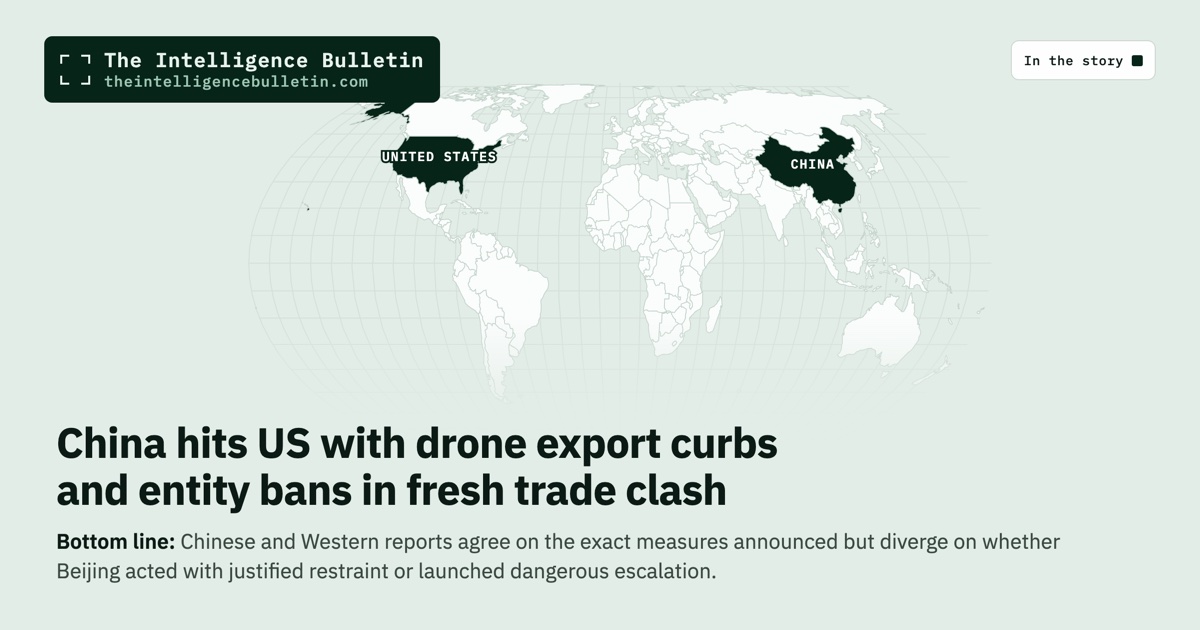
China hits US with drone export curbs and entity bans in fresh trade clash

Map of the countries in the story: China hits US with drone export curbs and entity bans in fresh trade clash
China’s Ministry of Commerce announced immediate countermeasures including case-by-case reviews of drone and component exports to the US and bans on dealings with six American entities. The moves respond to recent US actions such as FCC drone import bans and the addition of 43 Chinese firms to the Uyghur Forced Labor Prevention Act entity list. Chinese statements describe the steps as restrained retaliation and warn of further action if needed. US and other outlets report the same measures while placing them in the context of bilateral tensions ahead of an expected Xi-Trump meeting.

One Story. Many Angles.

🇨🇳
China
Global Times
Original reporting
China retaliates against latest US restrictions with a range of swift countermeasures
Read →
🇺🇸
United States
WRAL
Carries Associated Press reporting
China announces countermeasures against Washington, including controls on drones exports to the US
Read →
🇦🇺
Australia
The Canberra Times
Associated Press wire copy
China targets US firms and drone exports after bans
Read →
🇵🇰
Pakistan
ARY News
Carries AFP reporting
China announces ‘countermeasures’ after US trade sanctions
Read →
🇹🇼
Taiwan
Central News Agency
CHINESE
Original reporting
After the US bans products from 43 Chinese companies, China announces a series of countermeasures
“美禁43家中企產品後 中國宣布一連串反制措施”
Read →
5 sources · each independently reported
In Brief

Chinese and Western reports agree on the exact measures announced but diverge on whether Beijing acted with justified restraint or launched dangerous escalation.

All outlets that published full articles agree on the core facts: Beijing’s Ministry of Commerce responded on August 5 with export controls requiring case-by-case review of drones and related technology sold to the United States, plus prohibitions on Chinese dealings with six named US entities including Human Rights in China and Applied DNA Sciences. The same outlets record Beijing’s additional steps against Compliance Testing LLC and its initiation of a national-security probe into imported office equipment containing foreign software. Where the accounts diverge is emphasis. Global Times presents the package as swift, lawful self-defense against US “unilateral protectionist moves” tied to Xinjiang and national-security claims, repeatedly stressing that China acted with restraint and inviting the US to return to consultation. The AP dispatch carried by WRAL and The Canberra Times reports identical measures but frames them as the latest round in simmering tensions ahead of Xi Jinping’s planned September visit to the United States, noting that the US actions themselves responded to earlier Chinese practices. CNA’s Beijing-datelined piece records the same list of Chinese steps and quotes the “restrained” language but situates the trigger explicitly as Washington’s July 31 addition of 43 Chinese companies to the forced-labor list. ARY’s brief AFP item simply registers the announcement without elaboration. The reporting therefore converges on what Beijing did and why it says it acted; it parts company on whether the sequence constitutes justified reciprocity or an escalatory cycle that risks broader supply-chain effects.

Perspective Analysis

China’s Ministry of Commerce announced on August 5 a package of countermeasures that included case-by-case export reviews for drones and their key components sold to the United States, prohibitions on Chinese dealings with six named American entities, suspension of certain US certification bodies for China Compulsory Certification inspections, and a national-security investigation into imported office equipment containing foreign software. The measures took effect immediately. Beijing named the six entities as Applied DNA Sciences, Inc., Stratum Reservoir, LLC, Altana Technologies, Inc., the Responsible Business Alliance, Verite Group, Inc., and Human Rights in China. It separately added Compliance Testing LLC to its countermeasure list. The ministry stated that these steps responded to recent US restrictions, including Federal Communications Commission bans on Chinese drone imports and the Department of Homeland Security’s addition of 43 Chinese companies to the Uyghur Forced Labor Prevention Act entity list on July 31.

Chinese statements described the package as generally restrained and required by the need to safeguard national security and fulfill non-proliferation obligations. A ministry spokesperson said the US actions violated consensus reached by the two heads of state and damaged China’s legitimate rights and interests. The spokesperson urged Washington to revoke the measures, stop what Beijing called erroneous practices, and return to consultation. If the United States introduced new restrictions, the spokesperson warned, China would take further countermeasures. Global Times reported the announcement under the headline that China was retaliating with swift countermeasures against the latest US restrictions. Central News Agency’s Beijing report quoted the same restrained language and listed the identical six entities while situating the July 31 US list addition as the immediate trigger.

The same measures appear in the Associated Press dispatch carried by WRAL and The Canberra Times. That account records Beijing’s requirement for case-by-case reviews of unmanned aerial vehicles and related dual-use items, the ban on dealings with the six US entities, the action against Compliance Testing LLC, the suspension of US certification bodies, and the office-equipment investigation. It adds that the US actions themselves followed earlier Chinese practices and places the exchange in the context of simmering tensions ahead of an expected visit by Chinese President Xi Jinping to the United States in September. The AP report notes that the FCC had banned new Chinese drone imports in December, later revising the ban to allow some models, and that last week Washington announced bans on new foreign-made humanoid robots and power inverters citing national security.

ARY News carried a short AFP item that registered the announcement of countermeasures after US trade sanctions without further detail. The five outlets that published fuller accounts converge on the specific actions Beijing took and on the US moves that Beijing cited as the cause. They differ in the weight they give to justification versus sequence. Global Times repeatedly stresses the legal basis under China’s Export Control Law and the restrained character of the response while calling for renewed consultation. The AP accounts foreground the tit-for-tat character and note that the US restrictions themselves responded to earlier Chinese practices. CNA records the full Chinese list and the restrained claim but opens by naming the July 31 addition of 43 Chinese firms to the forced-labor list as the precipitating US step.

A reader limited to any single account would therefore miss the precise list of six entities that appears in the Chinese-language reporting and in the AP dispatch, or would miss the explicit July 31 date of the 43-firm US listing that CNA foregrounds. The same reader would encounter different framings of motive: one outlet presents Beijing’s moves as lawful self-defense, another presents them as the latest round in an ongoing cycle whose next turn depends on Washington’s choices. The AP dispatch notes that the measures come despite signs of warming ties during Xi’s May meetings with US President Donald Trump in Beijing.

What to Watch

The convergence across independent reporting chains on the concrete measures and on Beijing’s stated rationale supplies the strongest available warrant for treating those elements as the settled spine of the event. Global Times, as the outlet aligned with the announcing ministry, has an institutional interest in presenting the steps as proportionate and legally grounded. The AP dispatch, filed from Bangkok and Hong Kong, has an interest in placing the moves inside the bilateral diplomatic calendar and supply-chain implications for American firms. CNA’s reporting from Beijing, produced by a Taiwanese outlet, carries the same facts while adding the local lens of cross-strait technology friction. The shared factual core across these chains indicates that the event itself is the incremental tightening of export and certification rules rather than a dramatic rupture. What remains open is whether the next US move will trigger the further Chinese response Beijing has already signaled.
Share this story

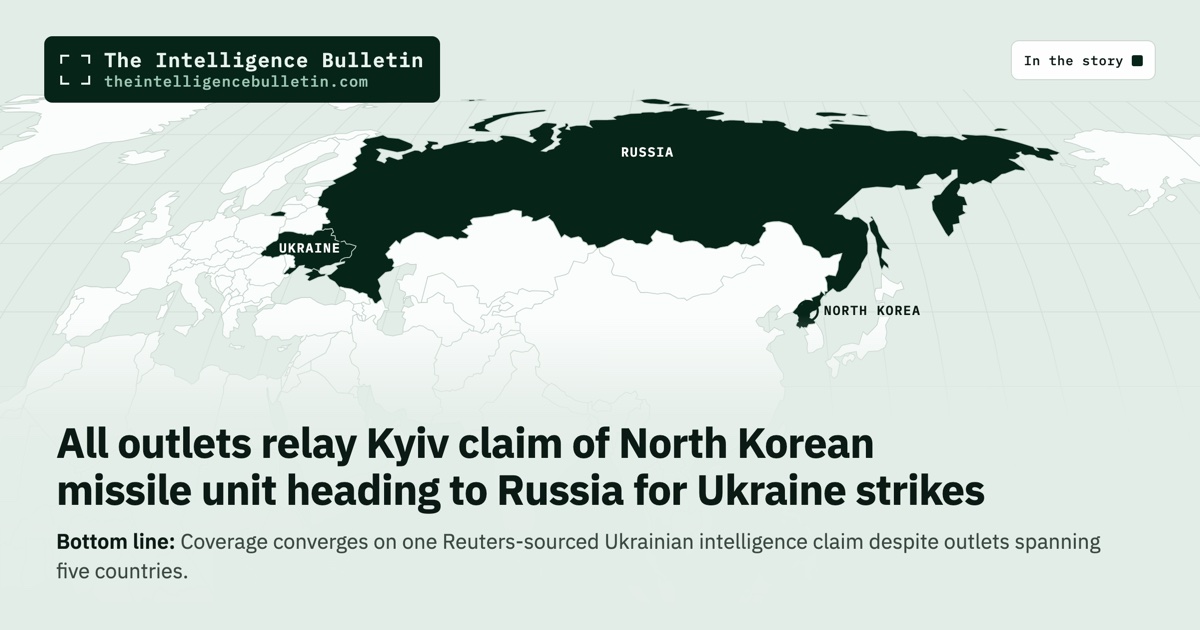
All outlets relay Kyiv claim of North Korean missile unit heading to Russia for Ukraine strikes

Map of the countries in the story: All outlets relay Kyiv claim of North Korean missile unit heading to Russia for Ukraine strikes
Ukrainian military intelligence official Andrii Cherniak told Reuters that North Korea is preparing to station around 90 personnel and up to 120 ballistic missiles in Russia’s Voronezh region as part of the 112th Missile Brigade for use against Ukraine. The claim builds on prior North Korean deliveries of missiles and troops to Russia. All five outlets in the set carry versions of this single reporting chain without contradiction or independent verification.

One Story. Many Angles.

🇺🇦
Ukraine
Kyiv Post
Carries AFP reporting
North Korea May Deploy Missile Unit to Russia for Strikes on Ukraine, Kyiv Intel Warns
Read →
🇷🇺
Russia
Bloknot
RUSSIAN
Carries Reuters reporting
SMO News: Kim Jong Un deploys a missile unit in Russia to strike Ukraine
“Новости СВО: Ким Чен Ын развертывает в России ракетное подразделение для нанесения ударов по Украине – БлокнотРУ – Новости СВО. СВО новости. Когда закончится СВО? Когда закончится СВО последние новости? СВО последние новости. Северная Корея. Северная Корея новости на сегодня. Северная Корея новости сегодня. Северная Корея новости. Новости Северной Кореи. Войска Северной Кореи на СВО. Новости СВО. СВО. СВО новости. Армия Северной Кореи. Численность армии Северной Кореи 2026. Армия Северной Кореи численность. Сколько военных из Северной Кореи сейчас в России?”
Read →
🇹🇷
Turkey
Anadolu Agency
Carries Reuters reporting
Kyiv warns North Korean missile systems will be targeted if used against Ukraine
Read →
🇦🇹
Austria
Die Presse
GERMAN
Carries Reuters reporting
Ukraine warns: North Korea sets up missile unit in western Russia
“Ukraine warnt: Nordkorea baut Raketeneinheit in Westrussland auf”
Read →
🇳🇴
Norway
TV 2
NORWEGIAN
Carries Reuters reporting
News agency: North Korea deploys missile forces in Russia
“Nyhetsbyrå: Nord-Korea utplasserer missilstyrker i Russland”
Read →
5 sources · 2 independent accounts — some share the same news agency’s report
In Brief

Coverage converges on one Reuters-sourced Ukrainian intelligence claim despite outlets spanning five countries.

Every selected outlet traces the story to the same Ukrainian intelligence statement given to Reuters, producing near-identical factual cores across Ukrainian, Russian, Turkish, Austrian and Norwegian mastheads. Kyiv Post foregrounds the scale of the planned deployment and its place in expanding Moscow-Pyongyang military ties, while Bloknot headlines Kim Jong Un’s initiative and places the item inside its domestic SMO coverage. Anadolu Agency isolates Kyiv’s threat to target the systems if used, Die Presse adds context on Ukrainian air-defense shortfalls and quotes an independent expert, and TV 2 stresses the escalation analogy drawn by a Norwegian military academic. The absence of any outlet from North Korea or Russia that offers an originating account means the selected coverage functions as a single international relay of one claim rather than competing national narratives. Where accounts diverge is only in emphasis: Ukrainian and Western European pieces highlight vulnerability and escalation risk, the Russian site presents it as proactive North Korean assistance, and the Turkish piece isolates the counter-threat. No source supplies contradictory facts or on-record denials.

Perspective Analysis

The central claim in this story originates with Andrii Cherniak of Ukraine’s Military Intelligence Directorate, who spoke to Reuters. Cherniak stated that North Korea is preparing to station roughly 90 personnel from a missile unit in Russia’s Voronezh region, where they would join the 112th Missile Brigade. The unit is expected to bring up to 120 ballistic missiles and six launchers for use against Ukraine. The deployment would follow a recent North Korean delivery of around 40 KN-23 and KN-24 missiles plus associated personnel, with final numbers and structure to be settled in high-level talks next month.

That single Reuters dispatch, dated August 5, 2026, supplied every concrete figure and attribution that appears across the five articles. No outlet added new sourcing or independent confirmation. Kyiv Post ran the fullest version of the Ukrainian intelligence account, written by Alisa Orlova. Its opening paragraph listed the 90 personnel, the Voronezh location, the brigade designation, the 120-missile ceiling and the six launchers. The piece then placed the move inside an existing pattern: North Korea has supplied Russia with artillery shells, troops and ballistic missiles since late 2023, including forces sent to Kursk in 2024 and another batch of 40 missiles delivered in recent weeks. It noted that Russia had used North Korean ballistic missiles against Ukraine for the first time since August 2025 and that the KN-23 and KN-24 weapons have longer range and larger payload than Iskanders but lower accuracy, a trait Ukrainian officials link to civilian casualties. President Zelensky’s earlier warning of another 30,000 North Korean troops was referenced as context.

Bloknot published the same Reuters facts under a headline that names Kim Jong Un as the actor: “Kim Jong Un deploys missile unit in Russia to strike Ukraine – Reuters.” The article sits inside a running feed of special military operation updates rather than a dedicated foreign-news slot. Its wording shifts agency toward Pyongyang’s initiative while embedding the item among domestic Russian developments such as strikes on Ukrainian logistics and political commentary on Zelensky. No additional numbers or operational details beyond the Reuters core appear.

Anadolu Agency’s English-language piece isolates one sentence from the Ukrainian side: Kyiv warns that North Korean missile systems will be targeted if used against Ukraine. The article carries no further operational figures and does not mention personnel numbers, brigade integration or the September talks. Its placement in the Eurasia section and its headline choice foreground the counter-threat rather than the deployment itself.

Die Presse opened with the intelligence warning and added two layers of context not present in the Reuters dispatch. It quoted military expert Rob Lee of the Foreign Policy Research Institute on the particular difficulty Ukrainian air defenses face against ballistic missiles and on the risk to the power grid in the coming winter. The piece also supplied background on the 2024 mutual defense pact between Moscow and Pyongyang, the delivery of millions of artillery shells, the presence of roughly 9,500 North Korean soldiers in Kursk, and a specific recent incident in which at least five members of one family died in the village of Radushne from a North Korean missile strike. It recorded that neither the Russian Defence Ministry nor North Korea’s UN mission had responded to requests for comment.

TV 2’s Norwegian article likewise began with the Reuters-sourced Ukrainian claim and then turned to an independent local voice. Military academy instructor Palle Ydstebø described the planned missile-unit deployment as an escalation comparable to Western forces operating from Ukrainian territory against Russia. The piece repeated the 90-personnel and 120-missile figures, noted that the missiles have ranges between 400 and 900 kilometres, and cited Zelensky’s statement that Russia is helping North Korea gain real combat experience. It also referenced the failure of Ukrainian air defenses during a recent barrage that killed 17 people in Kyiv and observed that interception systems for ballistic missiles could have altered that outcome.

Because every outlet drew from the identical Reuters wire, differences appear only in selection and framing. Kyiv Post and Die Presse supplied the greatest volume of surrounding detail on prior deliveries and weapon characteristics. Anadolu Agency stripped the story down to the single warning sentence. Bloknot folded the item into a domestic news stream and foregrounded Kim Jong Un in the headline. TV 2 added a Nordic military-academic assessment of escalation risk. None of the five articles contained an on-record statement from Russian or North Korean officials, nor did any report an independent confirmation of the deployment timeline or numbers.

The pattern that emerges is therefore not one of competing factual accounts but of distinct editorial choices applied to the same set of numbers and the same named source. A reader who saw only the Kyiv Post piece would carry away the operational scale, the integration into an existing Russian brigade, and the link to recent missile strikes on Ukrainian territory. A reader limited to Anadolu Agency would register primarily the Ukrainian threat to respond. A Bloknot reader would encounter the development inside a narrative of North Korean assistance to Russia. The Austrian and Norwegian pieces each supplied an external expert lens on air-defense vulnerability and alliance implications that the originating dispatch itself did not contain.

What to Watch

The shared origin also explains the absence of any originating Russian or North Korean voice in the selected set. The coverage therefore illustrates how a single intelligence statement travels through different national filters, each choosing which element of the same 90-personnel, 120-missile claim to place at the front and which additional context to attach. The September high-level talks mentioned in the Kyiv Post account remain the only scheduled point at which the final configuration of the unit is expected to be decided.


Share this story

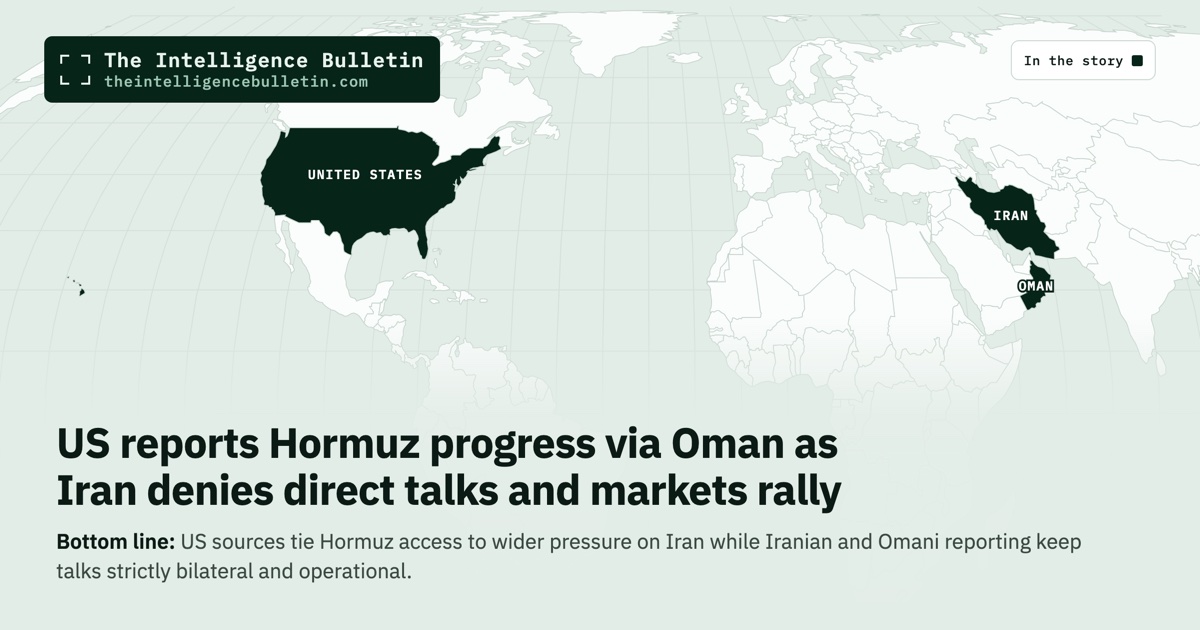
US reports Hormuz progress via Oman as Iran denies direct talks and markets rally

Map of the countries in the story: US reports Hormuz progress via Oman as Iran denies direct talks and markets rally
US President Trump and Secretary Rubio said talks mediated by Oman are advancing toward a possible interim deal to increase shipping through the Strait of Hormuz, with a deal possibly within days. Iran’s foreign ministry denied direct US negotiations but confirmed positive talks with Oman on safe routes. US markets hit records and oil prices eased on the news, while CENTCOM asserted the southern route remains open despite Iranian restrictions.

One Story. Many Angles.

🇸🇦
Saudi Arabia
Arab News
Carries AFP reporting
Trump warns Iran to open Hormuz or get ‘hit very hard’
Read →
🇴🇲
Oman
Times of Oman
Carries ANI reporting
Southern route through Strait of Hormuz remains free and open for commercial vessels despite Iranian aggression: US CENTCOM
Read →
🇮🇷
Iran
Gooya
PERSIAN
Commentary
Strait of Hormuz; from regional crisis to the great chessboard of energy and world powers, Mohammad Zamani
“تنگه هرمز؛ از بحران منطقه‌ای تا شطرنج بزرگ انرژی و قدرت‌های جهانی، محمد زمانی”
Read →
🇶🇦
Qatar
Al Jazeera
Original reporting
US stock market hits record high amid hopes for Strait of Hormuz reopening
Read →
🇮🇳
India
The Tribune
Carries ANI reporting
Denuclearisation of Iran ultimate deal; immediate focus is reopening Strait of Hormuz: Marco Rubio says progress made in talks
Read →
5 sources · the reporting behind them comes from 3 newsrooms — some carry the same original story
In Brief

US sources tie Hormuz access to wider pressure on Iran while Iranian and Omani reporting keep talks strictly bilateral and operational.

The reporting reveals a split between US emphasis on progress and threats versus Iranian insistence on Oman-only bilateral management. Arab News and The Tribune frame the story around Trump’s ultimatum and Rubio’s linkage of Hormuz access to eventual Iranian denuclearization, treating Oman mediation as a US-led channel. Times of Oman relays CENTCOM statements that stress operational openness without Iranian control or fees. Al Jazeera focuses on market gains from the diplomatic signals. Gooya’s commentary widens the lens to US-China-Russia energy competition, portraying Hormuz as leverage rather than a simple bilateral fix. Independent chains converge on the existence of Oman-mediated talks and Iranian denials of direct US contact, but diverge on whether Washington is a direct party or sidelined. No source from Yemen appears, even though Red Sea Houthi actions are referenced as context. The pattern shows actor outlets protecting national narratives on control and threat, while the observer and market-focused pieces treat reopening as an economic positive without resolving the underlying dispute over authority in the strait.

Perspective Analysis

US officials described advancing talks between Iran and Oman aimed at restoring greater commercial traffic through the Strait of Hormuz, a waterway that carried roughly one-fifth of global oil supplies before the current conflict. President Donald Trump said on Tuesday that a deal could come as soon as Wednesday or Thursday, while warning that if negotiations collapsed Iran would be “hit very hard” and the strait would still open. Secretary of State Marco Rubio stated that Washington was participating in the Oman-mediated discussions, with the immediate goal of safe passage and the longer-term objective of Iranian denuclearization. Treasury Secretary Scott Bessent told CNBC there was a chance of an agreement by Wednesday or Thursday.

Iran’s Foreign Ministry spokesperson Esmaeil Baghaei said talks with Omani officials on designating safe routes had been positive, yet repeatedly denied any direct or indirect negotiations with the United States. A senior Iranian military adviser, Mohsen Rezaee, rejected unauthorized routes and said Iran would target any US warships using them. US Central Command reported that the southern route through the strait remained free and open, with American forces having assisted more than 1,000 vessels over the past three months despite what it called unwarranted Iranian aggression. An unnamed US official added that any temporary routes would require no permits, approvals or fees.

Market reaction was immediate. The S&P 500 rose 1.8 percent on Tuesday to surpass 7,700 for the first time, according to reporting that tracked the surge alongside corporate earnings and the diplomatic signals. Brent crude futures settled near $80 after falling about 5 percent overnight. Before the conflict began in late February, the strait saw roughly 130 daily transits; by Sunday the number had fallen to nine vessels, per ship-tracking data.

The same reporting placed the Hormuz talks against a backdrop of continued maritime incidents. A merchant ship suffered a projectile strike in the strait off Oman on Tuesday, leaving one crew member missing. In the Red Sea an Indian-flagged vessel sank after an unattributed attack, with all crew rescued. Houthi forces in Yemen have declared a blockade on Saudi shipping lanes, including the Red Sea port of Yanbu, forcing some traffic to reroute around Africa.

Accounts converge on two core points. Multiple outlets carried the Iranian Foreign Ministry’s confirmation of constructive exchanges with Oman and its denial of direct US talks. Separate reporting chains also recorded CENTCOM’s assertion that the southern route stays open for commercial traffic. These elements appear across independent sources rather than repeated agency copy under different mastheads.

The accounts diverge on Washington’s precise role and on the framing of control. Arab News, relaying AFP material, led with Trump’s threat of a hard strike and presented the Oman channel as part of US pressure that could still turn military. The Tribune, carrying ANI, quoted Rubio tying the strait explicitly to eventual denuclearization as the ultimate American goal. Times of Oman relayed CENTCOM’s statement that no single party controls navigation and that temporary routes need no fees or approvals, foregrounding operational continuity under existing international rules. Al Jazeera centered the economic effects, noting the S&P record and oil-price relief without dwelling on enforcement disputes. Gooya’s commentary stepped outside the bilateral frame altogether, describing the strait as a node in US-China-Russia competition over energy leverage and warning that Iranian threats could ultimately constrain Tehran’s own exports and those of its partners.

A reader limited to Saudi-sourced material would encounter repeated emphasis on US military options and Iranian restrictions, while an Omani-sourced account would stress that shipping lanes function without Iranian permits. An Iranian domestic analysis would highlight great-power stakes beyond Washington and Tehran. None of the five selected outlets carried reporting from Yemen, even though Houthi actions at Yanbu and in the Red Sea appear as context in several pieces; the set therefore contains no direct Yemeni official voice on how the Hormuz talks intersect with Red Sea shipping disputes.

The corroborated elements—positive Oman-Iran exchanges and the denial of direct US-Iran talks—rest on on-record statements from the Iranian Foreign Ministry that appear in at least two independent chains. The single-source claims, including the 60-day interim arrangement floated via Axios and the precise market record cited by Al Jazeera, remain tied to their originating outlets. US statements consistently place Oman mediation inside a wider American agenda that includes nuclear limits and the threat of force; Iranian and Omani reporting keep the channel strictly bilateral and operational.

What to Watch

The pattern indicates that a short-term arrangement on routing and fees is the nearest plausible next step, because it satisfies the narrow convergence on Oman-mediated talks without forcing either side to concede the larger question of who sets the rules. Such an interim step would likely produce the observed market relief while leaving the underlying disagreement over authority in the strait intact.


Share this story

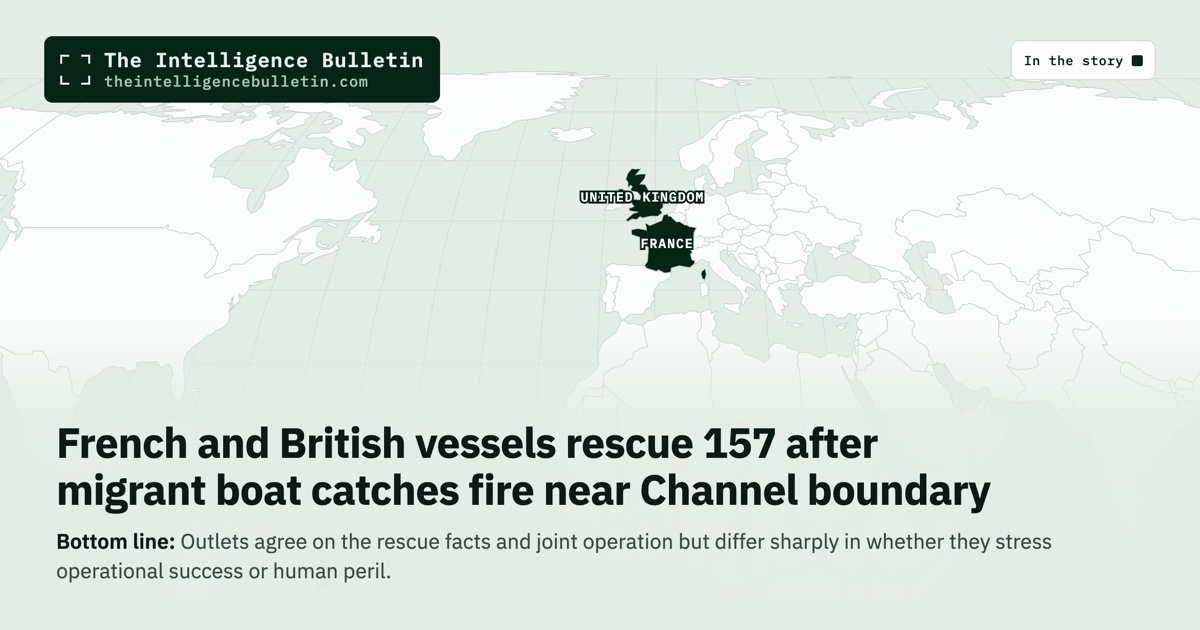
French and British vessels rescue 157 after migrant boat catches fire near Channel boundary

Map of the countries in the story: French and British vessels rescue 157 after migrant boat catches fire near Channel boundary
A boat carrying 157 migrants left Veules-les-Roses in France on Monday and caught fire early Tuesday near the French-British waters boundary. Passengers jumped overboard; five had already been rescued overnight after refusing further assistance. French and British vessels conducted a major joint rescue with no casualties reported, though some suffered hypothermia. It ranks among the largest such operations since 2018.

One Story. Many Angles.

🇬🇧
United Kingdom
Daily Mirror
Original reporting
English Channel horror as 157 migrants capsize on flaming boat
Read →
🇫🇷
France
franceinfo
FRENCH
Carries AFP reporting
Nearly 160 migrants were rescued while trying to cross the Channel – franceinfo
“Près de 160 migrants ont été secourus alors qu’ils tentaient de traverser la Manche – franceinfo”
Read →
🇶🇦
Qatar
Al Jazeera
Carries Reuters reporting
More than 150 people rescued in English Channel after boat catches fire
Read →
🇩🇪
Germany
Der Tagesspiegel
GERMAN
Carries AFP reporting
After boat fire in the English Channel: Crews rescue 157 migrants from the water
“Nach Bootsbrand im Ärmelkanal: Besatzungen retten 157 Migranten aus dem Wasser”
Read →
🇭🇰
Hong Kong
South China Morning Post
Carries Agence France-Presse reporting
French, UK vessels save 157 migrants from burning boat in Channel
Read →
5 sources · the reporting behind them comes from 4 newsrooms — some carry the same original story
In Brief

Outlets agree on the rescue facts and joint operation but differ sharply in whether they stress operational success or human peril.

Reporting from French authorities and multiple outlets converges on the same core sequence: a large boat departed Normandy, five passengers accepted early rescue, the remainder pressed on until the engine fire forced everyone into the water, and French and British vessels completed the evacuation without fatalities. Franceinfo and the Pas-de-Calais prefecture stress both the operational scale—one of the biggest since 2018—and the trend toward larger vessels carrying more people. German and Hong Kong coverage, drawing from the same French statements, frame the response as professional cross-border coordination rather than drama. Al Jazeera adds UK political context, noting Prime Minister Burnham’s recent pledges and Nigel Farage’s reaction, yet still aligns on the rescue facts. The Mirror’s headline alone leans into horror language while the underlying numbers match the others exactly. No independent chain disputes the count, the departure point, the fire, or the absence of confirmed deaths; the variation lies only in emphasis between operational success and human risk. This pattern shows national outlets defaulting to their domestic framing—rescue logistics in France, bilateral effort in Germany and Asia, political fallout in the UK—while all rest on the same French maritime authority account.

Perspective Analysis

A boat carrying 157 migrants left the coastal village of Veules-les-Roses in Seine-Maritime on Monday evening. Five of those on board accepted rescue overnight near Boulogne-sur-Mer. The remainder refused assistance and continued toward British waters. Early Tuesday the engine caught fire near the boundary between French and British search-and-rescue regions. Passengers jumped into the water as flames spread. French and British vessels, including a British lifeboat, reached the scene and brought everyone ashore. No casualties were reported at the time, though some of those rescued showed signs of hypothermia.

French maritime authorities described the response as one of the largest single operations conducted in the Channel since the start of small-boat crossings in 2018. The same authorities noted that average vessel capacity has risen sharply, from 26 people per boat in 2021 to 65 since the beginning of 2026. The boat in this case carried more than double that recent average. French prefecture statements placed the incident at the limit of French and British waters and credited vessels from both countries with the recovery.

British coastguard statements confirmed that a vessel had caught fire in the French search-and-rescue region and that UK assets assisted. The Royal National Lifeboat Institution reported launching a lifeboat at 6 a.m. on Tuesday in response to the same incident. No British source in the coverage disputed the French count of 157 people rescued or the absence of confirmed fatalities.

The same sequence appears across French, German, Hong Kong and Qatari reporting. Franceinfo, drawing on the Pas-de-Calais prefecture and maritime prefecture of the Channel and North Sea, recorded the departure point, the overnight refusal of assistance by most passengers, the engine fire, and the subsequent rescue. Der Tagesspiegel and the South China Morning Post, both relaying the same French authority statements, repeated the 157 figure, the fire, the jump into the water, and the involvement of French and British craft. Al Jazeera, citing French maritime prefecture and British coastguard accounts, aligned on every factual element.

Coverage diverged only in emphasis. Franceinfo foregrounded the scale of the coordinated operation and the trend toward larger boats. Der Tagesspiegel stressed the professionalism of the crews that pulled people from the water. The South China Morning Post highlighted the bilateral character of the vessel response. Al Jazeera added a paragraph on UK domestic politics, noting Prime Minister Andy Burnham’s recent pledge to be relentless on crossings and quoting Reform UK leader Nigel Farage’s statement that his party’s plan would save lives. The Daily Mirror headline described the episode as Channel horror and focused on the image of a capsizing flaming boat, yet its underlying reporting matched the 157 figure and the rescue outcome reported elsewhere.

No independent reporting chain contradicted the core claims. The departure from Veules-les-Roses, the engine fire near the boundary, the jump into the sea, the rescue by French and British vessels, and the absence of reported deaths all trace to the same French maritime authority statements and appear without alteration in every article that supplied detail. The Mirror’s more dramatic framing does not alter those numbers; it simply leads with different language. Al Jazeera’s addition of UK political commentary sits alongside the rescue facts rather than replacing them.

The French authority account supplies the only primary source chain present in the coverage. Every other outlet either quotes it directly or relays it through agency copy that originates in the same statements. Where outlets add context—larger boat trends in Franceinfo, crew actions in Tagesspiegel, bilateral coordination in the South China Morning Post, or UK political reaction in Al Jazeera—they attach that layer to an identical factual base. The convergence on the 157 figure, the departure point, the fire, and the lack of casualties therefore rests on a single reporting origin rather than multiple independent verifications.

That single-origin base still produces a clearer picture than any single national lens supplies on its own. A reader limited to French coverage would see the operational scale and the trend toward bigger boats but might miss the explicit UK political reactions recorded by Al Jazeera. A reader limited to the Mirror would encounter stronger language about risk and failure but would receive the same count and rescue outcome. German and Hong Kong reporting, by staying close to the French statements, keeps the focus on the mechanics of the rescue itself. The variation therefore lies in what each outlet chooses to foreground, not in conflicting descriptions of what occurred.

What to Watch

The corroborated sequence shows a rescue that succeeded under difficult conditions, yet it also records that the vessel carried more than twice the recent average load and that most passengers had already declined earlier assistance. French authorities presented both the success of the operation and the broader pattern of increasing boat sizes. No coverage in the set disputed either element. The incident therefore illustrates both the capacity of cross-border coordination to prevent deaths in individual cases and the continuing pressure created by larger vessels attempting the crossing.


Share this story

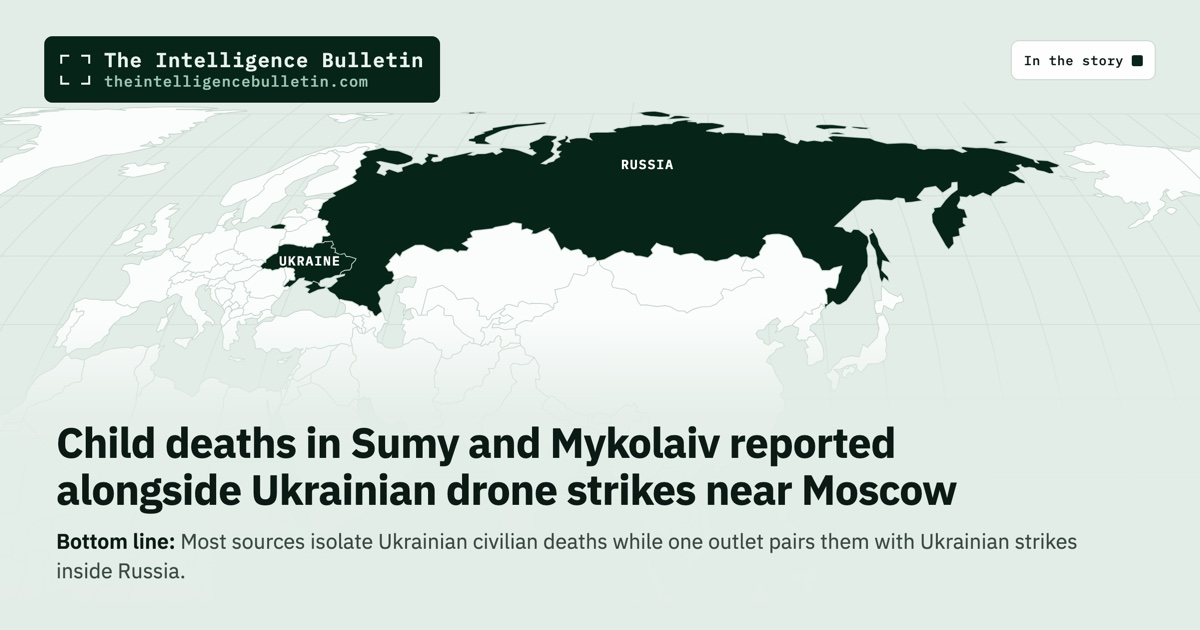
Child deaths in Sumy and Mykolaiv reported alongside Ukrainian drone strikes near Moscow

Map of the countries in the story: Child deaths in Sumy and Mykolaiv reported alongside Ukrainian drone strikes near Moscow
Russian forces struck Sumy with six guided aerial bombs on August 4, killing two girls aged 5 and 10 and an elderly woman in a destroyed private house. Overnight drone attacks on Mykolaiv killed an 89-year-old woman and injured seven people, including two children. Ukrainian drone strikes near Moscow killed five people and injured six, according to Russian regional officials. The attacks damaged civilian homes, warehouses and infrastructure on both sides.

One Story. Many Angles.

🇬🇪
Georgia
Georgia Today
Carries Kyiv Post reporting
Russian forces strike Mykolaiv and Sumy, children among the dead
Read →
🇩🇪
Germany
n-tv
GERMAN
Ukraine War in Live Ticker: +++ 10:32 Three dead after Russian bombing on Sumy – two children among the victims +++
“Ukraine-Krieg im Liveticker: +++ 10:32 Drei Tote nach russischem Bombenangriff auf Sumy – zwei Kinder unter den Opfern +++”
Read →
🇵🇱
Poland
Gazeta.pl
POLISH
Original reporting
Russian attack on Sumy and Mykolaiv. Four people dead, including children
“Rosyjski atak na Sumy i Mikołajów. Nie żyją cztery osoby, w tym dzieci”
Read →
🇧🇷
Brazil
Diário de Pernambuco
PORTUGUESE
Original reporting
Russian attack on Sumy kills three, including two children
“Ataque russo a Sumy faz três mortos, incluindo duas crianças”
Read →
🇮🇹
Italy
La7
ITALIAN
Original reporting
Russia-Ukraine War, drones on Moscow and raid on Sumy: dead, wounded and latest news
“Guerra Russia-Ucraina, droni su Mosca e raid a Sumy: morti, feriti e ultime notizie”
Read →
5 sources · the reporting behind them comes from 5 different newsrooms
In Brief

Most sources isolate Ukrainian civilian deaths while one outlet pairs them with Ukrainian strikes inside Russia.

The selected sources document Russian guided-bomb strikes on Sumy and Mykolaiv that killed at least four civilians, including two children in Sumy, with parallel Ukrainian drone attacks reported near Moscow. Georgia Today, drawing from Ukrainian regional military administrations, separates the two cities’ incidents without broader linkage. Gazeta.pl and Diário de Pernambuco echo the Ukrainian casualty details from the same administrations while adding context on Russian drone and missile barrages and resulting power cuts. La7 alone frames the Ukrainian deaths alongside Ukrainian drone strikes that killed five near Moscow and damaged a Wildberries logistics site, presenting the events as reciprocal escalation. No source in the set originates reporting from Russian territory or cites Russian Defense Ministry statements on these specific strikes. The pattern shows consistent reliance on Ukrainian military statements for the child deaths and injuries, with only one outlet explicitly connecting the Ukrainian civilian toll to Ukrainian actions inside Russia.

Perspective Analysis

Russian forces struck the Ukrainian city of Sumy with six guided aerial bombs on the morning of August 4, 2026. The Sumy Regional Military Administration reported that two guided bombs hit a private house, killing two girls aged five and ten whose bodies were recovered from the rubble, along with an elderly woman. Four other people sought medical help after the attack, which also damaged additional houses and non-residential buildings across the city. Two further guided bombs were intercepted by Ukrainian air defenses before they reached populated areas.

Overnight drone attacks hit the southern city of Mykolaiv. The Mykolaiv Regional Military Administration stated that an 89-year-old woman was killed and seven people were injured, including two children aged two and twelve. The strikes destroyed two private houses, damaged seven more private houses and three apartment buildings, and set a warehouse on fire in the Halytsynivka community. Four older women and one older man suffered acute stress reactions that required on-site medical attention.

Ukrainian drone strikes targeted areas near Moscow on the same night. Moscow regional governor Andrey Vorobyov reported that five people were killed and six injured despite Russian air defenses intercepting the drones. Fires broke out at an industrial site in Novoselki. A separate drone attack struck a Wildberries logistics warehouse near Krasny Bor in Leningrad region, starting a fire inside the facility and injuring one person.

The strikes occurred against a backdrop of wider exchanges. Gazeta.pl described Russian forces launching a ballistic Iskander-M missile from Rostov region and 136 drones from multiple launch points including Oryol, Millerovo, occupied Donetsk, and Crimea. Ukrainian air defenses claimed to have downed or neutralized 117 of those drones. Diário de Pernambuco noted resulting electricity cuts affecting seven Ukrainian regions, including Dnipropetrovsk, Donetsk, Zaporizhzhya, Mykolaiv, Sumy, Kharkiv, and Chernihiv, leaving thousands without power.

The four sources that covered both Ukrainian cities presented the Sumy and Mykolaiv incidents as separate Russian operations rather than a single coordinated action. Georgia Today, Gazeta.pl, and Diário de Pernambuco all drew the casualty figures directly from the respective regional military administrations and listed the child deaths and injuries in similar detail. La7 alone placed the Ukrainian civilian deaths in the same narrative as the reported Ukrainian drone strikes on Russian territory, describing the night as one of mutual escalation that also included Russian raids on ports near Odesa and Chornomorsk.

No article in the set carried statements from the Russian Defense Ministry addressing the specific strikes on Sumy or Mykolaiv. The Brazilian and Italian pieces were the only ones to include the Moscow-region death toll from Ukrainian drones. Gazeta.pl embedded the city strikes inside a broader account of Russian missile and drone launches across Ukraine, while Diário de Pernambuco added the power-outage consequences and the Wildberries warehouse damage.

The strongest corroborated element across the reporting is the account of civilian deaths in Sumy. Four independent outlets relayed the same figures from the Sumy Regional Military Administration: two girls aged five and ten and one elderly woman killed by guided bombs on August 4. The Mykolaiv death and injury count from the Mykolaiv Regional Military Administration appears in three of the pieces. The Moscow-region casualties rest on the single on-record statement from Governor Vorobyov and appear in only two articles.

A reader limited to the Georgian or Polish sources would see only the Ukrainian civilian toll and the scale of the Russian barrage. A reader limited to the Italian piece would see those same deaths framed as one side of an exchange that also produced five deaths near Moscow. The Brazilian piece supplies both the Ukrainian child deaths and the Moscow deaths but does not connect them as explicitly as La7 does. The absence of any Russian-sourced account of these particular strikes means the set offers no counter-claim on the targeting or intent behind the guided-bomb and drone attacks on Sumy and Mykolaiv.

What to Watch

The pattern of reporting therefore rests on Ukrainian regional military statements for the child casualties in Ukraine and on one Russian regional governor for the deaths near Moscow. That distribution leaves the Ukrainian civilian losses as the element with the widest cross-outlet confirmation while the reciprocal dimension depends on fewer chains. The next developments likely to matter are whether additional independent reporting chains surface on either side and whether the electricity disruptions and logistics damage produce measurable effects on civilian movement or military supply lines in the affected regions.


Share this story

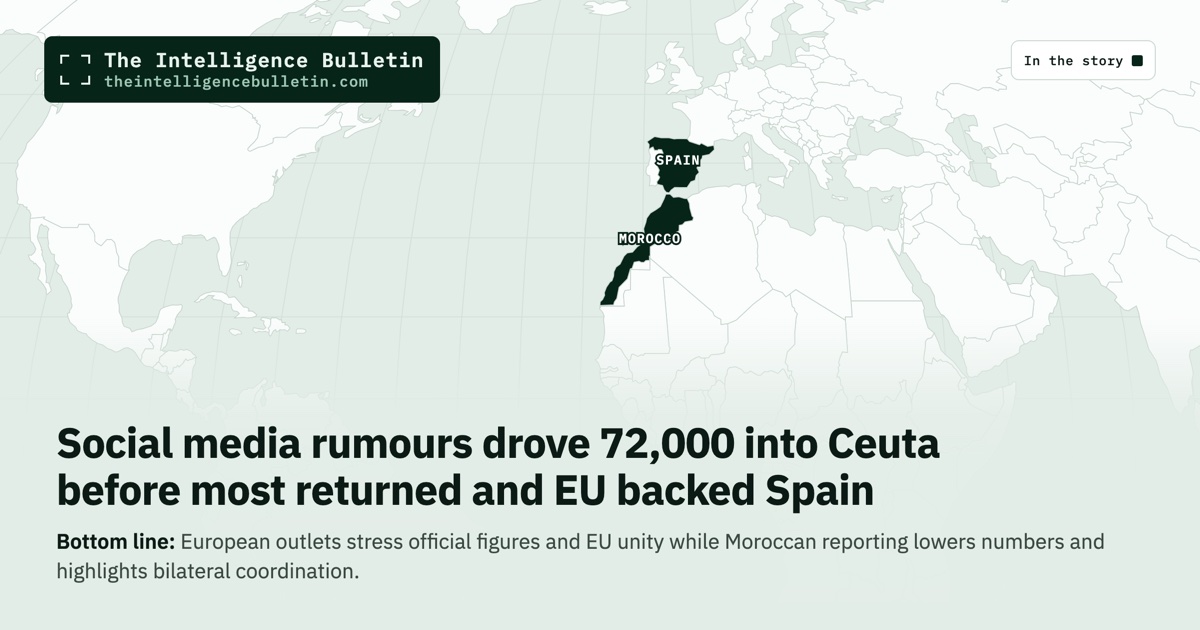
Social media rumours drove 72,000 into Ceuta before most returned and EU backed Spain

Map of the countries in the story: Social media rumours drove 72,000 into Ceuta before most returned and EU backed Spain
Tens of thousands of mostly Moroccan migrants crossed into Spain’s North African enclave of Ceuta last week after social media rumours spread that the border was open. Spanish authorities report around 72,000 crossings, over 80 deaths and that most have since returned to Morocco. Morocco estimates fewer participants and deaths while blaming online misinformation and a misinterpreted Spanish court ruling. EU interior ministers held emergency talks supporting Spain’s response and calling for stronger external border coordination.

One Story. Many Angles.

🇪🇸
Spain
The Local
Carries AFP reporting
Migrant rush to Spain’s Ceuta: 72,000 crossed, 2,000 remain and 75 died
Read →
🇩🇪
Germany
Deutsche Welle
Commentary
Who is responsible for the Ceuta border surge?
Read →
🇬🇧
United Kingdom
The Independent
Original reporting
European ministers to hold crunch talks on Ceuta migrant crisis as tensions grow between Spain and Italy
Read →
🇲🇦
Morocco
Morocco World News
Original reporting
Ceuta Crisis Pushes EU Toward Emergency Talks on Border Security
Read →
🇭🇰
Hong Kong
South China Morning Post
Carries Associated Press reporting
Deadly migrant rush to Spain’s Ceuta was sparked by runaway online rumours
Read →
5 sources · the reporting behind them comes from 4 newsrooms — some carry the same original story
In Brief

European outlets stress official figures and EU unity while Moroccan reporting lowers numbers and highlights bilateral coordination.

Reporting across five outlets shows the Ceuta surge was triggered by rapidly spreading social media claims that Spain’s border had opened, drawing tens of thousands of young Moroccans who then faced drownings, stampedes and swift returns. Spanish sources lead with precise official figures of 72,000 crossings and dozens of deaths while emphasising territorial sovereignty and efficient returns. Moroccan coverage lowers the participant count, stresses coordination with Spain and highlights EU recognition of Rabat as a key partner. German analysis questions simplistic blame on Morocco, noting geopolitical signals over Western Sahara yet warning against deliberate orchestration given the risks. UK reporting stresses intra-EU friction, including Italy’s temporary Schengen suspension with Spain. Hong Kong coverage isolates the online-rumour trigger as the decisive spark absent from most European accounts. The pattern reveals how national proximity shapes emphasis: Spain and Morocco frame bilateral cooperation or tension, while others isolate either EU unity or the social-media mechanism. No outlet presents evidence of third-country orchestration; all independent chains converge on the scale of the movement and the role of disinformation even as death tolls and Moroccan intent remain contested between Madrid and Rabat.

Perspective Analysis

Tens of thousands of mostly young Moroccans headed toward the border with Spain’s North African enclave of Ceuta after posts on Instagram, Facebook and TikTok claimed the crossing had opened. Buses, regional trains and taxis filled with people convinced Europe lay within reach. Within days the movement reached a scale of roughly 72,000 crossings according to the Spanish Interior Ministry, the largest such surge in years between the two countries. Spanish officials later revised the death toll upward to 75, with accounts of drownings and deaths in stampedes on both sides of the fence. Moroccan authorities put the participant number closer to 40,000 and confirmed 11 deaths while continuing to verify the full count with Spanish counterparts.

Most of those who crossed returned to Morocco within the first 48 hours. Spanish reports state that more than 70,000 of the 72,000 had left the enclave by the time interior ministers gathered for their emergency videoconference. A few hundred remained, some establishing a makeshift camp on a beach inside Ceuta and citing local food shortages and the fact that Schengen rules do not apply to the exclave. Spanish prime minister Pedro Sánchez described the breach as an attack on territorial sovereignty after videos showed Moroccan security personnel not intervening. Moroccan interior ministry spokesperson Rachid El Khalfi attributed the episode to malicious exploitation of digital space and misinterpretations of a recent Spanish Supreme Court ruling, adding that Rabat had never intended the surge and stood ready to cooperate fully.

European Union interior ministers convened the Tuesday meeting after 22 member states called for coordinated action. Spanish interior minister Fernando Grande-Marlaska described the tone as constructive and said colleagues recognised Madrid’s rapid response. European Commission president Ursula von der Leyen commended the handling while stressing that protection of external borders must become a collective responsibility rather than a burden for frontline states alone. She singled out Morocco as a key partner in managing irregular migration and countering smuggling networks. Italian interior minister Matteo Piantedosi used the occasion to press for EU-funded processing centres and return hubs in third countries, and Italy had already suspended passport-free travel with Spain for one month. French and Irish ministers echoed the call for unity against any attempt to use the crisis to divide the bloc.

The accounts diverge on the death toll. Spanish figures cited across multiple reports exceed 80, while Moroccan statements record 11 confirmed fatalities. They also differ on Moroccan responsibility. Sánchez’s government pointed to videos of passive border guards and treated the episode as a sovereignty issue. Moroccan officials rejected any deliberate orchestration and framed their role as one of active cooperation that helped limit onward movement into mainland Spain. German analysts interviewed by Deutsche Welle described a more layered picture: Moroccan authorities likely bore considerable responsibility for allowing the breach to reach that magnitude, yet experts judged full orchestration unlikely given Rabat’s interest in preserving international credibility, investment flows and joint hosting of the 2030 World Cup with Spain and Portugal. They noted longstanding migration networks, economic pressures on young Moroccans and the risk that any political signal over Western Sahara could have spiralled beyond control.

A reader limited to Spanish-language coverage would see a domestic emergency defined by precise official counts of crossings and casualties, swift returns and a clear assertion of sovereignty. Moroccan reporting foregrounds lower estimates, Rabat’s coordination with Madrid and European statements praising that partnership. German analysis weighs possible political signalling against the improbability of deliberate mass orchestration. British coverage isolates the diplomatic friction inside the EU, including Italy’s Schengen suspension. The Hong Kong account, drawing on Associated Press material, isolates the social-media mechanism as the decisive trigger in a way the European outlets largely left implicit.

The social-media trigger stands as the most consistently reported element across independent chains, appearing in the Moroccan spokesperson’s statement and in detailed reconstruction of the posts and videos that spread it. The scale of the movement and the rapid returns receive the same cross-border corroboration. Death tolls and the precise degree of Moroccan intent remain explicit points of disagreement between Madrid and Rabat, with no independent reporting chain offering a reconciled figure. No outlet presented evidence of third-country involvement.

What to Watch

Spanish officials have an interest in securing EU solidarity and additional resources while affirming control over an exclave that has long symbolised migration pressure. Moroccan authorities have an interest in positioning themselves as indispensable partners whose cooperation prevented worse outcomes, thereby protecting the economic and diplomatic relationship with both Spain and the wider bloc. The EU response already signals continued emphasis on external border management and third-country returns. Absent a single authoritative count of fatalities, the disagreement itself will shape the next round of bilateral and multilateral talks, with each side citing its own numbers to argue for or against stronger enforcement measures.


Share this story