NATO response to Lithuanian airspace breach shows allied unity amid Baltic drone incidents

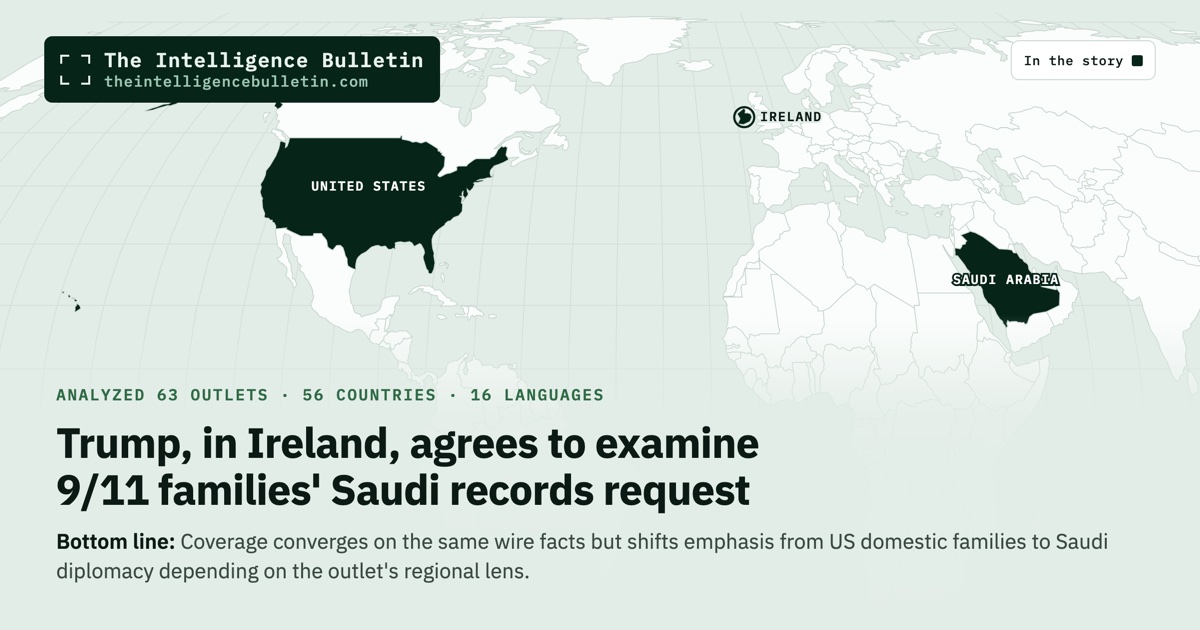
Map of the countries in the story: NATO response to Lithuanian airspace breach shows allied unity amid Baltic drone incidents
NATO fighter jets shot down a drone that violated Lithuanian airspace near Kaunas on the night of September 14-15, 2026. Lithuanian authorities reported the drone likely entered from Belarus; President Gitanas Nausฤ—da and Foreign Minister Kฤ™stutis Budrys thanked NATO allies. The incident occurred as Poland conducted parallel air operations linked to Russian drone activity over Ukraine. Baltic states have faced repeated drone incursions since Russia’s full-scale invasion of Ukraine.

One Story. Many Angles.

๐Ÿ‡ฑ๐Ÿ‡น
Lithuania
Vz.lt
LITHUANIAN
Original reporting
Tuesday night a drone entered Lithuania, it was destroyed by NATO fighters
“Antradienio naktฤฏ ฤฏ Lietuvฤ… buvo ฤฏskridฤ™s dronas, jis sunaikintas NATO naikintuvลณ”
Read →
๐Ÿ‡ซ๐Ÿ‡ฎ
Finland
Ilta-Sanomat
FINNISH
Carries Reuters reporting
NATO fighter jet shoots down drone in Lithuanian airspace
“Naton hรคvittรคjรค ampui droonin alas Liettuan ilmatilassa”
Read →
๐Ÿ‡ฉ๐Ÿ‡ช
Germany
Der Spiegel
GERMAN
Original reporting
Russia-Ukraine War: NATO fighter jets shoot down drone over Lithuania
“Russland-Ukraine-Krieg: Nato-Kampfjets schieรŸen Drohne รผber Litauen ab”
Read →
๐Ÿ‡ฌ๐Ÿ‡ง
United Kingdom
The Guardian
Original reporting
Nato jets shoot down drone violating Lithuania’s airspace
Read →
๐Ÿ‡น๐Ÿ‡ท
Turkey
Anadolu Agency
Carries Lithuanian presidential statement reporting
NATO jets destroy drone after it enters Lithuanian airspace: President
Read →
5 sources ยท each independently reported
Analyzed 61 outlets across 51 countries and 24 languages
In Brief

Outlets converged on the same Lithuanian-sourced facts instead of framing the event through competing national lenses.

Reporting across the source set converges on the same sequence of events with only minor differences in emphasis rather than substance. Lithuanian, Finnish, German, British and Turkish outlets all describe NATO jets intercepting the drone near Pratkunai village after an alert in Vilnius, cite the national crisis management centre as the primary source, and quote President Nausฤ—da linking the readiness to Russian aggression against Ukraine. The Finnish and German pieces add the probable Belarus origin and note prior Baltic incursions, while the British account places the event alongside Poland’s simultaneous air activity. No outlet disputes the facts or introduces conflicting details; the Turkish agency report stays closest to the official Lithuanian statement. This uniformity indicates the story rests on a single originating chain of Lithuanian official and state-media reporting that independent outlets then relayed with their own framing. The absence of any Western or Russian outlet in the selected set leaves the Baltic and Western European perspectives unchallenged within the pool. What stands out is how consistently the incident is treated as evidence of NATO’s operational commitment on the eastern flank rather than an isolated local event or an escalation requiring new analysis. The shared choice to foreground allied unity over speculation about the drone’s purpose reveals that, for these outlets, the defensive response itself is the story worth carrying.

Perspective Analysis

NATO fighter jets intercepted and destroyed a drone that crossed into Lithuanian airspace on the night of 14-15 September 2026. Lithuanian authorities placed the intercept near the village of Pratkunai, outside Kaunas in the central-southern part of the country. The national crisis management centre issued an alert for Vilnius and surrounding areas earlier that night and dispatched NATO aircraft after a possible drone sighting. Debris from the downed aircraft was later recovered on the ground. Lithuanian officials assessed that the drone had most likely entered from neighbouring Belarus and was heading west when it was engaged.

President Gitanas Nausฤ—da stated that NATO jets had destroyed the drone and thanked the alliance for its rapid response. He connected the episode to what he described as Russiaโ€™s intensifying aggression against Ukraine and said such readiness remained vital for the region. Foreign Minister Kฤ™stutis Budrys also thanked NATO partners whose presence, he said, helps protect Lithuanian skies and strengthens security. He called the episode the clearest demonstration of allied unity and resolve, sending the message that the alliance remains vigilant and prepared.

The same night, Polish forces conducted air operations described as preventive measures linked to Russian drone activity over Ukraine. Poland had recovered a suspected Russian military drone from the Baltic Sea the previous day near the northern coast. Lithuanian coverage placed the incident squarely inside national territory, noting the exact village and the recovery of wreckage. Neighbouring Finnish reporting added that the drone probably originated in Belarus and recalled earlier stray drones that had reached Baltic and Nordic airspace during the Ukraine conflict. German accounts situated the shoot-down inside the broader Russia-Ukraine war and recorded both the presidentโ€™s and the foreign ministerโ€™s statements on NATO cohesion. British reporting linked the Lithuanian episode to Polandโ€™s parallel moves and to the pattern of drone incursions that have affected the three Baltic NATO members since 2022. Turkish coverage stayed closest to the presidentโ€™s public remarks without additional regional context.

No outlet in the set introduced conflicting details about the timing, location or outcome of the intercept. All five carried the core sequence drawn from the Lithuanian crisis management centre and the statements of the president and foreign minister. The Finnish and German pieces supplied the Belarus-origin assessment that Lithuanian authorities had relayed through Reuters. The British account alone juxtaposed the event with Polandโ€™s air activity on the same day. The Turkish report reproduced the presidentโ€™s words with the least surrounding analysis.

A reader limited to any single national outlet would miss the consistent emphasis on operational alliance response rather than on the droneโ€™s possible purpose or on new escalation. Lithuanian domestic reporting foregrounds the airspace violation and local recovery of debris, leaving the wider Baltic pattern to background. Finnish coverage supplies the cross-border origin and earlier incidents that place the event inside a recurring regional problem. German framing ties the readiness directly to Russian actions in Ukraine. British reporting widens the lens to NATO-wide implications by including Polandโ€™s moves. Turkish coverage isolates the official Lithuanian voice. None of these angles contradict one another; each simply selects a different slice of the same originating Lithuanian record.

The uniformity across the set indicates that the story rests on one primary chain of official Lithuanian statements and crisis-centre reporting, which independent outlets then carried with their own regional or alliance-level framing. No independent verification chain appears in the published pieces. The absence of any Russian or additional Western outlet in the selected coverage leaves the Baltic and Western European accounts without direct counter-narrative inside this pool. What the reporting consistently foregrounds is NATOโ€™s demonstrated capacity to respond inside member airspace rather than speculation about the droneโ€™s intent or payload. That shared choice treats the defensive intercept itself as the central fact, not an isolated local breach or the start of a wider confrontation.

What to Watch

The record therefore supports the view that the incident illustrates routine alliance air policing on the eastern flank rather than a novel escalation. The repeated incursions noted across Baltic reporting since 2022 have produced a standing NATO presence whose rules of engagement now include live intercepts. Lithuanian officials have an interest in presenting the response as evidence of alliance solidarity; outlets in neighbouring and more distant NATO members have an interest in reading the same episode as proof that the eastern flank remains defended. Both interests converge on the same published sequence. The next development most likely to follow is continued air policing activity rather than a change in alliance posture, because the reporting shows no claim that the drone carried explosives or that the incursion was deliberate. The concrete detail that travels across every account is the successful intercept near Kaunas, executed under existing NATO arrangements and publicly endorsed by Lithuanian leadership. That fact alone supplies the clearest available measure of how the alliance currently handles airspace violations on its eastern border.
Share this story

B’Tselem Report Shows Coordinated Israeli Drive to Erase Palestinian Life in West Bank

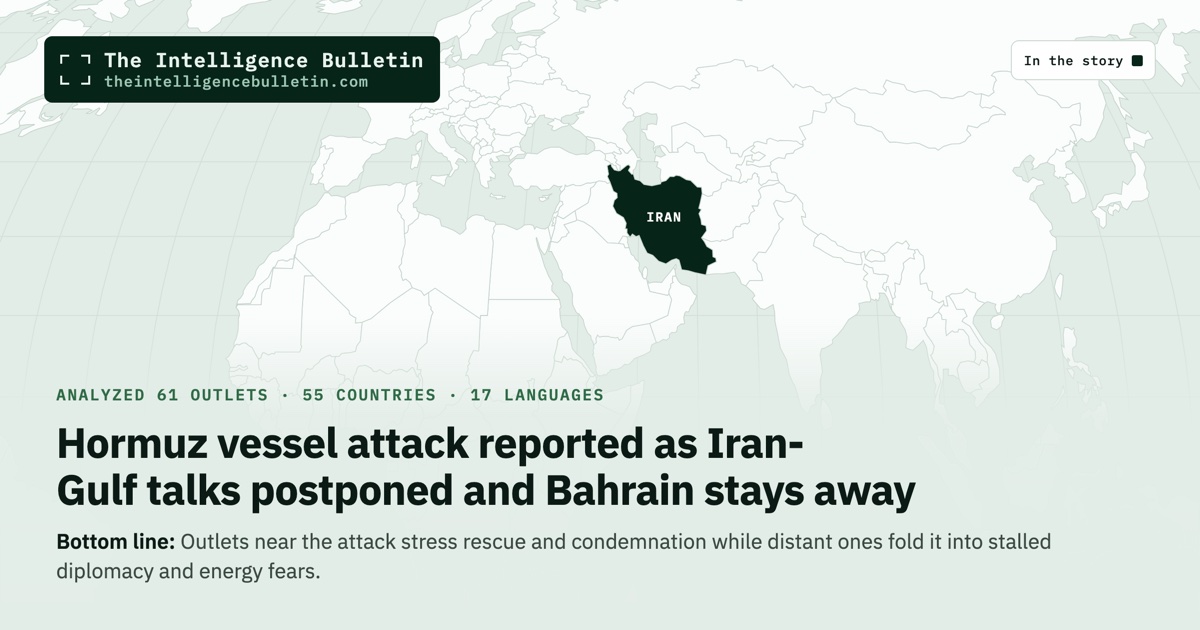
Map of the countries in the story: B'Tselem Report Shows Coordinated Israeli Drive to Erase Palestinian Life in West Bank
Israeli human rights organization B’Tselem released a report on September 14, 2026, alleging that Israeli policies in the occupied West Bank form an integrated ‘elimination’ or ‘erasure’ project. The report identifies five interconnected mechanisms: violence and terror, movement restrictions, economic strangulation, social and political destruction, and ethnic cleansing with territorial takeover. It draws on over 2,000 Palestinian testimonies since October 2023 and links the escalation to the current Israeli government and tactics transferred from Gaza. Palestinian, British, Emirati and German outlets all relayed the report’s claims while varying in emphasis on international implications or regional context.

One Story. Many Angles.

๐ŸŒ
Palestinian Territory
Wafa
Carries B’Tselem reporting
B’Tselem report: Accelerated Israeli project to erase Palestinian presence in the West Bank
Read →
๐Ÿ‡ฌ๐Ÿ‡ง
United Kingdom
International Business Times
Carries B’Tselem reporting
B’Tselem Report Accuses Israel of Working Toward ‘Elimination’ of Palestinian Life in West Bank
Read →
๐Ÿ‡ฆ๐Ÿ‡ช
United Arab Emirates
The National
Carries B’Tselem reporting
Israel carrying out ‘Palestinian elimination’ in West Bank, says rights group
Read →
๐Ÿ‡ฉ๐Ÿ‡ช
Germany
Deutschlandfunk
GERMAN
Carries B’Tselem reporting
Israel – B’Tselem warns of ‘eradication’ of the Palestinians
“Israel – B’Tselem warnt vor “Auslรถschung” der Palรคstinenser”
Read →
๐Ÿ‡ฌ๐Ÿ‡ง
United Kingdom
Middle East Monitor
Carries Anadolu reporting
Israeli rights group accuses Israel of seeking to erase Palestinian presence in occupied West Bank
Read →
5 sources ยท 2 independent accounts โ€” some share the same news agency’s report
Analyzed 61 outlets across 53 countries and 13 languages
In Brief

Outlets agree on the report’s core accusations but frame them through local priorities from institutional validation to calls for sanctions.

The selected sources converge on B’Tselem’s central finding that Israeli actions in the West Bank constitute a deliberate, accelerating project to erase Palestinian collective presence, yet they diverge sharply in tone and framing that reveals national priorities. Palestinian outlet Wafa presents the report as authoritative confirmation of an accelerated erasure project tied to settlement expansion and PA concerns, treating it as institutional validation rather than one group’s view. The UAE’s The National highlights elimination language and settler-colonial history, pressing for consequences beyond settlement sanctions amid recent Western measures. UK outlets split: IBTimes stresses economic data and links to British foreign secretary statements on ethnic cleansing, while Middle East Monitor emphasizes internal Israeli critique and specific displacement figures. Germany’s Deutschlandfunk offers the most detached account, noting casualty numbers and international inaction without regional advocacy. This pattern shows how the same Israeli-sourced report travels through different filters: actor endorsement in Palestine, regional accusation in the UAE, legal-international context in Britain, and human-rights warning in Germany. The absence of direct Israeli government rebuttal in these accounts leaves the report’s claims standing largely unchallenged within the set, underscoring how coverage outside Israel amplifies the rights group’s narrative while the underlying data on killings, displacements and land control remains consistent across chains.

Perspective Analysis

The Israeli human rights organization B’Tselem published a report on September 14, 2026, titled in various renderings as “The Erasure Project: Israelโ€™s Elimination of Palestinian Presence in the West Bank” or “The Elimination Project.” The document argues that Israeli policies in the occupied West Bank form an integrated system aimed at dismantling the conditions that allow Palestinians to sustain their presence as individuals, communities and a political collective. It identifies five interconnected mechanisms: violence and the instilling of terror, movement restrictions, economic strangulation, political and social destruction, and ethnic cleansing paired with the seizure of space. The report rests on more than 2,000 Palestinian testimonies recorded since October 2023, alongside three decades of B’Tselem documentation, and links the acceleration of these practices to the Israeli government formed in late 2022 and to tactics transferred from operations in Gaza after October 2023.

All five outlets that carried the story on the day of release relayed content from this single B’Tselem document. None conducted separate on-the-ground verification or introduced new primary evidence. Their differences lie entirely in selection, emphasis and surrounding context drawn from their own national environments. Wafa, the official Palestinian news agency, led with the report’s description of an “accelerated Israeli project to erase Palestinian presence” and placed the findings inside a daily bulletin that also listed fresh incidents of settler violence and home raids near Nablus and Jenin. It reproduced the five-pillar framework almost verbatim and closed with B’Tselem’s call for an end to military control rather than piecemeal reforms, aligning the material with Palestinian Authority framing of settlement expansion as the core threat.

International Business Times, publishing from the United Kingdom, foregrounded economic data and tied the report to recent British statements. Its account highlighted unemployment rising from 13.1 percent in 2022 to 31.3 percent in 2024 according to Palestinian Central Bureau of Statistics figures cited by B’Tselem, and it noted Finance Minister Bezalel Smotrich’s 2017 “Decisive Plan” as a blueprint. The piece also referenced UK Foreign Secretary Ed Miliband’s accusation of ethnic cleansing in the West Bank, positioning the report as additional documentation supporting diplomatic pressure already under way in London.

The National, based in the United Arab Emirates, opened with the phrase “Palestinian elimination” and quoted B’Tselem executive director Yuli Novak describing the strategy as “central to settler colonialist projects throughout history.” It added Novak’s press-conference remark that recent sanctions by the UK and other governments represented a move from condemnation to consequences, yet remained insufficient because the violations were embedded in state policy. The article placed the report against the backdrop of Israeli elections scheduled for the following month and noted Novak’s assessment that no major shift in West Bank policy would follow even if the current coalition lost power.

Deutschlandfunk, Germany’s public broadcaster, produced the shortest treatment. Its dispatch summarized the report as a warning of “Auslรถschung” directed at the Netanyahu government, recorded the figure of more than 1,100 Palestinians killed in the West Bank between October 2023 and August 2026, and listed 75 communities plus 33,000 residents from northern refugee camps as displaced. It noted parallel practices in Gaza described by B’Tselem as reaching the level of genocide and closed with the organization’s criticism of international inaction, without additional commentary or linkage to German policy.

Middle East Monitor, also publishing from the United Kingdom, emphasized internal Israeli critique and supplied the most granular statistics from the report. It listed 1,107 Palestinians killed, including 245 children, between October 2023 and August 31, 2026; 75 communities displaced; 33,000 people removed from northern refugee camps; and settler outposts and farms controlling 1.07 million dunams, or 18 percent of the West Bank. The piece cited Anadolu Agency photography of the Jerusalem press conference and quoted field research director Kareem Jubran on the single underlying goal of eliminating Palestinians as a collective. It framed the material within the outlet’s established focus on Palestinian civil society and added reference to Palestinian Finance Minister Estephan Salameh’s warnings about withheld clearance revenues.

These choices of headline language, length and added context illustrate how a single originating document travels through different editorial environments. Wafa integrated the report into the daily ledger of occupation incidents that its readers already track. International Business Times supplied British political coordinates and unemployment numbers that resonate with UK audiences following sanctions debates. The National amplified elimination terminology and pressed for wider accountability measures already visible in Emirati regional coverage. Deutschlandfunk maintained a concise, numbers-driven neutrality typical of its public-service mandate. Middle East Monitor expanded the statistical detail and connected the findings to Palestinian institutional voices on revenue withholding.

What to Watch

The pattern shows consistent selection of the report’s most pointed language and figures across all five outlets, with each adding only the surrounding references already familiar to its own readership. No outlet introduced independent sourcing that altered the underlying claims. The result is five distinct presentations of one Israeli organization’s assessment, each shaped by the institutional and national lens through which the dispatch passed.


Share this story

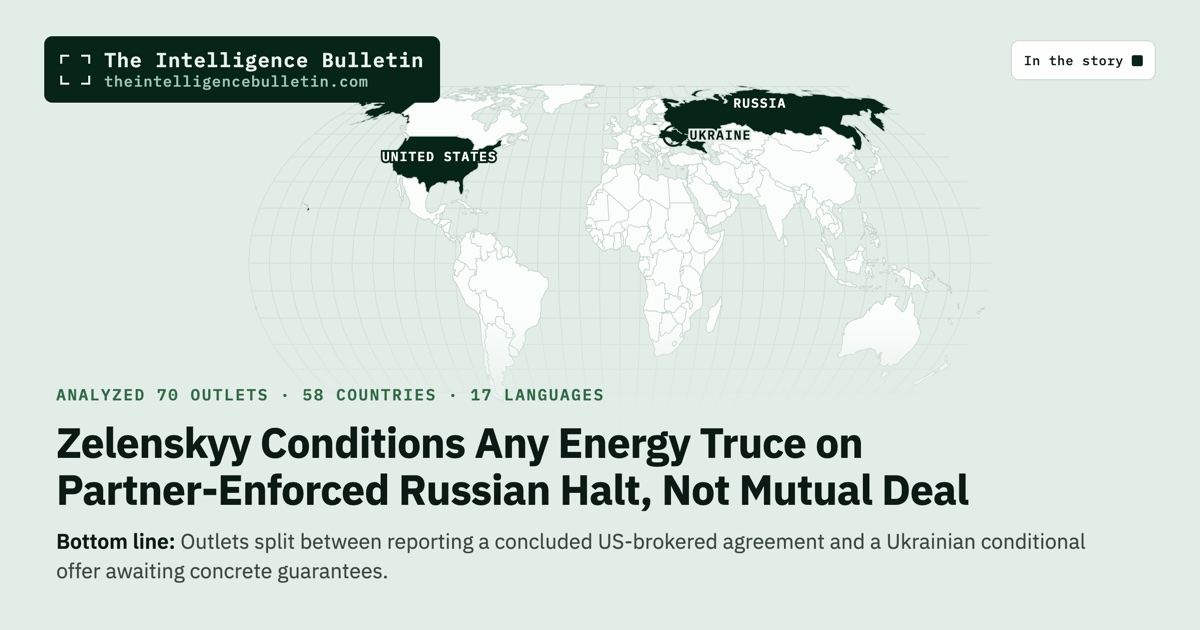
Zelenskyy Conditions Any Energy Truce on Partner-Enforced Russian Halt, Not Mutual Deal

Map of the countries in the story: Zelenskyy Conditions Any Energy Truce on Partner-Enforced Russian Halt, Not Mutual Deal
US President Donald Trump posted that Ukraine and Russia had agreed to stop striking each other’s energy targets, blaming Ukrainian drone attacks on Russian refineries for global diesel price spikes. Ukrainian President Volodymyr Zelenskyy replied that Ukraine would refrain from such strikes if partners ensured Russia halted attacks on Ukrainian critical infrastructure, energy facilities and food routes, but he expressed doubt Russia would comply and demanded concrete specifics. No Russian confirmation followed. The exchange highlights a potential de-escalation step amid ongoing long-range strikes by both sides.

One Story. Many Angles.

๐Ÿ‡บ๐Ÿ‡ฆ
Ukraine
Kyiv Post
Original reporting
Trump Calls on Ukraine to Lay Off Energy Industry Strikes on Russia
Read →
๐Ÿ‡ท๐Ÿ‡บ
Russia
The Moscow Times
Carries Reuters reporting
Ukraine Wants Specifics From Partners on Halting Strikes, Zelensky Says
Read →
๐Ÿ‡น๐Ÿ‡ท
Turkey
Anadolu Agency
Anadolu Agency wire copy
Trump says Russia, Ukraine agree to halt strikes on each other’s energy facilities
Read →
๐Ÿ‡ฎ๐Ÿ‡ณ
India
The Hindu
Carries AP reporting
Ukraine wants specifics from partners over halting strikes on Russia: Zelenskyy after Trump’s post
Read →
๐Ÿ‡ฉ๐Ÿ‡ช
Germany
Deutsche Welle
Carries AFP reporting
Trump seeks halt to energy attacks by both Russia, Ukraine
Read →
5 sources ยท each independently reported
Analyzed 70 outlets across 58 countries and 17 languages
In Brief

Outlets split between reporting a concluded US-brokered agreement and a Ukrainian conditional offer awaiting concrete guarantees.

Trump’s announcement framed a bilateral agreement already reached, yet reporting across the set reveals Zelenskyy’s statement as a conditional proposal requiring verifiable partner enforcement rather than an endorsement of any deal. Ukrainian coverage from Kyiv Post situates the offer inside Ukraine’s record August refinery strikes and Trump’s pressure over diesel prices, treating reciprocity as the central unresolved issue. The Moscow Times relay of Zelenskyy’s Telegram post stresses his explicit skepticism that Russia would abide by any accord and his call for reliable, long-term guarantees with real impact on civilians. Anadolu Agency’s account centers Trump’s claim of mutual consent without noting Zelenskyy’s caveats or the absence of Russian response. The Hindu and Deutsche Welle both foreground the demand for partner specifics and the lack of Kremlin reaction, presenting the initiative as tentative and dependent on external enforcement rather than a settled understanding. This pattern shows actor outlets and those with Global South or European security lenses converging on the conditional nature of Kyiv’s position, while the Turkish state-aligned wire amplified the US president’s assertion of agreement. The divergence underscores how the same Telegram text yields distinct narratives depending on whether the outlet treats Zelenskyy’s phrasing as a firm precondition or as secondary to Trump’s declaration.

Perspective Analysis

Donald Trump posted on Truth Social on September 14 that Ukraine and Russia had reached an understanding to stop striking each other’s energy facilities. “Ukraine has agreed not to hit Russian Energy targets. Russia has agreed to do, likewise!” the post read. It added that global diesel prices stemmed mostly from the Russia-Ukraine war rather than events in Iran. Trump had made similar remarks the previous day at the Amgen Irish Open golf tournament in Doonbeg, County Clare, telling reporters that Ukrainian long-range drone raids on Russian oil refineries were driving shortages and that Zelensky should target other sites instead.

Zelenskyy responded the same day on Telegram. Ukraine stood ready to halt its strikes on Russian energy infrastructure if partners secured a matching Russian commitment to spare Ukrainian critical sites, electricity systems, ports, logistics routes and food supplies. He wrote that a reliable, long-term step protecting these assets could mark a first move toward ending the war, but added that Ukraine remained unconvinced Russia would honor any such arrangement. “We expect specifics from our partners,” the statement concluded. It framed the proposal as a de-escalatory measure that would have real impact on civilian lives.

Ukrainian forces had conducted an intensive campaign against Russian refining capacity in the preceding weeks. August alone saw a record 21 Russian oil refineries struck, according to data compiled by Ukraine’s DeepStrike UA database and the Unmanned Systems Forces. Strikes continued into September, including hits on the Slavyansk-EKO facility in Krasnodar region and the Tatneft-operated Taneco plant in Tatarstan, both producing diesel among other fuels. Fires at both sites remained visible on NASA FIRMS satellite imagery the following day. Russia had in turn directed repeated attacks at Ukrainian power plants, ports and warehouses throughout the winter months.

No statement from Moscow appeared in the immediate coverage. Kremlin spokesman Dmitry Peskov had earlier welcomed any call on Ukraine to spare civilian economic targets, yet offered no direct reply to the new exchange. Previous attempts at partial pauses on infrastructure strikes had collapsed within hours, with each side accusing the other of violations.

The accounts diverge most sharply on whether an agreement already existed. Anadolu Agency reported Trump’s claim of mutual consent as the central development, presenting the United States as broker of a halt on energy attacks by both sides. The piece did not include Zelenskyy’s Telegram text or note the absence of Russian confirmation. In contrast, The Hindu, Deutsche Welle, the exiled Moscow Times and Kyiv Post all quoted Zelenskyy’s full conditional phrasing and his demand for concrete partner assurances. The Moscow Times relay emphasized his explicit skepticism that Russia would comply and his insistence on guarantees with lasting effect. Deutsche Welle added that Zelenskyy had recommended seeking such an accord only if Russia’s cooperation could be ensured after years of targeting Ukrainian energy systems. The Hindu placed the statement against a backdrop of prior failed partial ceasefires.

Kyiv Post supplied the operational context missing from the others. It detailed the scale of Ukraine’s August refinery campaign, the specific plants hit in early September and the visible fires still burning when Trump spoke. That outlet treated reciprocity as the open question rather than a settled fact. The Moscow Times, publishing from Amsterdam, relayed Zelenskyy’s words directly and recorded that they amounted to a denial of any formal Ukrainian endorsement of Trump’s announcement. The Hindu and Deutsche Welle both foregrounded the call for partner specifics and the lack of immediate Kremlin reaction, presenting the initiative as tentative and dependent on external enforcement.

The corroborated record across independent reporting chains shows Zelenskyy’s statement as a conditional offer, not an acceptance of a completed deal. Four outlets carrying the Telegram text reached the same reading: Ukraine would match a verified Russian halt, but no such verification had been secured. Anadolu Agency’s account aligns only with the initial Trump post and omits the response that followed within hours. The single-source observation of no Russian comment appears in both The Hindu and Deutsche Welle but receives no further elaboration in the available material.

What to Watch

Trump’s framing serves an evident interest in shifting attention from US diesel prices above six dollars a gallon and from the separate effects of the Iran conflict on tanker routes. Zelenskyy’s insistence on partner guarantees reflects Kyiv’s assessment that its refinery strikes have already reduced Russian fuel output by roughly a third, according to estimates cited in Ukrainian reporting, and that halting them without enforceable reciprocity would remove leverage without gaining protection for its own grid. The pattern of coverage indicates that readers limited to the Turkish state-aligned wire would see a concluded truce, while readers of the Ukrainian, Indian, German and exiled Russian accounts would see an opening that still requires third-party enforcement before any pause takes effect.


Share this story

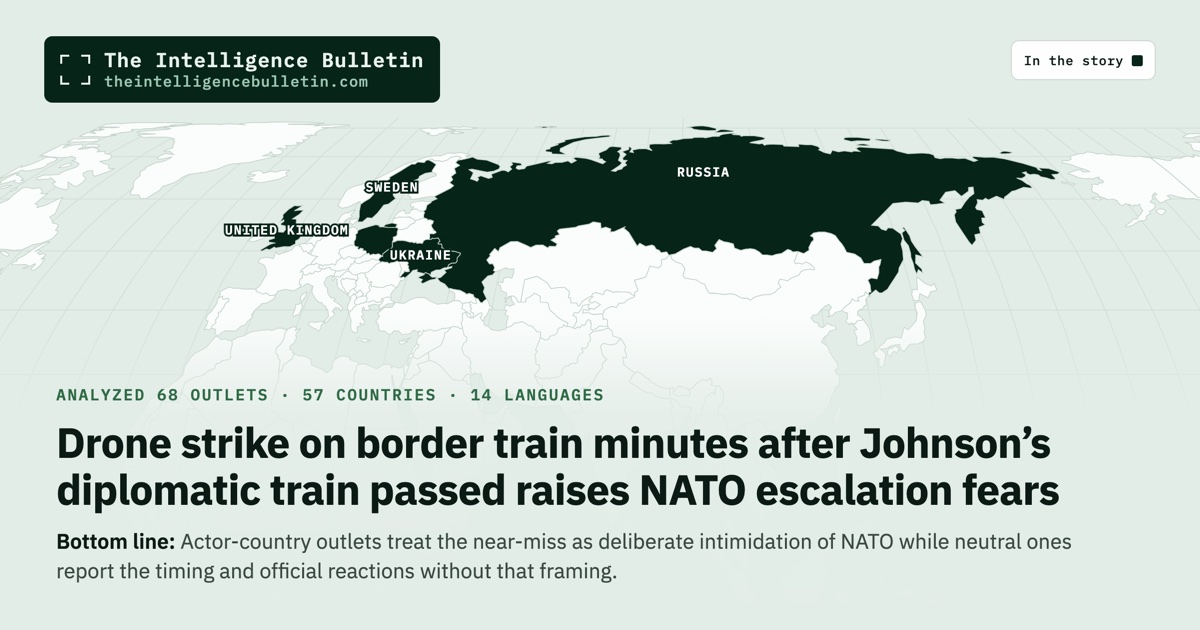
Drone strike on border train minutes after Johnsonโ€™s diplomatic train passed raises NATO escalation fears

Map of the countries in the story: Drone strike on border train minutes after Johnsonโ€™s diplomatic train passed raises NATO escalation fears
A Russian drone struck the engine of a Kyiv-Warsaw passenger train near the Yahodyn border crossing on September 13, 2026, about two kilometres from Poland. The train was evacuated after advance warning and no one was injured. A diplomatic train carrying former UK Prime Minister Boris Johnson, former Swedish Prime Minister Carl Bildt and other European officials had passed through the station minutes earlier; Ukraine’s rail operator said the strike may have targeted it. Poland and Ukraine described the attack as escalation threatening NATO’s doorstep, while Russia said it hit infrastructure used for military supplies.

One Story. Many Angles.

๐Ÿ‡บ๐Ÿ‡ฆ
Ukraine
Kyiv Post
Original reporting
Russian Drone Strike Narrowly Misses Boris Johnson and Western Officials
Read →
๐Ÿ‡ฌ๐Ÿ‡ง
United Kingdom
The Independent
Original reporting
Ukraine-Russia war latest: Putin ‘knocking on Nato’s door’ with drone strike on passenger train near Polish border
Read →
๐Ÿ‡ถ๐Ÿ‡ฆ
Qatar
Al Jazeera
Carries AFP reporting
Poland, Ukraine accuse Russia of ‘escalation’ after strikes near border
Read →
๐Ÿ‡ฎ๐Ÿ‡ณ
India
The Hindu
Carries AP reporting
Russian drone hits train near Ukraine-Poland border soon after Boris Johnson, other visiting dignitaries passed through
Read →
๐Ÿ‡น๐Ÿ‡ท
Turkey
Anadolu Agency
Original reporting
France says Russian drone strike near passenger train seeks to ‘divide,’ ‘intimidate’ European allies
Read →
5 sources ยท each independently reported
Analyzed 68 outlets across 57 countries and 14 languages
In Brief

Actor-country outlets treat the near-miss as deliberate intimidation of NATO while neutral ones report the timing and official reactions without that framing.

Reporting across the sources converges on the same sequence: a drone hit an ordinary passenger train minutes after the diplomatic one cleared the station, with no casualties but immediate political fallout. Ukrainian and Polish voices frame it as deliberate intimidation of NATO and EU partners, citing the proximity to the border crossing that funnels Western aid. UK coverage adds Boris Johnson’s personal condemnation of the “random and senseless” attack on civilian infrastructure. Indian and Qatari outlets relay the timing relative to the dignitaries without strong alliance rhetoric, while the Turkish source quotes French condemnation that the strike aimed to divide and intimidate European allies. The Independent carries an internal note questioning whether any VIP train was directly threatened, yet still leads with the NATO-doorstep warning. What stands out is the absence of any Russian-sourced detail beyond the generic infrastructure claim, leaving the intended-target assertion resting on Ukrzaliznytsia alone. The pattern shows actor countries stressing security implications for Europe while neutral outlets focus on the sequence of events and official reactions, underscoring how the same facts support both a narrow incident report and a broader escalation narrative depending on the outlet’s location.

Perspective Analysis

A Russian jet-powered drone struck the engine carriage of a Kyiv-Warsaw passenger train near the Yahodyn border crossing on September 13, 2026. The crossing lies roughly two kilometres inside Ukraine from the Polish frontier. Ukraineโ€™s state railway operator had received advance warning of the incoming drone and ordered the train evacuated before impact. No passengers or crew were injured. The 206 people aboard reached safety, and operations at the crossing were only briefly disrupted.

Minutes earlier, a separate diplomatic train carrying former British Prime Minister Boris Johnson, former Swedish Prime Minister Carl Bildt and security advisers from several European Union states had cleared the same station. The diplomatic train had departed ahead of its original schedule because rail timetables were being adjusted in real time to avoid Russian strikes. Another train, carrying former CIA director David Petraeus, remained at Yahodyn station when the drone hit. Bildt later posted that the struck train was the one just minutes behind his own and that his train had received an evacuation alert before being cleared to proceed. Johnson wrote on X that he did not know what โ€œwarped logicโ€ had driven the attack on a stationary Ukrainian locomotive and described it as the sort of โ€œrandom and senselessโ€ strike civilians in Ukraine endure daily.

Ukraineโ€™s rail operator stated that the diplomatic train may have been the intended target. The operator noted that the schedule change placed the officialsโ€™ train out of harmโ€™s way. Ukrainian Foreign Minister Andrii Sybiha called the strikes โ€œPutinโ€™s terror knocking directly on the doors of the EU and NATOโ€ and said Russian forces were at the gate of Ukraineโ€™s partners. President Volodymyr Zelenskyy described the border attack as deliberate. Polish Prime Minister Donald Tusk convened an emergency security meeting and warned that Russian actions were increasingly approaching Polandโ€™s border. He singled out the growing use of jet-powered drones, which are faster and harder to intercept than propeller-driven models. Polish Foreign Minister Radoslaw Sikorski said the escalation should lead allies to double their support for Ukraine. A second drone struck a truck about 800 metres from the same crossing, forcing a temporary closure.

Russiaโ€™s Defence Ministry said the strikes targeted infrastructure used to transport military cargo from Europe into Ukraine. No further detail on the specific target or the droneโ€™s guidance was released by Moscow. Kremlin spokesperson Dmitry Peskov has previously acknowledged that Russia strikes a wide range of sites once Ukraine began hitting economic targets inside Russia, though that statement was not tied directly to the Yahodyn incident.

The five outlets examined all report the same core sequence: the drone hit an ordinary passenger train after the diplomatic train had already left the station, with no casualties on any of the trains involved. Kyiv Post foregrounds the rail operatorโ€™s assessment that the diplomatic train was likely the intended target and places the episode inside Ukraineโ€™s broader argument that Russian attacks now reach NATOโ€™s immediate vicinity. The Independent leads with the same near-miss for Johnson and uses the phrase โ€œknocking on Natoโ€™s door,โ€ yet also carries a separate note from its political editor stating that sources indicated none of the VIP trains were directly involved and that the visible wreckage came from an ordinary passenger train, possibly linked to a nearby gas-station strike. Al Jazeera relays the Polish and Ukrainian accusations of escalation and notes past Russian strikes that crossed into Polish territory, including the 2022 incident in Przewodow. The Hindu, drawing on AP copy, sticks to the chronology of the dignitariesโ€™ passage and the early departure of their train. Anadolu Agency quotes a French statement that the strike sought to โ€œdivideโ€ and โ€œintimidateโ€ European allies.

The accounts converge on the physical event and on the immediate political reactions from Kyiv and Warsaw. They diverge on the question of intent. Only the Ukrainian rail operator asserts that the diplomatic train was probably the target; no independent reporting chain supplies additional evidence for or against that reading. The Russian claim that the strike hit military-supply infrastructure rests solely on the Defence Ministry statement. The Independentโ€™s internal note introduces the only published doubt within the set about whether the diplomatic train itself was under direct threat. Neutral and Global South outlets avoid endorsing either the targeting claim or the broader NATO-escalation framing, while actor-country outlets treat those interpretations as the central meaning of the incident.

What to Watch

The corroborated facts are therefore the strike on the passenger train, its timing relative to the diplomatic trainโ€™s passage, the absence of casualties, and the public statements from Polish and Ukrainian officials warning of escalation. The intended-target assertion and the Russian infrastructure claim each stand on a single reporting chain and should be carried with that limitation visible. Actor governments have a clear interest in presenting the episode as evidence that the war has reached NATOโ€™s doorstep, because that framing supports calls for additional air defences and sanctions. Outlets in non-belligerent countries have less stake in that presentation and therefore foreground the timeline and the movement of officials. The next developments most likely to follow are tightened Polish air-defence posture along the border and renewed Ukrainian requests for systems capable of intercepting jet-powered drones at greater range; both steps flow directly from the corroborated proximity of the strike to NATO territory rather than from the single-source claims about intent.


Share this story

Trump, in Ireland, agrees to examine 9/11 families’ Saudi records request

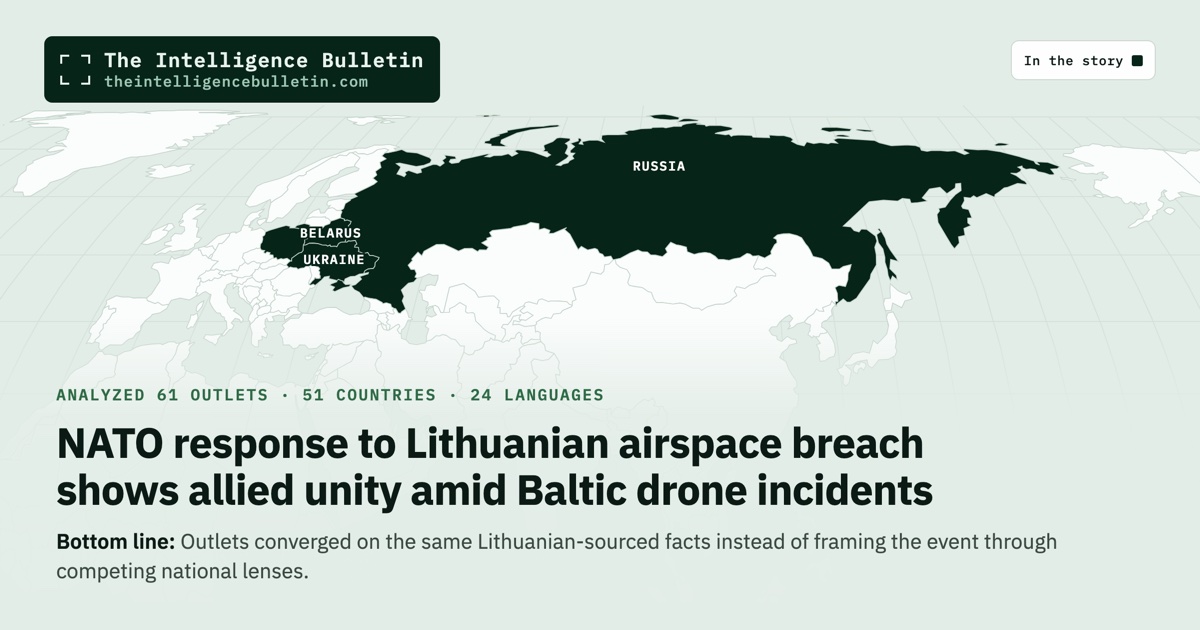
Map of the countries in the story: Trump, in Ireland, agrees to examine 9/11 families' Saudi records request
President Donald Trump said Sunday in Ireland that he would examine requests from 9/11 victims’ families to declassify records on alleged Saudi government ties to the 2001 attacks. Fifteen of the 19 hijackers were Saudi nationals. Families including Terry Strada, whose husband Tom died, have long alleged Saudi officials aided the plot, a claim Riyadh denies. The request comes amid ongoing lawsuits and prior partial releases of records.

One Story. Many Angles.

๐Ÿ‡บ๐Ÿ‡ธ
United States
Redlands Daily Facts
Carries Associated Press reporting
Trump says he’ll consider releasing 9/11 records after families’ request โ€“ Redlands Daily Facts
Read →
๐Ÿ‡ฎ๐Ÿ‡ณ
India
The Hindu
Carries AP reporting
Trump says he will consider releasing 9/11 records after families request
Read →
๐Ÿ‡ฎ๐Ÿ‡ฑ
Israel
The Jerusalem Post
Carries REUTERS reporting
Donald Trump considers request from 9/11 families to declassify Saudi records
Read →
๐Ÿ‡ฒ๐Ÿ‡พ
Malaysia
Free Malaysia Today
Carries Reuters reporting
Trump to consider request to release more 9/11 records
Read →
4 sources ยท 3 independent accounts โ€” some share the same news agency’s report
Analyzed 63 outlets across 56 countries and 16 languages
In Brief

Coverage converges on the same wire facts but shifts emphasis from US domestic families to Saudi diplomacy depending on the outlet’s regional lens.

All four outlets report the same core event from Trump’s brief remarks aboard Air Force One in Ireland, yet their framing reveals distinct priorities. The US-sourced AP account in Redlands Daily Facts centers the domestic political response to American families’ long campaign, naming Terry Strada and the 25-year legal fight without broader regional context. The Hindu carries nearly identical AP text but situates the potential release as an international transparency matter. The Jerusalem Post and Free Malaysia Today, both relaying Reuters copy, add quotes from New York Republican Representative Nicole Malliotakis praising the chance for transparency and note recent New York City record releases on air quality, while the Israeli outlet foregrounds possible Middle East diplomatic fallout from any Saudi-linked disclosures. The Malaysian piece stays procedural, treating the episode as routine declassification news. No outlet contradicts another on facts; the single reporting chain means differences lie in emphasis and added context rather than conflicting claims. The shared wire origin explains the close alignment on Trump’s exact words and the Strada family’s statements, while the Saudi angle receives more weight where regional stakes are higher.

Perspective Analysis

President Donald Trump told reporters in Ireland on Sunday that he would examine a request from relatives of those killed in the September 11 attacks to release additional records on possible Saudi government connections to the plot. Speaking just before boarding Air Force One at Shannon Airport after a weekend visit, Trump said, โ€œIโ€™m going to look at it when I get back. I know they asked me Friday.โ€ The families have pressed successive administrations for declassification of documents they say could clarify whether Saudi officials or religious figures with government ties helped the 19 hijackers, fifteen of whom were Saudi nationals. Riyadh has consistently denied any role.

The request reached Trump on Friday during remembrance events in New York. Terry Strada, who lost her husband Tom on the day, read victimsโ€™ names aloud and then called on the president to โ€œtell the Saudis to stop lying.โ€ She described a pattern in which earlier presidents had chosen โ€œto protect the Saudis instead of standing with the 9/11 families,โ€ adding that โ€œit has been one betrayal after anotherโ€ and that Trump โ€œcan still change that.โ€ Strada and other relatives have pursued civil suits against Saudi entities for years, seeking both accountability and fuller disclosure of intelligence files that remain sealed or redacted.

Four outlets that published the story on September 13 and 14 carried essentially the same sequence of events and quotations. The Redlands Daily Facts and The Hindu printed nearly identical copy from the Associated Press, foregrounding the familiesโ€™ domestic campaign and the 25-year legal struggle. The Jerusalem Post and Free Malaysia Today used Reuters material that included the same Trump remarks and Strada statements while adding two further details: New York lawmakers from both parties have urged release of certain phone records, and New York City Mayor Zohran Mamdani recently made public roughly 170,000 pages of city records on air quality, health effects, and the municipal response. Representative Nicole Malliotakis, a New York Republican, told ABC News that the moment offered โ€œone of the better shots that we have at getting this information out thereโ€ and expressed hope for transparency from the current administration.

No outlet in the set reported contradictory facts. All four reproduced Trumpโ€™s exact words from the Irish tarmac and the same core allegations about Saudi links. The only measurable differences appear in what each chose to layer around that shared spine. The American and Indian pieces stayed with the familiesโ€™ direct appeal and the presidentโ€™s response during his Ireland stop. The Israeli account placed greater weight on the Saudi dimension and possible diplomatic consequences in the Middle East. The Malaysian account kept the narrowest procedural frame, noting the lawmakersโ€™ call and the recent New York release without additional regional commentary.

Because every published account traces to one of two wire services, the uniformity is not surprising. A reader who saw only the Redlands Daily Facts version would encounter the same central facts and quotations as a reader of The Hindu, the Jerusalem Post, or Free Malaysia Today. The added Reuters sentences on phone records and the 170,000-page municipal release appear in two of the four pieces; the Saudi diplomatic angle receives explicit mention in one. These choices reflect outlet priorities rather than competing versions of events.

The episode sits inside a longer contest over 9/11 records that has produced partial releases in the past without resolving the familiesโ€™ central claims. Trumpโ€™s statement does not commit him to any particular action or timetable; it registers only that he will review the request upon returning to Washington. The familiesโ€™ public statements frame the issue as one of consistent protection of Saudi interests across administrations. Saudi officials have maintained throughout that no government involvement existed. The reporting supplies no new primary documents or official Saudi response to this specific request.

What to Watch

What the four articles together make clearest is that any further declassification would occur against a backdrop of already released material, including the recent New York City tranche, and against ongoing litigation. The single reporting chain means the public record available to readers in the United States, India, Israel, and Malaysia on this narrow development is effectively the same. Regional outlets can and do attach different significance to the Saudi element or the transparency precedent, but the underlying sequence of Trumpโ€™s remarks and the familiesโ€™ appeal does not vary.


Share this story

Hormuz vessel attack reported as Iran-Gulf talks postponed and Bahrain stays away

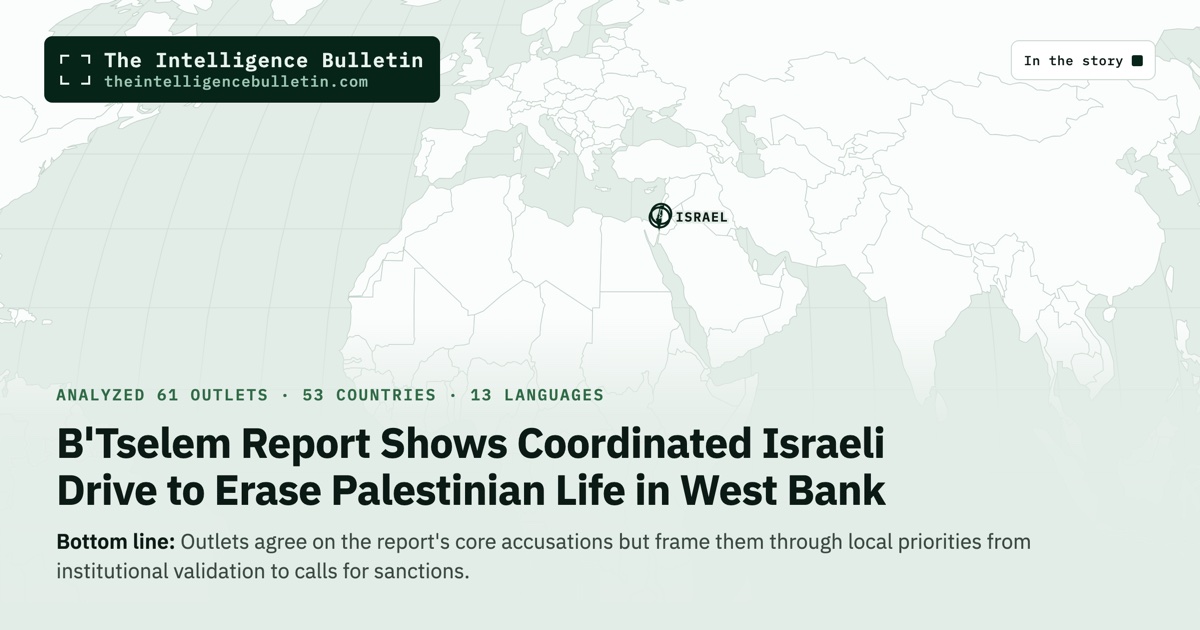
Map of the countries in the story: Hormuz vessel attack reported as Iran-Gulf talks postponed and Bahrain stays away
A commercial vessel, MT El Gaia, was struck by an unknown projectile in the Strait of Hormuz off Oman on September 13, 2026. Thirteen crew, mostly Indian, were rescued while one remains missing. India condemned the attack on commercial shipping. The incident occurred as Iran-Gulf diplomatic talks scheduled for Monday in Oman were postponed, with Bahrain refusing to attend and broader shipping disruptions continuing.

One Story. Many Angles.

๐Ÿ‡ด๐Ÿ‡ฒ
Oman
Times of Oman
Original reporting
India condemns attack on commercial vessel off Oman coast
Read →
๐Ÿ‡น๐Ÿ‡ท
Turkey
Anadolu Agency
Original reporting
1 missing, 13 rescued after vessel attacked off Oman in Strait of Hormuz
Read →
๐Ÿ‡ถ๐Ÿ‡ฆ
Qatar
Al Jazeera
Original reporting
Iran-GCC summit: What’s behind the meeting, why is Bahrain not attending?
Read →
๐Ÿ‡ญ๐Ÿ‡ฐ
Hong Kong
South China Morning Post
Carries Reuters reporting
Iran is set to unveil temporary Hormuz agreement to Gulf nations on Monday
Read →
๐Ÿ‡ฎ๐Ÿ‡ณ
India
Free Press Journal
Original reporting
Strait Of Hormuz Ship Hit By Projectile, Global Oil Supply Fears Rise After Saudi Pipeline Attack
Read →
5 sources ยท each independently reported
Analyzed 61 outlets across 55 countries and 17 languages
In Brief

Outlets near the attack stress rescue and condemnation while distant ones fold it into stalled diplomacy and energy fears.

The reporting across these five outlets shows a consistent factual core on the vessel attack and rescue but diverges sharply on framing: Omani and Indian sources tie it directly to crew safety and regional condemnation, while Turkish coverage stays with operational rescue details. Qatari and Hong Kong pieces embed the incident inside stalled diplomacy over Hormuz control and Bahrain’s boycott, treating the attack as one symptom of wider deadlock rather than the main story. Indian business coverage alone connects it explicitly to simultaneous Saudi pipeline damage and oil-price spikes, highlighting supply risks that others mention only in passing. This pattern reveals that outlets closest to the incident or affected nationals prioritize immediate human and navigational consequences, whereas those farther away or invested in Gulf-Iran channels use the attack to illustrate why talks matter or why they falter. No outlet claims to identify the attacker; all leave responsibility open while noting Iran’s parallel claims of its own vessel being hit. The absence of any selected Iranian source means statements from Tehran appear only through the lens of the other capitals’ priorities.

Perspective Analysis

A commercial vessel named MT El Gaia came under attack in the Strait of Hormuz on September 13 while transiting waters off the Omani coast. The British maritime security agency UKMTO reported that an unknown projectile struck the ship, starting a fire and forcing the crew to abandon it. Thirteen of the fourteen crew members, most of them Indian nationals, were rescued. Search operations continued for the one missing sailor. Indian authorities stated that the Indian Embassy in Oman was coordinating with Omani officials on the rescue and expressed thanks for their assistance.

India’s Ministry of External Affairs condemned the incident outright. The ministry described the targeting of commercial shipping, seafarers and civilian infrastructure as unacceptable and called for immediate de-escalation through dialogue and diplomacy to restore safe navigation and commerce in the region. This statement appeared in coverage from the Times of Oman, which placed the Indian position at the center of its account and noted the vessel’s location relative to Omani waters.

The same day brought a parallel report of violence on the Iranian side of the strait. An Iranian commercial vessel was struck near Qeshm Island, killing one person and wounding four others, according to the Qeshm governor and Iranian state media cited in Al Jazeera. Iranian officials attributed that attack to the “US terrorist enemy,” though no independent confirmation of responsibility appeared in the selected reporting.

The Hormuz incident unfolded against the backdrop of postponed regional diplomacy. Iran had planned to use a Monday meeting in Oman to present a temporary agreement reached with Muscat on shipping routes through the strait. Iranian Foreign Minister Abbas Araghchi told outlets that the pact would be shared with participating Gulf states along with related maps, yet he stressed that it would not trigger any reopening of the waterway. Tehran continued to condition normal transit on the United States meeting earlier commitments on sanctions and port access. Oman’s foreign minister announced late on Sunday that the gathering had been postponed in the interests of consensus. Iranian officials described the delay as a joint decision reached at the request of some regional countries, with a new date to be set in coordination with Muscat.

Bahrain declared it would not participate. Its foreign ministry said security in the region could not be preserved through appeasement and insisted that any collective meeting including Iran must await the resumption of diplomatic relations between Manama and Tehran. Bahrain has maintained that position since cutting ties in 2016, even as Saudi Arabia restored its own links with Iran in 2023. Al Jazeera’s reporting foregrounded these positions and the broader context of Iranian efforts to frame the meeting as a demonstration of good intentions toward neighbors despite the ongoing conflict.

Coverage from the South China Morning Post placed the vessel strike alongside the postponement and the earlier closure of Saudi Arabia’s 1,200-kilometer east-west pipeline, which had been damaged in drone attacks the previous week. The pipeline, capable of carrying up to five million barrels per day as an alternative to Hormuz transit, remained shut as a precautionary measure, with satellite imagery showing smoke along sections south of Medina. Oil prices had already climbed above 100 dollars a barrel in preceding days amid the cumulative disruptions. The Free Press Journal in India drew the same connection explicitly, noting that the Hormuz attack compounded fears of supply shortfalls after the Saudi pipeline incident and the broader restrictions that had already reduced daily traffic through the strait from roughly 130-140 vessels to five to seven.

Anadolu Agency confined its account to the immediate operational outcome: one missing and thirteen rescued after the strike off Oman. No further linkage to diplomacy or markets appeared in that dispatch.

The five selected outlets converged on the core facts of the MT El Gaia attack and the postponement of the Oman meeting. They diverged in what they chose to emphasize next. The Times of Oman and the Free Press Journal each highlighted the human and economic stakes closest to their national interests: Indian crew safety and condemnation in one case, oil-price and supply risks in the other. Anadolu Agency stayed with the rescue numbers alone. Al Jazeera and the South China Morning Post embedded the incident inside the stalled talks, treating the projectile strike as evidence of why regional security arrangements remain urgent yet elusive. Bahrain’s refusal received detailed treatment only in the Al Jazeera piece, which quoted the kingdom’s ministry directly on the need for restored diplomatic ties before any collective engagement.

No selected outlet identified the party responsible for the strike on MT El Gaia. All left the question open while recording Iran’s separate claim regarding its own vessel. Statements attributed to Iranian officials on the postponed meeting and the limits of any Oman agreement reached readers only through Qatari, Hong Kong and Omani reporting channels; no Iranian outlet appeared in the source set. The absence means those statements arrive already filtered through the diplomatic priorities of the capitals that published them.

The reporting therefore supplies a consistent spine on the attack itself and the diplomatic delay, yet it leaves responsibility for the projectile unresolved and presents Iran’s negotiating stance through external lenses. Outlets physically or commercially closest to the incident or its immediate victims gave priority to rescue coordination and explicit condemnation. Those positioned farther away or more invested in Gulf-Iran channels used the event to illustrate the mechanics of the postponement and the obstacles to any quick reopening of the strait. The single Indian business account alone made the direct link to simultaneous pipeline damage and price movements that the others left implicit or omitted.

The most reliable picture for a reader comes from treating the corroborated operational details as settled and the diplomatic claims as provisional statements of position rather than settled outcomes. The Times of Oman account of Indian condemnation stands on a single authoritative source but aligns with the pattern of regional governments responding publicly to attacks on their nationals. The postponement itself rests on matching statements from Omani and Iranian officials carried in two independent outlets. Bahrain’s refusal is documented on the record by its own ministry. Claims about the content or durability of any Iran-Oman agreement remain Iranian assertions pending further reporting from additional chains.

What to Watch

The pattern suggests that coverage closest to affected shipping lanes and crew nationalities will continue to foreground immediate safety and navigation questions, while outlets tracking the wider conflict will keep folding each new incident into assessments of whether the postponed talks can be revived or whether the current restrictions on Hormuz traffic will persist. The next concrete development to watch is whether Oman and Iran announce a revised date for the meeting and whether any participating Gulf state besides Bahrain signals conditions for attendance.


Share this story