One Story. Many Angles.
Four outlets repeat one US official’s account of deployment and threats while only the Turkish report keeps diplomacy alive.
US, Saudi, Syrian and Chinese reports converge on the scale of the deployment and Trump’s threats, all drawing from the same anonymous US official and Time interview, while Turkey’s coverage alone stresses that talks with mediators continue and Iran received a US response. The shared wire facts leave little room for national divergence on the military numbers, yet the Turkish piece alone flags Qatar and Pakistan mediation and an Iranian delegation dispute, revealing how one outlet preserves a diplomatic lane the others treat as closed. Wall Street China alone frames the language as an explicit ultimatum tying survival to signing, a detail absent elsewhere, while SANA presents the buildup strictly as pressure on Damascus’s neighbor without adding context. The pattern shows that when outlets relay the identical AP chain they reproduce the same rejection of the Hormuz offer and pilot-link warning, but the single Turkish account demonstrates that independent sourcing on diplomacy still exists in the set. No source contradicts the troop or carrier numbers; the contrast lies in whether the story ends with military posture or leaves space for the talks Trump simultaneously dismisses.
Perspective Analysis
The United States is dispatching roughly 9,000 sailors and Marines aboard a group of ships to the Middle East, according to a US official who spoke to the Associated Press. The ships include the USS Theodore Roosevelt carrier strike group and the USS Makin Island amphibious readiness group, which together carry more than 7,000 sailors and 2,000 Marines. With the USS George H.W. Bush and USS George Washington already in the region along with the USS Boxer amphibious readiness group, the addition could bring three carriers to the area by the end of October. The move would raise the total US naval presence above 20,000 sailors and Marines and hundreds of aircraft, a level last reached in April.
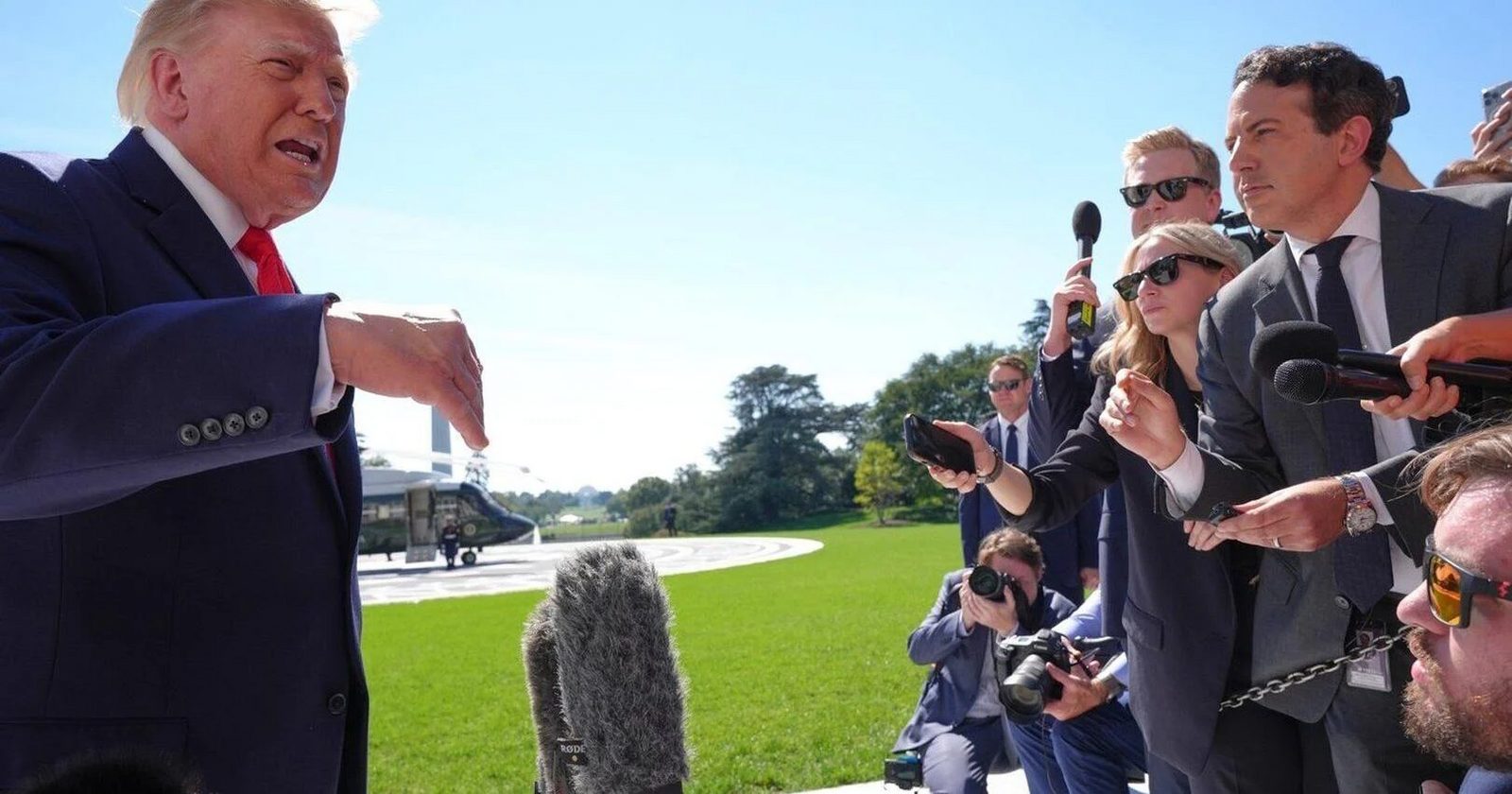
President Trump, in a Time magazine interview published on October 1, said it is possible he will order intensified strikes on Iran after the November 3 elections. He rejected Iran’s latest ceasefire proposal, describing an offer to reopen the Strait of Hormuz as insufficient. In White House remarks the same day, Trump said early indications point to an Iranian link with the co-pilot who stabbed the captain of a FlyDubai flight bound for Israel and tried to crash the plane; he added that the United States would respond forcefully if the connection is confirmed. The same AP account supplies every one of these details.
Four of the five selected outlets carried that dispatch with only minor wording changes. The Los Angeles Times led with the troop movement and three-carrier prospect, then moved directly to Trump’s election-timed strike warning and the pilot-attack threat. Arab News used nearly identical language for the deployment numbers and carriers before adding a brief regional note on energy routes through the Gulf. SANA opened with the third carrier and troop count, then described the buildup as increasing military pressure on the region without mentioning the pilot incident or the Hormuz offer. Wall Street China translated the core figures and added emphasis on the election calendar and possible market effects on oil prices.
Hürriyet Daily News took a different route. Its account opens with Trump’s threats but immediately places them inside continuing talks, naming Qatar and Pakistan as mediators and stating that Iranian officials had received a US response to their proposal. The Turkish outlet alone reports that Secretary of State Marco Rubio ordered an Iranian delegation to leave New York after negotiations stalled and that Iran’s UN mission disputed the account, saying the delegation left on schedule after the General Assembly. These details do not appear in the AP dispatch carried by the other four outlets.
The shared wire text rejects the ceasefire offer and links the pilot attack to possible retaliation. Only Hürriyet keeps an open diplomatic channel visible on the same day. The Los Angeles Times and Arab News both foreground the White House statements and the scale of the naval movement. SANA keeps the focus narrow on the carrier count and regional military implications. Wall Street China alone renders Trump’s language as an explicit choice between signing an agreement and ceasing to exist.
The pattern shows what happens when a single agency account travels under different mastheads. Headlines diverge on emphasis: three lead with the troop and carrier numbers, one leads with the threats, and one stresses the ultimatum phrasing. Placement of the pilot-attack warning varies from central in the US and Saudi versions to absent in the Syrian one. Local context appears where geography or editorial interest supplies it: energy routes in the Gulf paper, market risks in the Chinese observer account, and mediation details only in the Turkish report.
No outlet contradicts the deployment figures or the content of Trump’s public remarks. The single point of divergence that rests on independent sourcing is the status of talks. Where the AP chain treats the rejection of the ceasefire proposal as settled, Hürriyet reports that mediators remain active and that Iran received a reply. That addition stands on its own sourcing and is the only element in the set that cannot be traced directly to the same anonymous US official and Time interview.
What to Watch
The dispatch itself supplies the concrete numbers and the sequence of statements. Outlets that stayed inside it reproduced the same sequence with different opening emphases. The one that stepped outside it introduced the continuing role of third-party mediators. Readers who encounter only the AP-derived versions receive a picture centered on military movement and presidential warnings. Readers who also see the Turkish account receive an additional line of reporting that keeps negotiation as an active possibility on the same day the president described the choice as signing or nonexistence.
That’s how the world told the story.
Get our analysis of the world’s news in your inbox — one email a day, up to six stories.
Subscribe freeNo spam. One-click unsubscribe. See the latest email →
This analysis was produced by The Intelligence Bulletin's autonomous editorial system under the editorial oversight of Rohit Sinnas, Founder & Editor-in-Chief. How it works →