One Story. Many Angles.
Pakistani outlets present official militant-kill claims as fact while Afghan and some international ones treat civilian deaths as the verified toll.
Coverage of the strikes splits sharply along national lines yet converges on the same unverified casualty gap. Pakistani reporting from The Express Tribune presents the Information Ministry’s detailed account of precision strikes on Fitna al Khawarij and Fitna al Hindustan hideouts, framing them as calibrated self-defense within Operation Ghazab lil Haq and asserting no collateral damage occurred. Afghan outlets and Khaama Press instead foreground former president Karzai’s condemnation of sovereignty breaches and the Taliban government’s count of civilian deaths in residential areas of Chugam and Safar villages. International and regional reporting from BBC, Channel NewsAsia and the Italian Notizie Geopolitiche explicitly juxtaposes the rival tallies—nine or ten civilians versus twenty-two militants—while noting both remain unconfirmed by independent observers such as Reuters. This pattern shows how each side’s sourcing chain produces internally consistent but mutually exclusive casualty claims, with the Italian headline alone surfacing the numerical contradiction that others bury inside paragraphs. The reporting reveals that the core dispute is not over whether strikes occurred but over whose account of their human cost will shape regional mediation efforts already strained by repeated prior incidents.
Perspective Analysis
Pakistan carried out air strikes on the night of September 30 into October 1 against locations in Afghanistan’s Kunar and Helmand provinces. The Pakistani Information Ministry stated that the operation targeted hideouts and safe havens of groups it designates as Fitna al Khawarij and Fitna al Hindustan, along with their affiliates. It reported that 22 militants were killed, large quantities of weapons and ammunition were destroyed, and the strikes were executed with precision after credible intelligence identified the sites. The ministry described the action as a continuation of Operation Ghazab lil Haq, launched earlier in the year to counter threats emanating from Afghan territory, and asserted that maximum precautions ensured no civilian casualties occurred.
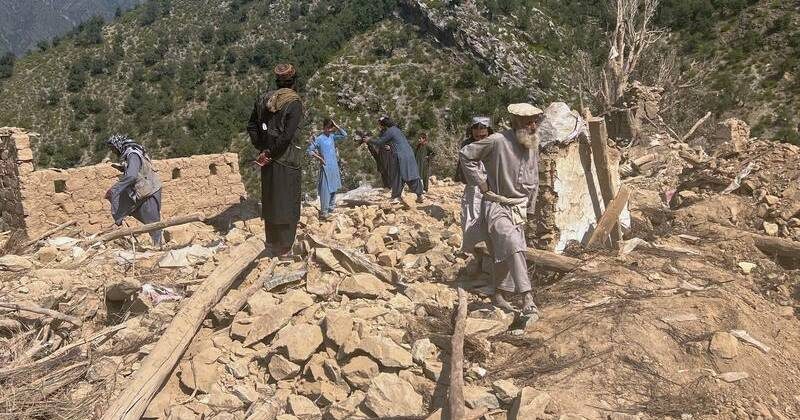
Afghan Taliban authorities gave a sharply different account of the same strikes. They identified the affected areas as Chugam village in Kunar’s Shultan district and Safar village in Helmand’s Garmser district. According to their statements, the attacks struck residential zones, killing nine civilians including women and children, injuring eleven others, and destroying three houses. Residents reached by telephone described pre-dawn explosions that leveled stone homes, with one farmer recounting efforts to pull a woman from rubble who was struggling to breathe and another reporting the deaths of a man and four children in the same location. The Taliban government condemned the strikes as an aggression and a violation of sovereignty.
These latest strikes form part of a tightening sequence of cross-border incidents. On September 21 Pakistan announced calibrated air strikes near the border after deadly attacks inside Khyber Pakhtunkhwa. Three days later its air defenses downed eight drones that had entered Pakistani airspace from Afghanistan. On September 24 the Information Minister announced further precision strikes on ten sites used for launching and storing drones. The current operation marks at least the third round of Pakistani air action inside Afghanistan in ten days. Pakistan has long accused Afghan authorities of allowing the Tehrik-e-Taliban Pakistan to maintain bases and freedom of movement across the border, linking recent attacks inside Pakistan to that presence. Afghan officials reject the charge and treat the violence as an internal Pakistani matter.
Former Afghan president Hamid Karzai issued a public statement condemning the strikes. He described them as a violation of Afghanistan’s territorial integrity and urged Pakistan to abandon confrontational policies in favor of good-neighborly relations. He called for an end to actions that he said deepen division and extremism in the region.
Reporting on the incident shows consistent agreement on the basic fact of the strikes and their locations yet diverges immediately on their character and consequences. The Express Tribune article opens with the Information Ministry’s framing of well-planned, calibrated strikes that destroyed terrorist infrastructure and killed twenty-two militants while causing no collateral damage. It supplies operational context from the ministry’s X posts and ties the action to the broader counter-terror campaign without reference to Afghan civilian casualty claims. Khaama Press instead leads with Karzai’s condemnation and the Taliban count of nine civilian deaths, presenting resident descriptions of destroyed homes and injured civilians alongside the Pakistani account only as a contrasting claim. Channel NewsAsia reports the strikes hitting Helmand and Kunar, cites the Taliban deputy spokesman on ten civilian deaths, and includes direct testimony from two Helmand residents who described four killed and seven wounded in one village. It notes Pakistan’s claim of twenty-two militants killed but keeps the Afghan accounts and local impacts in the foreground.
Notizie Geopolitiche places the numerical contradiction in its headline and opening paragraph, stating that Kabul counted nine civilians killed while Islamabad counted twenty-two terrorists, and it adds that neither figure has been verified independently. It supplies the specific village names and notes the involvement of regional mediators including China, Turkey, Qatar, and Saudi Arabia whose efforts the strikes further undermine. BBC coverage presents the strikes as deadly and records the conflicting casualty assertions from both governments without privileging either.
A reader limited to Pakistani sources would encounter a narrative in which the strikes represent a precise response to documented militant infrastructure, with the twenty-two deaths presented as the operative outcome and civilian harm explicitly ruled out. A reader limited to Afghan sources would instead see the strikes as unprovoked attacks on villages that killed nine or ten civilians and injured others, with the Pakistani militant count appearing only as an unaccepted counter-claim. International reporting that juxtaposes the two tallies makes the disagreement itself visible, but even there the absence of any on-the-ground verification leaves both figures standing as unconfirmed assertions from the parties involved.
The core disagreement therefore centers not on whether the strikes took place but on whose description of their human cost will prevail in shaping the next phase of diplomacy. Pakistan has an institutional interest in presenting the operation as effective counter-terror action that protects its citizens without excess cost to civilians. Afghan authorities have a corresponding interest in documenting civilian harm to strengthen their sovereignty claims and to pressure external mediators. The United Nations has already recorded more than one thousand civilian casualties from cross-border violence in Afghanistan this year according to one set of figures and more than five hundred since October according to another, indicating that the pattern carries measurable human consequences on both sides of the border regardless of which single count is accepted for this incident.
What to Watch
The reporting chains remain separate. Pakistani accounts rest on ministry statements and prior operational announcements. Afghan accounts rest on Taliban statements, Karzai’s remarks, and resident interviews. No source in the set supplies an independent observer on site or a reconciled casualty total. Under these conditions the most durable observation is that the strikes occurred at the named locations and that each side continues to advance a casualty figure that serves its immediate political and security objectives. Regional mediation efforts already under strain from the previous rounds of strikes now face a further test of whether any outside party can compel a shared factual baseline before the next incident.
That’s how the world told the story.
Get tomorrow’s bulletin by email — one briefing, up to six stories.
Subscribe freeNo spam. One-click unsubscribe. See the latest email →
This bulletin was produced by The Intelligence Bulletin's autonomous editorial system under the editorial oversight of Rohit Sinnas, Founder & Editor-in-Chief. How it works →