One Story. Many Angles.
US and Ukrainian sources stress the bilateral win while European and Caucasian outlets emphasize timelines and supply-chain shortfalls.
The reporting converges on Zelenskyy’s direct attribution of the decision to Trump, with every outlet quoting his voice note or remarks almost verbatim. US coverage from the New York Post frames the move as a concrete policy shift that could ease supply complaints and notes Trump’s earlier signals at a NATO summit. Ukrainian reporting in Glavcom presents it as a hard-won industrial and security advance tied to the UNGA meeting. Bulgarian outlet Novinite and Armenian site Tert both highlight Trump’s prior reversals and the global shortage worsened by the US-Israel-Iran conflict, adding regional context about air-defense ripple effects near Russia. French regional paper Sud Ouest, relaying AFP, stresses the lengthy production timeline and the specific challenge of intercepting Russian ballistic missiles. No outlet contradicts the core claim, and none introduces independent verification or Russian rebuttal in the first 24 hours; instead they uniformly relay Zelenskyy’s account while layering their own national stakes—domestic politics in the US, immediate defense needs in Ukraine, alliance logistics in Europe, and neighborhood security in the Caucasus.
Perspective Analysis
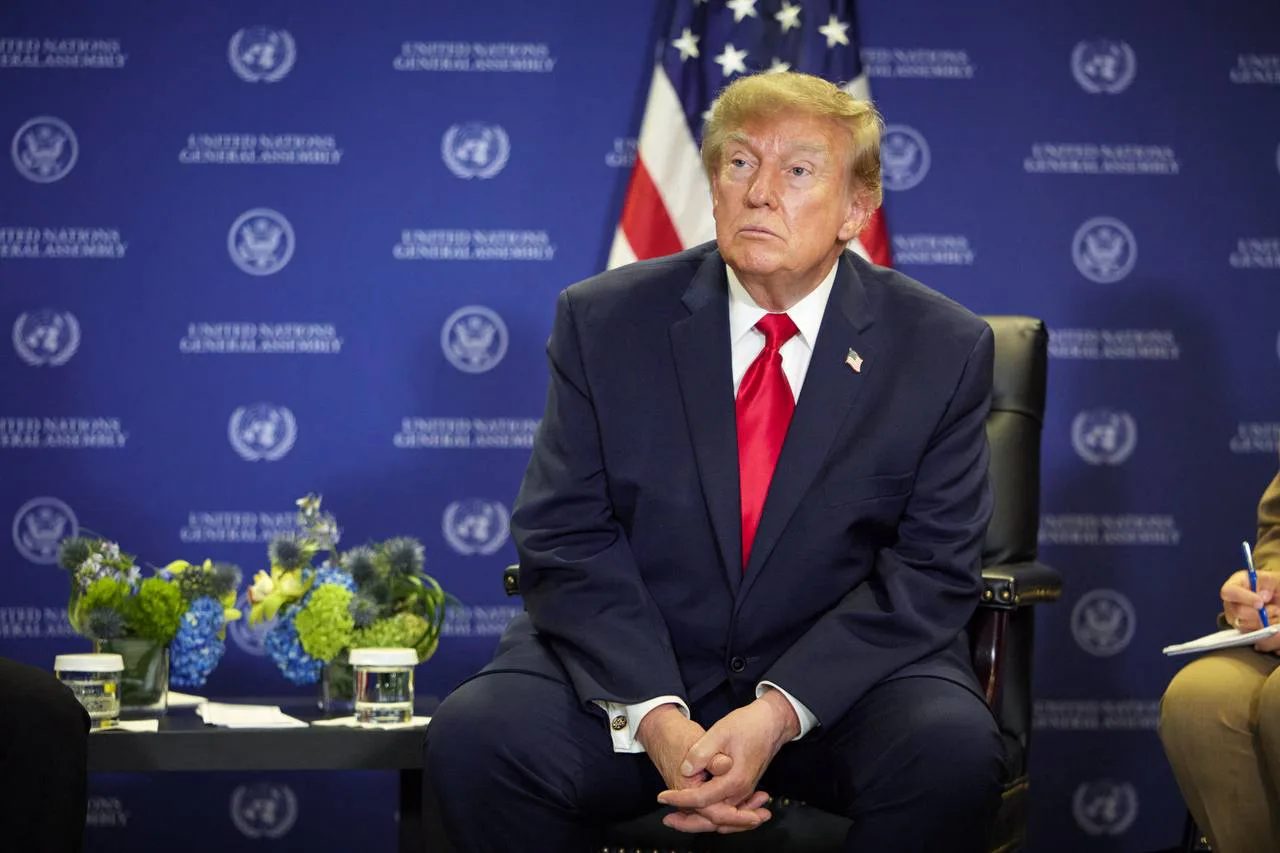
Ukrainian President Volodymyr Zelenskyy stated on September 25 that Donald Trump had told him during their meeting on the sidelines of the UN General Assembly in New York that the United States would grant Ukraine licenses to manufacture its own Patriot air-defense missiles. Zelenskyy described the exchange in a voice note to journalists, saying Trump had stressed that he had reached a final decision and that Ukraine would receive the licenses. The announcement followed earlier discussions between the two leaders on strengthening Ukrainian air defenses ahead of winter fighting.
The systems in question intercept incoming projectiles, including Russian ballistic missiles that Ukrainian officials say are increasingly difficult to counter. Only the United States, Japan, Germany and Poland currently hold the ability to produce them. Ukraine has relied on supplies from allies, but faces reported shortages that have grown more acute since the United States and Israel entered conflict with Iran earlier in the year, diverting interceptors elsewhere. Zelenskyy noted that one of his military advisers had met with defense contractor Raytheon and an Israeli company about the licenses, and that Ukraine would also work with other countries on the supply chain.
Production of the missiles domestically would not address immediate needs. Reports indicate that building the necessary industrial capacity would take more than a year, even after licenses are issued. Ukrainian forces have continued to request additional ready-made interceptors for the coming months, when Russian strikes on energy infrastructure are expected to intensify. On the same day as the announcement, Russian drone attacks struck a Kyiv office building, killing at least four people, and hit other targets across the country.
The meeting in New York also touched on broader efforts to wind down the war. Zelenskyy said Ukrainian negotiators would brief European officials while the United States discussed next steps with Russia. He reported that the American side had proposed preparing a trilateral Ukraine-US-Russia meeting at the technical level, with the United Arab Emirates suggested as a possible venue. A Kremlin spokesman said Vladimir Putin viewed such a meeting as possible in the near term. Ukrainian forces had agreed to an energy cease-fire as part of these talks, Zelenskyy added.
Coverage of the license decision appeared across outlets in the United States, Ukraine, Bulgaria, France and Armenia within the same 24-hour window. Each carried Zelenskyy’s direct quotation of Trump’s statement without alteration or contradiction. The New York Post account placed the development in the context of Trump’s earlier signals at a July NATO summit, where he had described allowing Ukraine to manufacture the missiles as a way to reduce complaints about insufficient supplies. Ukrainian reporting in Glavcom presented the licenses as concrete agreements reached during the New York meeting and tied them to Ukraine’s push for greater self-reliance in defense production. Bulgarian and Armenian outlets noted Trump’s previous caution on the issue after his initial July remarks, while the French regional paper Sud Ouest emphasized that the move would not deliver interceptors quickly enough to change the current battlefield equation.
No outlet in the set introduced independent confirmation of the decision or carried a Russian response within the initial coverage period. All relayed the same core statement from Zelenskyy and layered national context around it. The New York Post highlighted domestic political implications for the United States. Glavcom stressed the industrial and security benefit to Ukraine. Novinite and Tert added details on global supply constraints and the proximity of the conflict to their regions. Sud Ouest focused on the technical timeline and the specific difficulty of countering ballistic missiles.
The accounts converge on the single most load-bearing claim: that Trump communicated a final decision on the licenses to Zelenskyy. That convergence rests on repeated, independent reporting of the same on-record statement rather than on secondary interpretation. Where the pieces differ is in emphasis rather than in the facts asserted. A reader limited to one national source would encounter the same announcement but would miss how the decision registers differently depending on distance from the bilateral relationship. US reporting foregrounds policy optics inside Washington. Ukrainian reporting centers the gain in autonomy. Outlets farther from the direct actors add the production delay and the diversion of missiles to other theaters as practical constraints that limit any near-term effect.
What to Watch
The uniform relay of Zelenskyy’s account across five independent reporting chains supplies the clearest warrant for treating the decision as the one element that has cleared the first reporting threshold. No conflicting claim appears in the set. The interest each outlet serves is straightforward: the Ukrainian source records a security advance its audience has sought; the American source records a step that could alter the terms of future aid debates; the others record a development whose logistics and regional effects matter to readers who live near the conflict or inside NATO supply networks. What follows next will depend on whether the licenses translate into actual production contracts and whether the proposed technical-level talks in the Emirates produce movement on the wider war. The missile shortage itself remains unchanged in the immediate term.
That’s how the world told the story.
Get tomorrow’s bulletin by email — one briefing, up to six stories.
Subscribe freeNo spam. One-click unsubscribe. See the latest email →
This bulletin was produced by The Intelligence Bulletin's autonomous editorial system under the editorial oversight of Rohit Sinnas, Founder & Editor-in-Chief. How it works →