One Story. Many Angles.
French outlets detail local operational preparations while Polish coverage stresses Tusk’s warning and allied coordination.
French domestic reporting stands apart by detailing operational steps such as mobilizing prefects to form local security headquarters and identify vulnerable private firms supplying Ukraine, turning a presidential warning into concrete national preparation. Polish outlets instead foreground Tusk’s prior alert about possible accidental strikes on NATO’s eastern flank and Macron’s endorsement of it, underscoring allied coordination needs over French-specific measures. The Austrian piece narrows to the infrastructure-protection announcement without local urgency or alliance angles, while the British account places the warning in a wider NATO context of infrastructure risks across the continent. No source contradicts the core claim of rising hybrid activity, yet the selected coverage reveals a clear split: actor-country outlets translate presidential directives into domestic action plans, affected-country voices stress shared vigilance, and observers emphasize defensive measures in isolation. This pattern shows how proximity to the threat shapes whether the story is framed as an immediate French security shift or a broader European alert.
Perspective Analysis
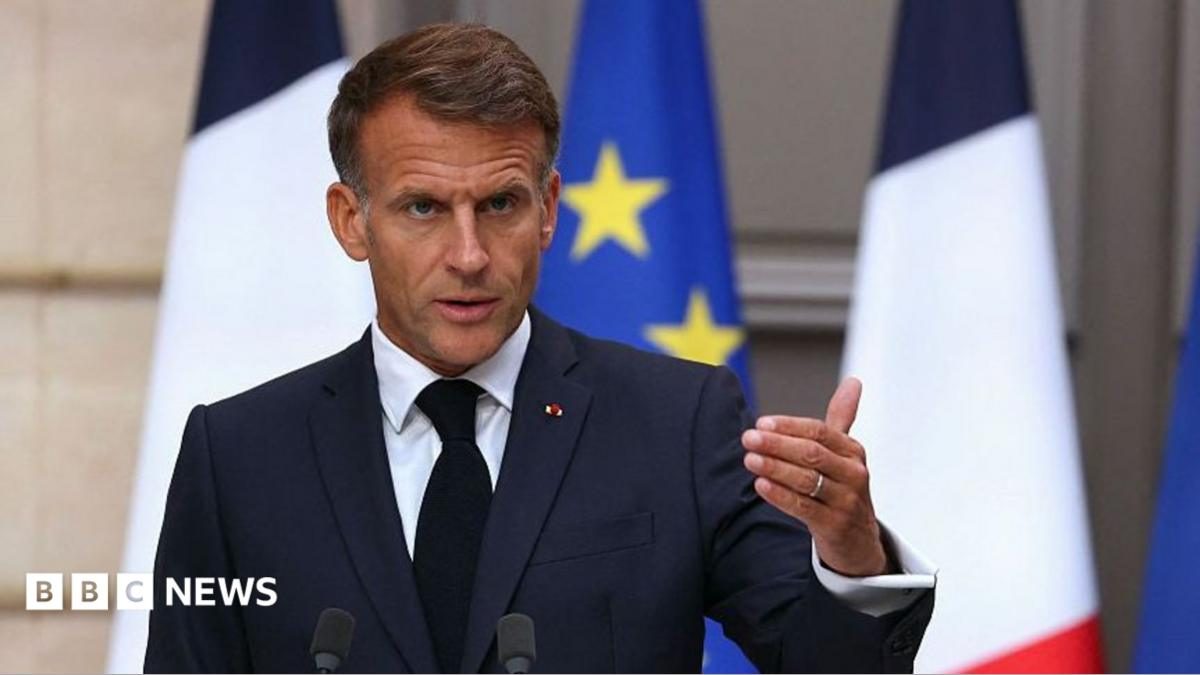
French President Emmanuel Macron told reporters after a closed meeting at the Elysee Palace on 18 September 2026 that Russian hybrid operations against Europe and France had stepped up sharply in recent weeks. He pointed to drone activity at Leipzig airport in Germany, where explosive devices were found on the tarmac near a Ukrainian cargo aircraft in early August, and to unidentified drones sighted over four Danish airports. He also cited the 13 September strike on a passenger train heading toward Warsaw near the Ukrainian-Polish border and repeated incursions into European airspace. Macron described the shift as moving beyond earlier low-level disinformation and interference campaigns to what he called a higher grade of threat, including potential sabotage and state-directed terrorism.
The warning came during a session convened with French party leaders and candidates for the 2027 presidential election. Participants discussed the broader deterioration of the international situation, including the impact of the Ukraine conflict on French security and energy supplies. Macron said the Russian actions appeared aimed at testing Western resolve and at discouraging continued support for Ukraine. He stated that further moves of this kind against European targets would be a mistake and would produce the opposite of the intended intimidation effect.
In direct response, Macron said he had instructed the government to draw up a protection plan covering critical infrastructure and the most sensitive sites of France’s defense industrial base. The plan is to address both drone strikes and cyber attacks. He noted that France had already passed new legislation on foreign interference. A senior official told RTL that the measure represented a change of level, with prefects in every department required from the following week to establish local security and defense headquarters. These bodies are to bring together police, intelligence officers, business leaders, civil-protection groups and the Red Cross. Their tasks include mapping potential targets that may not yet be obvious, such as smaller firms supplying Ukraine, and preparing the public for possible major crises without causing alarm.
Polish Prime Minister Donald Tusk had issued a comparable alert the previous day, warning that Russian plans included hybrid drone and missile strikes that could land on NATO eastern-flank territory and be presented by Moscow as accidents. Macron described Tusk’s assessment as factual and reliable. He said any such incident would not go unanswered and that European security, today and tomorrow, was at stake in Ukraine.
Coverage across the five outlets shows broad agreement on the central facts. All five carried Macron’s statement that hybrid activity had intensified, listed the same Leipzig and Danish examples, and reported his call for an infrastructure-protection plan. The three outlets that mentioned Tusk’s remarks recorded Macron’s endorsement of them. No outlet disputed the existence of the incidents or the direction to prepare defensive measures.
The accounts diverge in emphasis and in the operational detail they supply. RTL alone reported the prefect-level instructions and the planned inclusion of private-sector and reserve personnel in local headquarters. It framed the episode as a concrete French administrative response, quoting an official that the country was moving to a new level of readiness. The two Polish outlets, WP Wiadomości and WNP, gave greater prominence to Tusk’s earlier statement and to Macron’s reply that it was credible. WP Wiadomości highlighted the moment of “vigilance” and the risk to NATO territory; WNP added the economic context of rising fuel prices and the planned G7 coordination on energy stocks. The Austrian ORF piece stayed closest to the protection-plan announcement itself, listing the incidents as background but omitting both the French prefect arrangements and any Polish dimension. The BBC account placed the warning inside a wider NATO setting of infrastructure vulnerability across the continent without reference to national follow-up steps or to Tusk.
These differences track the outlets’ positions. The French domestic outlet translated the presidential directive into immediate government action inside France. The Polish outlets, writing from a country named in Tusk’s warning, connected the French remarks to existing allied concerns on the eastern flank. The Austrian and British pieces treated the episode as an observation from Paris about Europe-wide risks and recorded the defensive measure without adding local implementation detail.
The corroborated record shows that five independent reporting chains reached the same description of intensified Russian hybrid activity and of Macron’s protection-plan directive. Only one chain supplied the prefect-level mechanics. The shared elements rest on Macron’s on-record remarks at the Elysee and on the Leipzig and Danish incidents already acknowledged by German and Danish authorities. The single-source detail on prefects comes from RTL’s direct sourcing of French government instructions.
The pattern indicates that proximity to the stated threat shapes what readers are told to expect next. A French reader following RTL learns that local officials will begin mapping targets and convening cross-sector meetings within days. A Polish reader following WP Wiadomości or WNP learns that the episode confirms Tusk’s assessment and that coordinated vigilance across the alliance is required. An Austrian or British reader following ORF or the BBC learns that a major European government has identified a rising infrastructure risk and has begun planning defensive steps, but receives no timetable for local action or explicit link to eastern-flank warnings.
What to Watch
The accounts that stay within their national frame are not contradicted by the others; they simply stop short of the operational or alliance layer supplied elsewhere. Because the core claim of intensified activity and the directive for protection measures appear in every outlet examined, the event itself is narrower than any single national emphasis might suggest. What widens it is the recognition, visible only when the pieces are placed side by side, that the same presidential statement is already being turned into different practical expectations depending on the country doing the reading.
That’s how the world told the story.
Get tomorrow’s bulletin by email — one briefing, up to six stories.
Subscribe freeNo spam. One-click unsubscribe. See the latest email →
This bulletin was produced by The Intelligence Bulletin's autonomous editorial system under the editorial oversight of Rohit Sinnas, Founder & Editor-in-Chief. How it works →