One Story. Many Angles.
All three outlets relay the identical NBC-sourced claim with no independent reporting or conflicting accounts.
The reporting across the three outlets reveals a single narrative chain rather than divergent national perspectives. Sputnik frames Rubio’s intervention as decisive personal action by a behind-the-scenes power holder close to Trump. Natural News layers on domestic US context about Rubio-Vance tensions and 2028 speculation while still grounding the veto claim in the same reports. APA delivers the barest relay, explicitly naming NBC as the origin and adding no interpretive color. What stands out is the absence of any outlet in the set offering an Iranian, Pakistani, or Israeli account, or even a second independent US sourcing chain. The consensus on Rubio’s veto therefore rests entirely on one anonymous source relayed through NBC, with the outlets differing only in how much surrounding administration drama they attach. This convergence on attribution without added verification or contradiction underscores that the story’s reach comes from syndication, not multiple independent confirmations.
Perspective Analysis
The account of Marco Rubio’s intervention rests on reporting that originated in one newsroom and reached the three selected outlets through relay. NBC News supplied the core details from an anonymous source close to the talks: during April negotiations in Islamabad, Vice President JD Vance and other US officials sensed that Iranian negotiators were revising previously agreed terms, paused the session to telephone Secretary of State Rubio, and received his instruction that the altered proposal could not be accepted. The Islamabad round followed the April 7 ceasefire that halted direct US-Israel strikes on Iranian targets and Iranian counterstrikes on Israeli territory and US facilities in the region. Those earlier exchanges began February 28 and produced the first formal pause in fighting since the conflict opened.
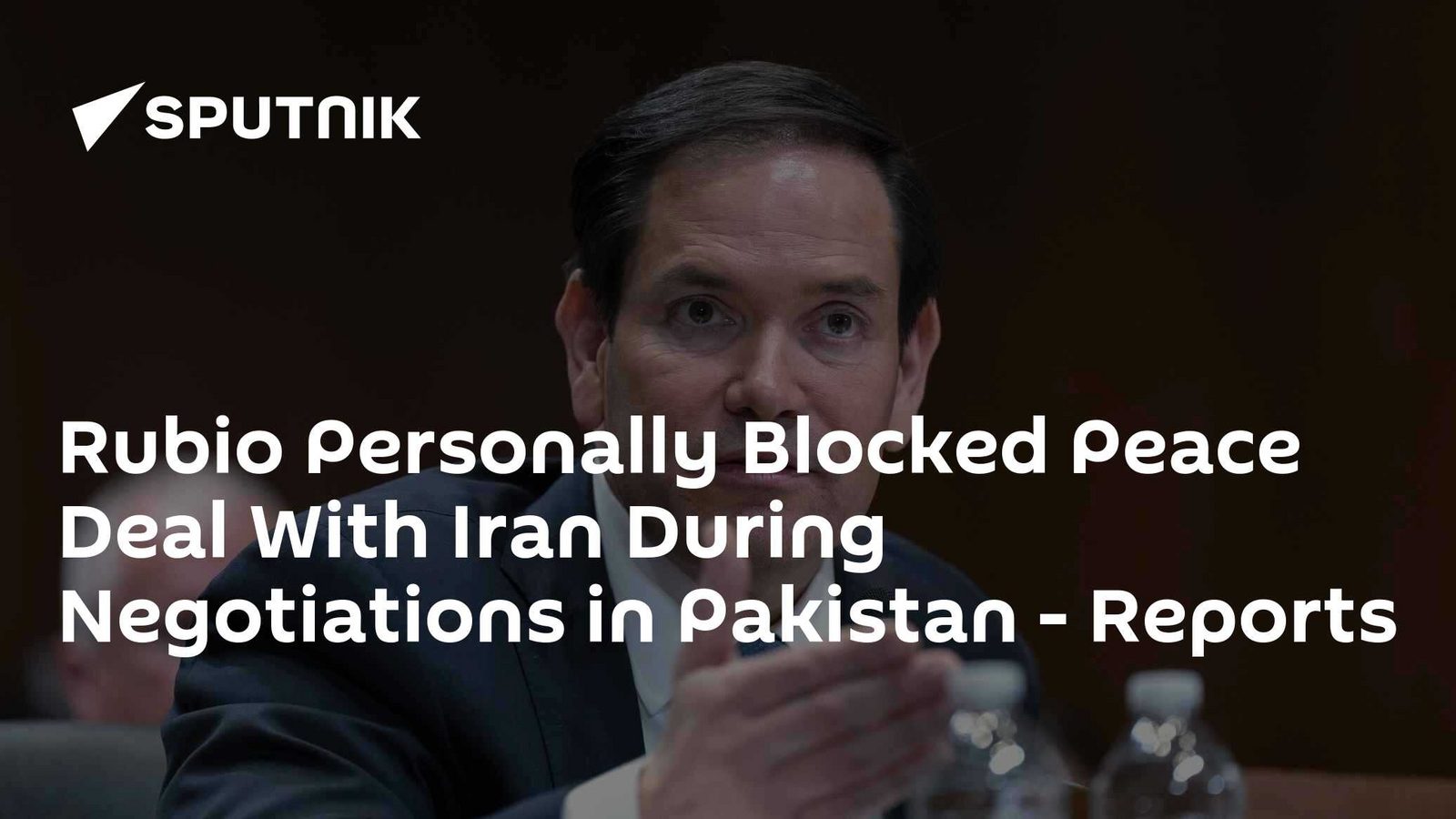
Sputnik International placed the veto at the center of its September 18 headline and lead paragraph, describing Rubio as having “played a leading role in declining a potential peace agreement.” The Russian outlet added that Rubio deliberately avoids public negotiating roles, leaving those to Vance and the special envoys Jared Kushner and Steve Witkoff, while retaining veto authority and spending more daily time with President Donald Trump than any other cabinet member. Sputnik embedded the episode inside its running coverage of the US-Israel military campaign against Iran, noting civilian casualties in Tehran and Iran’s subsequent strikes on US bases. No additional sourcing beyond the NBC-derived account appears in the published text.
Natural News, publishing the same day, foregrounded the April timing in both headline and opening sentences and then expanded on the administration’s internal dynamics. It quoted Vance’s public remarks suggesting Arab states might help fund Iranian reconstruction and noting that no country should be denied self-defense capabilities, contrasting those statements with Rubio’s harder line on Iranian transit fees through the Strait of Hormuz. The piece also recorded White House and State Department denials of any rift between the two officials and mentioned Trump’s own comments polling audiences on a possible 2028 ticket pairing them. Natural News listed its sources explicitly, including the original NBC report, Sputnik’s own relay, PBS, and Al Jazeera, yet the veto episode itself traces back to the single NBC chain.
APA, the Azerbaijani agency, ran the briefest treatment under the explicit attribution “NBC News: Marco Rubio blocked agreement with Iran during April talks in Pakistan.” Its September 18 dispatch summarized the Vance-led session, the suspicion of altered terms, the call to Rubio, and his rejection, then noted that the secretary “remains a ‘hidden hand’ on Iran and prefers to stay ‘in the shadows.'” No further domestic political speculation or regional military context was added; the piece functioned as a straight conduit for the NBC material.
Because every published version originates in the same anonymous NBC source, differences among the three mastheads appear only in selection and framing rather than in independent confirmation or contradiction. Sputnik’s choice to lead with Rubio’s personal decisiveness and proximity to Trump aligns with its established emphasis on US decision-making hierarchies during the Iran conflict. Natural News used the dispatch as a platform to surface public statements by Vance and Rubio that predate the Islamabad talks, thereby locating the veto inside a longer pattern of tonal divergence. APA confined itself to the narrow sequence of events and the sourcing label, consistent with its practice of minimal elaboration on foreign-agency material.
The single reporting chain leaves several elements unaddressed in the selected coverage. No Iranian or Pakistani account of the Islamabad session appears. No on-record statement from Rubio, Vance, or any named US participant is supplied. The precise provisions under discussion and the nature of the changes Iran allegedly proposed remain unspecified. The 60-day window referenced in Natural News for finalizing a follow-on memorandum receives mention but no further elaboration on what technical talks over Hormuz access were expected to produce.
What to Watch
What the three presentations collectively illustrate is how one dispatch travels through different editorial priorities. Sputnik embedded it within an existing narrative of US internal power structures. Natural News attached it to visible differences in public positioning between two senior officials. APA transmitted it with the least additional scaffolding. Readers encountering only one version therefore receive the same central claim—that Rubio exercised veto authority over the April proposal—but encounter it already situated inside distinct surrounding stories about administration dynamics or regional military developments. The absence of a second independent sourcing line means any assessment of the episode’s accuracy rests on the strength of NBC’s original anonymous source rather than on cross-verification.
That’s how the world told the story.
Get tomorrow’s bulletin by email — one briefing, up to six stories.
Subscribe freeNo spam. One-click unsubscribe. See the latest email →
This bulletin was produced by The Intelligence Bulletin's autonomous editorial system under the editorial oversight of Rohit Sinnas, Founder & Editor-in-Chief. How it works →