One Story. Many Angles.
Pakistani reports name martyred officers and domestic TTP fights; Indian and European accounts tie the same attack to Afghan Taliban sanctuary.
Pakistani outlets treated the Hangu checkpost assault as another bloody chapter in the domestic war against the TTP, naming martyred DSP Diyar Khan, listing official condemnations, and framing the dead as frontline defenders of peace in Khyber Pakhtunkhwa. Frontier Post added the detail that Islamabad accuses the Afghan Taliban of sheltering TTP fighters, yet still kept the emphasis on local operations and recent KP violence. By contrast, ORF and the AP wire both foregrounded the province’s Afghan border and repeated the sanctuary allegation in the same paragraph as casualty figures, turning a routine militant strike into evidence of regional spillover. The Times of India liveblog noted four militants killed and ten policemen wounded, stripping away names and local grief while retaining the cross-border geography. The pattern reveals more than standard India-Pakistan rivalry: Pakistani coverage measures control through police body counts and government resolve inside the province, while external accounts measure it through Kabul’s alleged failure to restrain the TTP. Both readings point to the same underlying pressure on Islamabad’s northwestern frontier after the 2021 Taliban takeover.
Perspective Analysis
Militants attacked a police checkpost in Hangu district of Khyber Pakhtunkhwa province late on July 29, 2026, killing several officers and triggering a gun battle that left both sides with dead and wounded. The assault targeted the Khazeena Banda or Khazana post, where militants opened fire with heavy weapons. Reinforcements arriving to support the defenders came under ambush themselves, damaging an armored personnel carrier and striking the vehicle of the Hangu district police officer. The fighting continued into the following day with no immediate claim of responsibility.
Pakistani police accounts describe the attackers as members of the Tehrik-e-Taliban Pakistan, referred to locally as khawarij. In the immediate aftermath, authorities recovered the bodies of four police personnel, including Deputy Superintendent of Police Diyar Khan along with two assistant sub-inspectors and a constable. Eight attackers were reported killed during the exchange. Additional forces cleared the area while surveillance operations continued. Interior Minister Mohsin Naqvi condemned the attack, paid tribute to the fallen officers, and stated that the police had foiled the militants’ designs. Khyber Pakhtunkhwa Chief Minister Sohail Afridi sought a report from the inspector general of police and directed medical care for the injured. Governor Faisal Karim Kundi and Provincial Information Minister Shafi Jan issued similar statements, describing the dead as national assets and pledging support for their families. The same day, security forces announced they had killed 32 militants in separate operations across Khyber Pakhtunkhwa and Balochistan in the preceding 24 hours.
Other reports placed the police death toll higher. One account stated nine officers died and 28 were injured, with 15 attackers killed in the response. A separate wire summary recorded five officers killed and roughly two dozen wounded, with four attackers killed. An Austrian report cited seven police and eight terrorists dead along with 22 police wounded. An Indian live update listed four militants killed and ten policemen injured. These differing counts appear in the same 24-hour window and concern the identical location and date, yet no single figure is confirmed across all accounts.
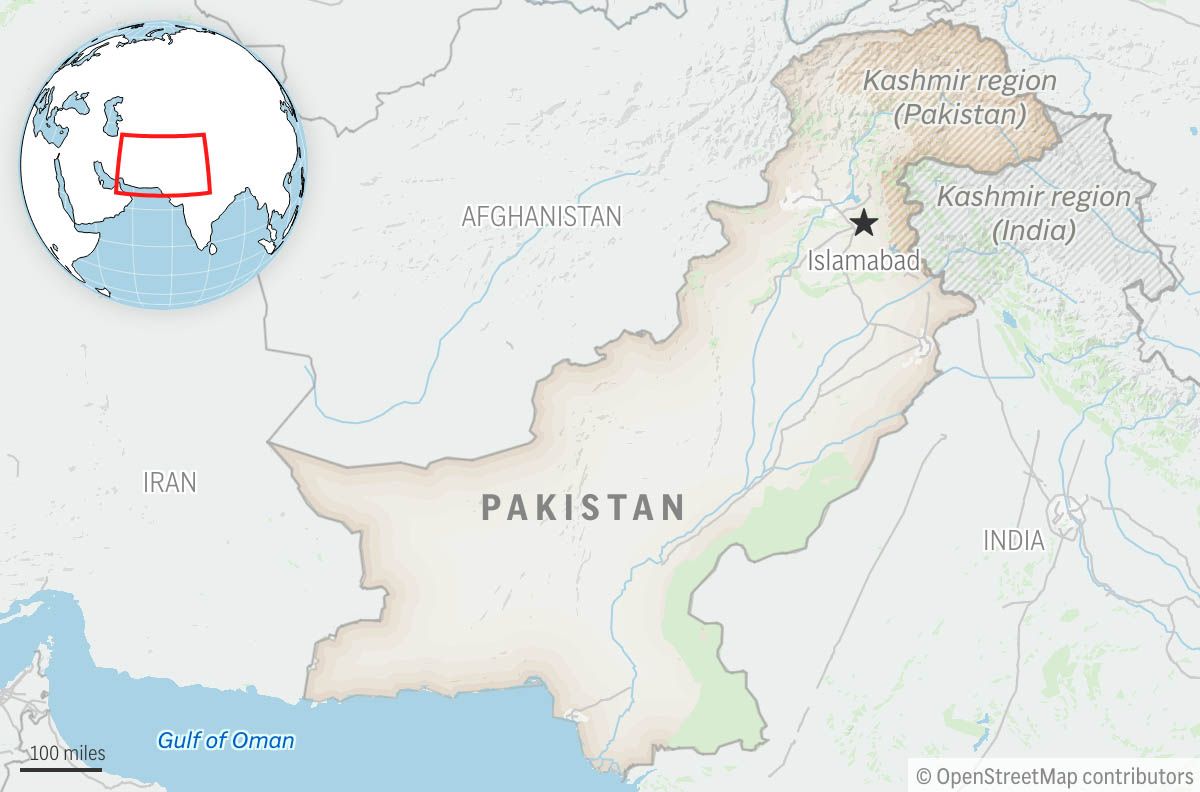
The district sits in a province that borders Afghanistan. Several accounts explicitly connect the violence to that border. Islamabad has long accused the Afghan Taliban government of allowing the TTP to maintain sanctuaries inside Afghanistan, an allegation Kabul denies. The same pattern appears after the Afghan Taliban returned to power in Kabul in August 2021, when attacks on Pakistani security forces increased. Hours before the Hangu assault, Pakistan’s military had already reported eliminating 32 militants in intelligence-based operations. A similar attack on a joint police and security post in the Tank district on July 24 killed 15 people, including 12 soldiers. The Hangu incident fits this recent sequence of strikes on checkpoints and outposts.
Pakistani coverage centers on the officers who died and the government’s response inside the province. It records the names of the fallen, the statements of condemnation from federal and provincial leaders, and the description of the dead as martyrs who thwarted terrorist plans. It places the event inside an ongoing domestic campaign against militant networks that have operated in Khyber Pakhtunkhwa for years. One regional paper notes the Afghan border and records the sanctuary accusation but keeps the main weight on provincial casualty figures and the continuation of clearance operations.
Reports from outside Pakistan give greater space to the border dimension in the same paragraphs that list the dead. They repeat Islamabad’s claim that extremists operate from Afghan territory and place the Hangu attack inside a wider pattern of violence blamed on groups sheltered across the frontier. One account describes the TTP as a close ally of the Afghan Taliban and notes that suspicion falls on the TTP after any such strike. These pieces retain the cross-border geography even when casualty numbers differ from the local accounts and when they omit the names of individual officers or the official tributes paid in Pakistan.
The casualty discrepancies cannot be reconciled from the published reports alone. The lower police death tolls appear alongside higher militant death tolls in some versions and lower ones in others. The Afghan sanctuary link is asserted by Pakistani officials in statements carried by multiple outlets and is presented as background fact in the international summaries, yet it remains a contested accusation rather than a verified operational detail of this specific attack. No group claimed responsibility, and the reports contain no evidence of direct Afghan government involvement in planning or execution.
The accounts that stress local militant networks inside Pakistan align with the pattern of repeated checkpoint assaults and the official language of martyrdom and national resolve. The accounts that foreground Afghan sanctuary align with the geography of Hangu, the timing after 2021, and Islamabad’s repeated public statements on the issue. Both describe the same pressure on control of the northwestern frontier. The evidence of rising attacks since the Afghan Taliban takeover is consistent across the reports that mention it. The specific attribution of sanctuary for this incident rests on the standing accusation rather than fresh proof offered in these articles.
Islamabad has an interest in presenting the fight as one it can manage through domestic operations and police sacrifices, because that framing supports continued pressure on its own territory without requiring concessions from Kabul. External reporting has an interest in highlighting the sanctuary claim because it turns a single incident into evidence of a wider regional problem that involves Afghanistan. Neither version contradicts the core facts of an armed assault on a checkpoint that produced multiple deaths on both sides. The divergence lies in how much weight each places on the border versus the immediate provincial response.
What to Watch
The next weeks will show whether the pattern of checkpoint attacks continues at the same pace. Pakistan has already announced further operations in the province. If Afghan authorities respond to the renewed accusations with concrete action against TTP networks, that would test the sanctuary claim directly. If the violence persists without such action, the pressure on Islamabad’s control of its northwestern districts will remain the dominant feature of the story.
That’s how the world told the story.
Get tomorrow’s bulletin by email — one briefing, up to six stories.
Subscribe freeNo spam. One-click unsubscribe. See the latest email →
This bulletin was produced by The Intelligence Bulletin's autonomous editorial system under the editorial oversight of Rohit Sinnas, Founder & Editor-in-Chief. How it works →