One Story. Many Angles.
Coverage across five countries treats the tariff threat as routine U.S.-Canada friction rather than an unprecedented environmental trade weapon.
Trump’s move to weaponize smoke with tariffs stands out because every outlet, from Ottawa to Islamabad, treated the threat as a straightforward extension of existing trade friction rather than an environmental dispute. Canadian coverage records Ottawa’s reminders of past mutual firefighting aid and recent prevention spending, while U.S. reports stress the immediate domestic health alerts and repeat Trump’s language about “willful negligence.” Australian and Pakistani accounts add only the background of Trump’s earlier tariffs and his combative tone toward Carney, without exploring whether forest fires constitute a tariff-eligible grievance. The shared silence on any legal or diplomatic precedent for charging neighbors for transboundary smoke reveals how routine the linkage of environment and trade has become under this administration.
Perspective Analysis
President Donald Trump’s decision to tie the cost of Canadian wildfire smoke directly to higher tariffs on Canadian goods reveals how completely environmental disputes have been absorbed into routine trade warfare under his administration. Rather than sparking debate over transboundary pollution rules or joint firefighting protocols, the July 17, 2026, threat was reported everywhere as one more salvo in an already heated tariff standoff with Ottawa.
Trump posted on Truth Social that Canada’s failure to maintain its forests and brush had sent “filthy, polluted, and unhealthy air” into the United States. He labeled the situation “Willful Negligence” that was “becoming a yearly occurrence, costing the United States Billions of Dollars,” and said that cost “must of necessity be added to the TARIFFS Canada is currently paying.” He added that he would call Prime Minister Mark Carney to discuss the matter.[[1]](https://www.cp24.com/news/canada/2026/07/17/trump-threatens-to-raise-tariffs-over-canadian-wildfire-smoke/)
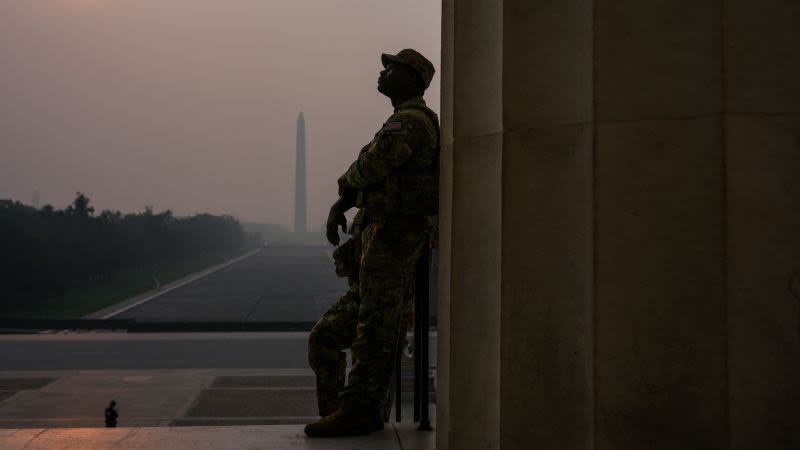
Air-quality alerts that day covered more than 100 million people across 18 states and the District of Columbia, with “very unhealthy” and “hazardous” conditions stretching from northeast Minnesota to southeast Virginia. Haze was visible over New York City and other East Coast locations.[[2]](https://www.ketv.com/article/trump-canada-tariffs-wildfire-smoke/73173441)
Every major outlet treated the tariff linkage as a predictable extension of existing friction rather than a novel environmental claim. Canadian reporting from CP24 recorded the immediate domestic effects—more than 900 active wildfires nationwide, 122 out of control, and fresh evacuations in northern Ontario—while noting Premier Doug Ford’s reminder that Canadian crews had helped fight U.S. fires in California the previous year and during the 2024 Georgia hurricane response. Ford suggested critics should “send support, send help” instead of complaining.[[1]](https://www.cp24.com/news/canada/2026/07/17/trump-threatens-to-raise-tariffs-over-canadian-wildfire-smoke/)
U.S. coverage, by contrast, foregrounded the visible domestic impact and Trump’s personal rhetoric. The New York Daily News opened with the haze over New York and Trump’s plan to bill Canada for “incalculable” costs, while recalling his earlier tariffs on Canadian goods and his broader antagonism toward the country since returning to office.[[3]](https://www.nydailynews.com/2026/07/17/trump-blames-canada-wildfires-tariffs/) KETV, serving the Midwest and Northeast under active alerts, emphasized the scale of the air-quality warnings and Trump’s explicit vow to speak with Carney about adding pollution expenses to existing tariffs.[[2]](https://www.ketv.com/article/trump-canada-tariffs-wildfire-smoke/73173441)
International accounts added only background on the pre-existing tariff regime and the personal tone of the exchange. The Canberra Times noted Ottawa’s C$12 billion investment in forest sustainability and fire prevention since 2020, mentioned shared climate drivers, and described the episode as part of Trump’s combative relationship with Carney.[[4]](https://www.canberratimes.com.au/story/9313043/tariff-threat-as-trump-blames-canada-for-wildfire-smoke/) Dawn, drawing on Reuters copy, framed the move through a wider lens of U.S. unilateralism on shared problems while recording the same tariff history and Trump’s planned call.[[5]](https://www.dawn.com/news/2016356/us-blames-canada-for-wildfire-smoke)
None of the reports examined whether charging a neighbor for drifting smoke has any established legal or diplomatic precedent under trade agreements or international environmental law. The omission was uniform. Canadian outlets focused on mutual aid history and provincial impacts; American ones on immediate health alerts and Trump’s existing trade pressure; foreign ones on the bilateral spat and climate context. All accepted the tariff connection as the story’s natural frame.
This pattern shows that the administration has succeeded in making environmental grievances another line item in tariff negotiations. Once smoke can be tallied as a cost to be offset by duties, any cross-border externality—water quality, species migration, or industrial emissions—becomes available for the same treatment. The lack of pushback in coverage from Ottawa to Islamabad indicates how normalized the practice has already become.
What to Watch
The next step is almost certain to be a call between Trump and Carney that produces no immediate policy change on forest management but keeps the tariff threat alive as leverage in broader trade talks. Ottawa will continue citing its prevention spending and past firefighting assistance; Washington will continue citing domestic air-quality costs. The real development to watch is whether similar charges are leveled at other neighbors or trading partners when smoke or other pollution crosses borders again. That will determine whether this episode remains an isolated rhetorical flourish or becomes a standing tool of U.S. trade policy.
That’s how the world told the story.
Get tomorrow’s bulletin by email — one briefing, up to six stories.
Subscribe freeNo spam. One-click unsubscribe. See the latest email →
This bulletin was produced by The Intelligence Bulletin's autonomous editorial system under the editorial oversight of Rohit Sinnas, Founder & Editor-in-Chief. How it works →