 AI-generated analysis published under the editorial responsibility of Rohit Sinnas. How it works →
Press quoted
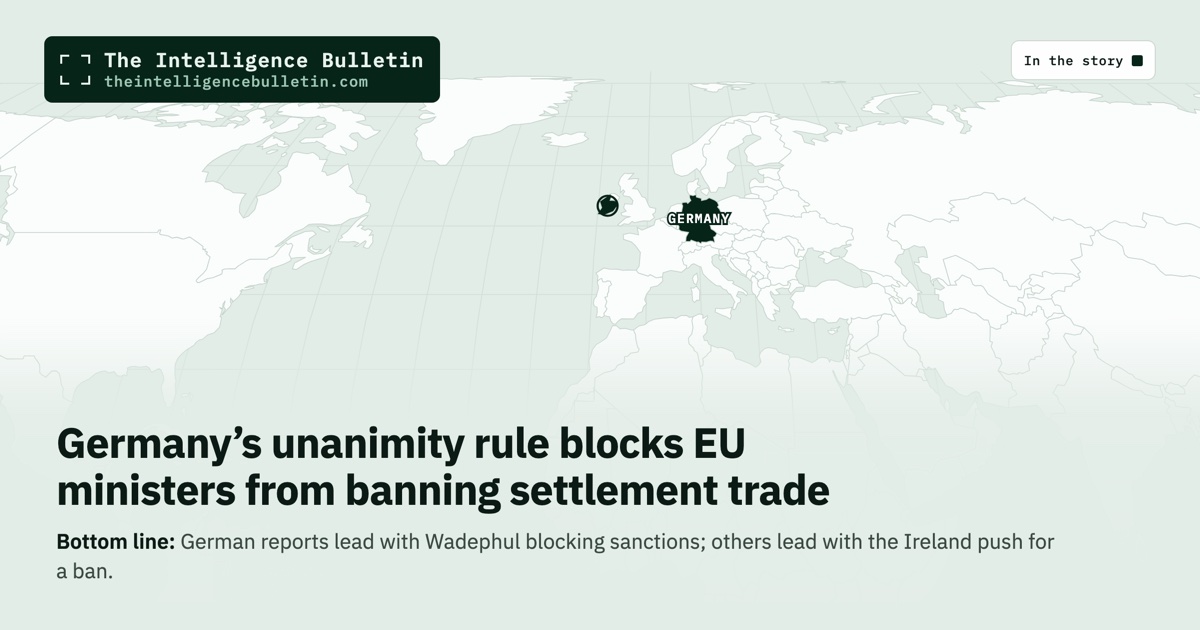
German reports lead with Wadephul blocking sanctions; others lead with the Ireland push for a ban.
The reporting reveals a clear split inside the EU that Germany is willing to enforce through procedural rules. Outlets covering the Ireland-led push, such as European Jewish Press and South China Morning Post, quote ministers calling the West Bank situation intolerable and note growing frustration with the Commission’s options paper. In contrast, RT Arabic and Faktor lead directly with Wadephul’s arrival statement that Berlin prefers continued dialogue and that any import limits must be unanimous, framing the German position as the decisive obstacle. The Yahoo explainer sidesteps the actor clash altogether and simply details the three technical options on the table. This pattern shows that the story’s real content is not the proposal itself but whether Germany will allow a vote at all, a point verified across every full article read.
Full analysis
Germany’s insistence that any trade restrictions on Israeli settlements require unanimous approval among all 27 EU members has turned a policy discussion into a procedural dead end. On July 13, 2026, foreign ministers gathered in Brussels to review three Commission options for curbing imports from the West Bank—import licensing, punitive tariffs, or an outright ban. A clear majority of ministers argued these were ordinary trade measures that could pass with a qualified majority vote, yet Germany’s position ensured no vote would occur. The outcome underscores that the EU’s ability to respond to settlement expansion now hinges less on the merits of the proposals and more on whether one member state can force every decision through the narrowest procedural gate.
Irish Foreign Minister Helen McEntee arrived stating that legal advice from the EU Council confirmed qualified majority voting would suffice. Spain, the Netherlands, Belgium, and Luxembourg echoed the view that the measures qualified as trade policy rather than sanctions. Belgian minister Maxime Prévot described the Commission’s paper as “more of a bone to chew on than a genuine willingness to move forward,” while his Luxembourg counterpart Xavier Bettel questioned whether the bloc was simply waiting for Israel’s October elections to avoid action. EU foreign policy chief Kaja Kallas noted broad agreement that the West Bank situation was “intolerable” and undermined the two-state solution, adding that the options targeted illegal settlements, not Israel itself.[[1]](https://ejpress.org/at-eu-foreign-ministers-meeting-ireland-pushes-for-total-ban-on-trade-from-israeli-communities-in-judea-and-samaria/)
German Foreign Minister Johann Wadephul countered directly that Berlin preferred continued dialogue with the Israeli government over restrictive measures and that any limits on settlement imports would require unanimity. Italy aligned with the same legal reading, describing the step as a political choice rather than a commercial one. These two positions aligned with the Commission’s own assessment that the tiny volume of settlement trade made the issue inherently political. Reports from the meeting showed at least twenty member states had earlier pressed the Commission for concrete proposals, yet the unanimity demand effectively sidelined that pressure.[[2]](https://arabic.rt.com/world/1810039-%D8%A3%D9%84%D9%85%D8%A7%D9%86%D9%8A%D8%A7-%D8%AA%D8%B9%D8%A7%D8%B1%D8%B6-%D8%B9%D9%82%D9%88%D8%A8%D8%A7%D8%AA-%D8%A3%D9%88%D8%B1%D9%88%D8%A8%D9%8A%D8%A9-%D8%AC%D8%AF%D9%8A%D8%AF%D8%A9-%D8%B9%D9%84%D9%89-%D8%A5%D8%B3%D8%B1%D8%A7%D8%A6%D9%8A%D9%84-%D9%88%D8%AA%D8%AF%D8%B9%D9%88-%D8%A5%D9%84%D9%89-%D8%A7%D9%84%D8%AD%D9%88%D8%A7%D8%B1/)
Coverage patterns across outlets reflect these fault lines without exaggeration. European-focused reporting gave prominent space to the Irish-led argument for a qualified majority and the frustration with Commission delay. Regional perspectives from Asia framed the episode as another illustration of EU difficulty translating international law concerns into collective action. Outlets closer to Russian and Balkan audiences opened with Wadephul’s arrival statement and the unanimity barrier, presenting German resistance as the decisive development. A U.S. wire explainer stayed strictly with the three technical options and background on settlement growth, avoiding any single capital’s stance. The variation confirms the story’s core is not the substance of the Commission paper but the procedural choke point Germany chose to activate.
Settlement expansion data cited in the coverage adds concrete stakes. More than 500,000 Israeli settlers live in the West Bank outside East Jerusalem. Recent approvals include plans for thirteen new settlements in the central area, with annual outpost numbers rising sharply from an average of eight between 2012 and 2022 to 86 in 2025. Violence linked to settlers reached its highest recorded level in a decade according to monitoring groups. The International Court of Justice’s 2024 advisory opinion had already called on states to avoid trade relations that sustain the occupation. Several individual EU countries already apply their own import restrictions, yet scaling those steps to the full bloc collides with the unanimity requirement Germany has now invoked.
What to Watch
The immediate consequence is stasis. Ambassadors received instructions to continue technical work, and ministers left open the possibility of an extraordinary meeting, but no pathway exists around the unanimity objection without a change in German or Italian policy. Future attempts to revisit the file will face the same legal argument unless a qualified majority coalition tests the Council’s legal service position in court or through a formal vote that forces the issue. For readers tracking EU foreign policy credibility, the episode demonstrates how a single member’s procedural preference can neutralize majority sentiment on questions already framed as violations of international law. The next test will come when the ambassadors’ follow-up work returns to ministers; absent a shift in Berlin, the pattern of dialogue over measures is likely to persist.
That’s how the world told the story.
Get our daily open-source intelligence on world events in your inbox — one email a day, up to six stories.
Subscribe freeNo spam. One-click unsubscribe. See the latest email →