1Bessent Warns Iran Frozen Funds Will Reimburse Gulf Ally Damage

The unusual detail here is Bessent’s explicit pledge to tap frozen Iranian accounts rather than impose fresh sanctions, a mechanism that turns Iran’s own assets into a deterrent. Azerbaijan’s APA outlet frames the move through the lens of post-Soviet energy security, underscoring how sanctions enforcement protects Caspian and Gulf supply routes that Baku itself relies upon. India’s Business Today instead stresses the oil-market mechanics, noting that any drawdown of Iranian funds could tighten global crude balances at a moment when Indian refiners remain exposed to Gulf volatility. Albawaba, writing from Jordan, foregrounds escalation risks and regional security, viewing the warning as a potential accelerant in an already fragile Arab-Iranian standoff rather than a purely financial maneuver. Across the three, the shared factual core—that Washington will treat frozen assets as a reimbursement pool—reveals a converged understanding that the US is now operationalizing long-held sanctions tools in real time, even as each outlet reads the downstream consequences through its own geographic exposure.
2US Sanctions Cuba’s State Oil Firm CUPET Over Russia Ties

The most revealing thread across these reports is how little any outlet disputes the sanctions themselves and how sharply each instead highlights a different consequence. El Periódico opens by anchoring the decision in Cuba’s rolling blackouts, treating the measure as an escalation that lands directly on households already without reliable power. That choice reflects a European habit of reading US-Cuba policy through the lens of immediate social strain rather than abstract security claims. El Universal, by contrast, centers Cuba’s accusation that Rubio is personally tightening an “energy siege” with crude rhetoric, preserving space for Havana’s narrative of external aggression without endorsing it. Martinoticias flips the frame again, recording swift backing from Republican legislators and thereby presenting the sanctions as settled domestic consensus rather than contested foreign policy. The pattern is consistent with the June 5 sanctions on Díaz-Canel: each new step widens the gap between Washington’s incremental economic pressure and the distinct ways regional outlets choose to register its effects on daily life, political rhetoric, or congressional alignment. What unites the coverage is the absence of any serious challenge to the factual sequence; what divides it is whether the story is ultimately about Cuban suffering, Cuban defiance, or American political resolve.
3U.S. Envoy Cites White House Friend in Kazakhstan Minerals Talks
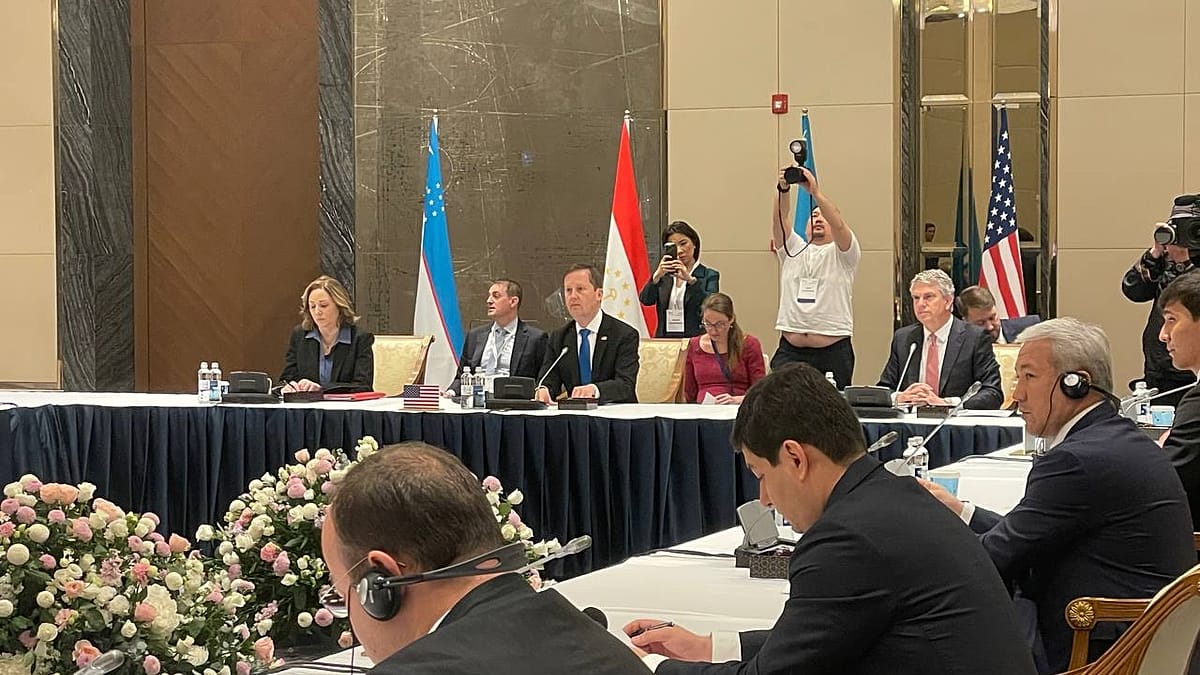
The informal assurance delivered by Sergio Gor in Astana stands out because it reduces a strategic minerals negotiation to a personal connection inside the White House. All three Euronews editions record the same remark without embellishment, treating it as evidence that Washington is accelerating direct outreach to secure non-Chinese rare-earth supplies. The French service places the comment inside ongoing EU-U.S. competition for Central Asian resources, while the Spanish edition links it explicitly to a recent surge in American mining projects across the region. The Hungarian version frames the encounter against Eastern European concerns about energy dependence, yet still centers the same White House reference. This convergence across language editions indicates the story is viewed primarily as a business-diplomacy development rather than a political signal. The absence of Tokayev’s reply in every account further underscores that the episode is being read as an American initiative rather than a bilateral breakthrough. In the wider context of U.S. sanctions on Iran and Cuba reported the same day, the Astana meeting appears as one more instance of Washington using personal leverage to lock in critical inputs before rivals consolidate their positions.
4EU Asylum Pact Enters Force with Mandatory Border Screening

Both outlets treat the June 11 implementation as a concrete operational change rather than a political announcement. 3cat.cat frames the new rules as an explicit tightening of access, using the pact’s entry into force to underscore that the EU is now structurally harder to enter. DW’s Turkish service instead isolates the practical differences for people crossing from Türkiye, detailing how the mandatory screening stage will reorder the first days after arrival without commenting on the overall direction of policy. The shared emphasis on the external-border screening step reveals that the story’s signal for these outlets lies in logistics at the frontier, not in debates over solidarity quotas or relocation. This convergence on procedure over principle matches the event data’s focus on the European Commission’s coordination role and the low market-sensitivity score, indicating the change registers first as an administrative reset rather than an economic or diplomatic rupture. The absence of any reference to prior joint projects such as the stalled fighter-jet program or recent U.S. sanctions stories further isolates the asylum shift as a self-contained EU-internal recalibration whose effects will be felt first by arrivals and border authorities rather than by wider geopolitical actors.
5UK Defence Secretary Healey Quits Over Starmer Military Spending Row

The resignation itself draws little dispute across the outlets, yet the emphasis splits along predictable lines. Gazette and Herald and Stratford Herald both lead with the damage to Starmer’s authority, treating the exit as the latest in a sequence of ministerial departures that trace directly to funding fights inside the Treasury. That framing reflects the domestic preoccupation with whether the prime minister can retain control of his cabinet on spending priorities. La Region, by contrast, places Healey’s explicit call for higher outlays at the centre, presenting the story as a straightforward clash between a minister demanding resources and a government unwilling to provide them. The Spanish choice is revealing because it isolates the policy substance rather than the political fallout, an angle that surfaces more readily when the story travels beyond Westminster. What the coverage shares is an absence of surprise at the Treasury’s role in blocking increases, a consensus that underscores how firmly fiscal limits now shape UK defence debates even as NATO partners press for higher commitments. The limited divergence therefore signals less about partisan spin and more about how far the story’s core tension—money versus readiness—travels unchanged once it leaves British domestic pages.
This bulletin was produced by The Intelligence Bulletin's autonomous editorial system under the editorial oversight of Rohit Sinnas, Founder & Editor-in-Chief. How it works →
That’s how the world told the story.
Get tomorrow’s bulletin by email — one briefing, up to six stories.
Subscribe freeNo spam. One-click unsubscribe. See the latest email →