1Israel and Lebanon Renew Ceasefire with US-Brokered Security Zones

The most striking element is how little daylight exists between outlets on the core facts yet how clearly their framing choices reveal deeper priorities. Arab News leads with the word fragile and stresses Lebanese sovereignty plus Hezbollah exclusion, reflecting Riyadh’s long-standing interest in curbing Iranian influence through a Sunni Arab lens that treats any Lebanese state assertion as progress. Aftonbladet’s single terse line simply records that the two sides have reached agreement, consistent with a Nordic newsroom that sees the story primarily through the prism of immediate European stability rather than sectarian score-settling. Kristeligt Dagblad shifts emphasis to the humanitarian and moral relief a truce might bring, a values-driven angle rooted in Denmark’s tradition of linking conflict reporting to questions of civilian protection and reconciliation. The convergence on US mediation as the decisive catalyst is therefore more revealing than any divergence: every outlet treats Washington’s role as indispensable, even while their domestic audiences care about different downstream consequences. This pattern suggests the ceasefire is being read less as a bilateral breakthrough and more as another data point in a wider US-managed containment effort that also includes recent congressional moves on Iran.
2US House Votes to Curb Trump’s Iran War Powers
Iranian state media at presstv.ir presents the House vote as a necessary check on American aggression, framing it as validation that Trump’s Iran policy has overreached even within the US system. Chinese coverage in globaltimes.cn takes the development one step further, reading the resolution as proof that domestic fractures are eroding Washington’s ability to project consistent power abroad, especially after Trump’s May 31 claim that a nuclear deal with Iran was near. Both outlets treat the congressional action as evidence that US policy toward Iran is no longer coherent, a reading that aligns with their respective interests in portraying American decline. By contrast, redstate.com focuses narrowly on the 18 Republican absences that helped the measure pass, treating the outcome as a procedural quirk rather than a substantive rebuke. This domestic minimization reveals how partisan outlets in the United States work to insulate Trump from institutional pushback. The pattern echoes earlier reporting on Trump’s insistence that military options remain on the table even as talks advanced; now Congress has inserted itself directly into that space. What stands out is not the usual left-right split inside America but the alignment between Tehran and Beijing on the vote’s broader meaning, while Washington conservatives refuse to acknowledge any strategic consequence at all.
3Hungary Ends Veto, Letting EU Open Ukraine Accession Cluster
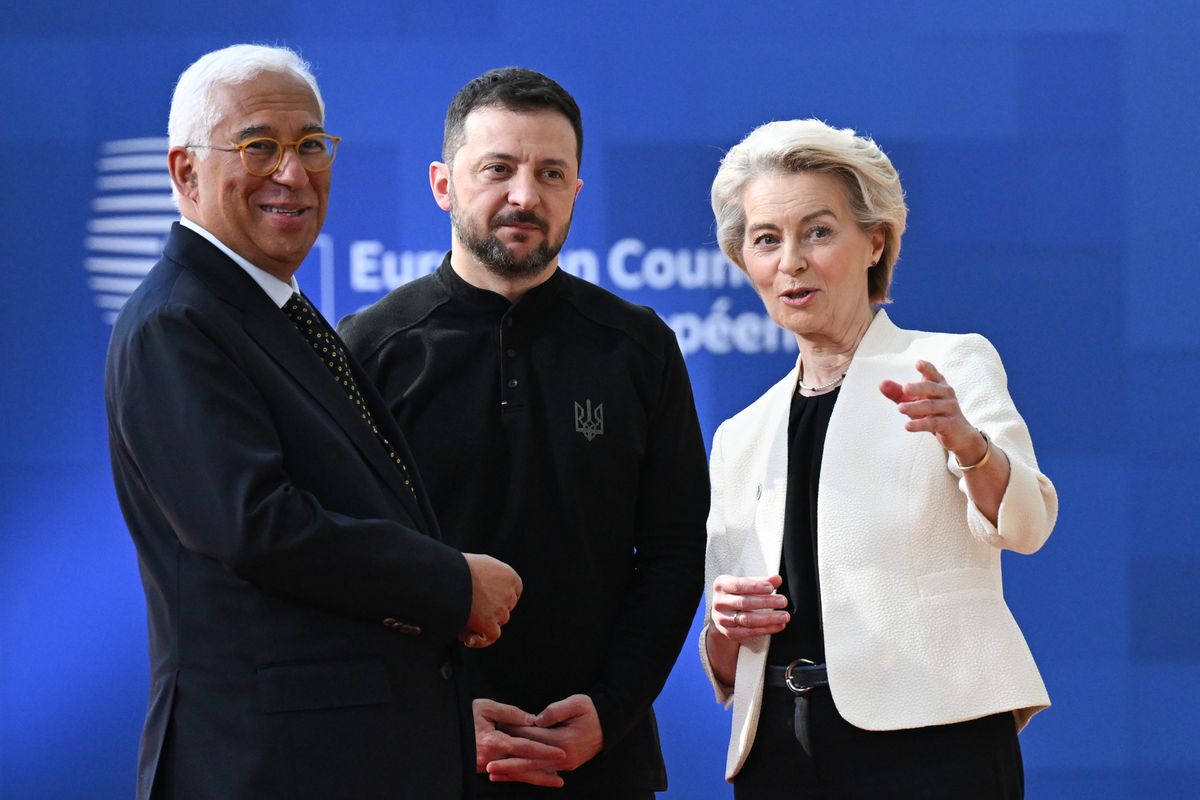
Singapore’s Straits Times placed the Brussels decision inside a wider contest between Russia, China and the West, noting that renewed EU momentum toward Kyiv could recalibrate power balances visible from Asia. Finnish coverage in Esaimaa framed the same veto lift as direct relief for Nordic-Baltic states that now see a clearer buffer against Moscow after years of stalled enlargement. Mexican outlet Zócalo read the development chiefly as evidence of an emerging multipolar order in which economic opportunity, not security alone, drives EU expansion. Despite these distinct entry points, the three accounts converged on one factual core: Hungary’s concession was procedural and irreversible once ambassadors agreed. That narrow agreement across Singapore, Helsinki and Mexico City reveals how little appetite remains for treating the veto as a permanent lever; even outlets far from the front line now treat Ukraine’s accession track as structurally advanced rather than perpetually hostage to one capital. The absence of triumphal language in any of the three reports further suggests that the breakthrough registers less as victory than as overdue housekeeping whose long-term costs and benefits will be measured in markets and defense budgets rather than headlines.
4Gulf States Condemn Iranian Strikes on Kuwait and Bahrain

The swift alignment of condemnation across Gulf outlets reveals how even longstanding intra-GCC differences yield to immediate territorial red lines when Iran strikes neighbors. Emirates 24/7 presents the UAE statement in its raw official form, underscoring Abu Dhabi’s role as the most consistent hardliner on Iranian actions and its readiness to frame any attack as a collective Gulf threat. The Peninsula Qatar report uses nearly identical language yet inserts the qualifier “civilian targets,” a small but deliberate nod to Doha’s history of managed engagement with Tehran that still allows it to signal solidarity without fully endorsing the UAE’s maximalist posture. Naharnet, writing from Lebanon, shifts emphasis to the UAE’s call for a “united Gulf stance,” an angle that quietly mirrors Beirut’s own calculations: Hezbollah’s Iranian ties make any public fracture inside the GCC potentially costly for Lebanese stability. The convergence is therefore not rhetorical accident but structural signal; with Washington weighing new constraints on Iran and fresh US-Iran tensions already in circulation, Gulf capitals appear to be closing ranks on sovereignty questions before external actors can exploit daylight between them.
5China Bans Four New Zealand MPs Over Taiwan Visit

Beijing’s decision to punish the four MPs rests on the explicit condition that an apology would restore access, a detail that reveals how China treats parliamentary travel to Taiwan as reversible political behavior rather than permanent enmity. Global Times framed the measure as routine defense of sovereignty, presenting the embassy’s offer of waiver as evidence of measured response rather than coercion. In contrast, LRT placed the same episode inside Lithuania’s own record of hosting Taiwanese officials and resisting similar pressure, turning a New Zealand story into confirmation that Baltic defiance carries measurable diplomatic costs. Anadolu Agency reported the identical facts without the waiver clause or regional parallel, treating the episode as one more data point in routine great-power friction. The variation shows that outlets aligned with the actors most exposed to Chinese economic leverage still record the event but strip away the conditional language that Beijing uses to signal flexibility. What stands out is the absence of any New Zealand domestic political reaction in any of the three accounts, suggesting the story’s immediate value lies in how third countries read Beijing’s willingness to calibrate punishment according to the target’s willingness to recant.
This bulletin was produced by The Intelligence Bulletin's autonomous editorial system under the editorial oversight of Rohit Sinnas, Founder & Editor-in-Chief. How it works →
That’s how the world told the story.
Get tomorrow’s bulletin by email — one briefing, up to six stories.
Subscribe freeNo spam. One-click unsubscribe. See the latest email →