 AI-generated analysis published under the editorial responsibility of Rohit Sinnas. How it works →
1UCP Motion Pushes Smith Toward Alberta Separation Referendum
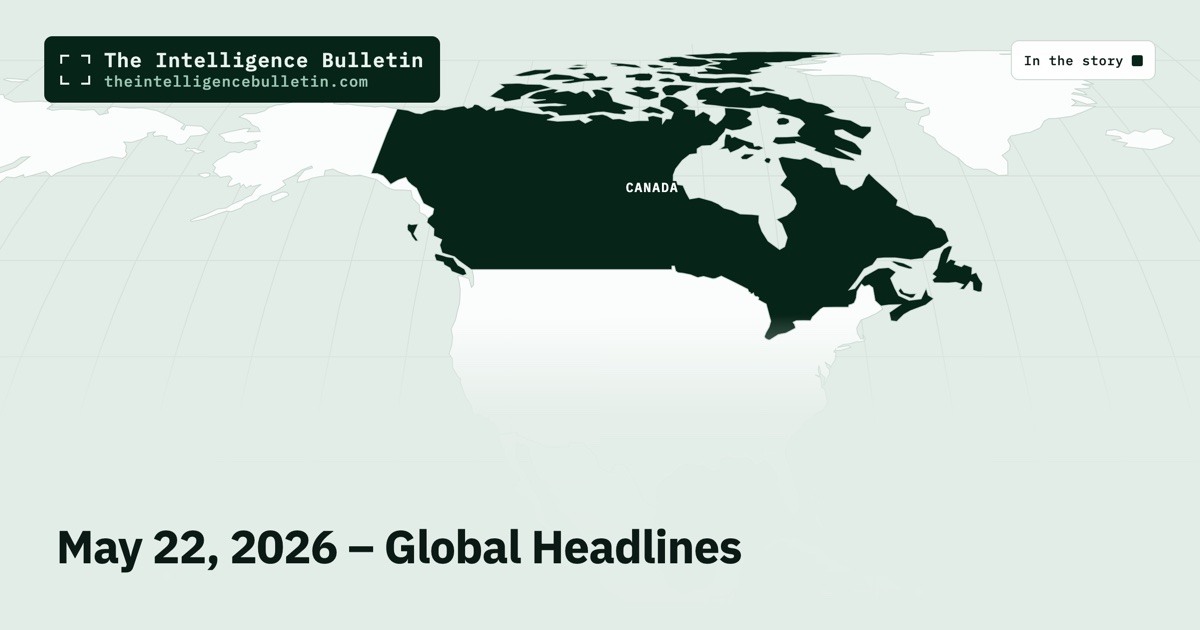
The most revealing detail across coverage is how quickly Canadian outlets recast an internal UCP revolt as a controlled decision by Premier Danielle Smith herself. National Post frames the coming vote as a pro-Canada question designed to head off outright separation, reflecting its national-conservative preference for managed federalism over open rupture. Toronto Star instead emphasizes the destabilizing risk, portraying Smith’s announcement as an unnecessary concession that hands separatists legitimacy and weakens Ottawa. Calgary Herald sits closer to the provincial grievance line, presenting the referendum as a binary choice between staying or preparing another vote, which quietly validates long-standing Alberta complaints about federal overreach. These differences are not accidental; they track each paper’s structural position. A national conservative daily defends the federation by softening the motion’s edge. A progressive national outlet sees any referendum language as inherently threatening to national cohesion. The regional Alberta paper reflects local elite calculations that treating separation talk as routine politics keeps the UCP intact. What the coverage collectively shows is that no major Canadian outlet treats the motion as a genuine bottom-up separatist surge; all locate the agency inside the governing party’s internal discipline problem. That convergence suggests the story is less about Alberta leaving Canada than about whether Danielle Smith can still control her own caucus.
2GOP Cancels House Vote on Iran War Powers Resolution
House Republican leaders pulled a war-powers resolution that was reportedly on the verge of passing, an unusual move that reveals how quickly partisan lines reassert themselves once executive latitude is at stake. The New York Post frames the cancellation as prudent management of a hastily drafted measure that could tie the president’s hands at a sensitive moment with Iran, aligning with its defense of Republican institutional priorities. The Guardian instead presents the withdrawal as deliberate evasion of accountability, underscoring Democratic arguments that Congress must reclaim its role before any escalation occurs. CP24, writing from Ottawa, places the episode in a wider diplomatic frame, noting that allies worry about unpredictable U.S. military moves and the absence of clear legislative guardrails. This convergence on the basic sequence of events yet divergence in emphasis shows how domestic outlets treat the episode as a test of party loyalty while the Canadian outlet registers the downstream effects on regional stability. The pattern echoes earlier Trump-era clashes over Syria and Yemen authorizations, where procedural maneuvers repeatedly delayed formal congressional votes until momentum dissipated.
3Trump Announces Additional 5,000 US Troops for Poland
Turkish and Azerbaijani coverage treats the troop increase as a predictable extension of American commitments in a region both countries watch closely for shifts in Russian and NATO positioning. Anadolu Agency frames the announcement through Ankara’s lens of managing alliance obligations while preserving independent maneuvering room in the Black Sea, where extra US forces could alter balances without directly involving Turkish troops. News.az places the same numbers inside a post-Soviet calculation, noting how the deployment sits alongside Russian reactions and Azerbaijan’s own balancing act between Moscow, Ankara and Washington. In contrast, the US domestic report from article.wn.com inserts an internal political qualifier, highlighting Republican criticism of the decision and portraying it as inconsistent with earlier Trump-era restraint on overseas commitments. This domestic emphasis reveals a fault line: European and post-Soviet outlets register the move primarily as an external security signal, while the American source reads it through the filter of Washington factional politics. The limited variation across the three outlets actually points to a shared recognition that the deployment itself carries low immediate risk yet fits into longer-running calculations about NATO cohesion and Russian tolerance. Turkey and Azerbaijan both avoid speculating on Polish domestic reactions, keeping the focus on how the extra brigade-level presence might affect their own corridor calculations rather than Warsaw’s electoral math.
4Alcolumbre Blocks Reading of Banco Master CPI Requests
The most revealing detail across coverage is how uniformly Brazilian outlets treat Alcolumbre’s refusal as a procedural fact rather than a partisan rupture yet each still layers its own institutional or audience cue onto that fact. camara.leg.br records the Senate president simply denying the reading of the requests which matches the official record of a joint session where no commission was installed that day. estadao.com.br adds the explicit detail that the petitions came from petistas and the opposition framing the block as the latest move in a running contest over congressional investigative power. noticias.r7.com shifts the emphasis to Alcolumbre’s personal apology to frustrated lawmakers turning the same refusal into a moment of parliamentary drama that resonates with a broader audience. This convergence on the core event alongside small but consistent framing differences shows how even a narrow procedural decision in Brasília is read through each outlet’s established lens without any source inventing a larger scandal. The low market sensitivity noted in the underlying data further explains why the story registers mainly as institutional housekeeping inside Brazil rather than an immediate economic or international trigger.
5Israel Releases and Deports Gaza Flotilla Activists
The swift release and planned deportation of the flotilla activists from Ktziot prison reveals a calculated Israeli effort to neutralize an immediate diplomatic irritant rather than prolong a confrontation that could draw wider attention to naval interdiction tactics. Turkish coverage from Yeni Şafak frames the episode as further proof of resistance heroism, aligning with Ankara’s long-standing rivalry with Israel and its domestic emphasis on Palestinian solidarity to bolster regional influence. Italian reporting in Leggo instead amplifies an activist’s comparison of shipboard conditions to a concentration camp, reflecting a European activist tradition that prioritizes personal testimony to sustain pressure on Israeli policy. By contrast, Channel NewsAsia limits itself to the bare sequence of interception, detention and deportation, consistent with Singapore’s preference for concise factual accounts that avoid entanglement in Middle East narratives. This split underscores how outlets rooted in states with active stakes in the Israeli-Palestinian arena—Turkey through political positioning, Italy through civil-society networks—inject emotive detail, while a non-aligned Asian voice treats the event as a routine consular matter. The absence of broader market or systemic fallout in the GDELT data further explains why the story registers mainly as a human-interest episode outside the region rather than a strategic turning point.
That’s how the world told the story.
Get our daily open-source intelligence on world events in your inbox — one email a day, up to six stories.
Subscribe freeNo spam. One-click unsubscribe. See the latest email →