 AI-generated analysis published under the editorial responsibility of Rohit Sinnas. How it works →
1Hantavirus Cases Prompt Evacuation of Passengers from French Cruise Ship
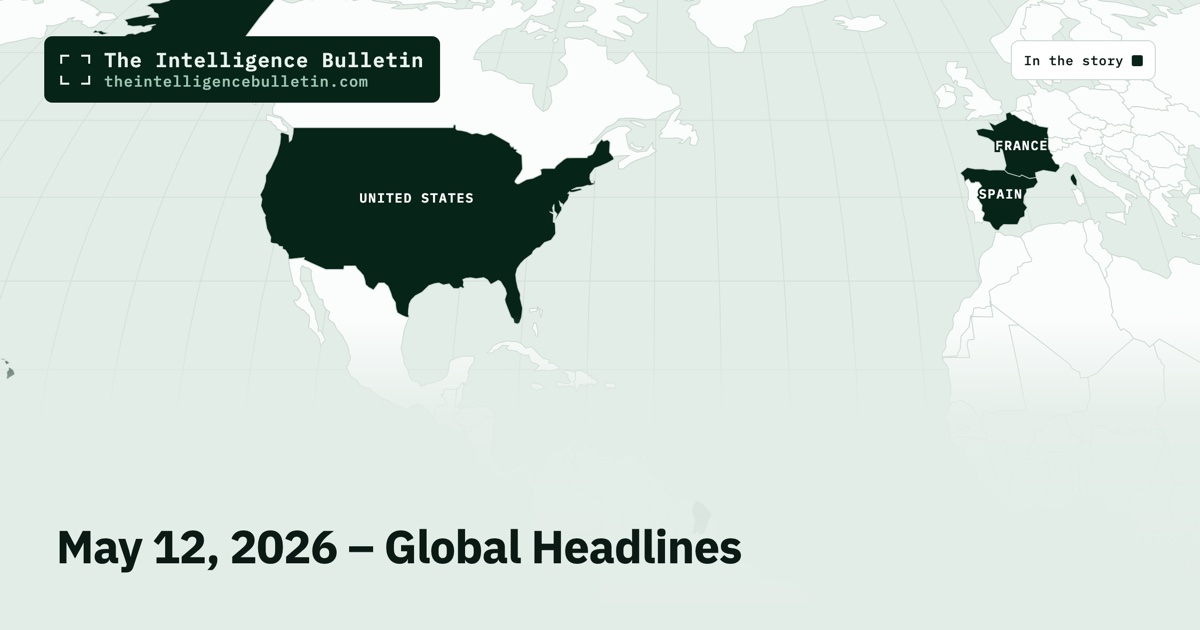
Croatian and Slovenian outlets frame the incident primarily as a European travel-safety and evacuation logistics story, while the U.S. source centers it on returning American citizens entering domestic health monitoring. The split is not merely emphasis but selection: European reports highlight the scale of the airlift and the French index case, whereas the U.S. report leads with American passengers and CDC coordination.
Their angle: Frames the event as a logistical evacuation operation involving special aircraft retrieving passengers from an infected cruise ship.
What’s distinct: Emphasizes the scale of the airlift and ship itinerary details that U.S. coverage omits.
Why: Croatia’s large cruise-tourism sector makes operational logistics of Mediterranean vessels directly relevant to its audience’s travel decisions.
Their angle: Highlights the number of people evacuated and the French passenger’s symptoms as the immediate health signal.
What’s distinct: Singles out the index-case nationality and symptom timing, unlike the U.S. focus on returning citizens.
Why: Slovenia’s location inside the EU Schengen area makes cross-border French health alerts and passenger flows a domestic concern.
Their angle: Centers on U.S. passengers returning for CDC-coordinated hantavirus monitoring after one tests positive.
What’s distinct: Leads with American citizens and domestic medical facilities rather than European evacuation logistics.
Why: As a U.S. public-radio outlet, its audience prioritizes the health status and follow-up care of returning nationals over foreign operational details.
The divergence reveals how geographic proximity to the vessel’s origin and the nationality of evacuees shape which operational facts are foregrounded versus which institutional responses are detailed. A reader limited to one language’s coverage would miss that the same airlift is simultaneously a European public-health logistics event and a U.S. domestic quarantine story. This story shows that outbreak reporting remains anchored in the nationality of those returning home rather than the location of initial exposure.
2Trump and Xi to Meet in Beijing on Trade and AI
US domestic outlets frame the summit as a high-stakes negotiation testing American commercial leverage, while the Indonesian outlet presents it as a potential turning point for global trade stability that directly affects Southeast Asian economies. ketv.com leads with unresolved questions about outcomes, theepochtimes.com highlights private-sector participation as a show of strength, and kompas.com foregrounds the possibility of de-escalation.
Their angle: ketv.com frames the summit around unresolved trade and AI questions facing the United States.
What’s distinct: Unlike theepochtimes.com it omits delegation details and unlike kompas.com it does not raise prospects for trade-war relief.
Why: Its US audience base and local-market focus make immediate American economic stakes the rational editorial priority.
Their angle: theepochtimes.com centers the presence of US tech and business leaders accompanying Trump.
What’s distinct: It highlights private-sector participation where ketv.com focuses on policy questions and kompas.com focuses on regional trade implications.
Why: Its editorial stance and ownership emphasize scrutiny of Chinese technology influence, making delegation composition central.
Their angle: kompas.com presents the meeting as a possible step toward easing the US-China trade war.
What’s distinct: It alone foregrounds de-escalation prospects and ASEAN supply-chain effects absent from both US sources.
Why: Indonesia’s role as an alternative manufacturing base creates direct economic interest in stable bilateral trade relations.
The divergence shows how coverage tracks each outlet’s position in the global economy rather than neutral reporting of the same facts. A reader following only US sources would miss the direct stakes for ASEAN economies that rely on continued access to both markets. Collectively the coverage reveals that the summit’s significance lies less in bilateral optics and more in its ripple effects across third-country supply chains.
3Virginia Democrats Ask Supreme Court to Restore New Congressional Map
All three U.S. outlets frame the story as a straightforward legal appeal by Virginia Democrats, yet they split on whether to emphasize the request to halt the existing ruling, the desire to implement the new map, or the procedural loss being appealed. Local Virginia-focused coverage stresses the immediate effect on district lines while national or regional wires highlight the Supreme Court filing itself.
Their angle: arlnow.com emphasizes Democrats asking the Supreme Court to halt the specific Virginia ruling blocking the districts.
What’s distinct: It includes more detail on the state court’s reasoning than the other two sources, which focus on the federal filing or outcome.
Why: As a hyper-local Arlington news site, arlnow.com prioritizes immediate effects on Northern Virginia districts for its geographically proximate audience.
Their angle: kten.com frames the story as Virginia Democrats seeking Supreme Court permission to implement the new congressional map.
What’s distinct: It stresses the practical result for elections rather than the legal mechanism or prior loss highlighted elsewhere.
Why: kten.com serves a regional audience outside Virginia and therefore leads with the concrete electoral consequence its readers can grasp quickly.
Their angle: wvtf.org presents the action as Virginia Democrats appealing their redistricting loss to the Supreme Court.
What’s distinct: It foregrounds the procedural history and sequence of defeats instead of the requested remedy or map details.
Why: As Virginia public radio, wvtf.org follows an institutional mandate to track state-government legal processes for a statewide audience.
The small but consistent variations show how even ideologically aligned domestic outlets calibrate language according to audience geography and institutional mission. A reader limited to one outlet would miss how the same filing is simultaneously a local districting crisis, a national court maneuver, and a procedural checkpoint. The divergence reveals that information about U.S. redistricting is shaped less by partisan slant than by the outlet’s distance from the affected voters and its editorial remit.
4Trump to Make State Visit to China May 13-15 at Xi Invitation
Chinese state-linked media frame the visit as an opportunity to correct American misperceptions through business channels, while Russian and Omani outlets present it strictly as an official diplomatic schedule released by Beijing. The core split lies between using the announcement to advance economic narrative versus treating it as a neutral ministry statement.
Their angle: Frames the visit around a US business leader’s call to correct misperceptions and advance commercial ties.
What’s distinct: Unique emphasis on business voices and specific companies absent from the other two outlets.
Why: Operates as Chinese state media targeting US audiences to stabilize economic relations.
Their angle: Presents the dates and Chinese Foreign Ministry attribution as an official diplomatic fact.
What’s distinct: Sticks closest to verbatim ministry language without business or interpretive additions.
Why: Serves as a platform for relaying non-Western official statements to international readers.
Their angle: Reports the invitation and schedule in minimal factual form attributed to the Chinese MFA.
What’s distinct: Shortest treatment focused solely on timing and protocol without thematic expansion.
Why: Gulf outlet prioritizes concise diplomacy updates for a regional audience with limited stake.
The divergence shows how state proximity to Beijing shapes emphasis on economic repair versus protocol, while distance produces stripped-down reporting. A reader limited to one language’s coverage would miss that the same ministry statement is repurposed to serve Chinese outreach, Russian alignment, or neutral brevity. This reveals an information environment where the announcement’s meaning is filtered through each outlet’s institutional relationship to the event’s primary actor.
5Supreme Court Temporarily Preserves Abortion Pill Mail Access
All three US outlets frame the ruling as a narrow procedural pause rather than a substantive ruling on abortion rights, yet they diverge on whether to lead with institutional process, patient access, or explicit time limits. Radio and newspaper sources emphasize continuity of access while public radio stresses the brief duration of the reprieve.
Their angle: Frames the decision as SCOTUS preserving mail access through an administrative stay.
What’s distinct: Emphasizes legal mechanics over patient impact or exact duration unlike the other two outlets.
Why: Talk-radio format prioritizes concise process updates for an audience seeking rapid legal summaries.
Their angle: Leads with extension of women’s access and links the ruling to ongoing clinic and mail-order realities.
What’s distinct: Adds operational context on service availability that the radio and public-radio sources omit.
Why: Regional newspaper serving post-Dobbs readers who need details on where and how access continues.
Their angle: Highlights the minimum three-day extension and precise timeline of the stay.
What’s distinct: Stresses temporal limits and procedural language rather than access continuity or broader context.
Why: Public-radio standards favor exact court timelines to maintain perceived neutrality with diverse funders.
The collective coverage reveals a shared US media caution around treating the stay as anything beyond temporary docket management, reflecting institutional risk aversion on a polarized domestic issue. A reader limited to one outlet would miss how the same three-day window can be presented as routine procedure, expanded access, or a ticking clock. The divergence shows that even within one country and language, editorial incentives tied to format and audience produce distinct factual priorities around identical court text. This story reveals that procedural stays on abortion medication now function as calibrated pressure valves in an unresolved federal-state conflict.
That’s how the world told the story.
Get our daily open-source intelligence on world events in your inbox — one email a day, up to six stories.
Subscribe freeNo spam. One-click unsubscribe. See the latest email →