 AI-generated analysis published under the editorial responsibility of Rohit Sinnas. How it works →
1Trump Rejects Iran Ceasefire Proposal, Declares Talks on Life Support
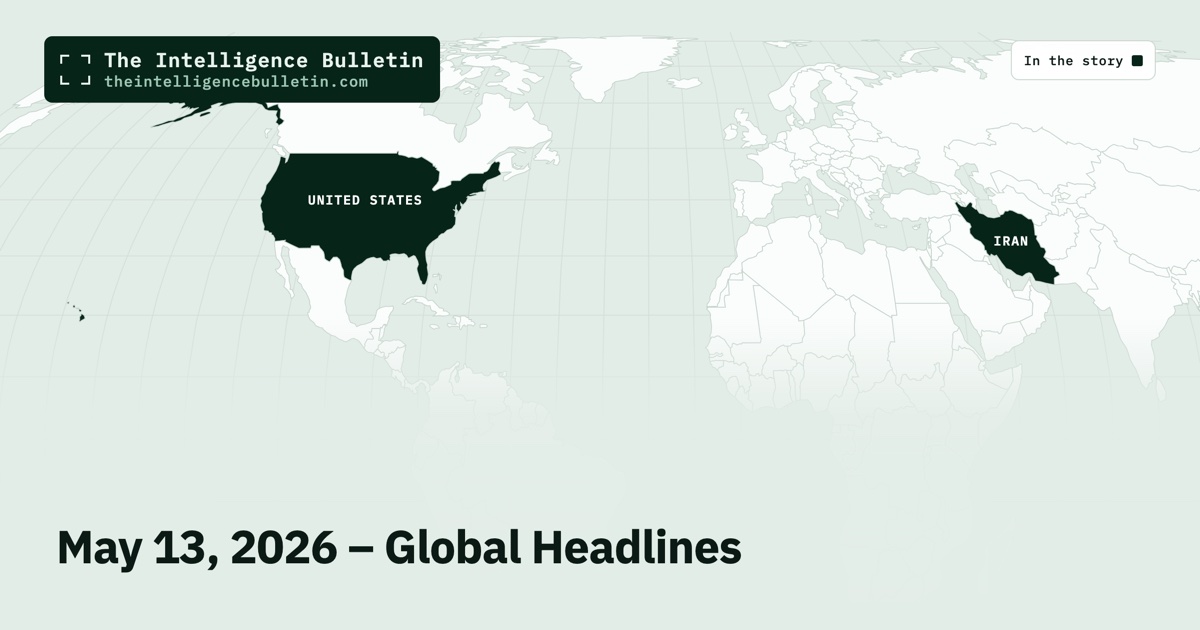
Coverage across the three sources largely agrees on the facts, reporting Trump’s rejection of the Iranian ceasefire proposal and his statement that talks are on life support without introducing divergent frames such as security threats or emotional appeals. All outlets lead with the diplomatic breakdown as the central event.
Their angle: The outlet frames the story as a direct rejection paired with a warning of collapse, using concise Spanish phrasing.
What’s distinct: It aligns closely with the English sources in sequencing and emphasis without adding unique regional context.
Why: As a Spanish-language aggregator, it prioritizes accessible summaries drawn from global wires for its audience.
Their angle: The outlet presents Trump’s life-support comment as the key follow-up after the rejection of the proposal.
What’s distinct: It matches the other sources in factual order and direct quotation without introducing Pakistan-specific angles.
Why: The outlet follows standard international reporting practices to relay US-Iran events neutrally.
Their angle: The outlet leads with the rejection and Trump’s characterization of the ceasefire status as the central development.
What’s distinct: It aligns with the other sources in content and tone, offering no distinct domestic emphasis.
Why: As a US public media outlet, it adheres to concise wire-based coverage of diplomatic events.
The coverage collectively shows consistent international focus on the immediate diplomatic impasse without injecting competing narratives. A reader following only one language or country’s coverage would miss the uniform reliance on the same core facts across borders. This story reveals that the information environment treats the rejection as a clear, shared signal of negotiation fragility rather than an event open to interpretive splits.
2Israeli Parliament Approves Death Penalty Tribunal for Oct. 7 Attackers
All three sources report the same core event without material disagreement. Coverage converges on the parliamentary vote creating a special tribunal for death-penalty cases linked to the October 7 attacks, with no variation in the stated facts or outcome.
Their angle: Reports the tribunal as standard legislative procedure targeting Hamas-linked attackers.
What’s distinct: Broadly aligns with the other sources on facts and outcome.
Why: U.S. English-language wire-style outlet emphasizes procedural clarity for a general audience.
Their angle: Describes the same tribunal but specifies Palestinians as the accused.
What’s distinct: Broadly aligns with the other sources on facts and outcome.
Why: Maintains neutral phrasing typical of aggregated international reporting.
Their angle: Highlights the unanimous 93-0 vote while identifying the accused as Palestinians.
What’s distinct: Broadly aligns with the other sources on facts and outcome.
Why: U.S. broadcast-affiliated site includes vote details to underscore legislative consensus.
The uniform English-language reporting across U.S. and unknown-country outlets indicates a narrow, fact-focused information environment that registers the procedural change without exploring implementation challenges or international reactions. A reader limited to any single outlet would miss only minor phrasing differences rather than substantive interpretive splits. This coverage collectively shows that the establishment of the tribunal registers as a contained legislative development rather than a broader policy shift.
3Congress Questions Hegseth on Iran War Costs and $1.5 Trillion Defense Plan
Both outlets report the same core event of a congressional hearing examining defense spending tied to Iran contingencies. The accounts converge on the basic facts of the May 12, 2026 session involving the House Appropriations Subcommittee on Defense and Pete Hegseth. Minor differences appear only in emphasis rather than substance.
Their angle: The hearing is presented as standard legislative oversight of U.S. defense spending and Iran planning.
What’s distinct: It aligns closely with the second source on facts but avoids any language implying evasion by Hegseth.
Why: Geographic distance and an audience focused on global defense budgets produce a neutral, procedural emphasis.
Their angle: The hearing is framed around Hegseth’s responses to questions about the high costs of Iran-related operations.
What’s distinct: It singles out cost figures and personal performance more sharply than the Pakistani account.
Why: Domestic UK audience interest in U.S. political accountability shapes the choice to highlight confrontation and fiscal scale.
The two accounts together confirm that the hearing addressed both immediate Iran-related cost estimates and the larger multiyear defense topline. A reader limited to either source would miss the procedural breadth: the Pakistani account supplies the full institutional cast while the British account isolates the political exchange. Collectively the coverage shows that the information environment treats the $1.5 trillion request as the central disputed figure regardless of national lens. The story reveals that congressional scrutiny of Iran contingency funding is now embedded inside the routine defense appropriations process.
4AIADMK Faction Backs Joseph Vijay-Led TVK Government in Tamil Nadu
The three Indian English-language outlets report the same core event with close factual overlap and no substantive contradictions. All describe an AIADMK splinter group declaring support for the TVK administration; differences appear only in emphasis and phrasing rather than in the underlying facts presented.
Their angle: The outlet emphasises the AIADMK faction’s claim of majority support and its formal decision to back the TVK government.
What’s distinct: It aligns closely with the other two sources but gives more space to the faction’s internal organisational assertion than they do.
Why: The outlet routinely covers Tamil Nadu party organisational developments for a domestic Indian audience.
Their angle: The outlet highlights the preceding rift with EPS and frames the support as acceptance of the people’s mandate.
What’s distinct: It is the only source that explicitly links the announcement to the EPS split, adding a layer the others downplay.
Why: The paper’s national readership requires context on how state-level splits may influence wider alliance calculations.
Their angle: The outlet reports the extension of support in concise transactional terms without additional internal party details.
What’s distinct: It is the most compact of the three and omits both the majority-support claim and the EPS rift.
Why: The outlet’s business-oriented audience favours brief accounts focused on the political fact rather than party mechanics.
Collectively the coverage reveals a Tamil Nadu political landscape in which smaller AIADMK fragments are publicly aligning with the new TVK dispensation rather than remaining with the established EPS leadership. A reader limited to any single outlet would miss the incremental contextual layers each adds: internal party arithmetic, the EPS break, and the minimal framing suitable for a national business audience. The reporting shows that state-level realignments in Tamil Nadu are being registered uniformly across Indian English media without partisan divergence at this early stage.
5Himanta Biswa Sarma Names Four Ministers for Assam Cabinet
The single available source reports the cabinet formation as a straightforward administrative step by the incoming chief minister, with no evident split in framing or emphasis on security versus diplomacy. Coverage remains factual and limited to the appointments and the Speaker candidate without added context or emotion.
Their angle: The outlet frames the appointments as a routine administrative announcement by the CM-designate.
What’s distinct: With only one source present, no distinct contrast exists and the angle aligns with factual reporting of the event.
Why: The English-language Indian outlet prioritizes concise coverage of state political developments for a domestic readership.
With only one source available, the coverage collectively shows a narrow, event-driven information environment centered on official announcements from Guwahati. A reader following solely this account would miss any potential regional reactions from opposition parties or neighboring states. The reporting underscores the procedural nature of power transition in Assam without broader geopolitical framing.
That’s how the world told the story.
Get our daily open-source intelligence on world events in your inbox — one email a day, up to six stories.
Subscribe freeNo spam. One-click unsubscribe. See the latest email →