 AI-generated analysis published under the editorial responsibility of Rohit Sinnas. How it works →
Press quoted
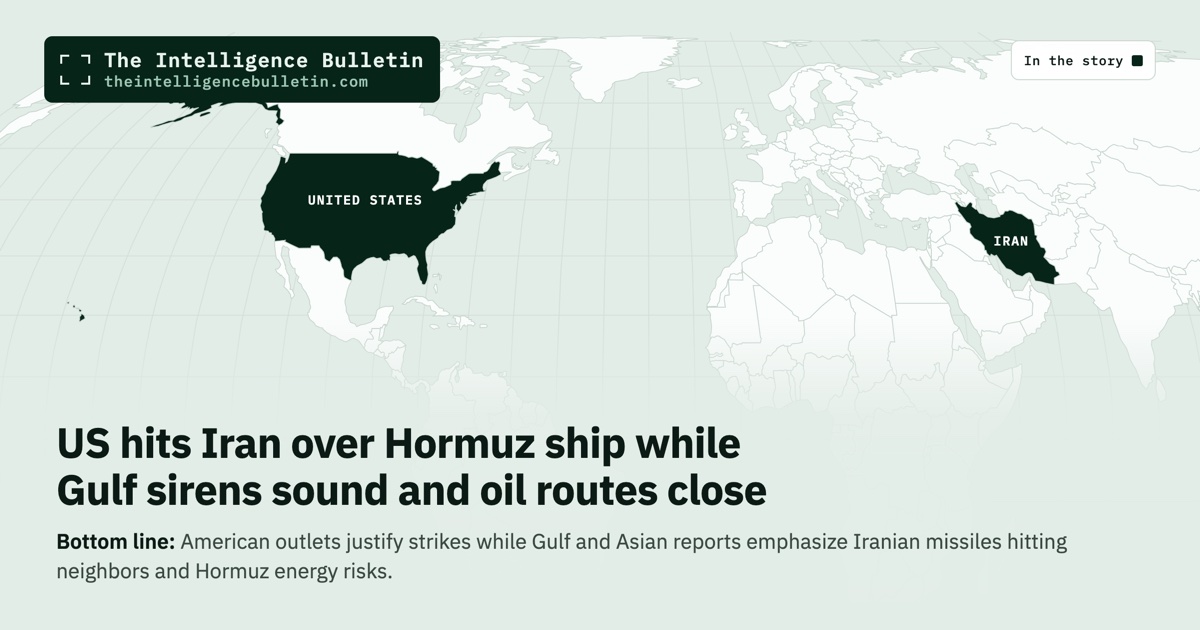
American outlets justify strikes while Gulf and Asian reports emphasize Iranian missiles hitting neighbors and Hormuz energy risks.
US coverage from Newsweek centers the American justification, quoting Defense Secretary Pete Hegseth that Iran ‘made a poor choice. Now they pay’ after the ship attack, and details the 140 targets hit to protect shipping. Xinhua limits itself to the single Iranian officer killed. Arab News names the dead lieutenant Hamidreza Dehghani and notes Gulf states’ condemnations of Iran’s regional strikes. Free Malaysia Today leads with sirens and explosions in Qatar, UAE and Bahrain from Iranian retaliation. Times of India stresses the Hormuz closure’s threat to global oil flows plus the Indian crew members affected. The pattern shows American outlets prioritizing retaliation framing while importers and neighbors highlight energy disruption and local spillover, even as every report confirms the same sequence of ship attack, US strikes and Iranian counterstrikes.
Full analysis
The divergent emphases in reporting on the July 11 escalation between the United States and Iran reveal a clear divide in priorities: American outlets present the strikes as a direct and justified response to protect international shipping lanes, while coverage from energy-dependent Asian nations and Gulf neighbors centers the immediate threats to oil routes, civilian safety, and regional sovereignty. This split matters because the Strait of Hormuz carries roughly one-fifth of global oil and liquefied natural gas shipments, and any prolonged closure directly raises fuel costs, inflation risks, and the chance of wider conflict.
The sequence began when Iranian forces struck the Cyprus-flagged container ship M/V GFS Galaxy in the strait. The vessel suffered engine room damage and fire damage, forcing the crew to abandon it in lifeboats. One Indian crew member remained missing while ten others were rescued. Iranian state media described the action as warning shots against vessels ignoring approved transit corridors. US Central Command called it a blatant attack on commercial shipping and responded with airstrikes on roughly 140 Iranian military targets, including missile and drone launch sites, ammunition depots, and communications equipment.
Defense Secretary Pete Hegseth stated on X that “Iran made a poor choice. Now they pay.” CENTCOM framed the operation as necessary to degrade Iran’s capacity to threaten mariners and keep the strait open as an international waterway. Iranian forces then declared the strait closed until further notice and until the end of American interventions in the region. They launched missiles and drones at US-linked targets in Qatar, Bahrain, the UAE, Jordan, Kuwait, and Oman. Air raid sirens sounded across several Gulf states, and local authorities reported intercepts along with explosions in Doha and other locations. Bahrain noted three injuries, including a child, from falling debris.
Iranian state media reported that one army officer, navy lieutenant Hamidreza Dehghani, was killed in the US strikes near the southern port of Jask. Xinhua carried only this detail, citing Iranian sources without additional context on targets or broader operations. Arab News identified Dehghani by name and recorded condemnations from Kuwait, Oman, and Egypt over violations of sovereignty and threats to regional stability. Free Malaysia Today opened its account with the sirens and explosions heard in Qatar, the UAE, and Bahrain, underscoring the direct spillover into neighboring territories hosting US facilities.
Times of India highlighted the Hormuz closure’s effect on global energy flows and the specific impact on Indian nationals aboard the attacked ship. Its reporting noted India’s call for de-escalation and diplomatic resolution while tracking the missing crew member through coordination with Omani authorities. These choices reflect concrete national stakes: India relies on secure maritime routes for energy imports and has citizens exposed in the incident, whereas Gulf states face immediate sovereignty and security concerns from cross-border strikes.
The coverage pattern shows no contradiction on the basic timeline—ship attack, US response, Iranian closure and retaliation—but clear differences in what receives prominence. Newsweek, aligned with official US statements, foregrounds the rationale for hitting 140 targets to safeguard shipping and quotes the defense secretary directly. Outlets closer to the physical and economic effects instead lead with local alerts, named casualties, and supply disruption. This is not a matter of invention but of selection driven by audience interests and government alignments.
Background context adds weight. The latest round follows an interim agreement reached June 17 aimed at ending earlier fighting that began in late February. President Donald Trump had declared a ceasefire earlier in the week, yet the ship incident shattered that pause. Iranian officials accused Washington of violating the arrangement, while US forces maintained that traffic continues through the strait despite Tehran’s claims of control.
The real stakes lie in whether the closure persists and whether further strikes draw in additional actors. Oil prices have already risen on fears of sustained disruption. Regional mediators, including Oman and Pakistan, continue technical talks on maritime security, yet Iranian hardliners signal willingness to expand targets if pressure mounts. Gulf states’ condemnations indicate limited tolerance for Iranian operations on their soil, raising the prospect of coordinated pushback or requests for greater US protection.
What to Watch
The pattern suggests escalation will continue in the near term unless one side accepts verifiable limits on strikes and shipping access. Readers in energy-importing economies face higher costs and supply uncertainty, while those in the Gulf confront direct security risks. The choice of what each outlet emphasizes simply tracks whose immediate interests—shipping defense, energy security, or territorial integrity—are most exposed in the current exchange.
That’s how the world told the story.
Get our daily open-source intelligence on world events in your inbox — one email a day, up to six stories.
Subscribe freeNo spam. One-click unsubscribe. See the latest email →