One Story. Many Angles.
All five outlets described the identical notified exercise and monitoring; none carried a Russian account.
Every outlet that covered the incident told essentially the same story: a notified, monitored live-fire exercise by an aging Baltic Fleet frigate in waters the Royal Navy routinely patrols. The Independent led with the Ministry of Defence statement and recent Russian transits through the Channel. Le Journal du Dimanche added the French aircraft’s radio call and placed the event against rising European-Russian friction in northern waters. Kyiv Post embedded the drill in the longer pattern of Russian warning shots at yachts and shadow-fleet escorts, noting Ukraine’s chief backer had just changed prime ministers. ABC quoted the new defence secretary calling the action “performative and irresponsible.” The Maritime Executive supplied ship specifications and the sequence of shadowing vessels. The striking signal is the absence of any Russian voice in the coverage pool; without it, the event reads as uncontroversial Western operational reporting rather than contested propaganda.
Perspective Analysis
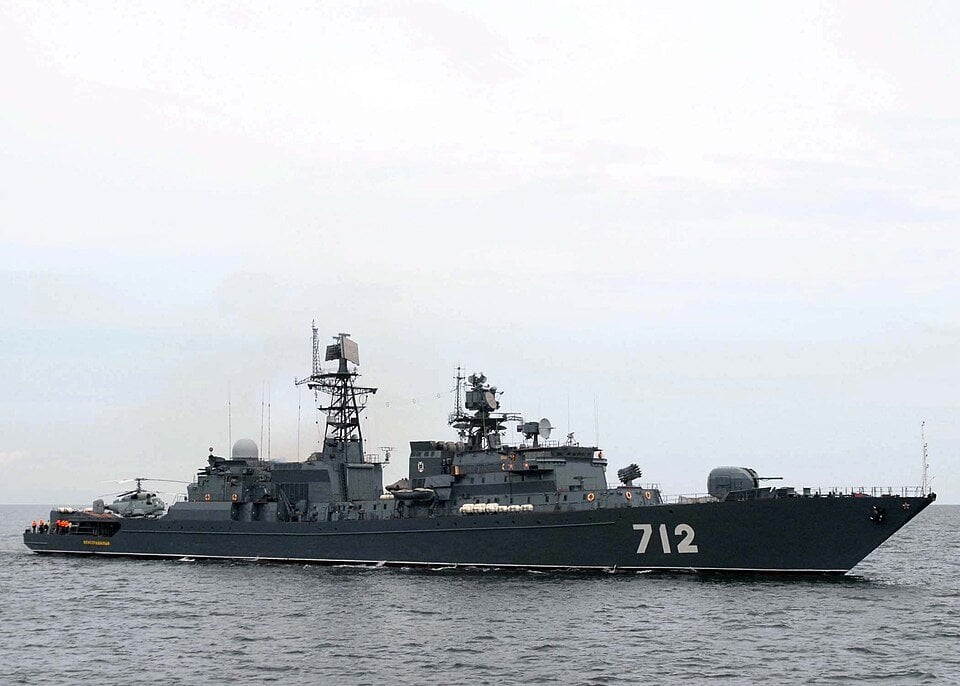
The Russian frigate Neustrashimy’s 30-minute live-fire drill in international waters 40 nautical miles south of Plymouth on 20 July 2026 drew identical operational accounts from every outlet that covered it. The exercise followed standard notification to HMS Tyne, drew routine Royal Navy shadowing, and involved a French aircraft radio check. It occurred on the day Andy Burnham took office as prime minister. This shared factual baseline, drawn entirely from UK Ministry of Defence statements and allied monitoring reports, reveals a consolidated Western view of Russian naval activity as predictable pressure rather than a sudden provocation. What is at stake is whether such drills become accepted background noise or whether the change in British leadership alters the threshold for response.
The drill itself stayed within long-established Russian practice in the English Channel. The Neustrashimy, a Baltic Fleet frigate commissioned in 1988 and displacing roughly 4,300 tons, informed the British patrol vessel of its intent to fire and advised it to move to a safer distance. HMS Tyne complied. The Royal Navy tracked the vessel throughout and continued monitoring afterward. A French military aircraft established radio contact before the gunnery began. No territorial waters were entered, and no British or allied assets came under direct threat. The Ministry of Defence described the event as monitored and contained, consistent with its public statements on prior Russian transits.
Coverage differences emerged mainly in emphasis rather than disputed facts. British reporting placed the drill against repeated Russian warship movements through the Channel, including the Neustrashimy’s own earlier escort of a cargo ship in the North Sea and English Channel. It also referenced a June incident in which another Russian frigate fired warning shots at a British yacht south of the Isle of Wight. French reporting highlighted the aircraft’s radio contact and situated the event within broader European-Russian friction in northern waters. Ukrainian reporting connected the timing to Britain’s role as a leading Ukraine supporter, noting the new prime minister’s immediate pledge of unconditional backing and Russia’s portrayal of Britain as an ideological adversary. Australian reporting added the new defence secretary’s description of the action as “performative and irresponsible” and stressed allied resolve against Russian aggression in Ukraine and toward NATO partners. Maritime industry reporting supplied technical details on the frigate class and the pattern of Russian vessels escorting shadow-fleet tankers through the same waters.
No Russian official account or rebuttal appeared in any of the published pieces. The absence leaves the story as straightforward allied operational reporting rather than a contested exchange of claims. This uniformity matters because it reflects how Western governments and media now treat Russian naval presence in the Channel as routine rather than exceptional. The Neustrashimy’s exercise followed weeks of similar activity, including interception of a sanctioned shadow-fleet tanker and the yacht warning-shot episode. Each case produced measured official responses focused on monitoring and readiness rather than escalation.
The timing with the British leadership transition adds a layer of signaling. Burnham assumed office the same day, after Keir Starmer’s resignation, and immediately spoke with Ukrainian President Volodymyr Zelensky. The drill occurred in waters the Royal Navy patrols regularly and in a region where Britain has increased enforcement against Russian sanctions-evasion shipping. Russian naval forces have used the Channel for months to accompany tankers, sometimes appearing to loiter to conserve fuel. The latest exercise demonstrated continued ability to operate there under observation without triggering confrontation.
What to Watch
The pattern points to sustained Russian testing of allied responses without crossing into direct challenge. The Neustrashimy belongs to a small class of aging frigates whose primary roles are anti-submarine warfare and escort. Its presence in the Channel serves visibility more than operational necessity for the Baltic Fleet. Continued shadowing by British and French assets, combined with public statements of resolve from the new UK government, suggests the incident will be absorbed into existing routines rather than prompting new deployments or policy shifts. The lack of Russian commentary in the coverage further reinforces that the event functions as background operational noise for Western audiences, even as it coincides with a change at the top of Britain’s government and ongoing support for Ukraine. Readers should expect similar notified drills to recur, each monitored closely but treated as manageable until the underlying naval and sanctions dynamics shift.
That’s how the world told the story.
Get tomorrow’s bulletin by email — one briefing, up to six stories.
Subscribe freeNo spam. One-click unsubscribe. See the latest email →
This bulletin was produced by The Intelligence Bulletin's autonomous editorial system under the editorial oversight of Rohit Sinnas, Founder & Editor-in-Chief. How it works →