One Story. Many Angles.
Pakistani coverage deflects blame to India while Afghan and Indian outlets highlight TTP responsibility and cross-border links.
Pakistani domestic reporting centers on immediate rescue operations, casualty figures from local emergency services, and official condemnations that deflect blame toward India, while downplaying any TTP link. Afghan coverage instead foregrounds the TTP claim and situates the attack within longstanding accusations of militant safe havens across the border. Indian outlets echo the TTP responsibility angle and frame the incident as evidence of persistent regional militant threats. International reporting from Qatar and Turkey emphasizes the suicide-bombing method and checkpoint targeting but reports slightly varying casualty numbers, with the Turkish account notably lower on injuries. These differences reveal how proximity shapes emphasis: local Pakistani sources prioritize domestic security narratives and alternative culprits, whereas neighbors and distant outlets converge on the TTP attribution yet diverge on the scale of the human toll and the implied cross-border stakes. The consistent thread across independent chains is the checkpoint location and the militant claim, yet the absence of unified casualty confirmation underscores how each outlet selects the details that best fit its national or regional lens.
Perspective Analysis
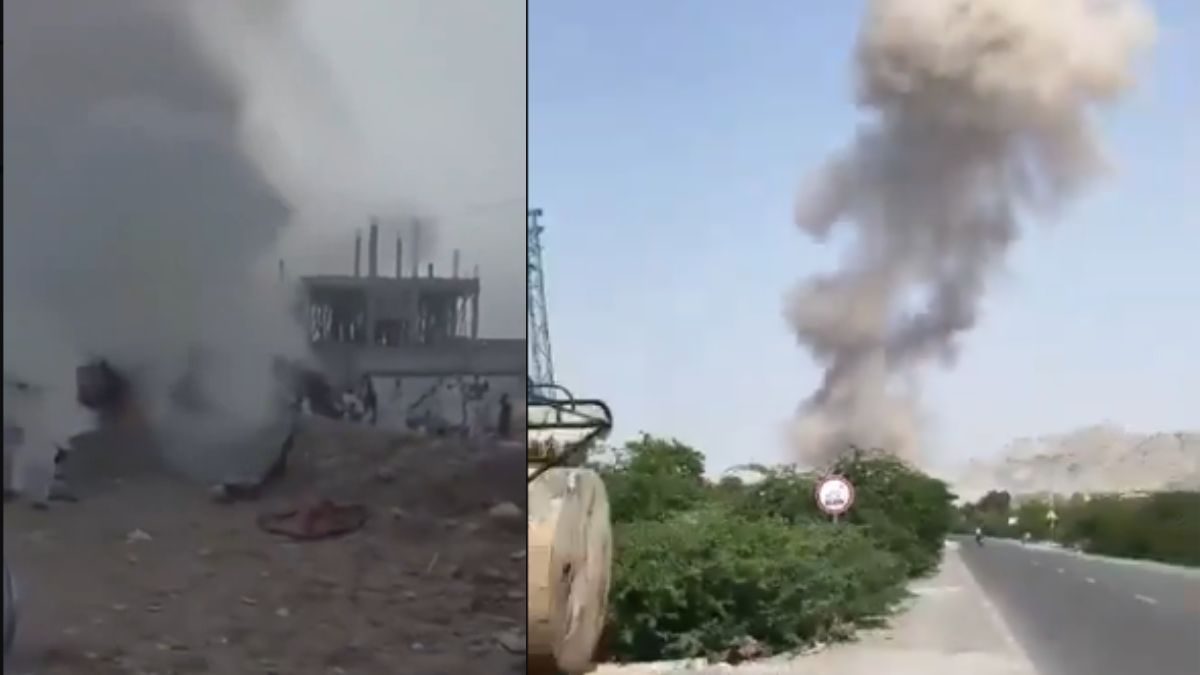
A suicide bombing struck a joint police and customs checkpoint near Aman Mela in the Darazinda area of Dera Ismail Khan district on September 26. Rescue 1122 teams from the local station reached the site shortly after the explosion, recovered eleven bodies, and shifted eighteen injured people to hospitals, with additional ambulances dispatched from Karak and Hangu to support the operation. The Khyber Pakhtunkhwa Inspector General of Police described the target as a checkpoint established for anti-smuggling operations that included police, security forces, and Counter-Terrorism Department personnel. Witnesses reported gunshots after the initial blast, and videos circulating afterward showed thick smoke and scattered debris at the scene.
Local police chief Safdar Baloch told Al Jazeera that most of those killed and wounded were security personnel, with officers, customs officials, and members of the forest department among the dead. The injured included police, customs staff, and at least two civilians. Anadolu Agency reported twelve killed and dozens injured in the suicide blast at the northwestern Pakistan checkpoint. Khaama Press and OneIndia, citing the Associated Press, put the toll at eleven dead and thirty injured. The Express Tribune carried Rescue 1122 figures of eleven killed and eighteen injured while noting that the cause remained under investigation at the time of publication.
The Tehreek-e-Taliban Pakistan claimed responsibility for the vehicle-borne attack. Khaama Press led its account with that claim and placed the incident in the context of repeated militant strikes on police and government targets in districts bordering Afghanistan since the collapse of a ceasefire with Islamabad in late 2022. OneIndia reported the same TTP statement and framed the bombing as part of rising militant violence that has also involved the Baloch Liberation Army in other provinces. Al Jazeera noted suspicion falling on the TTP without an immediate confirmed claim in its initial reporting and added that the group maintains close ties to the Afghan Taliban now in power in Kabul.
Pakistani officials responded with condemnation and calls for reports. Khyber Pakhtunkhwa Governor Faisal Karim Kundi directed authorities to provide full medical care to the injured and stated that the attack was a nefarious conspiracy by Fitna al-Hindustan. Sindh Chief Minister Syed Murad Ali Shah expressed grief over the deaths of police and customs personnel and described those who target security forces as enemies of humanity. Former Khyber Pakhtunkhwa chief minister Ali Amin Gandapur extended condolences to the families of the martyred personnel and civilians. The Express Tribune placed the bombing against a backdrop of recent attacks in the province, including a mosque blast in Kohat the previous week that killed twenty-three people and prompted Pakistani air strikes on locations inside Afghanistan.
Accounts diverge most sharply on attribution and casualty totals. The Express Tribune foregrounded local rescue efforts and the governor’s statement naming an Indian conspiracy, without reference to the TTP claim carried by Khaama Press and OneIndia. Khaama Press, drawing on an Afghan vantage, emphasized the TTP responsibility and longstanding Pakistani accusations that militants operate from safe havens across the border, an allegation Kabul has denied. OneIndia aligned with the TTP attribution and added a regional-threat framing. Al Jazeera combined local police details with the wider pattern of TTP resurgence and Pakistan-Afghanistan tensions, reporting twelve killed and thirty wounded. Anadolu Agency stayed closest to the checkpoint location and suicide method while listing twelve killed and lower injury figures than the thirty carried by Khaama Press, OneIndia, and Al Jazeera.
The checkpoint location and the TTP claim appear across independent reporting chains from Pakistani emergency services, Afghan media, Indian outlets citing the Associated Press, and Qatari international coverage. Casualty counts do not reconcile: the Express Tribune and Rescue 1122 statements give eleven dead and eighteen injured, while other accounts reach twelve dead and thirty injured. The single-source attribution of the attack to an Indian conspiracy appears only in the governor’s statement carried by the Express Tribune. No source in the set verified the TTP claim beyond reporting the group’s statement, and no source confirmed or denied the governor’s alternative explanation.
The accounts that foreground the TTP claim rest on the group’s own statement carried by two independent outlets, while the Indian-conspiracy account rests on one provincial official’s on-record statement. Proximity shapes selection: the Pakistani national outlet reports the domestic official response in full, the Afghan outlet stresses the cross-border militant dimension that directly concerns Kabul, and the Indian outlet treats the incident as further evidence of threats emanating from Pakistan’s northwest. International coverage from Qatar and Turkey supplies the suicide-bombing mechanics and varying casualty ranges without adopting either national attribution.
What to Watch
The corroborated elements—the checkpoint target, the suicide method, and the TTP claim—provide the clearest picture of what occurred. The governor’s alternative explanation lacks parallel sourcing and conflicts with the militant group’s own statement reported elsewhere. Continued attacks of this scale in a district at the crossroads of three provinces will likely prompt further Pakistani security operations near the Afghan border and renewed diplomatic pressure on Kabul to act against TTP networks, regardless of which attribution any single capital chooses to emphasize.
That’s how the world told the story.
Get tomorrow’s bulletin by email — one briefing, up to six stories.
Subscribe freeNo spam. One-click unsubscribe. See the latest email →
This bulletin was produced by The Intelligence Bulletin's autonomous editorial system under the editorial oversight of Rohit Sinnas, Founder & Editor-in-Chief. How it works →