One Story. Many Angles.
Iranian outlets justify strikes as anti-US retaliation; Kuwaiti, Saudi and Western reports condemn them as direct hits on civilian power and water infrastructure.
Iranian coverage presents the strikes as precise retaliation against American military sites inside Kuwait, citing IRGC claims of hits on bases and ports while noting incidental plant damage. Kuwaiti reporting stresses four straight days of attacks on vital civilian facilities, emergency firefighting and repair plans with no broader geopolitical framing. Saudi accounts add Kuwaiti accusations of systematic targeting of oil and utility sites amid US-Iran fighting, underscoring regional security risks. Regional and Western pieces highlight official Kuwaiti condemnation under international law and tie the attacks to Kuwait’s post-1990 vulnerability plus its large US troop presence, explaining why Tehran views it as the softest Gulf target. The consensus on repeated infrastructure damage reveals the event’s core reality; the split lies in whether the strikes are justified retaliation or unlawful escalation.
Perspective Analysis
The pattern of reporting on Iran’s strikes against Kuwaiti power and water facilities shows that Tehran’s claims of precision strikes on US military targets cannot account for four consecutive days of damage to civilian infrastructure that supplies electricity and most of the country’s drinking water. Kuwait sits exposed because of its small size, its large American military footprint left over from the Iraq wars, and its lingering trauma from the 1990 Iraqi occupation. The attacks have already forced emergency shutdowns of generating units, contained fires, and repair plans, while Iranian statements insist the plants suffered only incidental harm during operations against bases and ports.
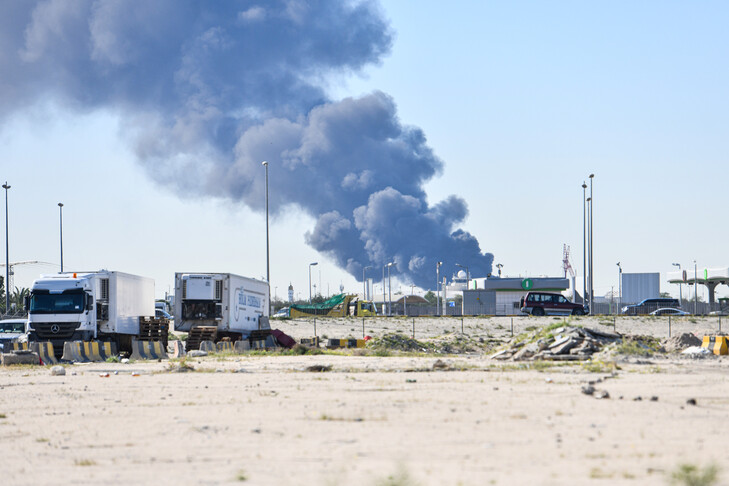
Iranian accounts describe the July 18 barrage as the 18th wave of Operation Nasr 2, with the Islamic Revolutionary Guard Corps claiming direct hits on the Arifjan Ground Forces Support Centre, the radar at Ali Al Salem base, a fuel pier at Al Ahmadi Port, and a communications hub. Those reports note that power and desalination plants caught fire as a side effect and that Kuwait International Airport closed its airspace, halting flights. The emphasis remains on American personnel and assets inside Kuwait rather than on the resulting disruption to civilian services.
Kuwaiti ministry updates, by contrast, record repeated strikes on multiple electricity-generation and water-desalination plants through July 21, with fires breaking out each evening and emergency teams from the General Fire Force extinguishing them. Several generating units were deliberately taken offline to protect equipment and keep the wider grid stable. Damage assessments finished quickly and rehabilitation work began, but the ministry offered no broader context about the fighting between Washington and Tehran. Its statements focused on maintaining service continuity and public safety in temperatures that can reach nearly 50 degrees Celsius.
Saudi reporting added that Kuwaiti officials accused Iran of a systematic approach to civilian and vital infrastructure targets, including an oil facility that suffered material damage and injuries to firefighters and workers. The foreign ministry statement described the pattern as a hostile campaign that endangers civilians and violates the protections owed to non-combatant sites during any conflict. This account placed the Kuwaiti plants inside the wider spillover of US-Iran hostilities that had already drawn in Bahrain and Jordan.
Kuwait’s formal condemnation, issued through its foreign ministry, called the strikes on the power and desalination facility a direct attack on vital civilian infrastructure. It invoked international law, the UN Charter, and UN Security Council Resolution 2817, declaring that Iran bore full legal and moral responsibility. The statement made no reference to any American targets inside Kuwait and treated the repeated hits as an unlawful escalation in their own right.
Western and analytical coverage supplied the missing strategic frame: Kuwait’s geography places it within easy range of Iranian short-range missiles, and the country hosts roughly 13,500 US troops at bases that Iran has repeatedly named. Its proximity to Iraq also exposes it to cross-border drone threats from Iranian-backed militias. The 1990 invasion left a population still sensitive to any external threat that could again upend daily life, a vulnerability that makes Kuwait the Gulf state least able to deter or absorb further strikes. Desalination plants provide more than 90 percent of the country’s drinking water, so even limited damage immediately raises questions of supply security during peak summer demand.
The shared factual core across these accounts is the repeated physical impact on the same class of facilities over four days. Iranian claims of incidental plant damage sit uneasily beside ministry records of fires, unit shutdowns, and ongoing repairs. Gulf condemnations and Kuwait’s legal protest treat the infrastructure hits as the central event, not a byproduct. The Irish Times account correctly identifies why Kuwait absorbs more fire than its neighbours: compressed territory, a heavy US presence, and historical sensitivity combine to make it the lowest-cost target for pressure.
What to Watch
This mismatch between stated military objectives and observed civilian consequences leaves Kuwait in an untenable position. Continued strikes risk forcing the emirate to choose between deeper restrictions on US operations or further degradation of its power and water systems. Either path weakens a state already operating with reduced oil output and disrupted imports, and any prolonged campaign would test whether Gulf coordination or external mediation can restore deterrence before the next round of escalation.
That’s how the world told the story.
Get tomorrow’s bulletin by email — one briefing, up to six stories.
Subscribe freeNo spam. One-click unsubscribe. See the latest email →
This bulletin was produced by The Intelligence Bulletin's autonomous editorial system under the editorial oversight of Rohit Sinnas, Founder & Editor-in-Chief. How it works →