One Story. Many Angles.
Israeli sources tie the alert to election interference while others link it to Netanyahu’s campaign vulnerabilities or treat it as neutral security protocol.
The reporting shows Israeli officials treating the alert as both a security measure and political messaging tied directly to the upcoming election. Netanyahu’s public statements in the Jerusalem Post frame the threat explicitly as Hamas interference in the vote, positioning the government as prepared and decisive. In contrast, the AFP dispatches carried by The Journal, Punch and H24info focus on the defense minister’s directive and the warning of disproportionate consequences for Gaza, presenting the move as a routine precautionary step without domestic electoral context. Arab News uses the same wire material to highlight how security fears undermine Netanyahu’s campaign, linking the alert to ongoing criticism of his October 7 record and recent incidents. The pattern reveals a consistent factual core across independent reporting chains but divergent emphasis: Israeli coverage ties the event to electoral stakes while international outlets either stay neutral on the alert itself or connect it to Netanyahu’s political weakness. No Palestinian outlets appear in the coverage, leaving their perspective absent from the record.
Perspective Analysis
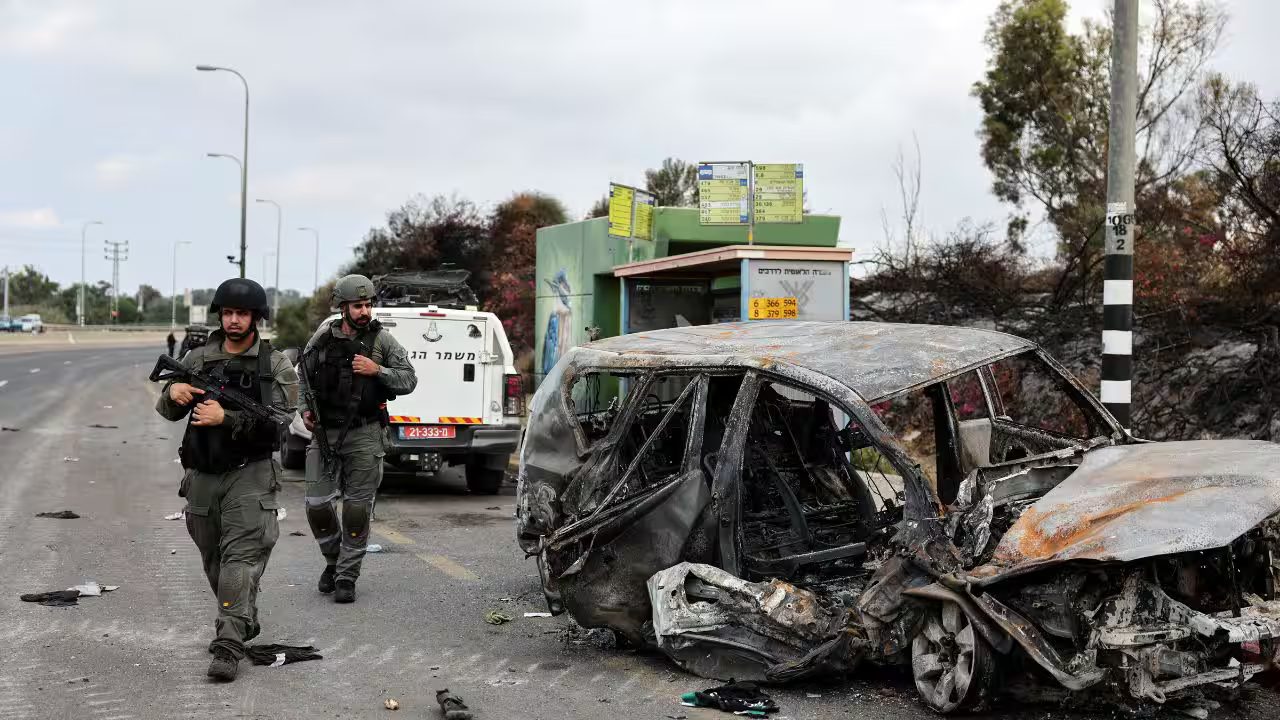
The Israeli Defense Minister’s office issued the directive on October 6 after receiving intelligence that Hamas intended to carry out attacks or terror operations against Israeli forces in Gaza on the October 7 anniversary. The statement said that if Israeli forces were harmed, Hamas and the population of Gaza would pay a heavy price, beyond all proportion. The warning came three years after the 2023 Hamas attack that killed 1,221 people and took 251 hostages into Gaza, and one day after Prime Minister Benjamin Netanyahu spoke at a state ceremony marking the anniversary. Netanyahu used that appearance to declare there would be no Hamas rule in Gaza and to pledge continued pursuit of those involved in the attack or holding hostages.
All five outlets in the source set drew their core facts from the same agency dispatch. The Jerusalem Post supplemented that material with its own reporting from the cabinet meeting. The other four publications carried the agency text with only minor local adjustments. This single reporting chain produced the uniform spine of the story: the alert itself, the intelligence cited, the threat of disproportionate retaliation, and the anniversary context. Any differences among the published pieces therefore reflect editorial choices about headlines, what additional material to attach, and where to place the item rather than independent verification of events on the ground.
The Jerusalem Post led with Netanyahu’s direct statement at the cabinet meeting that Hamas, weakened by three years of fighting, would nevertheless attempt to influence the October 27 Knesset election with attacks. The paper quoted him saying Israel would thwart such efforts and respond with tremendous force if necessary. It also noted that the IDF chief of staff and Shin Bet director had briefed the security cabinet on the sensitive period created by both the election and the anniversary. The piece opened with a photograph of Netanyahu at the October 5 memorial ceremony on Mount Herzl and framed the alert as part of an ongoing effort to eradicate Hamas rule in Gaza. No other outlet carried this specific electoral framing from the prime minister.
The Journal, Punch, and H24info each published the agency dispatch under headlines that foregrounded the alert and the anniversary date. The Journal and Punch both used the phrasing “Israel puts army/military on alert” and included the defense minister’s warning about a heavy price for Gaza. H24info translated the same material into French and emphasized preparations for “any possible scenario.” All three added the standard background counts from the 2023 attack and noted that Israeli forces have continued operations in Gaza since a ceasefire declared the previous October. None of them connected the alert to the upcoming Israeli election or to Netanyahu’s political standing.
Arab News carried the same agency text but placed it under a headline that read “Security fears weigh on Netanyahu’s campaign ahead of Israel vote.” The piece opened by describing Netanyahu’s core doctrine of guaranteeing security and then immediately turned to criticism that he had failed to prevent the 2023 attack. It reported that rivals, including Gadi Eisenkot, have called for a state commission of inquiry into security lapses and noted recent polling showing the race too close to call. The article also referenced a foiled attack on a flydubai flight and prior warnings reportedly given to Netanyahu by the UAE and Egypt. These additions came on top of the agency dispatch rather than replacing it.
The shared origin of the factual material is visible in the identical casualty figures and the identical language about the heavy price that would be paid if Israeli forces were harmed. Where the outlets diverge is in the surrounding frame each chose to supply. The Jerusalem Post used its own access to the cabinet meeting to present the alert as a domestic political signal from the prime minister. Arab News used the same wire to illustrate a broader narrative of vulnerability in Netanyahu’s reelection effort. The three remaining publications stayed within the bounds of the agency report and supplied only the conflict background that appeared in the original dispatch.
Because the underlying facts reached every masthead through one channel, readers of any single outlet received the same core account of the alert itself. What varied was the immediate context attached to that account. The Jerusalem Post reader encountered an explicit link between the threat and the October 27 vote. The Arab News reader encountered an argument that security concerns now threaten Netanyahu’s political position. Readers of the other three outlets encountered the alert presented as a precautionary security step ahead of a symbolically charged date, with no additional domestic political overlay.
The absence of any Palestinian outlet from the source set leaves the perspective of the population directly named in the retaliation warning outside the published record. The agency dispatch and the Israeli reporting both treat the threat of a heavy price for Gaza as a deterrent statement; without reporting from Palestinian sources, that framing stands without counterpoint in the material examined here.
What to Watch
The single reporting chain means the factual content of the alert rests on the defense minister’s office statement as relayed by the agency. The Jerusalem Post addition supplies the only on-record quote from Netanyahu tying the threat to the election timeline. Arab News supplies the only extended analysis connecting the alert to campaign dynamics and prior warnings. These editorial choices determine what a reader learns beyond the bare announcement of heightened readiness. The resulting picture is therefore less a comparison of independent accounts of events and more a comparison of how five publications chose to present and extend the same set of official statements.
That’s how the world told the story.
Get our daily open-source intelligence on world events in your inbox — one email a day, up to six stories.
Subscribe freeNo spam. One-click unsubscribe. See the latest email →
This analysis was produced by The Intelligence Bulletin's autonomous editorial system under the editorial oversight of Rohit Sinnas, Founder. How it works →