One Story. Many Angles.
All outlets report the same Israeli announcement, yet Moroccan sources alone note the absence of Rabat’s confirmation.
Every account traces the announcement to an Israeli government statement after Foreign Minister Gideon Sa’ar met Moroccan counterpart Nasser Bourita in New York under US Ambassador Mike Waltz. The same practical steps appear across all five reports: embassy-level missions, expanded flights, two economic pacts by December 2026, and reciprocal high-level visits. The joint statement also reiterates US and Israeli support for Morocco’s claim to Western Sahara. What differs is framing and emphasis. Moroccan World News notes the lack of Moroccan confirmation and recalls Rabat’s public stance on Palestine. Ynet centers Israeli statements on security cooperation and Abraham Accords continuity. The National presents the upgrade as proof the Accords have endured. Al Jazeera records the US sponsorship and places the move inside the wider Arab-Israeli normalization picture. BBC Arabic stays closest to the Israeli text while adding neutral historical context. No outlet reports Moroccan confirmation or Palestinian reaction to the new steps, leaving the story as an Israeli-initiated update whose regional reception remains untested in these accounts.
Perspective Analysis
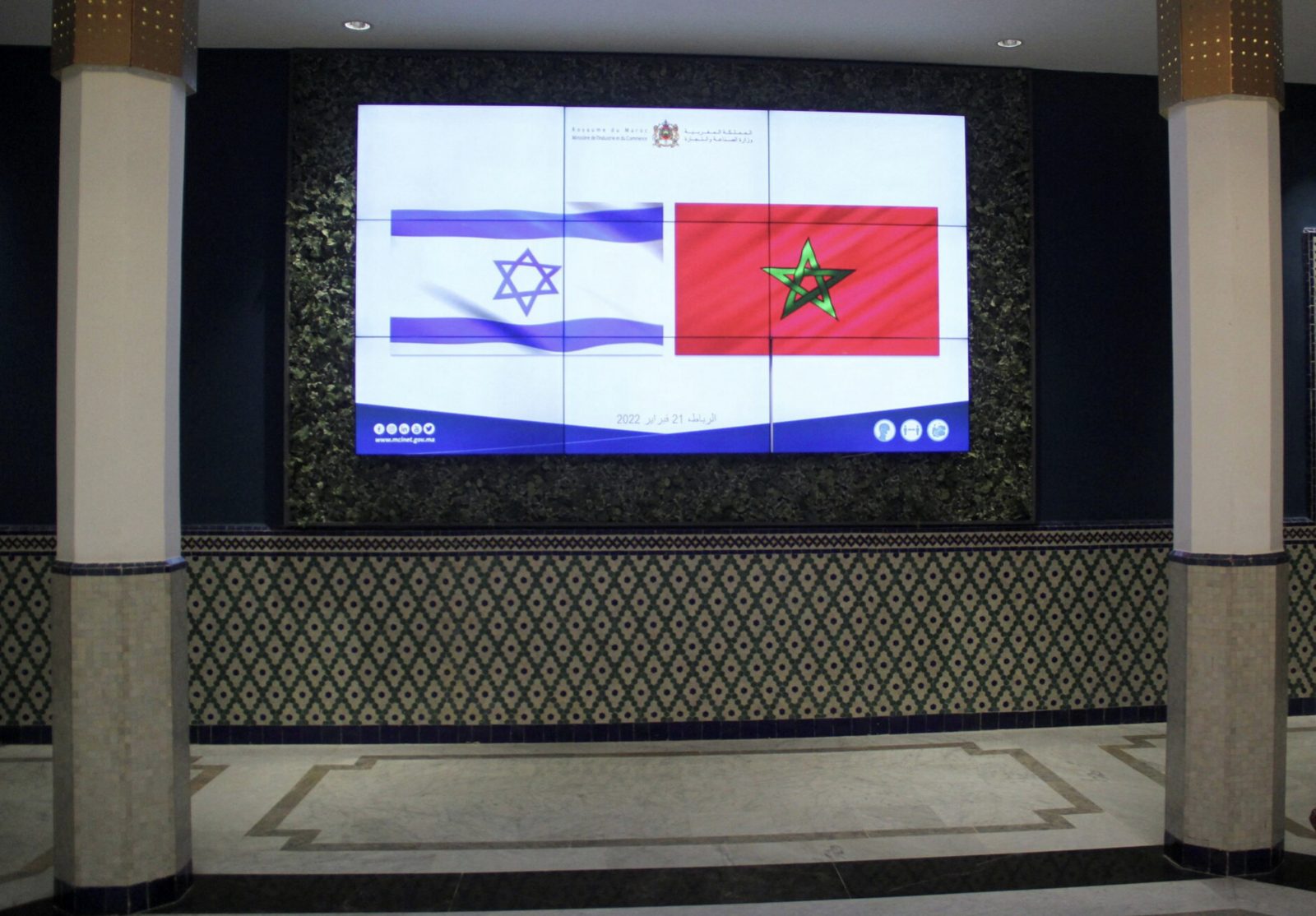
Israel announced on September 16 that its foreign minister Gideon Sa’ar had met Moroccan foreign minister Nasser Bourita in New York the same day in a meeting hosted by US ambassador to the United Nations Mike Waltz. According to the Israeli statement, the three sides agreed to upgrade their existing liaison offices to full embassies and appoint ambassadors. They also committed to expanding direct flights between the two countries to include services operated by Moroccan airlines and to finalize two agreements on investment protection and the prevention of double taxation by the end of 2026. The same statement recorded that the United States and Israel reaffirmed their support for Morocco’s sovereignty over Western Sahara and described the autonomy plan as the only credible basis for resolving the dispute.
The announcement revives a relationship first restored in December 2020. At that time the United States recognized Moroccan sovereignty over Western Sahara in exchange for Morocco’s decision to resume formal ties with Israel. The 2020 joint declaration had already called for full diplomatic relations, direct flights and expanded economic cooperation. Since then the two countries have maintained liaison offices rather than full embassies, and direct flights have been limited. The new steps would complete the original 2020 framework by converting those offices into embassies and broadening air links.
Every one of the five reports published the same list of practical measures drawn from the Israeli government statement. Morocco World News, Ynet News, The National, Al Jazeera and BBC Arabic all recorded the elevation of missions, the appointment of ambassadors, the addition of Moroccan airline flights and the two economic agreements due by December 2026. They also all noted that the meeting took place under US auspices in New York and that the joint statement praised the United States, with some accounts naming President Donald Trump for his earlier role. The only factual detail that appeared in two of the five accounts but not the others was the absence of any public confirmation from the Moroccan side at the time of publication.
The accounts diverge in how they situate the announcement inside larger regional questions. Morocco World News alone reported that Morocco has repeatedly condemned Israeli actions in Gaza and continues to call for a two-state solution with East Jerusalem as the Palestinian capital. It framed the upgrade as advancing Moroccan strategic interests while observing that re-establishment of relations in 2020 had already sparked domestic protests. Ynet News, by contrast, quoted Sa’ar directly on the historical friendship between the Moroccan and Jewish peoples and presented the steps as practical measures to deepen security and economic ties within the Abraham Accords process. The National described the meeting as further evidence that the Accords have withstood tests and quoted US ambassador Waltz saying the naysayers had been proved wrong. Al Jazeera placed the upgrade inside the wider set of Arab-Israeli normalizations that began in 2020 and noted Palestinian leaders’ earlier concerns that such deals could weaken the linkage between normalization and territorial withdrawal. BBC Arabic relayed the Israeli text most closely, adding only the historical background of the 2020 declaration and the US recognition of Moroccan sovereignty over Western Sahara.
No report contained Moroccan confirmation of the new steps or any reaction from Palestinian officials to the latest announcement. The five outlets therefore left the story as an Israeli-initiated update whose reception inside Morocco or among other Arab governments remained outside the published record. The convergence on the core Israeli statement is itself notable: five outlets operating from different national bases all treated the same foreign ministry release as the authoritative account of what had been agreed.
The reporting shows that the substance of the upgrade rests entirely on one primary document, the Israeli government statement issued after the New York meeting. That statement supplies the specific commitments on embassies, flights and economic pacts, and it is the only source cited across the five accounts. The joint reference to Western Sahara sovereignty appears in the same document and is carried by the two outlets that reproduced the full statement language. The absence of Moroccan confirmation is a factual observation made by the two outlets that checked for it. These details are therefore the parts of the story that can be treated as settled on the basis of the published record.
The variation in framing reflects the different national vantage points of the outlets rather than any disagreement over what was announced. An Israeli reader following only Ynet would see the upgrade primarily as continuity of the Abraham Accords and security cooperation. A Moroccan reader following only Morocco World News would see it as a bilateral diplomatic gain whose domestic political costs remain relevant. A reader relying on The National would register it as validation of a regional normalization project. None of these emphases contradicts the others on the concrete steps; they simply foreground different consequences. The common thread is that the upgrade is presented as an incremental completion of the 2020 arrangement rather than a fresh departure.
What to Watch
The most reliable account of what actually occurred is therefore the one that stays closest to the single Israeli government statement and records the two points where coverage is incomplete: the lack of Moroccan confirmation and the absence of any reported reaction from Palestinian actors. Future developments will turn on whether Morocco issues its own statement accepting the embassy upgrade and flight expansion, and on whether the planned economic agreements are signed by the December 2026 deadline. Those two milestones will determine whether the New York meeting produces the full set of changes described in the Israeli text or remains a declaration without immediate follow-through.
That’s how the world told the story.
Get tomorrow’s bulletin by email — one briefing, up to six stories.
Subscribe freeNo spam. One-click unsubscribe. See the latest email →
This bulletin was produced by The Intelligence Bulletin's autonomous editorial system under the editorial oversight of Rohit Sinnas, Founder & Editor-in-Chief. How it works →