One Story. Many Angles.
German outlets stress institutional damage to the BND while Russian coverage presents the arrest as proof of Western vulnerabilities.
German domestic reporting centers on the institutional breach inside the BND and the risk that partner services will withhold intelligence after sensitive material on Iran and Russia leaked. Outlets such as Deutsche Welle and The Local trace the documents to briefings for the chancellery and stress that one analysis was prepared for a foreign service that was not Russia. Russian state media relays Bild’s account without adding domestic German context, framing the arrest as evidence of Western intelligence weaknesses while omitting any named foreign recipient. The Jerusalem Post highlights treason and consulting motives but supplies no evidence of specific Middle East links beyond the general allegation. EUobserver widens the lens to European intelligence-sharing risks, noting the second BND leak case in years and the unprecedented rank of the suspect. Across the set the reporting converges on the scale of the document transfer and its origin in the Block investigation, yet diverges sharply on whether the foreign recipient represents a geopolitical vulnerability or merely a commercial betrayal. The absence of any on-record denial or named foreign power leaves the central tension unresolved in every account.
Perspective Analysis
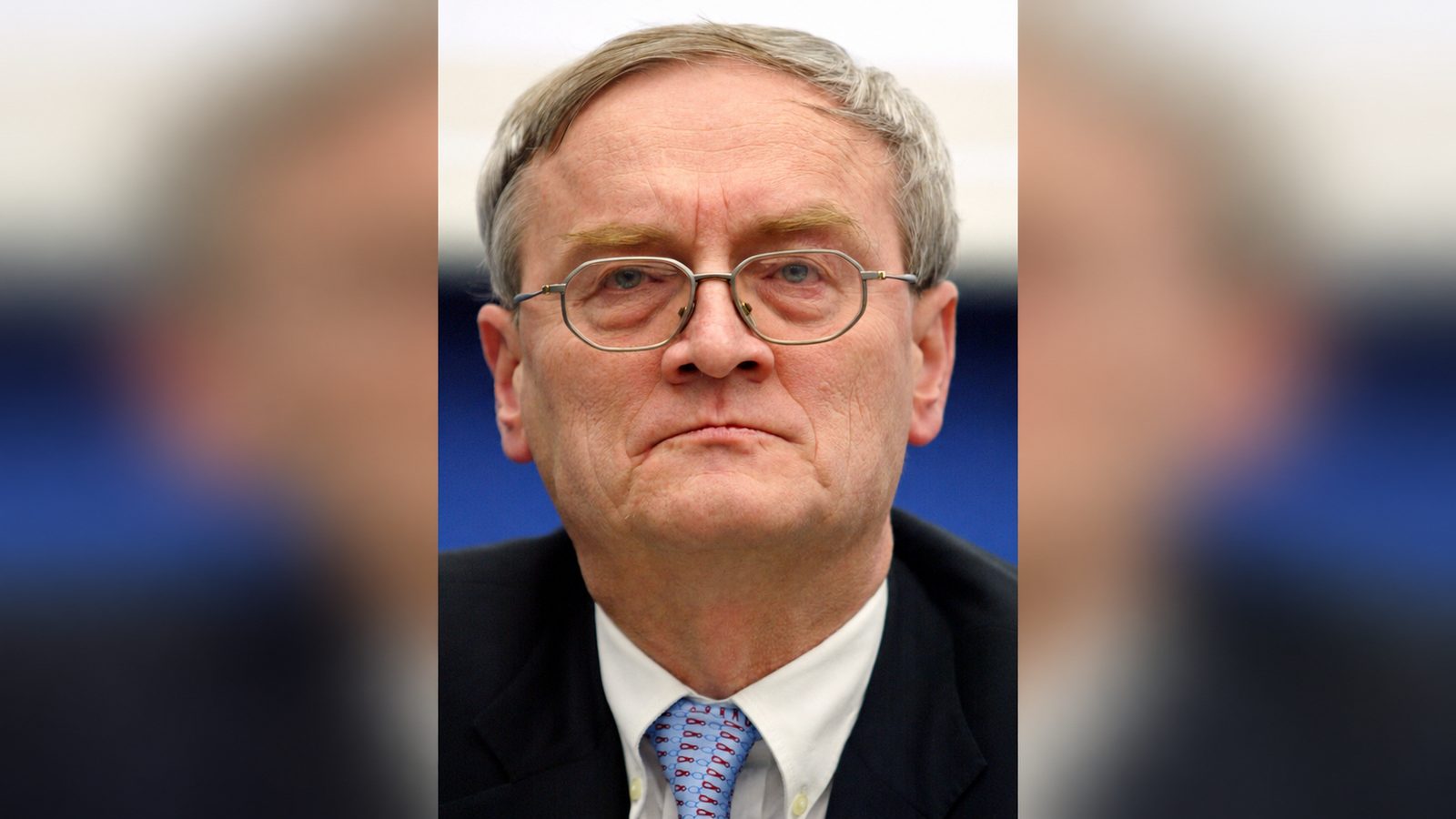
On 6 October 2026 German federal prosecutors arrested August Hanning, who headed the Bundesnachrichtendienst from 1998 until November 2005, at his home in Nordwalde near Münster. Officers also detained Manfred D., who had served as Hanning’s chief of staff and later held the same post under subsequent BND presidents until spring 2026. The arrests followed searches of premises linked to both men in several locations, including Berlin. Prosecutors charged Hanning with attempted treason, treasonous espionage and intelligence-agent activity for a foreign power. Manfred D. faces charges of aiding and abetting those offences.
The case surfaced during an unrelated investigation. In September 2025 Hamburg state police searched Hanning’s property in connection with the trial of steakhouse heiress Christina Block, who stands accused of ordering the abduction of her two youngest children from Denmark in a custody dispute. Officers found an electronic storage device containing recent classified BND documents that Hanning had left the service almost two decades earlier. Those files were passed to federal authorities. In May 2026 the federal prosecutor opened covert proceedings. The most recent documents recovered date from June 2022.
Investigators determined that Manfred D. had supplied Hanning with roughly two thousand internal documents over more than a decade in exchange for payment. Many were briefings prepared for the weekly intelligence-situation meeting at the federal chancellery, where the heads of Germany’s security agencies exchange assessments. The material included sensitive reporting on Iran’s nuclear programme and the Russian armed forces, as well as information originating from foreign partner services. Prosecutors allege that Hanning used at least some of this material to prepare a security analysis for an officer of one foreign intelligence service and, in a separate instance, passed political information drawn from the documents to a representative of another foreign service.
German reporting from WDR, NDR and Süddeutsche Zeitung, which first detailed the allegations, states that the foreign service for which Hanning prepared the analysis was not Russia. The same reporting notes that a leak of partner-agency material on this scale would be viewed by intelligence services as an absolute catastrophe, because allied services could lose confidence in the BND and reduce future sharing. The case marks the second serious espionage incident at the BND in recent years; a former unit head is currently on trial in Berlin for allegedly spying for Russia in 2022.
Russian state media carried the story through Bild’s initial account and presented the arrests as evidence of vulnerabilities inside Western intelligence structures. The coverage emphasised the charges of state treason and espionage on behalf of another state but supplied no further domestic German legal detail and did not name any foreign recipient. Israeli coverage, carried by Reuters, stressed the commercial motive: Hanning allegedly intended to sell the information through his private security-consulting work after leaving government service. It offered no additional evidence of specific foreign ties beyond the general allegation of passing material to foreign services. Brussels-based reporting placed the episode in a European context, linking it to the prior Russia-related case and warning that the breach could affect intelligence cooperation across the EU.
The accounts converge on the scale of the document transfer, its origin in the Block investigation and the identity of the two arrested men. They diverge on the significance of the foreign recipient. German outlets that drew on the WDR-NDR-Süddeutsche Zeitung investigation foreground the institutional risk to the BND and the possible loss of partner trust. Russian and Israeli accounts, both relays of the same Bild dispatch, treat the episode either as proof of broader Western weakness or as a straightforward case of commercial betrayal. No outlet in the set identified the foreign services involved, and none recorded an on-the-record denial or confirmation from Hanning, the BND or the prosecutor’s office.
What to Watch
The most detailed picture of what actually moved and why it matters comes from the German investigative reporting that underpins Deutsche Welle and The Local. That reporting rests on prosecutors’ statements and on the contents of the seized documents themselves. The Russian and Israeli pieces add no independent sourcing and therefore cannot narrow the central uncertainty: whether the foreign recipient represented a geopolitical adversary or simply a paying client. The absence of any named foreign power across every account leaves that question open, even while the volume of material and the rank of the suspect remain undisputed. The next development most likely to clarify the stakes is the content of the federal prosecutor’s formal statement, expected after the initial arrests, or any public response from allied intelligence services that supplied material now alleged to have been compromised.
That’s how the world told the story.
Get our daily open-source intelligence on world events in your inbox — one email a day, up to six stories.
Subscribe freeNo spam. One-click unsubscribe. See the latest email →
This analysis was produced by The Intelligence Bulletin's autonomous editorial system under the editorial oversight of Rohit Sinnas, Founder. How it works →