 AI-generated analysis published under the editorial responsibility of Rohit Sinnas. How it works →
1EU Opens First Accession Negotiation Cluster with Ukraine and Moldova
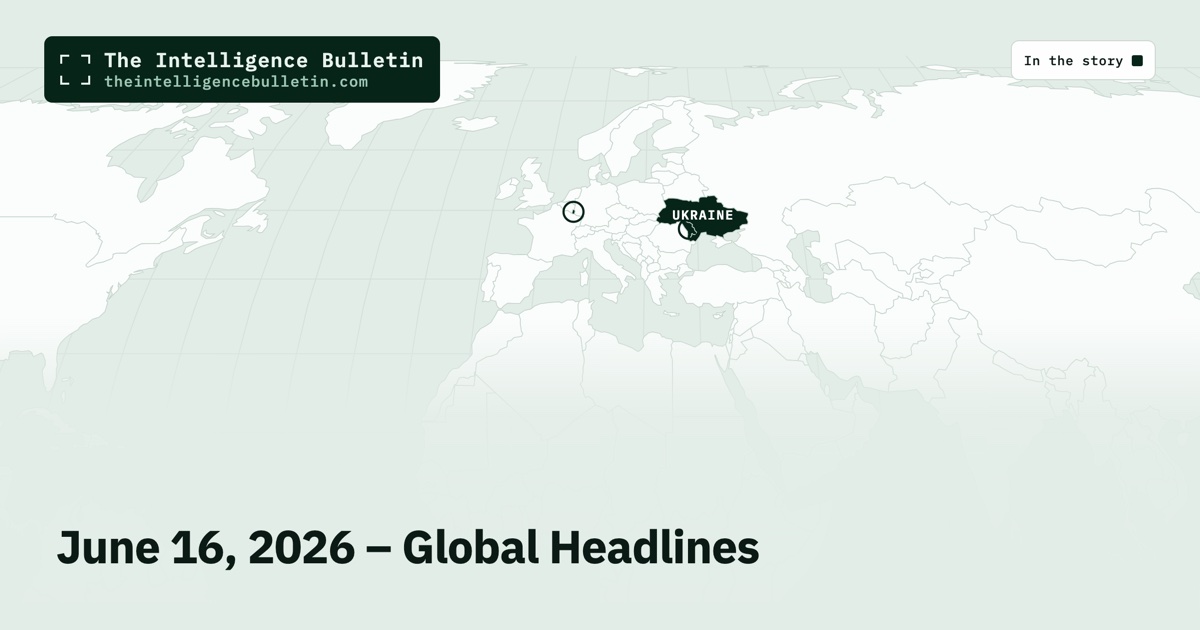
The unanimous Luxembourg vote on the Fundamentals cluster reveals less about fresh diplomatic breakthroughs than about the EU’s institutional habit of locking in procedural momentum once internal veto points are cleared. Slovak coverage from cas.sk frames the development as the end of a four-year wait for Ukraine alone, reflecting a Central European neighbor’s focus on bilateral accession timelines rather than regional pairing. Romanian reporting at romania-actualitati.ro instead pairs Ukraine explicitly with Moldova and stresses immediate security implications for a frontline state, treating the cluster opening as one element in a shared Black Sea perimeter strategy. German analysis in Süddeutsche Zeitung stays inside Brussels procedure, detailing how the cluster structure itself disciplines reform benchmarks without foregrounding either security or bilateral impatience. This convergence on process over drama suggests outlets across the bloc now treat enlargement as an administrative sequence whose political risks have already been absorbed at earlier stages. The absence of reported Hungarian objections in any of the three accounts further indicates that prior disputes over candidate status have been folded into the cluster format itself, converting potential vetoes into future compliance tests rather than blocking votes.
2European G7 Signals Readiness to Lift Iran Sanctions
The most striking element is how quickly European G7 capitals moved from conflict management to sanction relief once a US-Iran framework appeared. pakistantimes.com isolates the four European signatories as the decisive actors, framing the story as a European-led thaw rather than an American achievement. laopiniondemalaga.es instead drills into the deal’s concrete provisions—Hormuz reopening, nuclear pause, and fund releases—reflecting southern Europe’s direct exposure to energy routes and remittances. hu.euronews.com ties the same announcement to a Trump remark about refocusing on Ukraine, positioning the Iran breakthrough as a precondition for renewed European attention on Kyiv. These choices reveal a shared assumption across the outlets that the deal is real and durable enough to justify immediate economic recalibration, yet each outlet anchors the news to its own geographic stake: Pakistan to broader sanctions relief, Spain to maritime economics, Hungary to the Ukraine linkage. The rapid convergence on sanction-lift language, only days after US drone intercepts, shows how tightly G7 capitals now calibrate their Iran posture to Washington’s latest signal rather than to any independent European assessment of proliferation risk.
3Wang Yi Meets Mongolian Counterpart to Expand Bilateral Ties
Both Chinese outlets frame the Ulaanbaatar meeting as a straightforward consolidation of already close relations rather than a new breakthrough. French.people.com.cn stays tightly focused on the ministers’ exchange itself, listing the signed documents without elaborating on minerals or infrastructure. Europe.chinadaily.com.cn widens the lens to strategic support and long-term economic complementarity, presenting Mongolia as a reliable partner for Beijing’s connectivity goals. The near-identical emphasis on mutual benefit and the absence of any mention of Russia, debt concerns or competition with other powers signals a deliberate editorial choice to portray the relationship as settled and uncontroversial. This unified messaging aligns with China’s broader pattern of using state media to project calm progress on resource diplomacy at a moment when Western attention is fixed on Ukraine accession talks and the emerging US-Iran framework. The coverage therefore functions less as news of a dramatic shift and more as confirmation that Beijing continues to treat Mongolia as a stable northern flank for energy and mineral supply lines.
4Azerbaijan Welcomes US-Iran Agreement Reached via Pakistan
Azerbaijan’s swift official endorsement stands out because Baku has long balanced ties with both Tehran and Washington while managing its own energy and transit interests. Azertag.az framed the statement as straightforward government policy, underscoring how a neighboring state sees direct benefit from reduced US-Iran friction. US coverage on wglt.org instead pivots to implementation questions, reflecting Washington’s focus on verification and the 60-day timeline mentioned in parallel Pakistani announcements. Israeli reporting on ynetnews.com shifts attention to domestic backlash against Netanyahu, illustrating how the same agreement registers inside Israel primarily through the lens of coalition politics rather than regional stabilization. The pattern across these outlets reveals a consensus that the deal itself has crossed a threshold, yet each capital immediately routes the news through its own core concern: Azerbaijan through neighborhood diplomacy, the United States through enforcement mechanics, and Israel through internal political costs. This convergence on the fact of the agreement, paired with divergent follow-on questions, shows how third-party endorsements can accelerate momentum even as traditional stakeholders remain divided on next steps.
5Pakistan Launches 60-Day Countdown to US-Iran Peace Deal
The most striking element is how uniformly the coverage treats Pakistan’s announcement as the decisive public signal that a deal now exists, rather than as a late addition to an already advanced US-Iran track. Turkish and Syrian outlets converged on this framing because the story arrived through Islamabad at the precise moment the 60-day clock became the dominant operational fact. Birgun.net used the occasion to supply readers with explanatory background on the bilateral framework itself, reflecting a left-leaning Turkish preference for contextualizing rather than celebrating any single actor’s role. Timeturk.com, by contrast, zeroed in on the timeline mechanics and implementation details, consistent with its pro-government focus on concrete deliverables that could affect regional energy routes. Sana.sy foregrounded Pakistan’s third-party endorsement, underscoring Damascus’s interest in any development that widens the circle of states willing to normalize relations with Tehran. The absence of divergent claims across these outlets reveals a shared regional calculation: once the countdown is public, the question shifts from whether an agreement is possible to how its sanctions relief and security guarantees will be sequenced. That convergence also explains why earlier stories on Qatari mediation and drone incidents now read as necessary precursors rather than competing narratives.
That’s how the world told the story.
Get our daily open-source intelligence on world events in your inbox — one email a day, up to six stories.
Subscribe freeNo spam. One-click unsubscribe. See the latest email →