One Story. Many Angles.
Gulf outlets portray ongoing mediation while one reports a specific US nuclear ultimatum that others omit.
The reporting splits sharply between claims of outright deadlock and assertions that diplomatic channels remain open. APA’s account, drawing on an Al Hadath source, details a specific US message tying any progress to nuclear concessions and dismissing the Strait of Hormuz as a priority once Iran lost control. Anadolu Agency and Al-Anba, both relaying Qatari Foreign Ministry statements, counter that contacts, visits, and message exchanges persist without interruption and aim at comprehensive progress. The Economic Times adds Russia’s parallel offer of assistance during a Putin-Pezeshkian call, framing the impasse as a moment for external help rather than collapse. Pakistan Today’s headline highlights UN praise for Islamabad’s role, an angle absent elsewhere. No selected outlet carries Iranian government statements directly. The pattern shows Gulf-focused sources emphasizing continuity to protect mediator credibility, while the Azerbaijani piece isolates the nuclear sticking point and the Indian outlet injects great-power diplomacy. This leaves readers with competing signals on whether the process has stalled or merely narrowed, without a shared account of what the parties actually conveyed.
Perspective Analysis
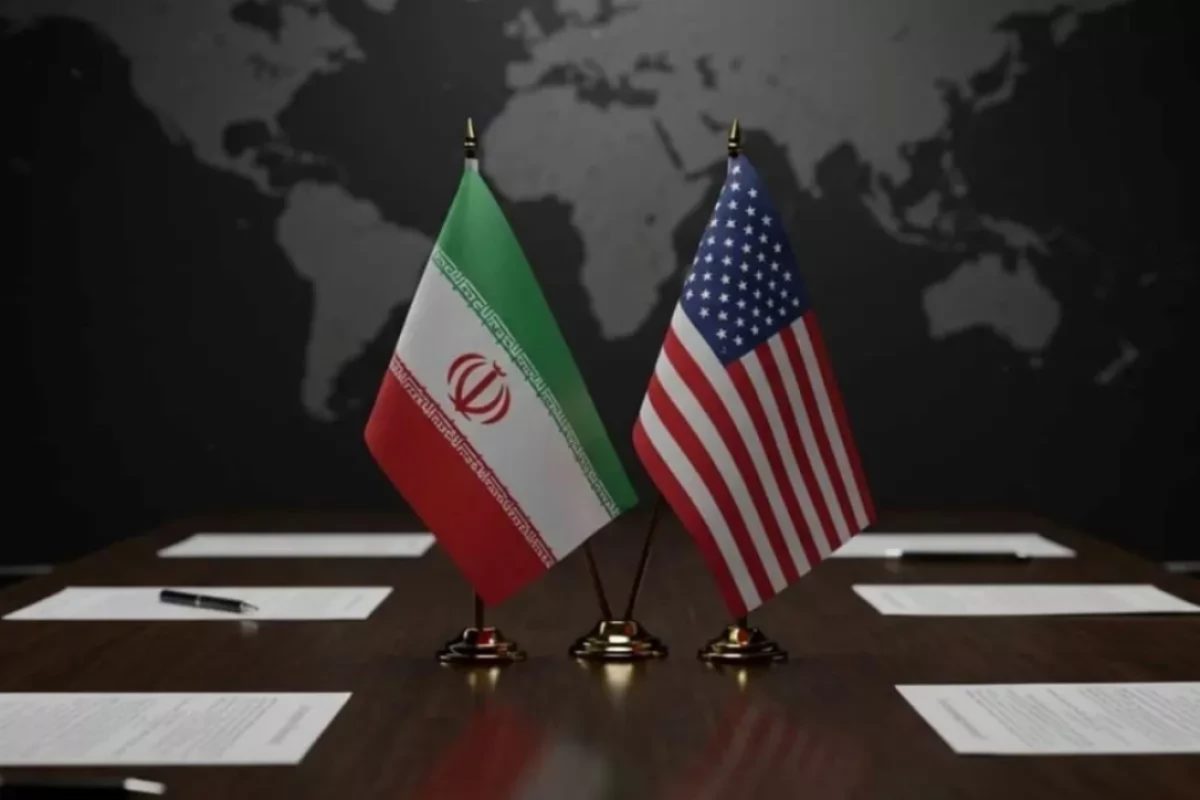
The indirect talks between Washington and Tehran over ending the months-long Middle East war have produced two sharply different public pictures of their current state. One account holds that the mediation has reached a deadlock after the United States told Iran no further progress is possible until Tehran curtails its nuclear capabilities and acknowledges it will not develop them further. Another account, carried in two separate Gulf outlets, states that message exchanges between the two capitals continue through Qatari channels and that the mediation effort itself has not stopped.
The first picture appears in reporting from APA, which cites a source at the Al Hadath television channel. That source described a specific American message to the Iranians that progress requires limits on nuclear work and that the Strait of Hormuz no longer ranks as a priority for Washington once Iran, in the American assessment, lost control over the waterway. The same account adds that Washington now seeks an explicit Iranian admission that it will cease developing nuclear capabilities.
The second picture comes from Anadolu Agency and Al-Anba. Both quote Ibrahim al-Hashimi, director of media and communications at Qatar’s Foreign Ministry, who told a news conference that contacts and visits remain ongoing with the aim of reaching progress that can be built upon and that covers all issues of concern to both sides. Al-Hashimi stated directly that “talks are continuing, there is an exchange of messages between Washington and Tehran, and Qatar is a mediator between the parties.” He added that mediation efforts “are continuing and have not stopped.” Al-Anba carried the same statements and noted an additional meeting between Qatar’s emir and Iran’s interior minister, Eskandar Momeni, at which regional developments and de-escalation efforts were discussed.
These two accounts do not directly contradict each other on every point. The Qatari statements focus on the persistence of the channel rather than on any specific demand or concession. The Al Hadath-sourced report isolates one American position on nuclear issues without addressing whether messages are still moving. Both descriptions can coexist if the channel remains open while one side has placed a firm precondition on further movement.
A third strand appears in The Economic Times. It reports that Russian President Vladimir Putin told Iranian President Masoud Pezeshkian in a telephone call that Moscow stands ready to assist mediation efforts aimed at reducing tensions in the Middle East war. Iranian state media IRNA carried the readout, which also described the conversation as covering the positive trajectory of bilateral relations and the need to deepen them. The same Indian outlet placed the offer against the backdrop of an impasse in the US-Iran channel, noting earlier Russian statements of willingness to help stabilize the Strait of Hormuz and the wider Gulf.
Al-Anba adds one further element not foregrounded elsewhere in the set: United Nations Secretary-General António Guterres praised Pakistan’s mediation role between Washington and Tehran, describing it as trusted even by states in conflict with one another. The same report carried Guterres’s call for an end to the conflict, a return to diplomacy, and full restoration of navigation rights under international law.
The war context that frames these diplomatic moves receives its fullest treatment in The Economic Times. That account states the conflict began on February 28 with US and Israeli attacks on Iran that killed former supreme leader Ayatollah Ali Khamenei. It describes Iran’s blockade of the Strait of Hormuz, a vital oil and gas route, and a US counter-blockade of Iranian ports. Iran’s top diplomat, according to the same reporting, presented seven conditions for reopening the strait during indirect talks held on the sidelines of the UN General Assembly. Those conditions included a ceasefire across the Middle East, the unfreezing of Iranian assets abroad, the lifting of sanctions on Iran’s oil sector, and an end to the US naval blockade.
The accounts diverge most clearly on the immediate prospects of the mediation itself. APA’s report presents a concrete American precondition on nuclear matters that would have to be met before any breakthrough. The Qatari statements relayed by Anadolu Agency and Al-Anba present an open channel whose purpose is precisely to address all issues of concern without declaring any one of them a terminal barrier. The Russian offer reported by The Economic Times treats the current moment as one in which external assistance could still move the process forward rather than one in which movement has ceased.
A reader limited to any single outlet would therefore receive an incomplete map. One would see only the nuclear precondition and the reported loss of priority on the Strait of Hormuz. Another would see only the assertion that messages continue to flow. A third would see Russia positioning itself as a potential helper without the specific American demand that appears in the Azerbaijani account. None of the selected reports contains direct Iranian government statements on the latest messages or demands.
The corroborated element across independent reporting chains is the persistence of the Qatari-mediated channel. Two outlets quoting the same Qatari Foreign Ministry official on the same day produced matching language that the efforts have not stopped and that messages are still being exchanged. The deadlock claim rests on a single reporting chain through Al Hadath. The Russian offer likewise rests on one chain through IRNA. The UN praise for Pakistan appears in one account within the set.
The Gulf outlets’ emphasis on continuity aligns with their governments’ interest in preserving a visible mediator role that brings regional influence and diplomatic credit. The Azerbaijani report’s focus on the nuclear precondition isolates a hard barrier that would affect sanctions relief and any eventual oil-market stabilization. The Indian report’s inclusion of the Russian offer places the impasse inside a wider pattern of great-power positioning.
What to Watch
The evidence that can be weighed most directly is the Qatari official’s on-record statement that the channel remains active. That statement carries the weight of an attributable government position rather than an unnamed source. The nuclear demand reported by APA comes through an intermediary television channel and is not echoed in the other accounts. On that basis the process appears narrowed rather than fully closed, with the nuclear issue now standing as the clearest reported point of friction. Oil markets and sanctions policy will continue to register any sign that the channel either narrows further or produces movement on that specific precondition.
That’s how the world told the story.
Get our daily open-source intelligence on world events in your inbox — one email a day, up to six stories.
Subscribe freeNo spam. One-click unsubscribe. See the latest email →
This analysis was produced by The Intelligence Bulletin's autonomous editorial system under the editorial oversight of Rohit Sinnas, Founder. How it works →