One Story. Many Angles.
European leaders embraced the rejoin signal that UK reporting presented as tentative and domestically risky.
The warm European reception stands out against Burnham’s own measured, conditional language: he listed rejoining only as the furthest of several options, explicitly requiring public support before any manifesto pledge. French and Spanish outlets frame the Madrid remarks as an immediate diplomatic opening after years of post-Brexit distance, quoting Macron’s direct ‘welcome back’ and Sanchez’s reference to a ‘brotherly people’. UK reporting, by contrast, pairs the welcome with immediate domestic pushback from pro-Brexit voices and notes the political risk of reopening old divisions. German and Indian coverage stays neutral, recording the same quotes while stressing that polls show majority support for rejoining only until budget contributions or the euro enter the discussion. The pattern across the set reveals a clear split: continental leaders treat the signal as good news worth embracing publicly, while British accounts treat it as a tentative trial balloon that could still fracture domestic opinion. No outlet claims the EU has offered terms; all record the Commission’s line that it is for the UK government to set out its preferences first.
Perspective Analysis
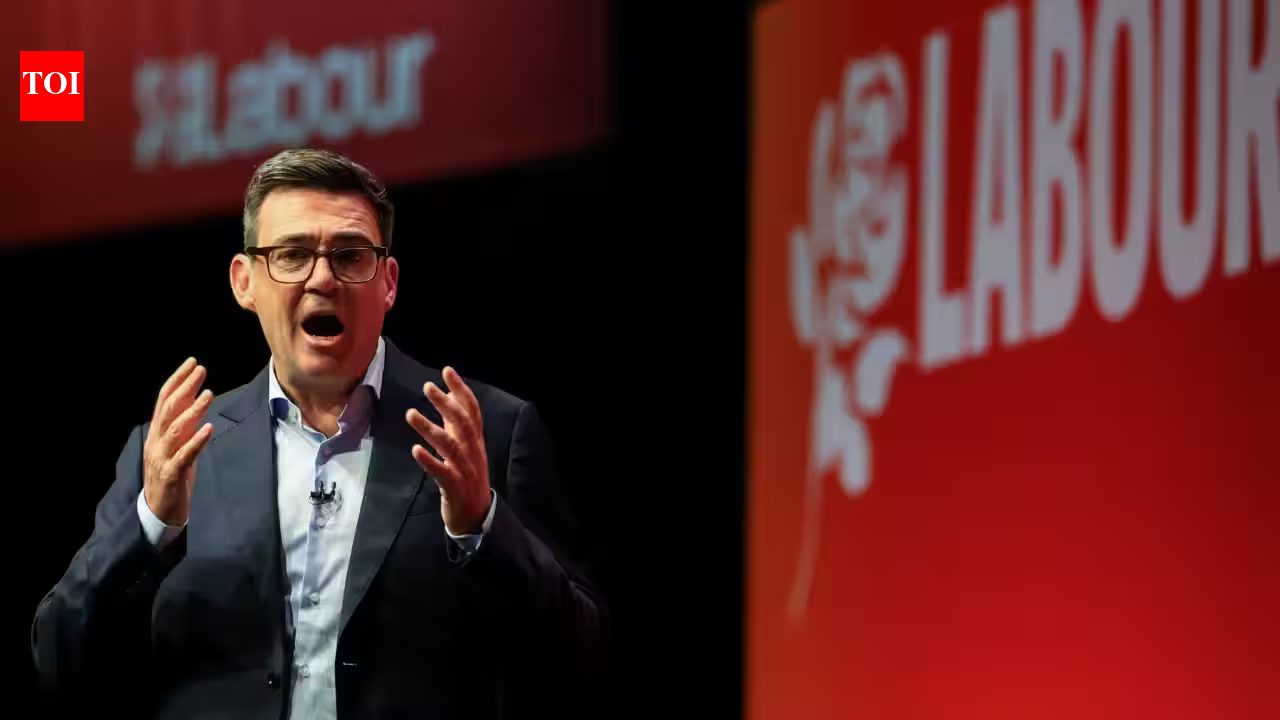
The single reporting chain behind the day’s coverage originated with AFP dispatches filed from Madrid and London on 30 September 2026, then relayed or lightly adapted under the mastheads of the five outlets examined. That chain supplied the core sequence: British Prime Minister Andy Burnham, who took office in July after Keir Starmer’s resignation, addressed the Labour Party conference in Liverpool on 29 September and told BBC Radio 4 the following day that rejoining the European Union remained one of several long-term options for Britain. He listed the status quo, a customs union, the single market, or full membership, saying any choice would depend on whether the benefits outweighed the costs and that public opinion would have to support a referendum before Labour could include such a pledge in its next manifesto, due no later than 2029. The same chain recorded a joint press conference in Madrid the same day at which French President Emmanuel Macron and Spanish Prime Minister Pedro Sanchez responded directly. Macron said in English “welcome back” and added that a British move in that direction would be “very good news both for his country and for Europeans,” while cautioning that Britain could not pick and choose EU freedoms while remaining outside. Sanchez called Brexit “a huge loss, both for the British population and for the whole European project” and said Spain would “applaud” rejoining and “open its arms again to a brotherly people.” An EU Commission spokesperson, Balazs Ujvari, stated that the United Kingdom remained “a close and valued partner” and that it was for the British government to set out how it wished to develop the relationship. The dispatch also noted domestic British criticism from Reform UK figures who called the remarks a betrayal, and it cited a Survation poll from June showing 55 percent of Britons would now vote to rejoin.
Each masthead placed this material on its international or politics pages and retained the essential sequence while adjusting emphasis through headline choice, opening paragraph, and added local detail. The Huffington Post UK headline led with the continental welcome, framing the piece as the story of France and Spain responding positively to a British proposal. Its opening paragraph foregrounded Macron and Sanchez’s remarks before turning to Burnham’s interview, and it inserted the detail that pro-Brexit groups had immediately accused Burnham of betrayal. El Mundo opened its account with Burnham’s option-setting and placed Macron’s “Welcome back” in the headline, then devoted a full paragraph to Sanchez’s assessment of Brexit as a loss and to the Spanish leader’s offer of open arms, situating the exchange inside Spain’s bilateral ties with Britain. RTL led its headline and first sentences with Macron’s personal endorsement, quoting his English phrase prominently and describing the Madrid setting as part of the French president’s schedule, while keeping the British domestic context shorter. Deutsche Welle compiled the same AFP material with Reuters and AP contributions, headlined the welcome from France and Spain, and inserted an explicit note that polls showed majority support for rejoining only until budget contributions or the euro were mentioned. The Times of India headline reproduced Burnham’s conditional phrasing almost verbatim and opened with the “pros outweigh cons” language, adding the observation that support in Britain often faded once concrete requirements such as EU budget payments entered the discussion.
These surface differences in headline and lead sentence reflect the editorial priorities each outlet brought to the identical wire text rather than any divergence in the underlying events. The French and Spanish outlets each foregrounded their own leader’s statement at the Madrid press conference, giving Sanchez or Macron the first or most prominent quote and supplying the local political setting. The British outlet paired the foreign welcome with immediate domestic pushback, keeping the focus on how the remarks landed inside the United Kingdom. The German and Indian accounts stayed closer to the wire’s neutral sequence, adding only the polling caveat already present in the dispatch or expanding slightly on the economic and political risks already noted. None of the five introduced new on-the-record statements from additional sources or altered the Commission spokesperson’s wording; the variations were confined to selection, ordering, and the addition of one or two sentences of context drawn from the same chain.
What to Watch
The pattern shows how a single factual spine travels through different national filters without changing its substance. The dispatch itself already contained both the conditional character of Burnham’s remarks and the unqualified warmth of the continental replies, so each masthead could choose which element to place first without contradicting the record. What changes across the versions is the implied reader: a French audience is invited to see Macron shaping a European response, a Spanish audience is shown Sanchez extending a bilateral hand, and a British audience is shown both the external welcome and the internal accusation of betrayal. The Indian and German versions, aimed at more distant readers, retain the full set of options and the polling qualification, underscoring that any actual move would still face significant hurdles inside Britain. The shared origin makes clear that these are not independent corroborations of new facts but different editorial presentations of the same set of statements delivered on 30 September. The next concrete step the dispatch itself points toward remains the bilateral summit now expected in November, where the British government is scheduled to set out the options Burnham described; nothing in the coverage indicates that any European capital has yet offered terms or altered its negotiating posture.
That’s how the world told the story.
Get tomorrow’s bulletin by email — one briefing, up to six stories.
Subscribe freeNo spam. One-click unsubscribe. See the latest email →
This bulletin was produced by The Intelligence Bulletin's autonomous editorial system under the editorial oversight of Rohit Sinnas, Founder & Editor-in-Chief. How it works →