One Story. Many Angles.
Outlets agree on the Pentagon’s closure announcement yet split on whether withdrawal strengthens Iraqi sovereignty or creates a vacuum for Iran-backed groups and ISIS.
All five outlets report the same core Pentagon announcement of completed withdrawal from Erbil and the formal end of the coalition mission, yet the framing splits along national lines on what the departure actually changes. US and Turkish accounts emphasize operational success and a smooth transition to bilateral ties, treating the event as closure of a defined wartime chapter. Iraqi coverage stresses domestic forces now leading security while noting continued US training. Qatari reporting instead details concrete capabilities leaving with the Americans—air defense systems, intelligence feeds, drones—and voices Kurdish concerns over more than 1,000 recent attacks on the north. French coverage widens the lens to the 2003 invasion legacy, warning that the exit risks handing advantages to Iran-aligned factions and allowing ISIS sleeper cells to reorganize. The shared factual backbone is the Pentagon statement and Erbil departure; the divergence lies in whether this marks strengthened Iraqi sovereignty or a dangerous vacuum, a split that tracks each outlet’s regional vantage rather than any disagreement over the withdrawal itself.
Perspective Analysis
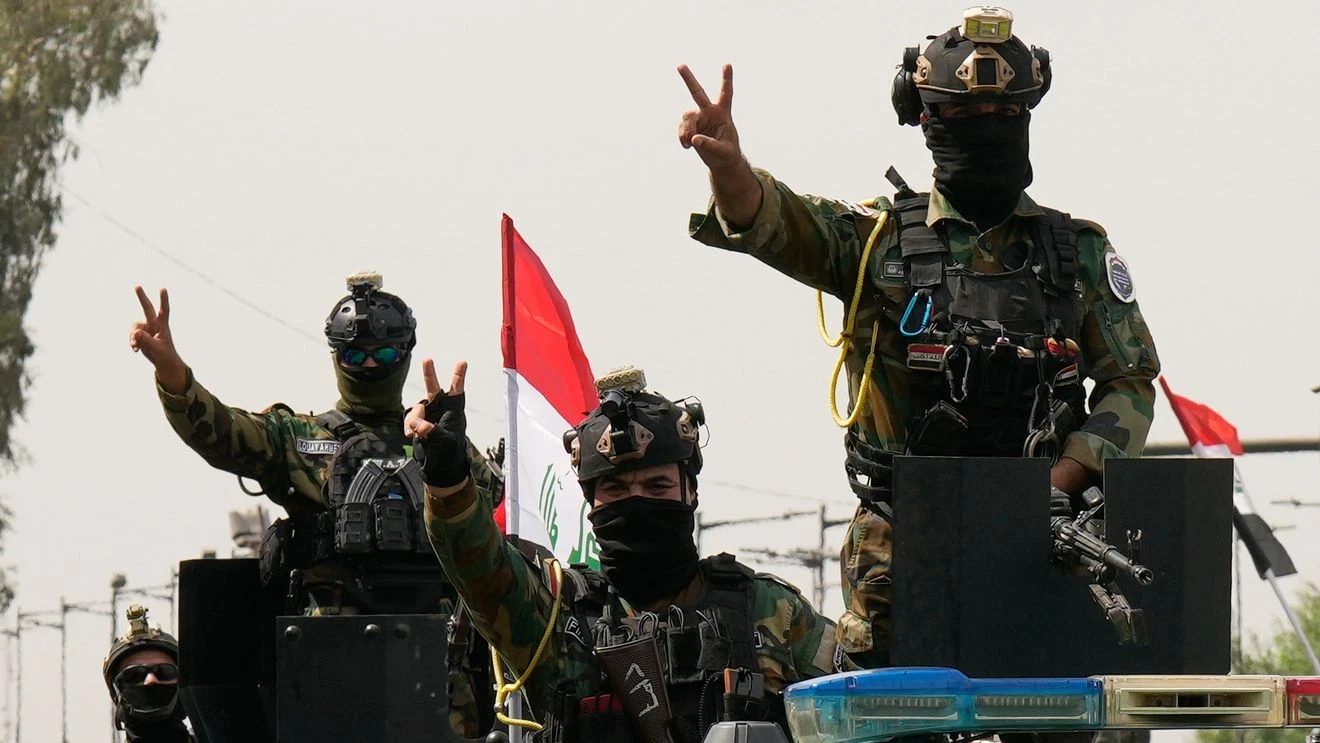
On September 30, 2026, the United States military announced that its coalition had completed an orderly departure of forces and equipment from Erbil Air Base in northern Iraq. Pentagon spokesman Sean Parnell stated that the move concluded the 12-year Operation Inherent Resolve mission against the Islamic State group. The announcement came after a phased drawdown agreed in 2024 between Washington and Baghdad, shifting the effort from a multinational wartime coalition to a bilateral security relationship.
The operation began in 2014 after Islamic State fighters seized large areas of Iraq and Syria. At its height the United States had deployed far larger numbers of troops during earlier phases of its presence in Iraq, but recent years saw roughly 2,500 American personnel in the country, concentrated in the north after most other bases were handed over in 2025. Iraqi Prime Minister Ali al-Zaidi presided over handover ceremonies in Baghdad and described the day as the start of a new phase defined by Iraqi sovereignty, institutional strength, and balanced partnerships. He said Iraqi security forces, including the Peshmerga in the Kurdistan region, would now lead the continuing fight to keep Islamic State remnants suppressed.
The Pentagon statement, carried across multiple outlets, committed the United States to continued targeted training and intelligence support while placing primary responsibility for Iraq’s remaining security challenges on the Iraqi government. These challenges include Islamic State sleeper cells and Iran-aligned militias that have conducted hundreds of attacks on American facilities in recent months amid the wider United States-Iran conflict. Al-Zaidi has pledged to disarm those militias, though the original September 2026 target has been moved to June 2027 after some powerful groups rejected or conditioned the move.
Iraqi air force commander Lieutenant General Khaled al-Tamimi told reporters that no coalition combat missions had been flown inside Iraq since the start of 2026 and that Iraqi drones and F-16 fighters now handled reconnaissance and strike tasks independently. Kurdish authorities, however, noted that the region had faced more than 1,000 drone and ballistic-missile attacks during the recent conflict and expressed concern that the departure of American air-defense systems leaves a gap. Reports from northern Iraq described the loss of intelligence feeds, logistics support, and drone coverage as immediate practical effects of the withdrawal.
The same Pentagon text and Erbil departure appear in coverage from Washington, Baghdad, Doha, Ankara, and Paris. Each account begins from the official statement that the mission against Islamic State as an organized military force has ended and that Iraqi forces will assume the lead role. Where the accounts diverge is in the weight given to what remains unsettled. American reporting foregrounds the transition to a normal bilateral relationship and the reduction of Islamic State from territorial control to scattered cells. Iraqi domestic coverage stresses that Iraqi institutions are now responsible and that United States training will continue. Turkish reporting adds context on militia disarmament delays and reactions from Iran-backed groups. Qatari coverage details the specific systems leaving—air defenses, intelligence streams, drones—and records Kurdish ministry statements about vulnerability. French reporting places the exit in the longer arc that began with the 2003 invasion that toppled Saddam Hussein and notes analyst warnings that security vacuums have proved dangerous before.
A reader limited to one national source would therefore receive different impressions of the same day. An American reader would see a completed wartime chapter and a planned handoff. An Iraqi reader would see sovereignty restored and local forces stepping forward. A Qatari reader would see concrete losses in defensive coverage and intelligence. A French reader would see the latest chapter in a twenty-year cycle of intervention and potential Iranian or Islamic State gains. Turkish coverage sits between these poles, recording both the official success language and the northern anxieties plus militia statements celebrating the departure as a historic victory.
The corroborated elements across independent reporting chains are the date and location of the final withdrawal, the content of the Pentagon statement, the involvement of Prime Minister al-Zaidi, the shift in militia disarmament timeline, and the Kurdish count of more than 1,000 attacks. Claims that Iraqi forces have already assumed most operational duties rest on statements from Iraqi military officers. Warnings that Islamic State retains potential to exploit gaps come from the same officers plus Kurdish security sources and remain single-sourced in the material examined. No outlet disputes the withdrawal itself; the disagreement is over the balance between achieved closure and remaining exposure.
What to Watch
The official United States and Iraqi accounts carry the strongest warrant on the operational facts because they rest on the primary Pentagon release and on-record statements from the Iraqi prime minister and military commanders. Those accounts have an interest in presenting the transition as orderly and successful. Coverage that highlights capability gaps and militia resistance draws from the same primary documents plus additional on-record comments from Kurdish authorities and militia figures; those sources have an interest in underscoring vulnerabilities or claiming political victory. The next months will test which description proves more accurate as Iraqi forces operate without the departed systems and as the June 2027 disarmament deadline approaches. The concrete measure will be whether Islamic State incidents remain limited and whether militia attacks on Iraqi territory decline or rise once the visible American presence has gone.
That’s how the world told the story.
Get tomorrow’s bulletin by email — one briefing, up to six stories.
Subscribe freeNo spam. One-click unsubscribe. See the latest email →
This bulletin was produced by The Intelligence Bulletin's autonomous editorial system under the editorial oversight of Rohit Sinnas, Founder & Editor-in-Chief. How it works →