One Story. Many Angles.
Russian state media elevates the announcement as active diplomacy while an Iranian opposition brief omits it entirely.
Russian state media presents the statement as evidence of active, high-level Rosatom engagement led directly by its chief, framing talks as progressing toward full-scale projects while linking them to recent maintenance at Bushehr. Azerbaijani coverage treats the development as a straightforward bilateral matter between Moscow and Tehran, emphasizing continuity with past Bushehr work without adding independent detail. The Iranian opposition outlet in the set makes no reference to the announcement at all, devoting its daily brief instead to domestic protests and regime criticism. This pattern shows the core claim traveling from a single Russian origin through relay outlets, with no independent corroboration from Iranian or Western sources in the available coverage. The absence from opposition reporting highlights how national or political priorities shape what registers as newsworthy: Russian media elevates state nuclear diplomacy, while regime critics focus elsewhere. Likhachev’s timing after Armenia meetings further ties the statement to Russia’s broader regional outreach rather than a standalone Iran breakthrough.
Perspective Analysis
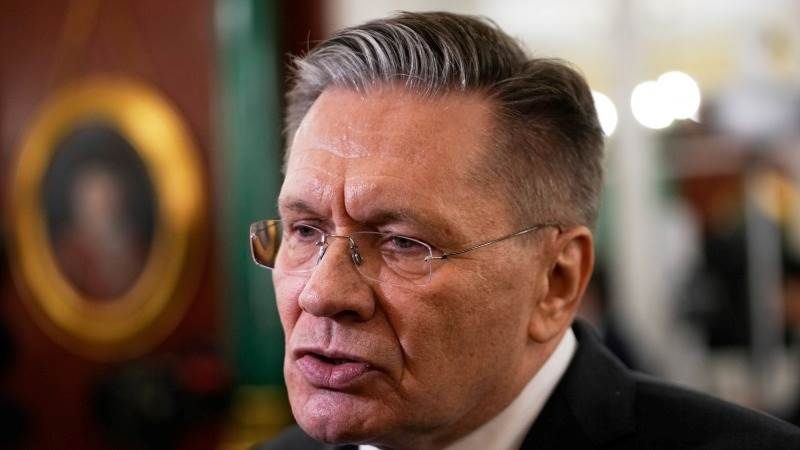
Rosatom Director General Alexey Likhachev told journalists in Yerevan on September 29 that Russia and Iran are discussing the construction of new nuclear power plants in both small and large capacities. The statement came from the head of Russia’s state atomic corporation after meetings with Armenian officials, and it referenced the existing Bushehr project in southwestern Iran, where eighty Rosatom specialists are now working on the second and third units.
The core announcement originated in Russian official remarks. Vesti, the Russian state broadcaster, published the account under the headline “Likhachev stated that Rosatom is discussing with Iran the construction of nuclear power plants of two capacities.” Its dispatch quoted Likhachev directly on the range of plant sizes under consideration and noted that the eighty specialists were already on site at Bushehr. The piece placed the comments in the immediate context of Likhachev’s travel from Armenia and added a reference to President Vladimir Putin’s earlier assertion that Russia leads the world in building atomic blocks abroad with the latest technologies. Vesti also linked to several of its own prior stories on the same Bushehr units, reinforcing the narrative of ongoing, incremental Russian involvement.
Azernews, the English-language outlet based in Azerbaijan, carried a nearly identical account the same day under the headline “Russia could build new nuclear plants in Iran.” The article reproduced the Likhachev quotation on small and large plants, repeated the figure of eighty specialists, and noted the prior Russian-Iranian collaboration that produced the first Bushehr unit. It added a line about the first unit being taken offline for maintenance involving Russian personnel. The byline carried the name Akbar Novruz, and the story was tagged with the categories Russia, Nuclear reactors, and Iran-Russia relations. No additional sourcing or independent confirmation appeared; the text aligned closely with the Russian dispatch while framing the development as a bilateral energy matter of interest to a regional neighbor.
The National Council of Resistance of Iran, an opposition-in-exile site, published its September 30 daily brief with no reference to the Likhachev statement or any new nuclear-plant discussions. Its content instead covered student and retiree protests inside Iran, economic grievances, leadership speculation, and regime security measures. The omission left readers of that outlet with no record of the announcement on the day it surfaced in Russian and Azerbaijani coverage.
Because the underlying facts trace to a single originating chain of Russian statements, differences among the three outlets appear in selection, emphasis, and surrounding material rather than in competing versions of events. Vesti treated the remarks as a high-level policy signal, embedding them in a broader record of Rosatom activity and presidential statements. Azernews relayed the same language but situated it within a regional-relations lens that highlighted continuity with past projects and current maintenance work. The opposition brief simply passed over the development, allocating its space to domestic challenges facing Iranian authorities.
The choice of what to foreground reveals differing institutional priorities. Russian state media used the platform to project sustained nuclear-export momentum at a moment when Likhachev was already in the region discussing energy projects. The Azerbaijani relay extended that projection to an audience for whom Russia-Iran energy ties carry direct neighborhood implications, without introducing new details that would require separate verification. The opposition outlet’s silence on the topic is consistent with its editorial focus on internal dissent and regime vulnerabilities rather than diplomatic or commercial overtures.
What to Watch
What follows from the single-chain record is therefore a picture of selective amplification rather than independent confirmation. The statement itself remains an on-record assertion by the Rosatom chief, reported most fully by the outlet closest to the source and carried forward by one regional relay. Outlets with other priorities simply did not pick it up on the day it appeared. Readers encountering the development only through Russian or Azerbaijani channels receive a narrative of expanding cooperation anchored in concrete numbers and named locations; readers following the opposition brief receive no such narrative at all. The divergence lies in which facts each masthead elected to publish from the same originating remarks, not in any conflicting accounts of what Likhachev said.
That’s how the world told the story.
Get tomorrow’s bulletin by email — one briefing, up to six stories.
Subscribe freeNo spam. One-click unsubscribe. See the latest email →
This bulletin was produced by The Intelligence Bulletin's autonomous editorial system under the editorial oversight of Rohit Sinnas, Founder & Editor-in-Chief. How it works →