One Story. Many Angles.
Major-power outlets stress procedural criteria while Caribbean reporting treats the race as a direct regional stake.
The reporting reveals that Security Council veto politics and straw-poll arithmetic shape the outcome far more than the visible gender-equality campaign. AP coverage from the Fort Morgan Times records four women among seven candidates and notes that even the top two women each drew at least five discourage votes from the fifteen-member council. Belize’s explicit endorsement of Guyana’s Caroline Rodrigues-Birkett, reported by Love FM, illustrates how Caribbean states treat the contest as a regional stake rather than a symbolic milestone. The Express Tribune’s relay of China’s demand for a “competent, impartial and upright” candidate who upholds the Charter shows Beijing framing the choice in procedural terms that sidestep both gender and specific names. Costa Rican coverage, though blocked here, centers the immediate council vote and US-China tensions, confirming that procedural deadlock receives more attention than representation arguments. Across the set, only the AP piece foregrounds UN Women officials and presidential speeches on gender parity; the rest treat the milestone as background to council mechanics and national backing. This pattern indicates that the gender push registers publicly but does not override the five permanent members’ private calculations or regional rotation norms.
Perspective Analysis
The selection of the next United Nations secretary-general is moving through its decisive phase in the Security Council. Seven candidates remain in contention to replace Antonio Guterres when his second term ends on December 31. The slate includes four women and three men. Former Chilean president Michele Bachelet has already withdrawn. The most recent anonymous straw poll showed Costa Rica’s Rebeca Grynspan, who heads the UN trade and development body, and Guyana’s permanent representative Caroline Rodrigues-Birkett at the top of the list. Each nevertheless drew at least five discourage votes from the fifteen-member council.
The council’s five permanent members hold the effective power to block any recommendation before it reaches the General Assembly for formal approval. Regional rotation conventions point to a Latin American successor this time, though two African contenders also appear on the slate. Russian Foreign Minister Sergey Lavrov stated on the margins of the General Assembly that Grynspan and Rodrigues-Birkett meet the necessary criteria. Chinese Foreign Ministry spokesman Guo Jiakun told reporters in Beijing that the next secretary-general must be competent, impartial and upright, must observe the UN Charter, and must fulfill responsibilities with dedication. Beijing said it would participate in the process responsibly but offered no names.
Caribbean governments have treated the contest as a direct regional opportunity. Belize Prime Minister John Briceño used his General Assembly address to announce his country’s support for Rodrigues-Birkett. He described her as a distinguished daughter of the Caribbean whose record, rather than symbolism alone, qualified her for the post. A Caribbean woman at the helm would be historic, he said, yet small and vulnerable states must sit at the center of the organization’s work rather than at the margins of decisions that determine their survival. Guyana had formally nominated her earlier in the year.
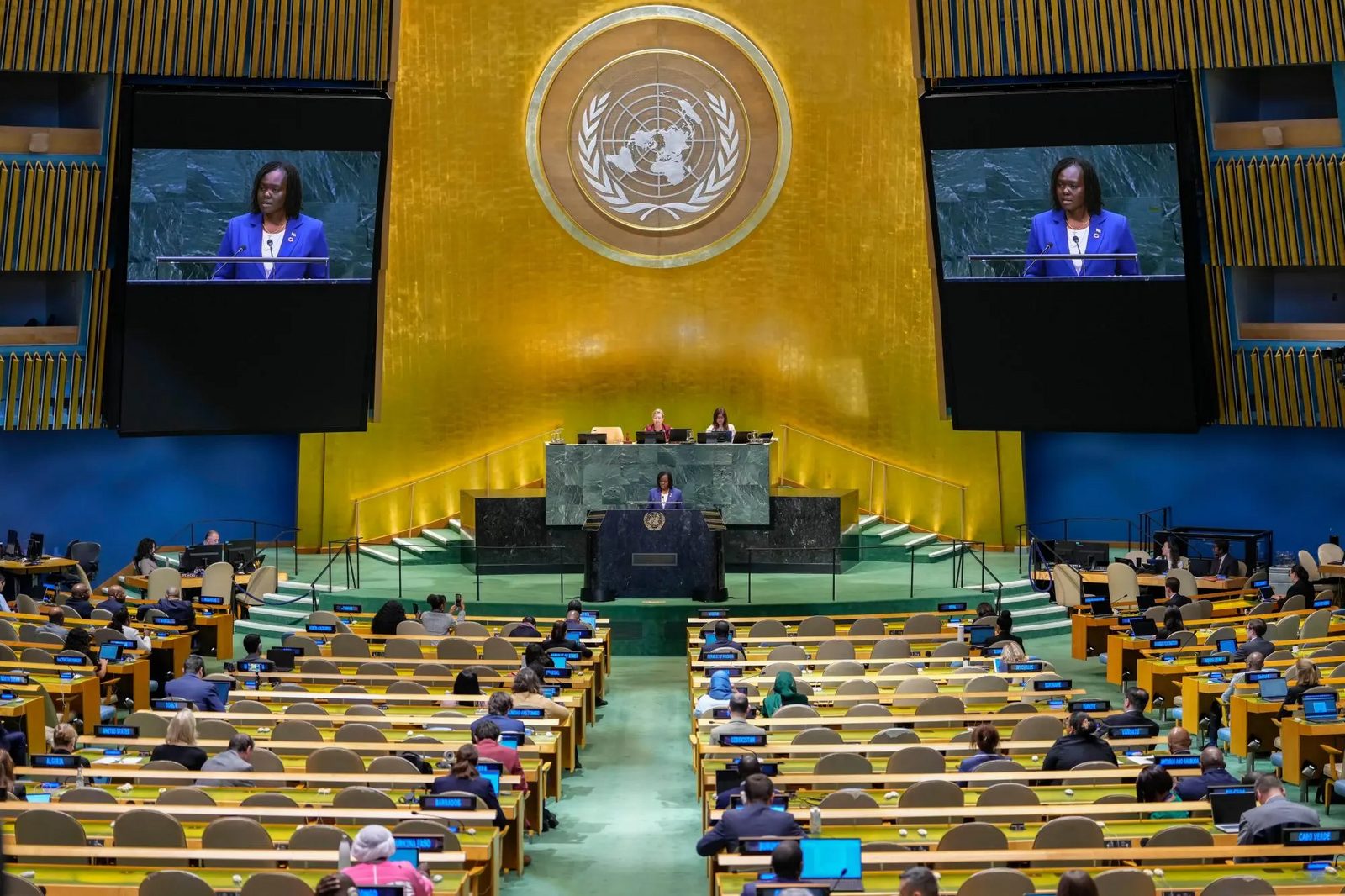
Public attention has also fastened on the absence of a woman in the post across more than eighty years. During the high-level week at headquarters, several heads of state and government remarked on the pattern. East Timor’s President José Ramos-Horta called for a woman of unquestionable integrity. Botswana’s president Duma Boko described the lack of female leadership as an unfinished chapter. Liberian President Joseph Boakai linked gender equality to more durable peace agreements, faster economic growth and greater government accountability. UN Women director Sarah Hendriks told the Associated Press that the week’s speeches reflected a male-dominated world in both representation and content, yet also showed a disproportionate reinforcement of the case for a woman secretary-general that cut across regions and political lines. She argued that the organization cannot credibly ask governments and companies to dismantle barriers while leaving its own ceilings intact.
The process itself remains opaque. A third straw poll was scheduled for the day after the latest results circulated. Diplomats noted that the numbers could still shift and that additional candidates might emerge. The five permanent members have remained publicly silent on their preferences. US and Chinese positions, in particular, have shown no visible convergence on either specific names or on whether gender balance should factor into the choice.
Coverage of these developments diverges sharply by outlet. The single extended account that foregrounds the gender-equality dimension draws on speeches delivered during the General Assembly week and on direct comments from UN Women officials. It records the grim pace of global progress—171 years at current rates to reach parity—and places the secretary-general contest inside that larger pattern. Other reporting treats the same contest primarily as an exercise in council arithmetic and national positioning. Belize’s announcement appears as a straightforward diplomatic statement tied to the prime minister’s address. China’s criteria are presented without reference to any candidate or to representation questions. Costa Rican coverage, where accessible through headlines, centers the immediate council vote and the absence of agreement between Washington and Beijing. An opinion piece published in Ghana frames the question around what the eventual winner should deliver for African states on development, climate and security.
These differences are not contradictions of fact but of emphasis. The same straw-poll numbers and the same list of permanent-member prerogatives appear across the material, yet only one account treats the push for a woman leader as the central frame. The others locate the story inside established diplomatic routines: regional endorsement, great-power statements of principle, and the mechanical requirement that any candidate secure nine votes without a veto. No outlet claims to have inside knowledge of how the five permanent members will ultimately cast their ballots.
The pattern that emerges from reading the accounts together is that the visible gender campaign registers in public forums but does not appear to alter the private calculations that will decide the outcome. The Security Council’s straw-poll results already show that even the leading women candidates face organized resistance inside the body that holds the real power. Regional rotation and the need for a candidate acceptable to all five permanent members remain the operative constraints. Belize’s explicit backing of a Caribbean nominee illustrates how smaller states are using the moment to advance concrete interests rather than abstract milestones. China’s insistence on competence, impartiality and fidelity to the Charter supplies a standard that any finalist must meet regardless of gender or nationality.
What to Watch
The next steps will clarify whether those constraints can accommodate the representation argument or whether the five permanent members will settle on a candidate who satisfies their individual veto thresholds first. The General Assembly’s formal vote, once the council makes its recommendation, will be largely ceremonial. What the reporting shows is that the decisive negotiations are occurring out of public view, conducted by actors whose stated positions leave ample room for either outcome.
That’s how the world told the story.
Get tomorrow’s bulletin by email — one briefing, up to six stories.
Subscribe freeNo spam. One-click unsubscribe. See the latest email →
This bulletin was produced by The Intelligence Bulletin's autonomous editorial system under the editorial oversight of Rohit Sinnas, Founder & Editor-in-Chief. How it works →