One Story. Many Angles.
Chinese outlets stress protocol and warmth while others highlight tensions and domestic pushback.
The reporting converges on the ceremonial details of the tarmac greeting but diverges sharply on what the event signals about the relationship. Chinese state media presents the arrival as a protocol-rich affirmation of stable ties between equals. US and Australian accounts, drawing from the same wire copy, note the unusual personal effort by Trump while flagging domestic criticism over issues like Iran and Taiwan. German coverage situates the pomp within European worries about trade rules and technology controls. Al Jazeera steps outside the bilateral frame to examine trade data, showing China’s global surplus growing even as bilateral flows shrink. The common thread is low expectations for breakthroughs; the real distinction lies in which audience each outlet addresses and which tensions it chooses to foreground or downplay.
Perspective Analysis
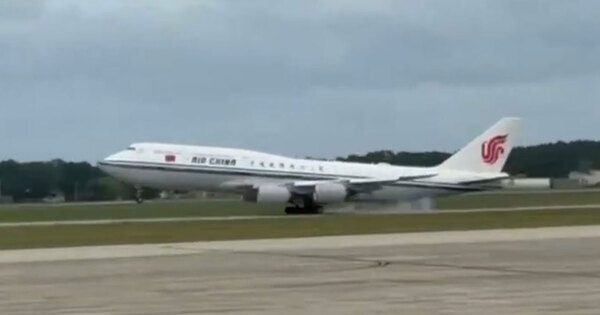
Chinese President Xi Jinping stepped off his plane at Joint Base Andrews on the afternoon of September 23, 2026, and was met on the tarmac by President Donald Trump and First Lady Melania Trump. Xi’s wife, Peng Liyuan, accompanied him. A red carpet stretched from the aircraft stairs. An honor guard stood ready. National anthems played and a gun salute was planned. The ceremony marked the start of a three-day state visit, the first by a Chinese leader to Washington in more than a decade.
The greeting was unusual. Trump had traveled to the base rather than waiting at the White House. Chinese state media described the scene as a warm reception that underscored stable ties. US reporting noted the personal effort and placed it against a backdrop of friction. The same wire account, carried by outlets in the United States and Australia, recorded that Trump had praised Xi as a great leader and friend while extending the invitation after his own May visit to Beijing, where Vice President Han Zheng had greeted him instead.
The schedule ahead included a formal arrival ceremony at the White House on Thursday, a review of troops, and a black-tie state dinner. Tech executives such as Nvidia’s Jensen Huang and Elon Musk were expected among the guests. On Friday the two leaders and their wives planned a private tea followed by a tour of the National Archives to view documents on the bilateral relationship. Expectations for concrete agreements remained low.
Trade and technology loomed over the talks. One account supplied concrete numbers on the economic relationship. US-China bilateral trade had dropped nearly 30 percent in 2025 compared with the year before. China’s global goods trade surplus reached about $1.2 trillion that year. Tariffs on Chinese goods entering the United States averaged 36.5 percent as of July 2026, while Chinese tariffs on US goods averaged 31 percent, with some products facing much higher rates. China had redirected exports toward ASEAN and European markets, where its shipments continued to grow.
Domestic voices in the United States registered unease with the scale of the welcome. Senator Roger Wicker, chairman of the Senate Armed Services Committee, called the reception lavish and argued that Trump should not have extended the invitation given China’s military buildup and support for Iran. Secretary of State Marco Rubio countered that the two largest economies and most powerful militaries had no choice but to engage at the highest level.
German reporting placed the same events inside a wider European frame. The visit would touch on tariffs, artificial intelligence safety, the war in Iran, and Russia’s conflict with Ukraine. A state banquet guest list that included multiple US technology chiefs signaled the commercial stakes for European firms competing in the same sectors.
Australian coverage emphasized the personal optics of the tarmac meeting and its signal to Indo-Pacific partners. The decision to greet Xi at the base rather than at the White House was presented as an effort to match the pageantry Xi had arranged for Trump in May, when hundreds of Chinese youths had lined the route chanting welcomes.
Chinese state media stayed with the ceremonial record: the red carpet, the anthems, the presence of both first ladies. It did not mention congressional criticism or tariff figures.
A reader who saw only the Chinese account would leave with the impression of a relationship returning to protocol and mutual respect. A reader limited to the shared US-Australian wire copy would absorb both the spectacle and the domestic pushback, plus the list of unresolved disputes over Taiwan and Iran. A reader of the German piece would add the European interest in technology rules and supply-chain security. The Al Jazeera explainer would supply the only quantitative picture of trade flows and surpluses.
The accounts converge on the basic sequence of events and on the absence of expected breakthroughs. They diverge on the weight given to ceremony versus friction. The trade data appear in only one source and therefore stand alone. The criticism from Senator Wicker appears in two independent outlets that both drew from the same agency dispatch, giving it corroboration within that reporting chain.
The data on trade volumes and tariff rates provide the clearest external check on claims of stability. Those figures show bilateral commerce shrinking while China’s overall surplus expands, a pattern consistent with redirection rather than resolution. The corroborated detail of congressional criticism shows that even the host government’s own legislators do not treat the visit as an uncomplicated reset. The German and Australian angles add the interests of third parties that will feel the effects of any US-China bargain on technology or security.
The account that most closely matches the full record is the one that pairs the documented ceremony with the documented economic numbers and the documented domestic dissent. That combination appears across the wire-based US and Australian pieces together with the Al Jazeera data. Chinese state media correctly records the official choreography but omits the measurable economic divergence and the internal US resistance. European reporting correctly flags the technology and trade stakes that affect its own economies but lacks the primary trade statistics.
What to Watch
The next test will come on Thursday when the leaders meet behind closed doors and again at the state dinner. Any joint statement will be measured against the tariff and surplus numbers already published. If those numbers remain unchanged after the visit, the gap between ceremonial language and economic reality will have widened rather than narrowed.
That’s how the world told the story.
Get tomorrow’s bulletin by email — one briefing, up to six stories.
Subscribe freeNo spam. One-click unsubscribe. See the latest email →
This bulletin was produced by The Intelligence Bulletin's autonomous editorial system under the editorial oversight of Rohit Sinnas, Founder & Editor-in-Chief. How it works →