One Story. Many Angles.
Venezuelan and some Latin American outlets treat the encounter as a historic diplomatic thaw while US coverage presents it as routine scheduling.
All five outlets report the same core facts from the White House announcement: the meeting will occur Tuesday during UNGA week as a casual pull-aside, alongside Trump’s sessions with the UK and Japanese prime ministers. Venezuelan coverage from ACN frames Rodríguez as the driving Venezuelan actor advancing bilateral energy deals and ending isolation, while noting her upcoming General Assembly speech as the first by a Venezuelan head of state since 2018. US reporting via NBC New York presents the encounter as one item on a packed diplomatic schedule without special emphasis on Venezuela. Chilean outlet La Tercera and Peruvian RPP embed the event in a decade-long diplomatic freeze ending with the post-Maduro shift, citing the 2015 Obama-Maduro precedent. The Times of India alone foregrounds the post-regime-change context and the oil-reserves deal as the explicit driver of renewed engagement. No outlet contradicts the timing or basic description; the divergence lies in whether the meeting is portrayed as historic reset, standard diplomacy, or energy-focused follow-up. The convergence on the White House briefing as the single originating source explains why factual details align while interpretive weight varies by national lens.
Perspective Analysis
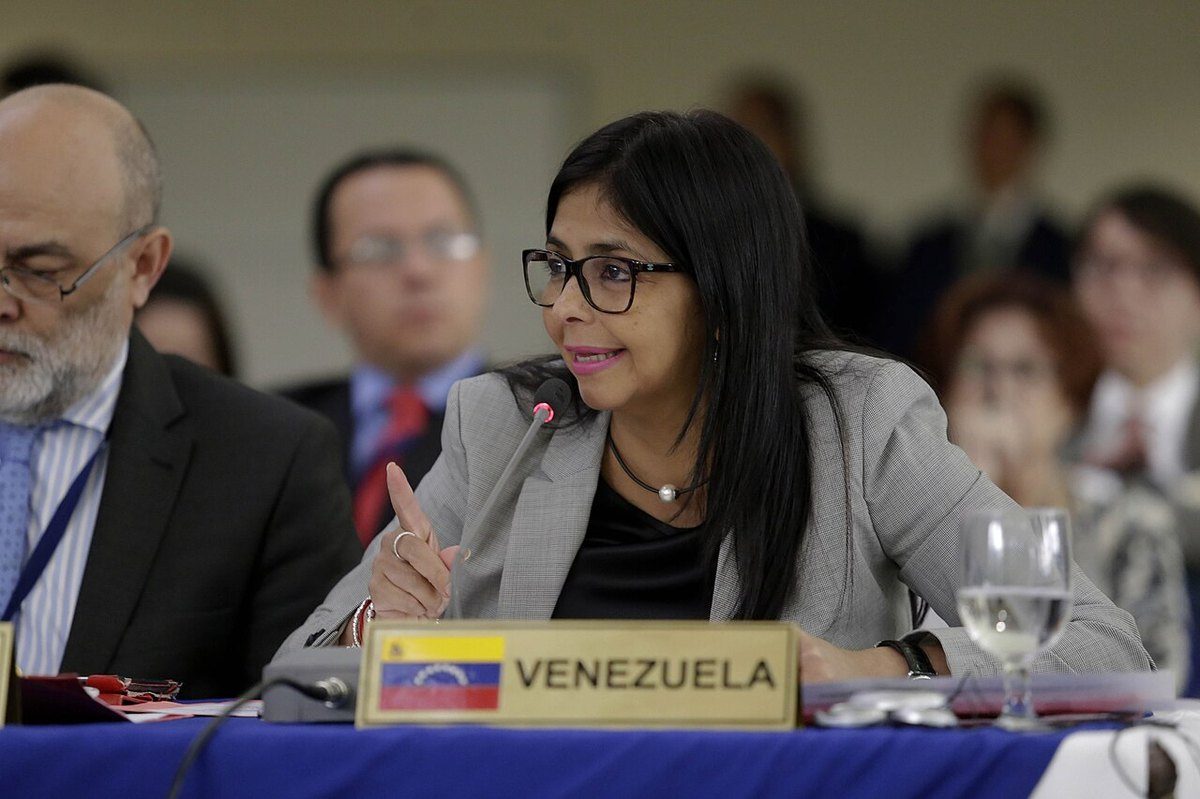
US President Donald Trump will meet Venezuela’s acting president, Delcy Rodríguez, next Tuesday in New York during the annual UN General Assembly session. The encounter will be a brief pull-aside rather than a formal bilateral sit-down, according to US ambassador to the United Nations Mike Waltz, who confirmed the plan on a Friday briefing call. Trump’s schedule that day already includes meetings with UK Prime Minister Andy Burnham and Japanese Prime Minister Sanae Takaichi, plus a session with leaders of the Gulf Cooperation Council. Rodríguez will address the General Assembly herself later in the week, her first such speech as acting president.
The meeting marks the first direct contact at this level between a US president and a Venezuelan leader since a short conversation between Barack Obama and Nicolás Maduro at the 2015 Summit of the Americas in Panama. Rodríguez rose to the acting presidency after a US military operation in January captured Maduro and brought him to the United States on drug-trafficking charges. She had previously served as Maduro’s vice president. In the months since the change, the two governments have restored diplomatic ties that were severed in 2019 and reached an energy agreement last month that gives the United States preferential access to a portion of Venezuela’s oil reserves. Trump announced the pact on August 28 and defended it as strengthening US strategic reserves. The State Department also removed Venezuela from a list of countries failing to meet counternarcotics commitments, citing improved cooperation.
Venezuelan state-linked coverage presents the encounter as the product of Caracas’s own diplomatic steps. ACN reported that Rodríguez will travel to New York for the assembly and that the Trump meeting was confirmed by the US ambassador after earlier reporting in Bloomberg and Axios. The outlet noted Rodríguez’s prior appearances at the forum as chancellor in 2016 and vice president in 2019, both marked by criticism of US sanctions, and described the upcoming address as her first as head of state. It tied the meeting to the oil agreement and the counternarcotics delisting, framing both as evidence of bilateral progress under her leadership.
US reporting treats the same facts as one entry on a crowded diplomatic calendar. NBC New York relayed the White House announcement through Associated Press copy, describing the pull-aside as routine and listing it alongside the UK, Japan, and Gulf sessions. The piece mentioned the January operation that installed Rodríguez and the recent oil-reserves deal but placed no special emphasis on the Venezuela encounter beyond its place in the week’s schedule.
Regional outlets in Chile and Peru placed the event inside a longer diplomatic timeline. La Tercera, citing Europa Press, called it the first face-to-face meeting between the two countries’ leaders in more than a decade and noted that it closes Trump’s official UNGA agenda. RPP, drawing on EFE, stressed the Tuesday timing and the White House attribution while recording the 11-year gap since the 2015 Obama-Maduro exchange and the oil agreement as background. Both pieces described the post-capture period as one of restored relations without adding domestic Venezuelan detail.
Indian coverage linked the meeting directly to the energy agreement and the post-Maduro political shift. The Times of India reported that the pull-aside would occur at a reception Trump is hosting for UNGA leaders and connected the talks to efforts to revive Venezuela’s oil industry through US company involvement. It also noted that opposition figure María Corina Machado had sought an earlier alliance with Trump before Maduro’s removal, while the current administration has focused on Rodríguez.
The five accounts converge on every verifiable detail that originates in the White House briefing: the date, the format as a pull-aside, the other leaders on Trump’s calendar, and the decade-long gap since the last presidential contact. They also agree that the energy agreement and the January change of government form the immediate backdrop. No outlet supplies an alternative timeline or disputes the sequence of events. The single originating source for these facts is the Friday White House call, which explains the uniformity.
Where the accounts diverge is in the weight they assign. ACN foregrounds Rodríguez’s agency and the concrete steps taken under her government, including the oil pact and the counternarcotics delisting. NBC New York lists the meeting without elevating its symbolic status. La Tercera and RPP emphasize the restoration of contact after years of rupture. The Times of India alone names the oil-reserves stake as the explicit driver and situates the encounter inside a post-regime-change frame. These differences track the outlets’ locations: the Venezuelan piece stresses national leadership, the US piece follows official scheduling language, the Latin American pieces measure distance from the prior freeze, and the Indian piece highlights the commercial dimension visible from outside the region.
The energy agreement and the January operation appear in four of the five pieces, giving those elements the strongest cross-chain support. The decade-long gap is recorded in every account and anchored to the documented 2015 meeting. The pull-aside characterization comes uniformly from the Waltz briefing. No independent reporting chain contradicts any of these points.
What to Watch
The reporting therefore shows a narrow but consistent set of facts about a single scheduled encounter, with interpretive framing that reflects each outlet’s vantage. The Venezuelan account correctly records domestic protocol and recent bilateral steps. The US account accurately reflects the scale of the White House schedule. The regional and Indian pieces correctly note the historical interval and the commercial stakes that preceded the meeting. A reader limited to any one of these would miss the others’ emphasis but would not encounter conflicting claims about what is scheduled to occur.
That’s how the world told the story.
Get tomorrow’s bulletin by email — one briefing, up to six stories.
Subscribe freeNo spam. One-click unsubscribe. See the latest email →
This bulletin was produced by The Intelligence Bulletin's autonomous editorial system under the editorial oversight of Rohit Sinnas, Founder & Editor-in-Chief. How it works →