 AI-generated analysis published under the editorial responsibility of Rohit Sinnas. How it works →
Press quoted
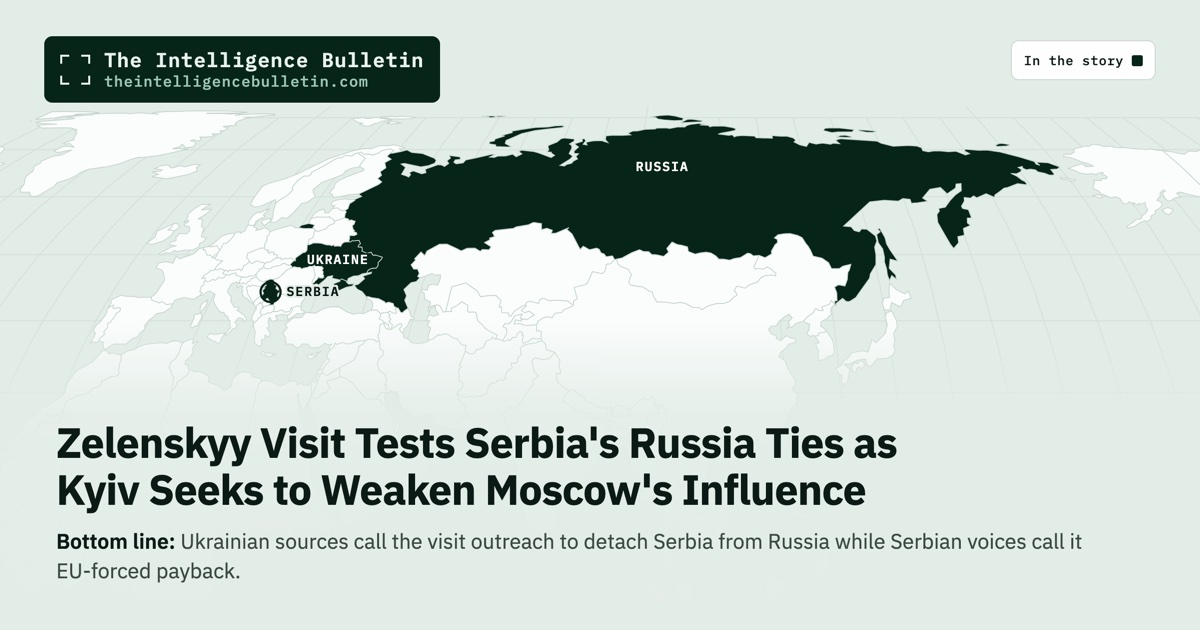
Ukrainian sources call the visit outreach to detach Serbia from Russia while Serbian voices call it EU-forced payback.
The reporting converges on the basic facts of the planned visit from a single Ukrainian official speaking to AFP, yet splits sharply on motive. Ukrainian sources present the trip as deliberate outreach to detach Serbia from Moscow. Russian coverage, quoting Serbian politician Aleksandar Vulin, frames it instead as Brussels-imposed revenge for Serbia’s refusal to sign a joint anti-Russian declaration at the July Ukraine-Southeast Europe summit. Serbian statements stress that Belgrade will not join any anti-Russian coalition, impose sanctions, or supply arms to Ukraine. Turkish and British outlets highlight Serbia’s long-standing energy and diplomatic links with Russia and President Vucic’s personal balancing act between Brussels and Moscow. Slovak reporting adds that Serbia has provided Ukraine roughly 60 million euros in non-military humanitarian aid while rejecting munitions deliveries and refusing to sign the July declaration. Across the set the visit is treated as symbolic rather than substantive, with no outlet claiming concrete new agreements will emerge. The consistent reliance on the same unnamed Ukrainian source and Vulin’s rebuttal leaves the underlying Serbian government position on the trip itself unstated in the published record.
Full analysis
Ukraine’s President Volodymyr Zelenskyy is scheduled to arrive in Belgrade on August 8 for his first visit to Serbia since Russia’s full-scale invasion of Ukraine began in 2022. A senior Ukrainian official told Agence France-Presse that the trip carries a clear political purpose: to draw Serbia away from its traditional alignment with Moscow. The same official described the visit as a symbolic strike against Russian interests, noting that Serbia has long stood as one of Moscow’s closest partners in Europe.
Serbia has not joined European Union sanctions against Russia and continues to rely on Russian energy supplies. It has also hosted Russian President Vladimir Putin during the war and maintains active diplomatic and trade channels with Moscow. At the same time, Serbia voted at the United Nations in favor of resolutions supporting Ukraine’s territorial integrity and has provided roughly 60 million euros in non-military humanitarian and technical assistance to Ukraine since the invasion. Serbian President Aleksandar Vucic met Zelenskyy in Kyiv on July 15 during the Ukraine-Southeast Europe summit but declined to sign the final declaration that called for increased military support to Ukraine and greater pressure on Russia.
The announcement of the August 8 visit reached multiple outlets through the same channel: the unnamed Ukrainian official speaking to AFP. Reports in the Kyiv Post, Daily Sabah, International Business Times and Aktuality all carried that account in the hours after it surfaced. The Ukrainian source framed the trip as an active step by Kyiv to shift Serbia’s posture. Serbian politician Aleksandar Vulin, a former deputy prime minister and founder of the Movement of Socialists party, offered a sharply different reading in remarks given directly to RIA Novosti. Vulin stated that the visit does not reflect the wishes of Serbian citizens or the Serbian leadership. Instead, he said, it stems from European Union pressure and amounts to revenge for Serbia’s refusal to endorse the anti-Russian declaration at the July summit. Vulin added that Serbia would use the meeting to restate its refusal to impose sanctions on Russia, to avoid joining any anti-Russian coalition, and to reject any supply of ammunition that could reach Ukrainian forces.
No Serbian government statement on the visit itself appears in the published record beyond Vucic’s earlier confirmation that he will host Zelenskyy. Vulin’s comments stand as the most detailed Serbian-sourced rebuttal available. Turkish coverage in Daily Sabah foregrounded Serbia’s refusal to sanction Russia and its energy dependence on Moscow, placing the visit against that established pattern of ties. British reporting in the International Business Times examined Vucic’s record of personal meetings with both Putin and Zelenskyy, noting that he skipped the May 2026 Victory Day parade in Moscow after attending the previous year and that earlier Russian accusations of Serbian arms reaching Ukraine had been denied by Belgrade. Slovak reporting in Aktuality added the 60-million-euro aid figure and noted Serbia’s continued EU candidacy alongside its rejection of munitions deliveries.
The accounts diverge most clearly on motive. The Ukrainian official presents the trip as Kyiv-initiated outreach aimed at reducing Russian leverage in the Balkans. Vulin presents it as externally compelled and unwelcome in Serbia. Both claims rest on single named sources rather than multiple independent chains. The Ukrainian statement appears in four of the five articles examined. Vulin’s statement appears only in the Russian outlet. Serbian government positions on sanctions, arms exports and coalition membership are stated repeatedly across the set and align with Vulin’s remarks, even though Vulin himself is not currently a serving official.
A reader limited to Ukrainian reporting would see the visit as a calculated diplomatic move by Kyiv with a realistic chance of shifting Serbian policy. A reader limited to Russian reporting would see the same visit as evidence that external actors are attempting to override Serbian preferences. Neither picture captures the full record: the visit date and location are corroborated across independent outlets, the Ukrainian intent is attributed solely to one official, and the Serbian counter-claim is attributed solely to Vulin. The underlying position of Vucic’s government on whether the trip advances or complicates Serbia’s existing balance between Brussels and Moscow remains unstated in the material published so far.
What to Watch
The corroborated fact of the August 8 visit itself rests on the widest reporting base. The Ukrainian official’s description of its purpose is the narrower claim, and Vulin’s description of its origins is narrower still. Serbia’s established pattern of refusing sanctions while delivering limited non-lethal support to Ukraine is the element repeated most consistently across the outlets. That pattern suggests the visit is more likely to produce renewed statements of existing positions than any immediate change in Serbian policy.
That’s how the world told the story.
Get our daily open-source intelligence on world events in your inbox — one email a day, up to six stories.
Subscribe freeNo spam. One-click unsubscribe. See the latest email →