One Story. Many Angles.
US outlets credit Trump’s leverage while Turkish and Pakistani reports credit mediators and oil relief.
US conservative coverage presents the pause as Trump’s calculated show of strength to force a better deal, while wire-fed reports from Turkey and Pakistan stress third-party mediators and the immediate economic payoff from lower oil prices. Israeli outlets limit themselves to a single Waltz quote on diplomacy space, revealing little appetite for Iranian talks. The Iran-labeled site is actually an Indian aggregator reprinting Axios details on Omani envoys and Israeli surprise, underscoring how thin genuine national voices remain on this story. Across the set the same Axios and Waltz facts dominate, showing the pause itself is undisputed even as outlets differ on whether it signals American leverage or fragile multilateral breathing room.
Perspective Analysis
The pause in US strikes on Iran after 13 consecutive nights has produced one clear point of agreement across reporting: both sides have stopped shooting for now, Iran has suspended attacks on shipping through the Strait of Hormuz, and oil prices have dropped in response. What divides the accounts is whether this halt represents American leverage secured by force or a narrow opening created and sustained by third-party mediators whose formula remains untested. The difference matters because the next days will show whether the pause hardens into a return to talks on Trump’s terms or collapses back into strikes once the immediate economic relief fades.
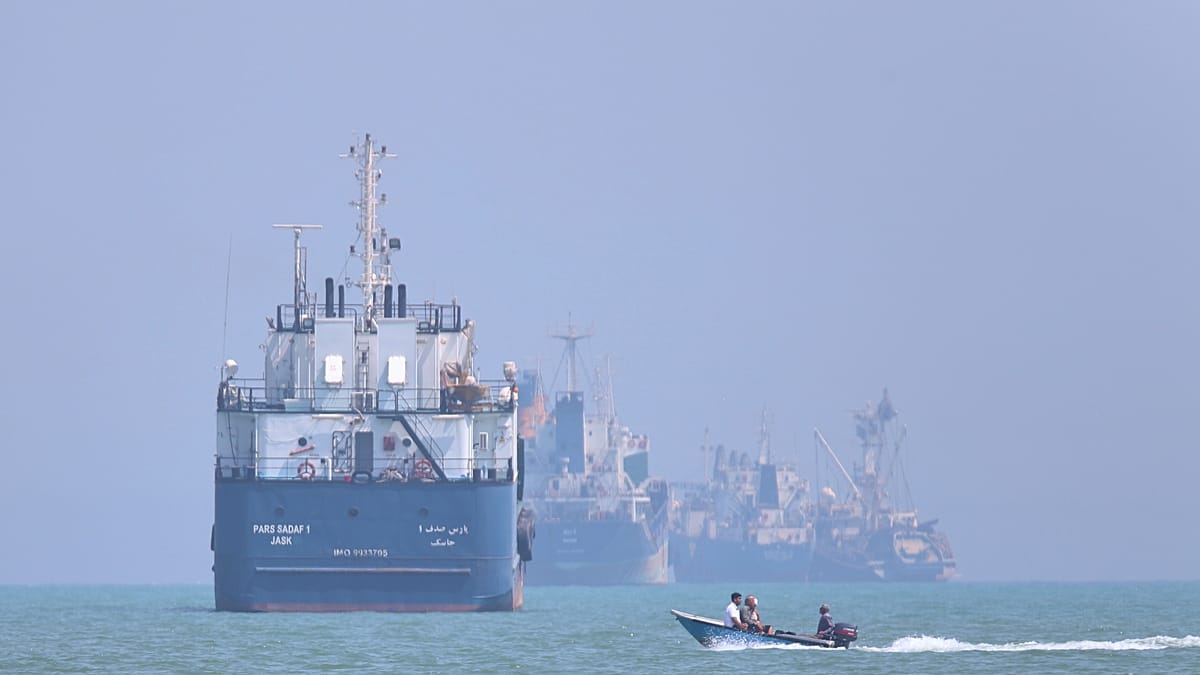
Trump directed the military to withhold new strikes on Friday despite receiving the usual daily plan, according to multiple accounts that trace the decision to an Omani delegation arriving in Tehran earlier that day. Iran responded by confirming it would halt operations against ships for as long as the American pause held. US Ambassador to the United Nations Mike Waltz described the move on Fox News as giving diplomacy “some space” and “a little bit of room.” Regional sources added that Pakistan and Qatar had already circulated a joint de-escalation proposal urging both sides to return to their pre-July 9 positions as the first step toward resuming stalled negotiations.
The economic signal arrived quickly. Brent crude fell more than 7 percent at one point, briefly dropping below $90 a barrel, while West Texas Intermediate declined around 4 percent to $85.45. Shipping concerns eased in the Gulf even as fighting continued elsewhere, including Houthi claims of downing a Saudi drone and renewed Saudi-led strikes in Yemen. The lull also set the stage for Israeli Prime Minister Benjamin Netanyahu’s scheduled White House meeting with Trump on July 28, where Iran’s nuclear program is expected to dominate the agenda.
Accounts differ sharply on what the pause actually demonstrates about US intentions. One line of reporting presents the halt as deliberate proof of resolve that positions Trump to extract a stronger deal if talks resume, with the president himself quoted saying the United States remains “locked and loaded” while preferring to “make a deal.” This reading notes that Trump had approved strikes every afternoon for the prior two weeks and only withheld approval on Friday, framing the choice as tactical rather than a sign of weakness. Israeli officials, by contrast, received formal notification only after the fact and had prepared for another round of American strikes, leaving their forces on high alert throughout Friday.
Other reporting centers the role of outside brokers. Pakistani and Qatari mediators intensified message exchanges after both Washington and Tehran signaled consent to explore the de-escalation formula. The proposal includes an immediate Iranian reopening of the Strait of Hormuz, an end to any resumed US blockade of Iranian ports, the lifting of sanctions on Iranian oil sales, and a two-week ceasefire. Sources close to the mediators cautioned that the pause remains fragile, with a strong possibility of violations and with “hawks” on both sides still able to reignite fighting. Oman’s separate channel on Hormuz shipping mechanisms is described as making progress that could be finalized over the weekend, leaving Trump to decide whether to accept any resulting agreement.
The narrowest accounts simply record Waltz’s quote without additional context or interpretation. Israeli outlets, in particular, limited themselves to that single statement, offering no further detail on mediator proposals, oil-market effects, or the surprise to Israeli planners. This restraint aligns with caution about any diplomatic track that might leave Iran’s nuclear program intact, a concern Netanyahu has already voiced by insisting the program must end “with a deal or without a deal.”
Across these pieces, the same core facts recur: the 13-night strike sequence, the Friday pause, Waltz’s phrasing, Iran’s conditional suspension of Hormuz attacks, and the involvement of Omani, Pakistani, and Qatari channels. Where reporting diverges is in emphasis—on presidential strength versus multilateral brokerage—and in the degree of attention paid to the economic relief already visible in energy markets. The shared facts establish that the pause itself is not in dispute; the interpretive split reveals competing bets on whether force or third-party pressure will determine the next phase.
What to Watch
What happens next will test both bets at once. If the mediators’ formula holds long enough for talks to restart in venues such as Geneva, Qatar, or Islamabad, the pause will have bought time for de-escalation without conceding American leverage. If the lull proves too fragile, the same reporting that now highlights oil-price relief will soon track renewed supply fears and the rapid return of strike plans already prepared by US Central Command. The immediate drop in crude prices shows that markets are pricing in at least temporary stability; whether that pricing proves durable depends on whether the mediators can convert the current consent into concrete steps before either side reverts to the pre-pause pattern of nightly operations.
That’s how the world told the story.
Get tomorrow’s bulletin by email — one briefing, up to six stories.
Subscribe freeNo spam. One-click unsubscribe. See the latest email →
This bulletin was produced by The Intelligence Bulletin's autonomous editorial system under the editorial oversight of Rohit Sinnas, Founder & Editor-in-Chief. How it works →