One Story. Many Angles.
Four outlets treated the flight as routine technical progress; only the Italian paper added environmental alarm over future satellite constellations.
Coverage across five outlets converged tightly on the technical milestones of the July 24 flight: stage separation, the first deployment of operational Starlink V3 satellites, and intact splashdowns that gave new heat-shield data. CNBC framed the launch explicitly as SpaceX’s first major test since its June IPO, linking it to stock performance and the company’s push for rapid Starlink growth. The Italian Corriere della Sera matched that success narrative but inserted a distinct European caution, warning that plans for a million orbital data-center satellites could release pollutants into the stratosphere and damage the ozone layer. Observador in Portugal stressed the historic satellite deployment and the recovery of both modules, while RNZ and The Peninsula delivered straight technical summaries drawn from SpaceX statements and Xinhua wire copy. The near-unanimity on the engineering advance, rather than any national split, signals that the reusable-launch breakthrough itself now registers as shared global infrastructure news rather than a purely American corporate event.
Perspective Analysis
The July 24 launch of Starship demonstrated that fully reusable heavy-lift rockets have moved from experimental milestone to operational infrastructure, yet one outlet alone raised the prospect of stratospheric pollution from plans to orbit a million data-center satellites. That narrow divergence shows the engineering advance now registers as settled global fact rather than contested national achievement, while environmental questions remain secondary in most reporting.
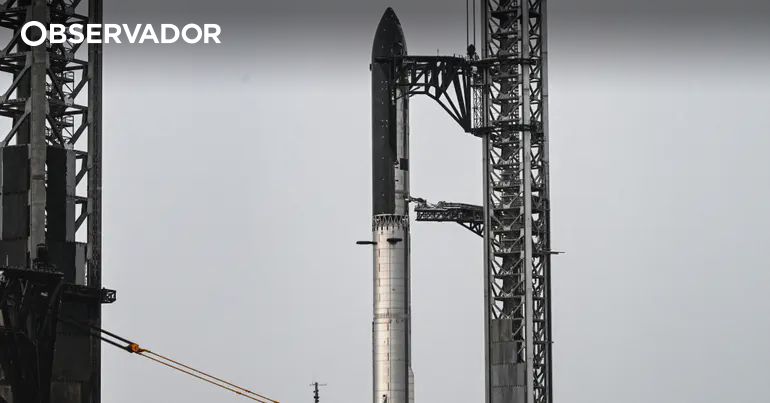
SpaceX sent the 124-meter vehicle from Starbase, Texas, on its 13th integrated test flight. The Super Heavy booster separated cleanly two minutes after liftoff, and the upper stage deployed 20 operational Starlink V3 satellites roughly 18 minutes into the mission. Both stages reached the water intact enough to yield new heat-shield imagery: the booster in the Gulf of Mexico after a harder-than-planned landing burn, the upper stage in the Indian Ocean after a soft splashdown that kept it transmitting data. The satellites, built with larger solar arrays and laser links, followed the suborbital trajectory and reentered after about 20 minutes, some using onboard cameras to record the reentry environment.
One U.S. business outlet tied the flight directly to corporate performance. It noted the test was the first major attempt since SpaceX’s June IPO and linked investor interest in the rocket’s reusability to the company’s target of rapid Starlink growth. The piece also mentioned ongoing work on orbital data-center satellites under the Starmind label and quoted an industry analyst who said progress had been made but full rapid reusability remained distant. Stock price movement after the June offering was referenced as context for why markets watch each flight.
An Italian daily reported the same technical sequence but added a distinct layer. It described the intact Indian Ocean recovery as a first and noted the successful release of working V3 satellites. The account then turned to scientists’ concerns that repeated launches and reentries from constellations numbering up to a million satellites could release soot, aluminum oxides, and other compounds into the stratosphere. Those particles, the report stated, might accumulate at levels that damage the ozone layer or alter the climate in ways still poorly understood, citing a NOAA flight that had already detected metals in sulfuric-acid aerosols.
Portuguese coverage emphasized the operational firsts. It highlighted the deployment of functional satellites rather than mass simulators and the recovery of both stages as steps toward landing them on the launch tower’s mechanical arms in future flights. The account placed the test within the broader timeline of Starship development since 2023 and noted the version’s role in planned NASA lunar missions.
Two additional outlets carried shorter, wire-based accounts that stayed within the technical facts. One summarized liftoff, stage separation, satellite release, and splashdowns while noting plans for Starlink expansion and a NASA test flight next year. The other delivered a concise statement of completion, including the in-space engine relight and the suborbital satellite deployment.
Across these accounts the shared record is consistent: stage separation succeeded, the first operational V3 satellites flew, and both stages returned with usable data. The only sustained departure from that record appears in the single European piece that inserted atmospheric warnings. No other outlet in the set foregrounded those warnings or linked the flight to ozone or climate effects.
The pattern indicates that reusable heavy-lift performance has crossed a threshold where it is treated as shared infrastructure news rather than a U.S. corporate story alone. Financial implications surface where markets are the primary audience. Environmental caveats surface where outlets routinely cover both space programs and climate science. The rest of the coverage treats the engineering result as the main event.
What to Watch
What happens next depends on whether the data from this flight clears the path to orbital insertion and tower catches. If it does, the volume of launches required for large satellite constellations will rise sharply. The single outlet that flagged stratospheric risks has already connected those plans to regulatory petitions filed with the FCC. Other outlets have not yet done so. Readers therefore see a technical success whose downstream atmospheric consequences remain visible in only one corner of the coverage.
That’s how the world told the story.
Get tomorrow’s bulletin by email — one briefing, up to six stories.
Subscribe freeNo spam. One-click unsubscribe. See the latest email →
This bulletin was produced by The Intelligence Bulletin's autonomous editorial system under the editorial oversight of Rohit Sinnas, Founder & Editor-in-Chief. How it works →